Palm wine
Africa
Understanding : Palm wine
INTRODUCTION
Palm wine is an iconic traditional drink in many regions of Africa, known for its sweet taste when fresh, its slight natural effervescence, and then its more acidic and fermented character over time. Made from the sap extracted from certain palm trees, it holds an important place in African food culture, both as a convivial drink, a culinary ingredient, and a symbol of sharing. In many West African, Central African, and Southern African countries, palm wine accompanies festivities, ceremonies, communal meals, and family gatherings.
Prepare this speciality
Choose a detailed recipe, adjust the portions and prepare your ingredients before starting. Our cooking tips and food safety advice complement the steps described in the recipes.
Explore further: Cooking tips · Food hygiene and safety advice.
History and uses
WHAT IS PALM WINE?
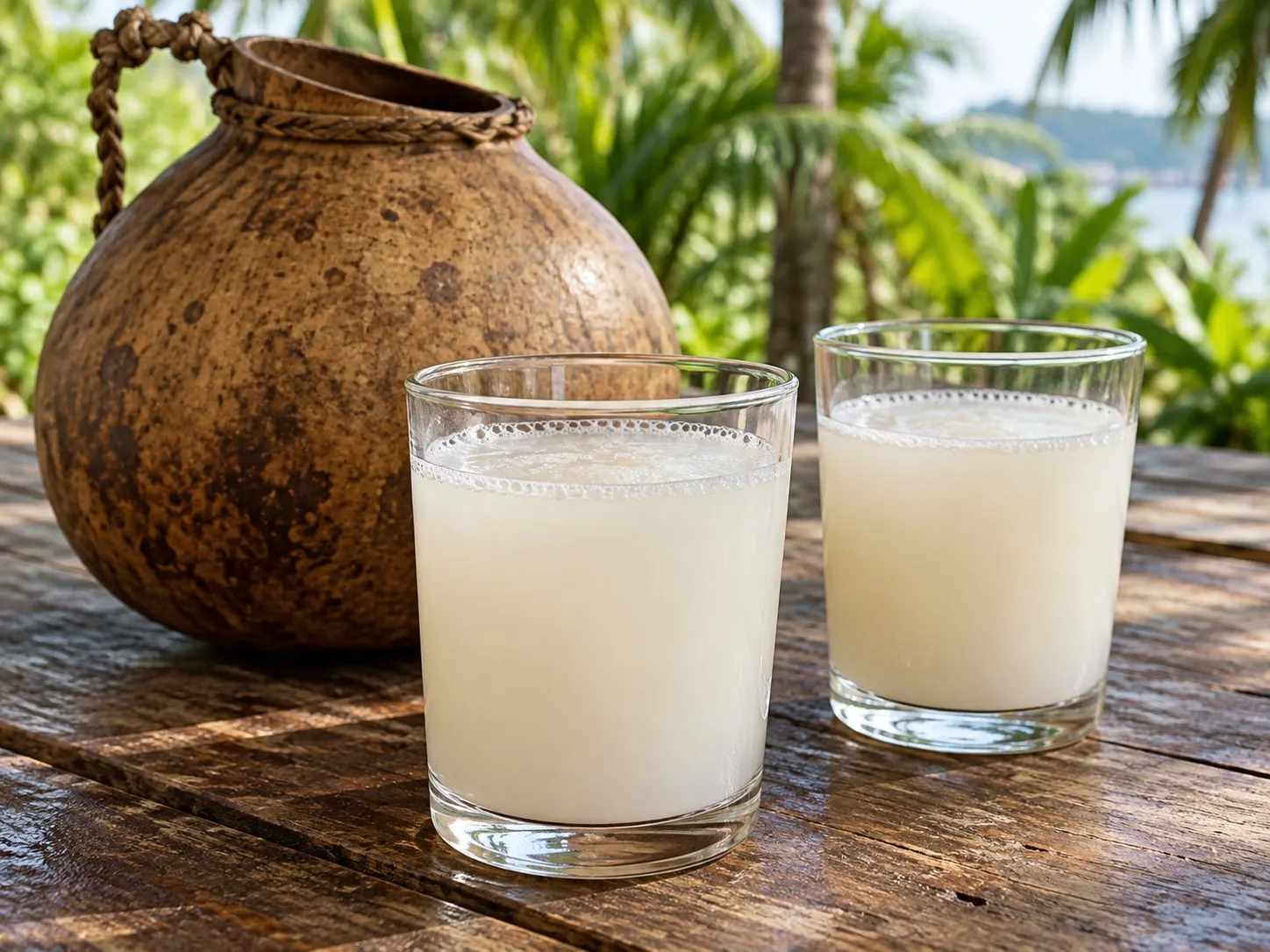
Palm wine is obtained from the sweet sap collected from palm trees, most often the oil palm or other palm species depending on the region. Once collected, this sap naturally begins to ferment under the action of yeasts present in the environment. It is this spontaneous fermentation that transforms the clear, sweet liquid into a slightly sparkling alcoholic beverage, whose taste evolves rapidly over time. Freshly tapped, palm wine is generally sweet, fragrant, and very pleasant on the palate. After a few hours, it becomes more acidic and stronger in alcohol. This rapid evolution explains why it is often consumed shortly after harvesting. In some communities, it is enjoyed as is, while in others, it serves as a base for culinary preparations or traditional mixtures.
SENSORY CHARACTERISTICS OF PALM WINE
Palm wine is distinguished by several organoleptic qualities: • Color: often white, yellowish, or slightly cloudy, depending on freshness and harvesting method. • Taste: initially sweet, then tangy, fermented, and sometimes fuller-bodied. • Texture: fluid, sometimes slightly foamy or sparkling. • Aroma: vegetal, fresh, fermented, with notes sometimes reminiscent of must or natural artisanal beverages. This diversity of taste profiles makes palm wine a highly appreciated drink in African regions, where harvesting expertise strongly influences the final quality.
THE PLACE OF PALM WINE IN AFRICAN CUISINE
In African cuisine, palm wine is not limited to a simple drink. It plays a major culinary and cultural role. It is used in several traditional preparations to bring acidity, aromatic depth, and a characteristic fermented touch. In some recipes, it serves as a marinade, cooking liquid, or even a base for sauces and soups.
- A convivial drink Above all, palm wine is a social drink. It is shared among family members, friends, and guests on special occasions: weddings, funerals, harvest festivals, traditional ceremonies, or community gatherings. Its collective consumption strengthens social bonds and symbolizes African hospitality. In many cultures, offering palm wine to a visitor is a gesture of respect and welcome.
- An ingredient in traditional dishes Palm wine is used in several African recipes, particularly in sauced dishes, fish soups, meat stews, and certain vegetable preparations. Its natural acidity helps balance rich and fatty flavors. It is particularly appreciated with palm-based foods, smoked fish, goat meat, game, or shellfish. For example, in some West African dishes, palm wine is added to spicy sauces to enhance the umami taste and add a tangy note. It can also be used to tenderize meat before cooking. In other regions, it accompanies dishes based on yam, cassava, plantain, or rice.
- A culinary and ritual symbol Palm wine often has a ritual dimension. It is offered to ancestors, used during libations, or integrated into religious and traditional ceremonies. This symbolic function gives it a unique place in African culinary heritage. African cuisine is not limited to nutrition; it also expresses the identity, memory, and spirituality of peoples. Palm wine fully participates in this logic.
In my books

Continue exploring the continent’s cuisines with Africa at the Table — 54 countries, 54 iconic dishes, by Alioune FALL. This book is in English.
Explore further
PALM WINE IN DIFFERENT REGIONS OF AFRICA
In West Africa In countries like Benin, Togo, Ghana, Nigeria, Ivory Coast, or Cameroon, palm wine is very popular. It accompanies many local dishes and is drunk during gatherings. It is also found in some traditional sauce recipes based on palm oil, fish, or meat. In Central Africa In Congo, Gabon, the Central African Republic, and other Central African countries, palm wine holds an important place in eating habits. It is often associated with large tables and generous dishes, simmered with local produce. Its culinary use may vary from one ethnic group to another, but it remains a strong marker of local gastronomy. In East and Southern Africa Even if its use is sometimes less widespread than in West or Central Africa, palm wine also exists in certain areas of East and Southern Africa where palm trees are present. It can be consumed as an artisanal drink or used in local fermentation practices. Nutritional value and fermentation aspects Palm wine initially contains natural sugars from the sap. During fermentation, some of these sugars are converted into alcohol and organic acids. This explains its changing flavor. Depending on its freshness, it may contain small amounts of vitamins, minerals, and compounds from the palm tree. However, its composition varies greatly depending on the fermentation duration, climate, and harvesting method. From a nutritional perspective, palm wine is appreciated for its ability to enhance the flavors of dishes. Its acidity and fermented aroma bring an interesting complexity to traditional African cuisine. This is why it is often sought after by lovers of authentic recipes.
PALM WINE AND TRADITIONAL GASTRONOMY
In African gastronomy, palm wine is associated with robust dishes, rich in taste and history. It is sometimes combined with: • smoked fish • goat meat • farm chicken • snails • game • local leaves • cassava • plantain • yam • traditional rice These associations create complex dishes where the balance between fat, acidity, spices, and texture is essential. Palm wine often provides the final touch that gives relief to the recipe.
PALM WINE: AFRICAN CULINARY HERITAGE
Palm wine is much more than an artisanal alcoholic beverage. It is an integral part of African culinary heritage. It tells the story of peoples, agricultural traditions, harvesting know-how, and fermentation practices passed down from generation to generation. Its importance extends beyond cuisine: it is linked to culture, sociability, and identity. Even today, despite urbanization and the modernization of eating habits, palm wine retains a strong symbolic value. In villages as in some cities, it remains a sought-after product for its authenticity and unique taste. It is often associated with natural products, local produce, and traditional African cuisine.
PRECAUTIONS AND RESPONSIBLE CONSUMPTION
Like any fermented beverage, palm wine should be consumed in moderation. Its alcohol content can increase rapidly after harvesting, which sometimes surprises consumers. It is also important to ensure the hygienic quality of the product, as its artisanal harvesting and preservation can vary. Consumed fresh and under good conditions, it remains a highly appreciated traditional drink.
CONCLUSION
Palm wine plays an essential role in African cuisine and in the continent's gastronomic culture. Both a convivial drink, a culinary ingredient, and a ritual symbol, it embodies the richness of African traditions. Its evolving taste, freshness, and authenticity make it a unique product, deeply rooted in daily life and celebrations. In sauces, marinades, soups, or simply shared among loved ones, palm wine remains an essential element of African culinary heritage.
ENJOY YOUR MEAL! © Photo credit: recettesafricaines.com. All rights reserved.
In the kitchen : Palm wine
Recipes from the site to put your knowledge into practice:
Discover these cuisines at a restaurant
Explore our restaurant and caterer directories. Choose your destination and check the establishment’s menu to confirm which dishes are offered and available.
Continue exploring
Enjoy discovering ingredients and African cuisines? Join our newsletter. The illustrated PDF 10 sauces africaines incontournables is in French and is offered after confirming a subscription to the French or bilingual edition.