Thiéré
West Africa
Understanding : Thiéré
INTRODUCTION
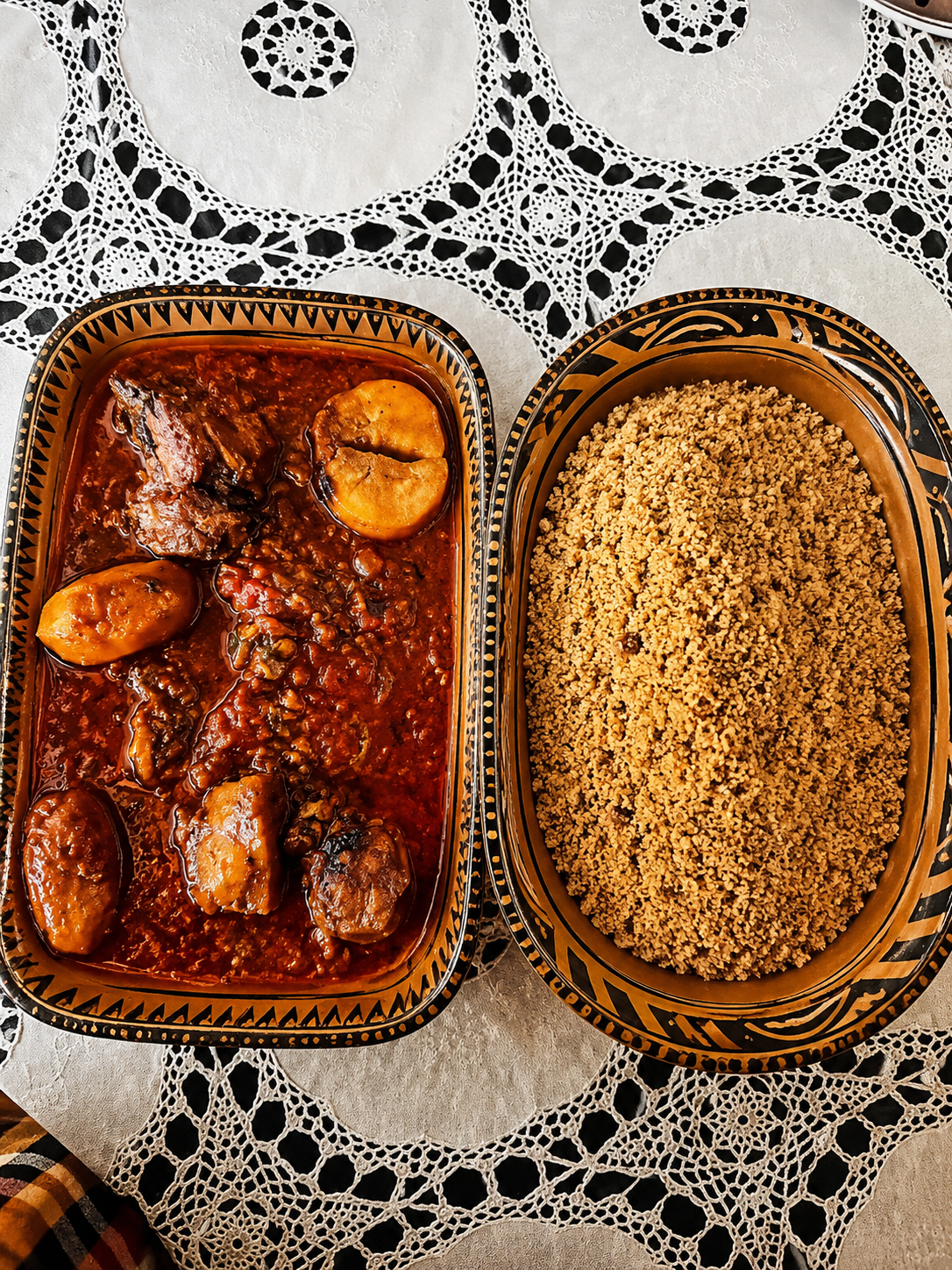
Thiéré is one of the most emblematic foods of West African cuisine, particularly in Senegal, Mauritania, Gambia, and other countries in the Sahel and Sudano-Sahelian zone. Prepared from millet semolina or crushed millet, it resembles a traditional African couscous, fine, light, and versatile. Thiéré is both an everyday dish, an accompaniment, and a base for many recipes rich in sauce, vegetables, or meat. Its place in African cuisine is considerable, as it symbolizes the adaptation of populations to local cereals, food sobriety, and the conviviality of shared meals. In many households, thiéré holds a strategic place. It can be served with curdled milk, vegetables, fish, meat, chicken, or various sauces. It is appreciated for its ability to absorb juices and accompany generous dishes. Thiéré is not only a nourishing food: it is also a cultural marker, a testament to African culinary ingenuity, and a symbol of continuity between rural traditions and modern urban cuisines.
WHAT IS THIÉRÉ?
Thiéré is a preparation of millet grains steamed or moistened, then crumbled or rolled until a texture similar to couscous is obtained. Depending on the region and family, it can be finer or coarser, drier or more tender. It is often compared to couscous, but it has its own identity and deep roots in Sahelian food culture. Thiéré can be prepared in several ways: • white thiéré: plain, often served with a sauce • milk thiéré: for breakfast or a light meal • meat thiéré: a richer and more festive version • fish thiéré: very common in Senegal • vegetable thiéré: vegetarian or fasting version It is therefore a very flexible food, adaptable to various occasions.
ORIGINS AND HISTORICAL CONTEXT OF THIÉRÉ
Thiéré is part of the ancient history of food in West Africa. Millet is one of the oldest and most important cereals in the region. Very drought-resistant, it grows well in Sahelian areas where other cereal crops are more difficult to maintain. This adaptability has made millet a staple cereal in the diet of many African populations. Thiéré was born from this cereal abundance. Populations developed processing techniques to make millet more digestible, tastier, and more practical to cook. Steaming, crumbling, rolling, and sifting allow for a light texture that easily accompanies sauces. Historically, thiéré is also linked to cultures of sharing and communal meals. In families, it is often prepared in large quantities, served in common dishes, and shared among several people. It also has strong symbolic value in ceremonies, religious festivals, and celebratory meals.
THE PLACE OF THIÉRÉ IN AFRICAN CUISINE
Thiéré occupies a central place in African cuisine, especially in West Africa, as it embodies several essential dimensions.
- A local cereal adapted to the climate Millet is perfectly adapted to the dry conditions of the Sahel. Thiéré is therefore an example of sustainable cuisine, based on a local and resilient resource.
- A versatile staple food Thiéré can be served with sauces, vegetables, fish, meat, or milk. It adapts to many culinary traditions.
- A symbol of conviviality Like many African cereal-based dishes, thiéré is shared. It is often prepared to feed an entire family or a group of guests.
- A bridge between tradition and modernity Today, thiéré is also present in restaurants, canteens, and urban kitchens. It retains its traditional dimension while adapting to contemporary habits.
TASTE PROFILE AND TEXTURE OF THIÉRÉ
Thiéré has a mild, cereal, slightly rustic, and natural taste. Its texture depends on the degree of millet processing: • finer, it resembles a light couscous • coarser, it becomes firmer and more nourishing Plain thiéré is quite neutral, making it an excellent base for sauces and accompaniments. It absorbs flavors well and pairs equally well with savory and sweet preparations.
CLASSIC ACCOMPANIMENTS FOR THIÉRÉ
Thiéré can be served with many accompaniments: • tomato sauce • vegetable sauce • fish • chicken • meat • curdled milk • yogurt • butter • sugar • peanut In Senegalese tradition, it can be found in dishes like thiéré bassi (a Senegalese dish made with millet couscous, vegetables, and meat or fish) or preparations with fish and vegetables. It is also sometimes eaten for breakfast with milk.
DRINKS THAT ACCOMPANY THIÉRÉ
The most suitable drinks for thiéré depend on the type of preparation: • curdled milk • fresh milk • tea • coffee • bissap (hibiscus drink) • fruit juice • water Curdled milk is particularly appreciated with plain or lightly sweetened thiéré. For savory versions, tea and light juices are very common.
NUTRITIONAL BENEFITS OF THIÉRÉ
Thiéré is a very interesting food nutritionally, especially when prepared from whole or minimally refined millet. Main benefits • sustainable energy source • provides complex carbohydrates • can be rich in fiber depending on the degree of refining • contains B vitamins • contributes to satiety • easily integrates into a balanced diet Millet is a naturally interesting cereal for people looking for nourishing and digestible food. It can be combined with animal or plant proteins to form a complete meal.
APPROXIMATE NUTRITIONAL VALUES
For an average portion of plain thiéré, one can estimate: • Calories: approximately 180 to 280 kcal • Carbohydrates: 35 to 50 g • Proteins: 4 to 8 g • Fats: 1 to 4 g • Fiber: 2 to 5 g • Salt: 0.1 to 0.6 g depending on seasoning • Vitamins: mainly B1, B3, B6, and sometimes a little folate • Minerals: magnesium, phosphorus, iron, potassium Nutritional details • Carbohydrates: main source of energy • Proteins: moderate but useful • Fats: low in the plain version • Fiber: higher if the millet is minimally refined • B vitamins: important for energy and metabolism • Iron and magnesium: present in interesting quantities
REGIONAL VARIATIONS OF THIÉRÉ
Thiéré varies by country and culinary zone. Senegalese Thiéré Often served with fish, vegetables, or curdled milk. Mauritanian Thiéré Can be drier or finer depending on local preparations. Gambian Thiéré Often similar to Senegalese versions with neighboring influences. Milk Thiéré Sweet version, often served for breakfast. Savory Thiéré Served with tomato sauce, fish, or meat. Sweet Thiéré Prepared with milk, sugar, and sometimes a little butter.
WHY IS THIÉRÉ IMPORTANT IN AFRICAN CUISINE?
Thiéré represents African food ingenuity. It shows how a local cereal can be transformed into a central, versatile, and culturally strong food. In the cuisines of Senegal and the Sahel, it is both daily and symbolic. It nourishes, brings people together, and highlights the importance of local resources in food sovereignty. It is also an excellent example of the diversity of African cuisine, which is not limited to a single type of preparation but includes multiple textures, sauces, contexts, and uses.
TIPS FOR MAKING GOOD THIÉRÉ
- Choose quality millet Fineness and freshness greatly influence the taste.
- Steam carefully This is the key to a good texture.
- Do not over-wet the semolina Thiéré should remain light, not pasty.
- Crumble it well To obtain a homogeneous consistency.
- Pair it with a well-flavored sauce This enhances its natural neutrality.
- Serve it hot It is best right after preparation.
CONCLUSION
Thiéré is a pillar of African cuisine, particularly in West Africa and the Sahelian zone. Based on millet, it represents a local, sustainable, and meaningful food. Its versatility, cultural value, and nutritional richness make it an essential dish, both traditional and modern. Whether served with sauce, milk, or vegetables, thiéré embodies generosity, culinary memory, and African identity.
ENJOY YOUR MEAL! © Photo credit: recettesafricaines.com. All rights reserved.
Practical notes and Senegalese terminology
Thiéré notably refers to millet couscous, made by granulating flour and steaming it. Arraw consists of rolled granules used in porridge, whereas sankhal is cracked millet. These products share a cereal but not necessarily the same texture or cooking method. Follow the product instructions, especially when it has been precooked.
Prepare this speciality
Choose a detailed recipe, adjust the portions and prepare your ingredients before starting. Our cooking tips and food safety advice complement the steps described in the recipes.
Explore further: Cooking tips · Food hygiene and safety advice.
In my books

Continue exploring the continent’s cuisines with Africa at the Table — 54 countries, 54 iconic dishes, by Alioune FALL. This book is in English.
In the kitchen : Thiéré
Recipes from the site to put your knowledge into practice:
Discover these cuisines at a restaurant
Explore our restaurant and caterer directories. Choose your destination and check the establishment’s menu to confirm which dishes are offered and available.
Continue exploring
Enjoy discovering ingredients and African cuisines? Join our newsletter. The illustrated PDF 10 sauces africaines incontournables is in French and is offered after confirming a subscription to the French or bilingual edition.