Urwagwa
Rwanda, Burundi
Understanding : Urwagwa
INTRODUCTION
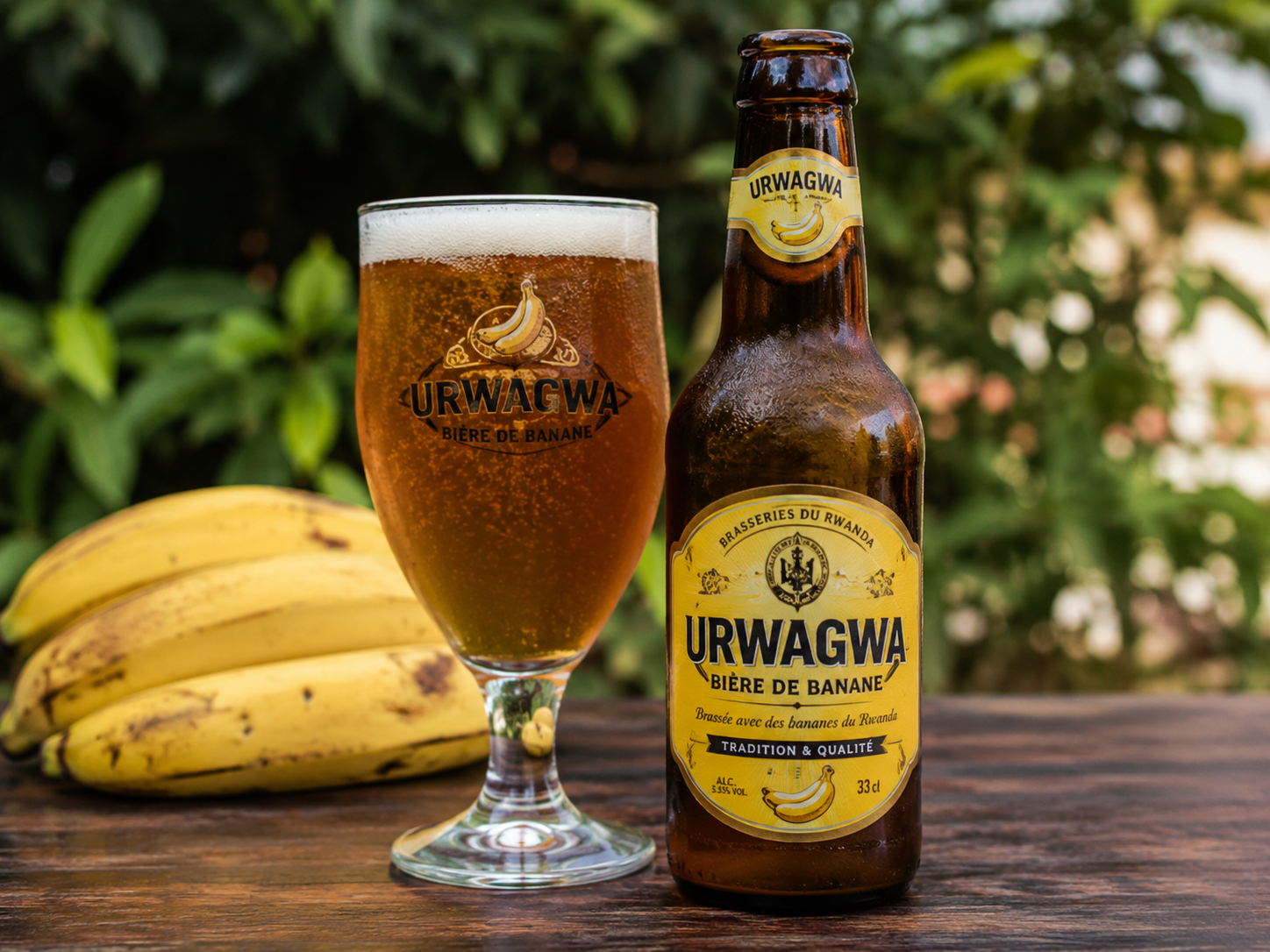
Urwagwa is a very well-known traditional fermented drink in the Great Lakes region, particularly in Burundi and Rwanda. Prepared from ripe bananas, it holds an important place in African cuisine, not only as a nourishing drink but also as a cultural, festive, and identity element. Long associated with ceremonies, family gatherings, and convivial moments, urwagwa is much more than a simple beverage: it is a true marker of African culinary heritage. In the context of traditional African cuisine, urwagwa perfectly illustrates how populations have managed to transform simple local products into foods and drinks rich in flavors, symbolic values, and social uses. Even today, it attracts the attention of African gastronomy enthusiasts, researchers in food heritage, and people who wish to discover authentic East and Central African recipes.
Prepare this speciality
Choose a detailed recipe, adjust the portions and prepare your ingredients before starting. Our cooking tips and food safety advice complement the steps described in the recipes.
Explore further: Cooking tips · Food hygiene and safety advice.
History and uses
WHAT IS URWAGWA?
Urwagwa is a fermented banana-based drink. Depending on the regions and families, its preparation may vary slightly, but the base generally remains the same: very ripe bananas, water, and sometimes roasted cereals or sorghum to aid fermentation or give more body to the drink. The result is a slightly alcoholic, sweet, nourishing drink with a characteristic taste. In many rural households, urwagwa is prepared traditionally, with methods passed down from generation to generation. This oral and practical transmission is an integral part of African culinary culture. Each community may have its own way of pressing bananas, filtering the juice, allowing the mixture to ferment, or serving the drink. Urwagwa is not only a traditional alcoholic beverage: it is also a product of daily life, associated with hospitality, celebrations, and cultural identity. In several societies, offering urwagwa to a guest is a sign of respect and welcome.
ORIGINS AND CULTURAL ANCHORING OF URWAGWA
Urwagwa is part of the history of the peoples of the African Great Lakes, where bananas hold a central place in the diet. In countries like Burundi, Rwanda, Uganda, and certain areas of the Democratic Republic of Congo, bananas have long been an essential crop. They are consumed green, ripe, cooked, boiled, mashed, fermented, or processed into a drink. Urwagwa thus emerged in an environment where bananas were abundant and readily available. Communities developed processing techniques to preserve, enhance, and diversify this resource. This shows how much African cuisine often relies on ingenuity, adaptation, and the valorization of local products. Historically, urwagwa also played a role in social relations. It was served at weddings, births, family reunions, community festivals, and sometimes in traditional exchanges between clans or families. Its presence in these events reinforces its importance in African culinary culture.
HOW IS URWAGWA PREPARED?
The preparation of urwagwa varies by region but generally follows several simple steps. It begins by choosing ripe, often very sweet, bananas. They are then peeled, crushed, or pressed to extract the pulp and juice. In some traditional recipes, water is added to facilitate extraction and adjust the texture. After this, the mixture can be filtered using plant fibers or clean cloths, then left to ferment for a certain period. Fermentation is an essential step, as it transforms the natural sugar of the bananas into a drink with a more complex taste and a slight alcohol content. Some versions of urwagwa include ingredients like roasted sorghum, millet, or other local cereals. These additions can influence the color, texture, and final flavor. In all cases, the quality of urwagwa depends on the choice of bananas, the care taken in preparation, and the fermentation time. This traditional African drink is often produced at home or in small artisanal settings. Today, it can also be found in some traditional restaurants, cultural events, or local markets.
THE PLACE OF URWAGWA IN AFRICAN CUISINE
Urwagwa holds a special place in African cuisine because it embodies several dimensions simultaneously: nutritional, social, cultural, and economic. In Africa, cuisine is not limited to feeding. It also serves to express identity, celebrate community, preserve traditions, and transmit know-how. In this context, urwagwa is an excellent example of a traditional African drink that connects gastronomy to culture. It often accompanies local dishes based on cassava, beans, sweet potatoes, plantains, green vegetables, or meats, depending on the occasion. Its sweetness and slightly fermented character make it a suitable drink for festive meals. From a gastronomic perspective, urwagwa is increasingly attracting people who explore traditional African recipes and artisanal beverages from the continent. It represents an authentic alternative to industrial drinks and highlights the richness of local know-how. Urwagwa also has symbolic value. In some communities, it is associated with peace, unity, sharing, and hospitality. In this sense, it goes beyond its function as a drink to become an element of social cohesion.
In my books

Continue exploring the continent’s cuisines with Africa at the Table — 54 countries, 54 iconic dishes, by Alioune FALL. This book is in English.
Explore further
URWAGWA AND TRADITIONAL FOOD
Even though urwagwa is known as a fermented drink, it is part of a broader logic of traditional African food. Indeed, African societies have often developed versatile food products, capable of nourishing, hydrating, and bringing people together. Bananas, the main ingredient of urwagwa, are themselves a staple food in several regions. They provide energy, fiber, and nutrients. Once processed into a fermented drink, they acquire a new form of use that further enhances local production. In a context where consumers are increasingly interested in natural, artisanal, and cultural foods, urwagwa can be perceived as an authentic traditional African drink, rooted in sustainable and local practices. It represents an ancient, yet still relevant, way of transforming agricultural resources.
URWAGWA IN CEREMONIES AND SOCIAL LIFE
One of the most important aspects of urwagwa is its presence in traditional African ceremonies. It is often served at weddings, family celebrations, community gatherings, and important meetings. In some contexts, it can even play a ritual or honorary role. Serving urwagwa at an event often means welcoming guests generously. This shows that the drink is linked to conviviality and social recognition. In many African cultures, drinking together is a way of building connections. Urwagwa perfectly fulfills this function. This social dimension explains why urwagwa remains important, even in the face of the rise of modern beverages. It continues to be a symbol of authenticity and cultural continuity.
URWAGWA, CULINARY TOURISM AND HERITAGE ENHANCEMENT
Today, urwagwa is experiencing renewed interest within the framework of African culinary tourism and the enhancement of gastronomic heritage. Visitors discovering Burundi, Rwanda, or other regions of the Great Lakes are often interested in local specialties, and urwagwa is among the most emblematic beverages. For tourism stakeholders, traditional restaurants, and cultural initiatives, highlighting urwagwa allows for telling a story: that of a drink made from local products, ancient know-how, and a communal way of life. This enhancement also contributes to strengthening the visibility of traditional African cuisine on the international stage. Urwagwa can also inspire local processing projects, artisanal marketing, or the promotion of local products. In a logic of sustainable development, it shows how culinary heritage can become an economic and cultural asset.
A DRINK BETWEEN TRADITION AND MODERNITY
Like many elements of African food heritage, urwagwa today stands at the crossroads of tradition and modernity. On one hand, it remains rooted in rural and family practices. On the other hand, it can be revisited in urban, festive, or commercial contexts. This evolution raises important questions: how to preserve the authenticity of the drink while adapting it to modern hygiene, preservation, and distribution standards? How to transmit traditional recipes to younger generations? How to make urwagwa a recognized product without losing its cultural soul? These questions are at the heart of the preservation of traditional African beverages. Urwagwa shows that gastronomy is not static. It evolves, adapts, and reinvents itself, while retaining its roots.
CONCLUSION: why urwagwa is essential in African cuisine Urwagwa is much more than a fermented banana-based drink. It is a strong symbol of African cuisine, the cultural heritage of the Great Lakes, and the culinary creativity of local communities. Through its preparation, consumption, and its place in ceremonies, it tells a story of transmission, sharing, and identity. In a world where there is an increasing desire to rediscover culinary traditions, urwagwa deserves to be better known, better valued, and better integrated into narratives about African gastronomy. It embodies the richness of local products, the ingenuity of artisanal know-how, and the importance of conviviality in African cultures.
© Photo credit: recettesafricaines.com. All rights reserved.
In the kitchen : Urwagwa
Recipes from the site to put your knowledge into practice:
Discover these cuisines at a restaurant
Explore our restaurant and caterer directories. Choose your destination and check the establishment’s menu to confirm which dishes are offered and available.
Continue exploring
Enjoy discovering ingredients and African cuisines? Join our newsletter. The illustrated PDF 10 sauces africaines incontournables is in French and is offered after confirming a subscription to the French or bilingual edition.