Cachupa
Cape Verde
Understanding : Cachupa
INTRODUCTION
Cachupa is one of Cape Verde's most famous dishes and one of the strongest symbols of its gastronomy. Rich, generous, nourishing, and deeply linked to daily life, it occupies a central place in Cape Verdean culinary culture. Made from corn, beans, vegetables, and often meat or fish depending on the variations, cachupa perfectly illustrates the creativity of African cuisines, capable of transforming simple ingredients into a complete, flavorful, and meaningful dish. In African cuisine, cachupa represents much more than a recipe: it tells the story of an archipelago, the exchanges between the African and Atlantic worlds, the constraints of the climate, the ingenuity of families, and the transmission of traditions. It is at once an everyday meal, a festive dish, and a strong identity marker for Cape Verdeans, both within the country and in the diaspora.
Prepare this speciality
Choose a detailed recipe, adjust the portions and prepare your ingredients before starting. Our cooking tips and food safety advice complement the steps described in the recipes.
Explore further: Cooking tips · Food hygiene and safety advice.
History and uses
WHAT IS CACHUPA?
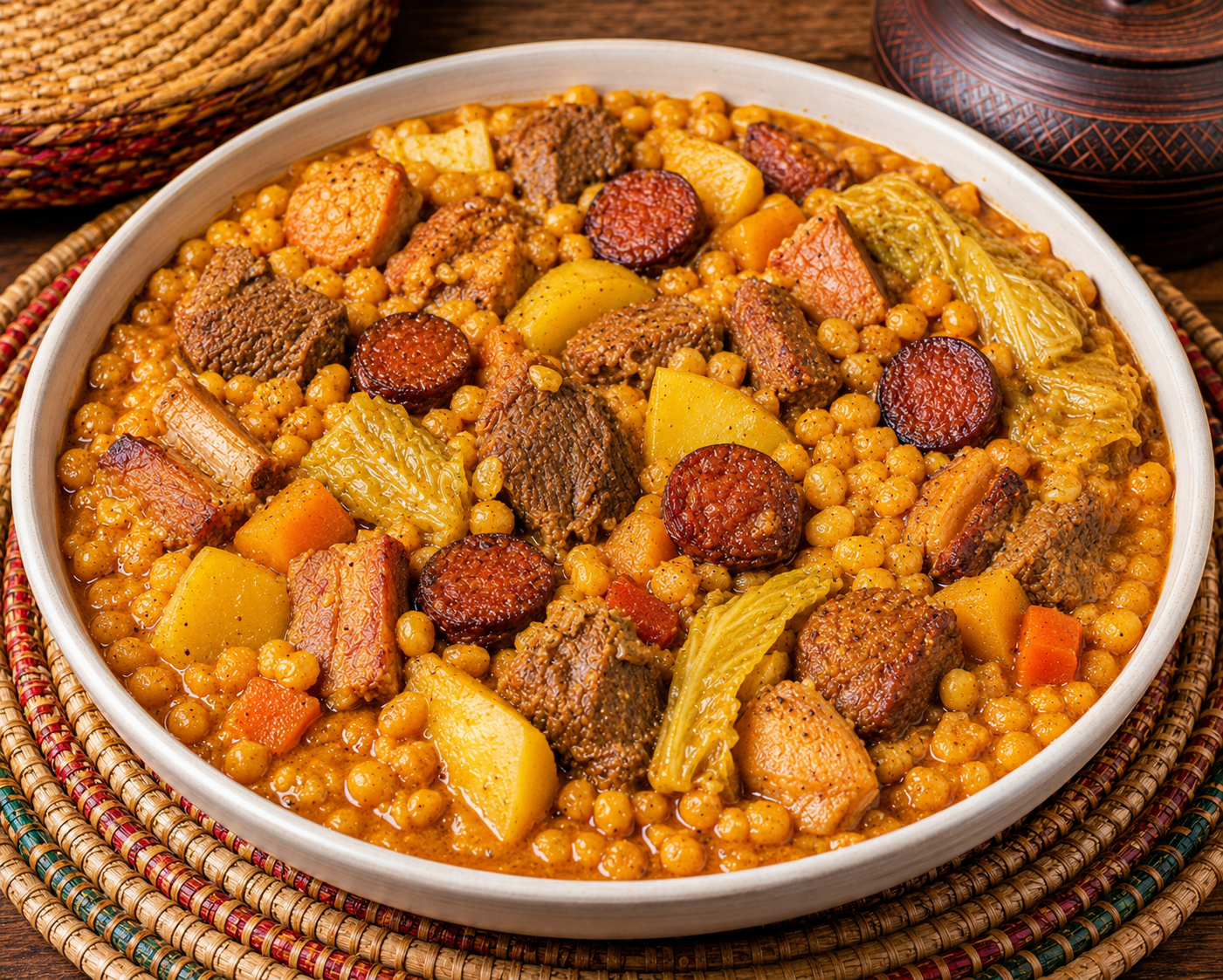
Cachupa is a traditional Cape Verdean slow-cooked stew, composed mainly of corn, beans, vegetables, and sometimes meat, fish, or cured meats depending on the versions. Its long cooking time allows the flavors to develop fully, resulting in a rich, melting, and comforting dish. A complete and nourishing dish Cachupa is often considered a complete meal because it combines cereals, legumes, and vegetables. In some variations, animal proteins are added, making it a particularly filling dish. This composition explains why it has long held an important place in family nutrition in Cape Verde.
A RECIPE WITH NUMEROUS VARIATIONS
There are several forms of cachupa. Some are more modest, consisting mainly of corn and beans, while others are richer, with meat, sausages, or fish. This diversity shows that cachupa adapts to available resources and occasions.
THE ORIGINS OF CACHUPA
The history of cachupa is linked to that of Cape Verde itself. Located off the coast of West Africa, the archipelago has developed a cuisine marked by natural constraints, trade, and cultural blending. A dish born from an island context Cape Verde has often experienced periods of drought and limited resources. In this context, populations have learned to make the most of available foods. Cachupa fits into this logic of adaptation: it uses accessible, inexpensive ingredients capable of feeding many people. A cuisine of cultural blending Cachupa also reflects Cape Verde's history as a meeting place between Africa, Europe, and the Atlantic. Some ingredients or cooking techniques may recall external influences, but the whole remains deeply rooted in local creativity and in African traditions of slow-cooked dishes. The main ingredients of cachupa Ingredients may vary depending on the islands, families, and available means, but the base remains relatively stable. Corn Corn is one of the most important elements of cachupa. It brings texture, body, and a mild flavor to the dish. Depending on the recipes, it can be used as soaked dried grains or semolina. Beans Beans are essential in many versions. They provide vegetable protein and contribute to the consistency of the dish. Their association with corn also recalls several African and American culinary traditions where cereals and legumes are combined. Vegetables Cachupa often contains vegetables such as cabbage, cassava (manioc), sweet potato, squash, onion, tomato, or other local vegetables. They enrich the dish with colors, fiber, and taste. Meats and fish In richer versions, pork, chicken, sausage, beef, or fish are added. In Cape Verde, fish is particularly important in coastal areas, which sometimes gives cachupa a more maritime identity.
HOW IS CACHUPA PREPARED?
The preparation of cachupa takes time. It is a dish that is built slowly, over the course of cooking. Long and gentle cooking The basic principle is to simmer the corn, beans, and other ingredients for several hours. This slow cooking allows the flavors to blend and the ingredients to become tender. Cachupa is a dish of patience. A precise order of ingredients According to recipes, some ingredients are cooked first, others added later. This organization helps preserve the texture of the vegetables and balance the overall consistency of the dish. A cuisine of transmission Like many traditional African dishes, cachupa is transmitted orally and practically. It is often mothers, grandmothers, and family cooks who keep its secrets and variations.
In my books

Continue exploring the continent’s cuisines with Africa at the Table — 54 countries, 54 iconic dishes, by Alioune FALL. This book is in English.
Explore further
THE DIFFERENT FORMS OF CACHUPA
There are several types of cachupa, each corresponding to a particular context. Rich cachupa Cachupa rica is a more elaborate version, with several types of meats or cured meats. It is often served on special occasions, holidays, or important meals. Poor or simple cachupa The simpler version, sometimes called cachupa pobre, uses fewer expensive ingredients. It remains nevertheless flavorful and very representative of everyday cuisine. Cachupa refogada Cachupa refogada is often prepared from already cooked cachupa, reheated with onions, garlic, sometimes eggs, pieces of meat, or sausage. It is a very popular way to recycle the next day's dish while giving it a new flavor.
THE PLACE OF CACHUPA IN AFRICAN CUISINE
Cachupa holds a special place in African cuisine, as it shares many traits with other traditional dishes of the continent: slow cooking, use of local products, importance of sharing, and adaptation to economic realities. A dish of sharing and family Like many African dishes, cachupa is often prepared in large quantities to be shared. It accompanies family meals, community gatherings, and major celebrations. The meal then becomes a social as well as a culinary moment. A terroir logic Cachupa values simple and local products. This approach is very present in African cuisine, which often relies on the resources of the territory: cereals, tubers, legumes, vegetables, and fishing or livestock products. A gastronomy of resilience Cape Verde has long had to contend with difficult conditions. Cachupa expresses this resilience: with little, a nourishing, flavorful, and identity-rich dish is prepared. This ability to sublimate modest ingredients is one of the great strengths of African cuisine.
CACHUPA, CAPE VERDEAN IDENTITY AND DIASPORA
Cachupa is also a major identity marker for Cape Verdeans in the country and in the diaspora. A dish symbolizing belonging For many Cape Verdeans, cachupa immediately evokes home, family, and childhood memories. It is a link between generations and between territories. A dish present in the diaspora In Cape Verdean communities settled in Portugal, France, the United States, or elsewhere, cachupa remains a strong culinary symbol. It helps keep the memory of the country alive and transmit a part of Cape Verdean identity to younger generations.
CACHUPA AND MODERNITY
Today, cachupa continues to evolve. A recipe adapted to current lifestyles In cities, preparation time can be shortened, ingredients modernized, or the recipe simplified. Despite this, the spirit of the dish remains the same: a generous, nourishing, and convivial meal. A specialty valued by tourism Cachupa has also become a sought-after specialty by visitors to Cape Verde. It is one of the dishes to discover to understand local culture through its cuisine.
CONCLUSION
Cachupa is much more than a national dish of Cape Verde. It is a symbol of African cuisine, cultural blending, family transmission, and the resilience of island peoples. Through its simple ingredients, slow cooking, and numerous variations, it tells a story of sharing, identity, and ingenuity. In African gastronomy, cachupa holds a prominent place because it brings together everything that makes the strength of great traditional cuisines: the relationship to the land, conviviality, adaptation, and memory. It is a living, deeply human dish that continues to bring Cape Verdean families together and to charm those who discover Cape Verde's culinary heritage.
ENJOY YOUR MEAL! © Photo credit: recettesafricaines.com. All rights reserved.
In the kitchen : Cachupa
Recipes from the site to put your knowledge into practice:
Discover these cuisines at a restaurant
Explore our restaurant and caterer directories. Choose your destination and check the establishment’s menu to confirm which dishes are offered and available.
Continue exploring
Enjoy discovering ingredients and African cuisines? Join our newsletter. The illustrated PDF 10 sauces africaines incontournables is in French and is offered after confirming a subscription to the French or bilingual edition.