Gozo
Central African Republic
Understanding : Gozo
INTRODUCTION
Gozo is one of the most well-known traditional foods in the Central African Republic. Present in many homes, markets, and daily meals, it holds an important place in the country's food culture. Simple, nourishing, and deeply rooted in local customs, gozo reflects how African cuisines transform basic ingredients into foods with high social and cultural value. In Central African cuisine, gozo is much more than a side dish or a staple: it is a food of survival, sharing, identity, and memory. It often accompanies sauces, meats, fish, or vegetables, and it is part of a long tradition of consuming flours, porridges, and pastes made from cereals or tubers. This detailed article on gozo in Central Africa invites you to discover its nature, ingredients, preparation methods, uses, and its place in African cuisine.
Prepare this speciality
Choose a detailed recipe, adjust the portions and prepare your ingredients before starting. Our cooking tips and food safety advice complement the steps described in the recipes.
Explore further: Cooking tips · Food hygiene and safety advice.
History and uses
WHAT IS GOZO?
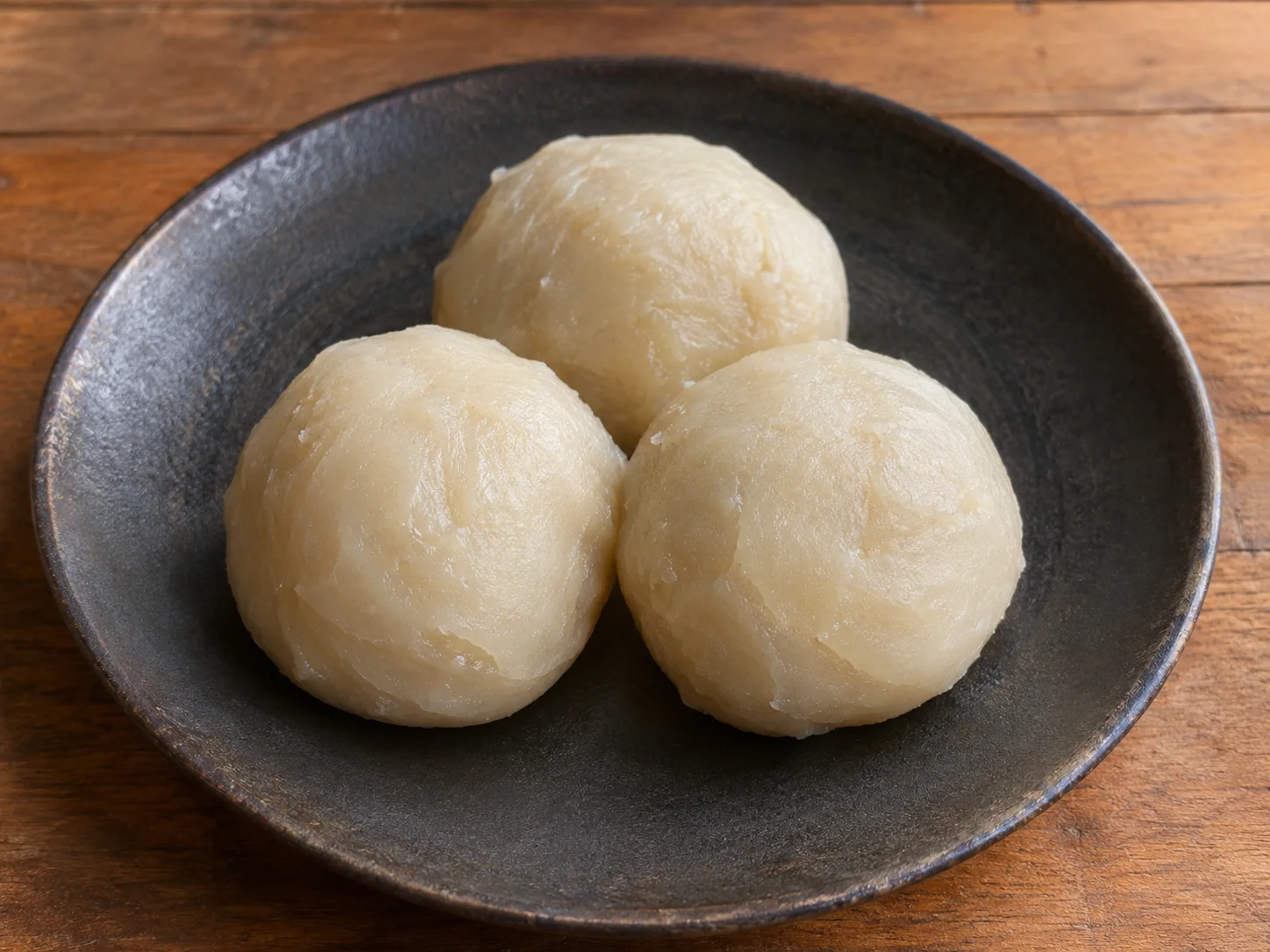
Gozo refers to a traditional Central African food prepared as a paste or thick aggregate, often resulting from the processing of local flours. Depending on the regions, families, and culinary practices, it can be made from cereals, tubers, or other local agricultural products. Its consistency allows it to be consumed with rich sauces, vegetables, or stews. A daily staple food Gozo is especially appreciated for its simplicity and its satiating power. In many households, it is an accessible, economical, and nourishing meal. It is one of those foods that show how African cuisines can meet material realities while remaining flavorful and culturally significant. A preparation linked to the terroir Like many traditional African foods, gozo is highly dependent on local resources. It is prepared with what is available in the agricultural and domestic environment. This logic of proximity to the terroir is part of its identity.
THE ORIGINS OF GOZO IN CENTRAL AFRICA
The history of gozo is part of the history of Central African food practices. The Central African Republic, a country of forests, savannas, and rivers, has developed a cuisine based on agricultural products, hunting, fishing, and gathering. A response to rural realities Gozo was born in a context where it was necessary to produce nourishing foods from local raw materials that were easy to cultivate or process. It meets a fundamental need: to feed families with simple and accessible products. A continuity of African food traditions Gozo is part of a broader tradition of African paste, porridge, or starch-based dishes, which are widespread across the continent. Similar logics are found in other countries in Central, West, and East Africa, where cereals and tubers are transformed into staple foods.
INGREDIENTS AND COMPOSITION OF GOZO
The exact composition of gozo can vary according to local practices, but it generally relies on simple raw materials. Local flours Gozo is often prepared from flours derived from agricultural products such as cassava, corn, millet, or other cereals. These flours are then worked with water to obtain a paste or a suitable consistency. Water and cooking Water is an essential element in the preparation of gozo. It helps bind the flour and produce a homogeneous texture. Cooking, often slow and careful, plays a central role in the success of the dish. Sometimes enriched or accompanied Depending on the context, gozo can be enriched with other ingredients or consumed with sauces based on vegetables, leaves, fish, or meat. It then serves as a neutral and satiating base that enhances the accompaniments.
HOW IS GOZO PREPARED?
The preparation of gozo requires care, patience, and a good mastery of textures. Step 1: preparing the flour Flour is generally placed in a suitable container. Depending on the recipe, it can be sieved or used as is. Step 2: mixing with water Water is added gradually to avoid lumps. It is vigorously mixed to obtain a smooth paste or a texture suitable for cooking. Step 3: cooking The mixture is then heated and stirred until the desired consistency is reached. This step is essential, as the success of gozo relies on the balance between firmness and suppleness. Step 4: shaping or serving Once cooked, gozo can be shaped or served directly with sauces. It is often eaten in portions, by hand or with utensils, depending on customs.
In my books

Continue exploring the continent’s cuisines with Africa at the Table — 54 countries, 54 iconic dishes, by Alioune FALL. This book is in English.
Explore further
THE USES OF GOZO IN CENTRAL AFRICAN LIFE
Gozo holds an important place in daily diet and in moments of sharing. A daily food In many households, gozo is consumed as a main meal or as an accompaniment. It is particularly appreciated in contexts where a simple, economical, and nourishing food is sought. A convivial dish Like many African staple foods, gozo is shared with family or neighbors. It accompanies communal meals and strengthens social bonds around the table. A food adapted to local sauces Gozo pairs very well with Central African sauces based on leaves, peanuts, dried fish, meat, or vegetables. It acts as a support that absorbs flavors and allows for varied pleasures.
THE PLACE OF GOZO IN AFRICAN CUISINE
Gozo has a special place in African cuisine because it reflects several fundamental traits of the continent's gastronomy. A cuisine of transformation One of the great strengths of African cuisine is its ability to transform raw products into rich and nourishing preparations. Gozo is a good example: it transforms a simple flour into an essential daily food. A cuisine of sobriety and ingenuity Gozo shows that a dish does not need to be complex to be important. The sobriety of the ingredients does not detract from its value. On the contrary, it reveals the ingenuity of populations who know how to make the best use of their resources. A logic of complementarity In several African cuisines, staple foods like gozo, porridges, pastes, or flatbreads are designed to accompany richer sauces. This creates a balance between satiety, taste, and nutrition.
GOZO AND CENTRAL AFRICAN CULTURAL IDENTITY
Gozo is not just food: it is part of Central African culinary heritage. A marker of tradition Preparing and consuming gozo also means perpetuating an ancient way of eating. It recalls practices passed down from generation to generation and the attachment to local products. A link with rural life Gozo evokes fields, harvests, mills, family kitchens, and domestic know-how. It is linked to a way of life where the transformation of raw materials is central. A food memory For many families, gozo is associated with childhood memories, the cooking of mothers and grandmothers, and a form of stability in daily diet.
GOZO, NUTRITION AND MODERNITY
Today, gozo continues to play an important role, even as eating habits evolve. A satiating food Thanks to its composition, gozo is appreciated for its satiating effect. It allows one to feel full for a long time and can constitute a useful food base in contexts of active life or limited resources. An adaptable recipe Gozo can be adjusted according to preferences: more compact, more flexible, simpler, or richer depending on the accompaniments. This flexibility makes it always relevant in contemporary cuisine. Possible valorization In an effort to promote Central African culinary heritage, gozo can be highlighted in traditional restaurants, cultural events, and projects promoting African gastronomy.
CONCLUSION
Gozo in Central Africa is a food deeply rooted in daily life, collective memory, and the country's culinary culture. Simple, nourishing, and versatile, it reflects the richness of Central African cuisine and its place in the great diversity of African cuisines. Through its modest ingredients, careful preparation, and social uses, gozo tells a story of adaptation, sharing, and identity. In African gastronomy, gozo holds an essential place because it embodies a cuisine of the terroir, family, and transmission. It is a perfect example of how Africa transforms local resources into foods with high cultural and social value.
ENJOY YOUR MEAL! © Photo credit: recettesafricaines.com. All rights reserved.
In the kitchen : Gozo
Recipes from the site to put your knowledge into practice:
Discover these cuisines at a restaurant
Explore our restaurant and caterer directories. Choose your destination and check the establishment’s menu to confirm which dishes are offered and available.
Continue exploring
Enjoy discovering ingredients and African cuisines? Join our newsletter. The illustrated PDF 10 sauces africaines incontournables is in French and is offered after confirming a subscription to the French or bilingual edition.