Vanilla
American continent
Understanding : Vanilla
INTRODUCTION
Vanilla is one of the most famous and beloved spices in the world. Its sweet, warm, floral, and delicately sugary fragrance makes it an essential ingredient in many sweet preparations, but also in some savory recipes and traditional beverages. In African cuisine, vanilla holds a special place, particularly in producing regions like Madagascar, Comoros, Reunion, Uganda, and other tropical areas where its cultivation has developed or found favorable ground. Beyond its refined aroma, vanilla is also an agricultural product of great economic and cultural value. It is one of those ingredients that connect terroir, trade, gastronomy, and culinary heritage. In this detailed article on vanilla in African cuisine, we will explore its origins, production, culinary uses, its value in local traditions, its economic importance, and its place in the continent's gastronomy.
Where to find it
Look for the exact food-grade form required by the recipe at markets and specialist shops. Check the product name, ingredients, condition and storage instructions.
Explore further: Cooking tips · Food hygiene and safety advice.
Search Amazon.fr — affiliate link →
Check availability and delivery on Amazon.fr. Compare ingredients, packaging and sellers.
As an Amazon Associate I earn from qualifying purchases.
History and uses
WHAT IS VANILLA?
Vanilla is a spice obtained from the pods of certain species of tropical orchids of the genus Vanilla. The most well-known is Vanilla planifolia, widely cultivated in humid tropical regions. After harvesting, the pods undergo a long process of transformation, fermentation, drying, and curing that develops their characteristic aroma. A rare and precious spice Vanilla is considered one of the most precious spices in the world. Its cultivation requires time, patience, and great care. Manual pollination, the slow maturation of the pods, and post-harvest work explain its high cost and its reputation as a noble product. A unique flavor The scent of vanilla is immediately recognizable. It brings roundness, sweetness, and depth to desserts, creams, beverages, and sometimes to certain savory preparations. This versatility explains its success in many cuisines, including in Africa.
THE ORIGIN OF VANILLA AND ITS ESTABLISHMENT IN AFRICA
Vanilla originated on the American continent, but it found in Africa an exceptional cultivation area, particularly in humid tropical zones. Madagascar, a major vanilla country Madagascar is today one of the world's largest producers of vanilla. The quality of Malagasy vanilla is internationally recognized. It is often associated with rich, complex, and highly sought-after aromas. Comoros and other Indian Ocean islands Comoros, Reunion, and other Indian Ocean islands also participate in the African history of vanilla. These territories have developed agricultural and artisanal expertise around this crop, which is integrated into local economies. A crop adapted to tropical climates Vanilla needs warmth, humidity, and shade. African tropical regions offer favorable conditions for its development, which has allowed its integration into the agricultural systems of several countries.
VANILLA PRODUCTION: a demanding savoir-faire Vanilla production is a long and delicate process. Manual pollination In many producing regions, vanilla must be pollinated by hand. This step is essential for the formation of the pods. It requires precise know-how and great attention. Harvesting the pods The pods are harvested when they reach a certain degree of maturity. They do not yet release their full aromatic richness at the time of picking. Drying and curing After harvesting, the pods go through several stages: scalding, sweating, sun or shade drying, then curing. It is during this process that vanilla develops its deep aroma and supple texture. Artisanal work Vanilla is a product of patience. Each step of its transformation contributes to its final quality. This is why it is often considered a noble and artisanal product.
THE PLACE OF VANILLA IN AFRICAN CUISINE
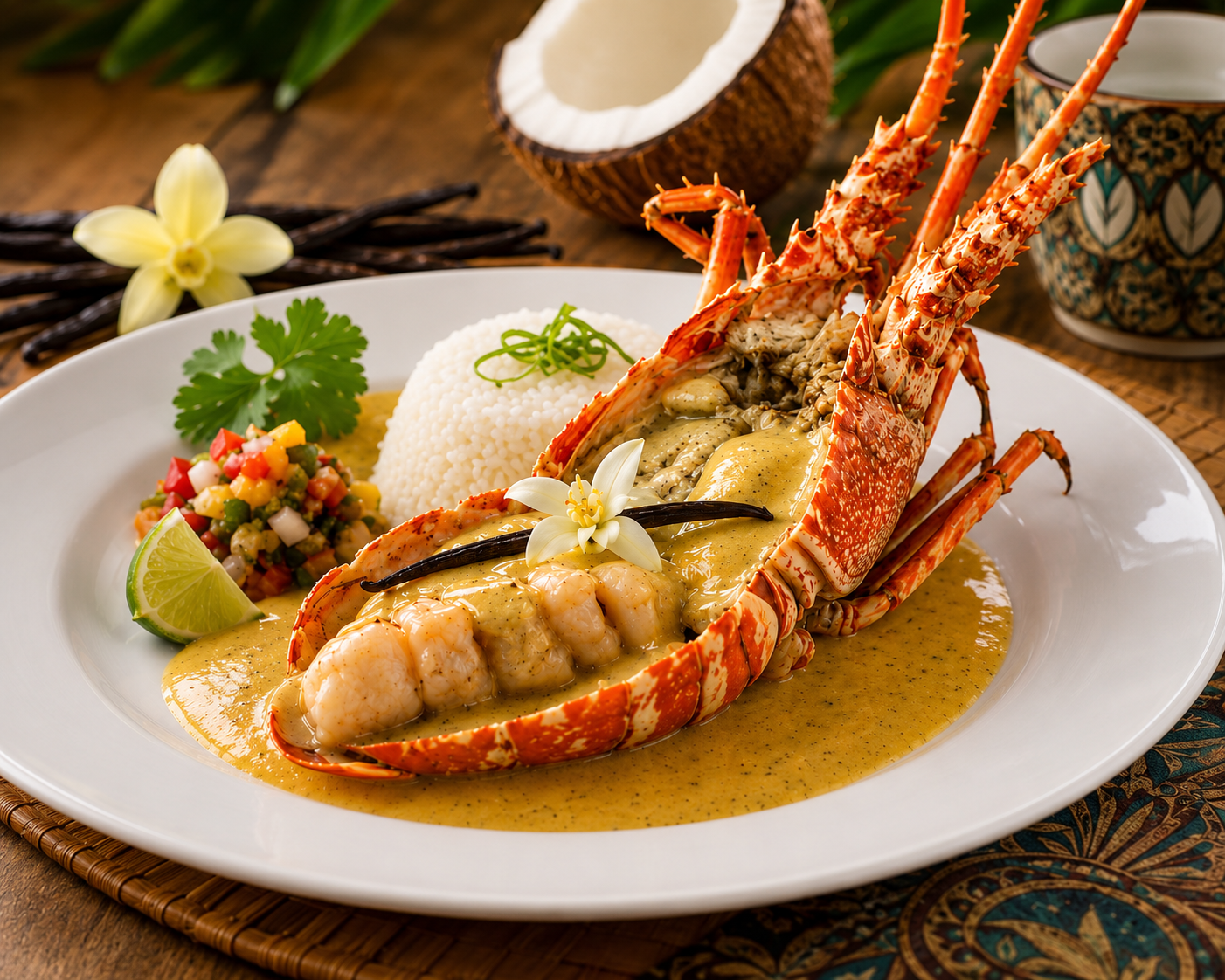
Vanilla has an important place in several African culinary traditions, particularly in producing countries and in cuisines influenced by Creole, island, and tropical cultures. In African desserts Vanilla is widely used in creams, flans, cakes, puddings, yogurts, ice creams, and biscuits. It brings a sweet and aromatic note much appreciated in family and festive desserts. In beverages It is found in certain hot, cold, or milky beverages. Mixed with milk, coffee, cocoa, or syrups, it gives a subtle and refined flavor. In African Creole cuisine In the Creole areas of the Indian Ocean, vanilla is integrated into a mixed cuisine where African, European, and Asian influences meet. It is sometimes used in sauces, sweet and savory dishes, and marinades. A prestige spice Vanilla is often associated with special moments, festive meals, and elaborate recipes. It adds a touch of sophistication without breaking with local products. Vanilla and gastronomy in Madagascar Madagascar deserves special mention because vanilla plays a central role in its economy and food culture. A national pride Malagasy vanilla is known worldwide. It represents a major agricultural and economic heritage. For many families, it is an essential source of income. A place in local cuisine In cooking, vanilla is used in homemade desserts, creams, some pastries, and beverages. It often accompanies dairy products, rice pudding, or festive preparations. A product between tradition and global trade Vanilla shows how a local product can become an international raw material while remaining linked to traditional agricultural practices.
In my books

Continue exploring the continent’s cuisines with Africa at the Table — 54 countries, 54 iconic dishes, by Alioune FALL. This book is in English.
Explore further
VANILLA, CULTURE AND IDENTITY
Vanilla is not just a culinary ingredient. It is also part of a cultural imaginary. A symbol of refinement Its fragrance evokes sweetness, comfort, and elegance. In many cultures, vanilla is associated with delicate recipes and childhood memories. A link with the land Even if it is sold globally, vanilla remains deeply linked to plantations, local know-how, and the tropical climate. It recalls the importance of agricultural work in the construction of African culinary heritage. Transmission of know-how The cultivation and processing of vanilla are passed down from generation to generation. This know-how constitutes human as well as economic wealth.
CHALLENGES IN THE VANILLA SECTOR IN AFRICA
Vanilla is a precious product, but its sector also faces many challenges. Price volatility The international vanilla market can experience significant price fluctuations. This affects producers and the families who depend on it. Climate risks As a tropical crop, vanilla is highly dependent on climatic conditions. Cyclones, droughts, or diseases can weaken harvests. The need to value producers The sustainable development of the sector requires better remuneration for producers, protection of local know-how, and a balance between international trade and the rural economy. Vanilla in African gastronomic tourism Vanilla also attracts visitors interested in gastronomy and local products. A discovery product In countries like Madagascar, culinary tourism highlights plantations, markets, processing workshops, and vanilla-based recipes. A richness for the country's image Vanilla contributes to the identity of producing territories. It becomes an ambassador for African cuisine and agricultural heritage.
CONCLUSION
Vanilla is much more than just a spice. In African cuisine, it represents a bridge between agriculture, tradition, gastronomy, and economy. Present in desserts, beverages, and some Creole preparations, it provides a unique aromatic signature while valuing local know-how. From Madagascar to Comoros, and through other tropical regions of the continent, vanilla tells a story of patience, artisanal work, trade, and culture. It occupies an important place in African culinary heritage and continues to charm with its sweetness and aromatic richness.
© Photo credit: recettesafricaines.com. All rights reserved.
In the kitchen : Vanilla
Recipes from the site to put your knowledge into practice:
Discover these cuisines at a restaurant
Explore our restaurant and caterer directories. Choose your destination and check the establishment’s menu to confirm which dishes are offered and available.
Continue exploring
Enjoy discovering ingredients and African cuisines? Join our newsletter. The illustrated PDF 10 sauces africaines incontournables is in French and is offered after confirming a subscription to the French or bilingual edition.