Zigni
Eritrea
Understanding : Zigni
INTRODUCTION
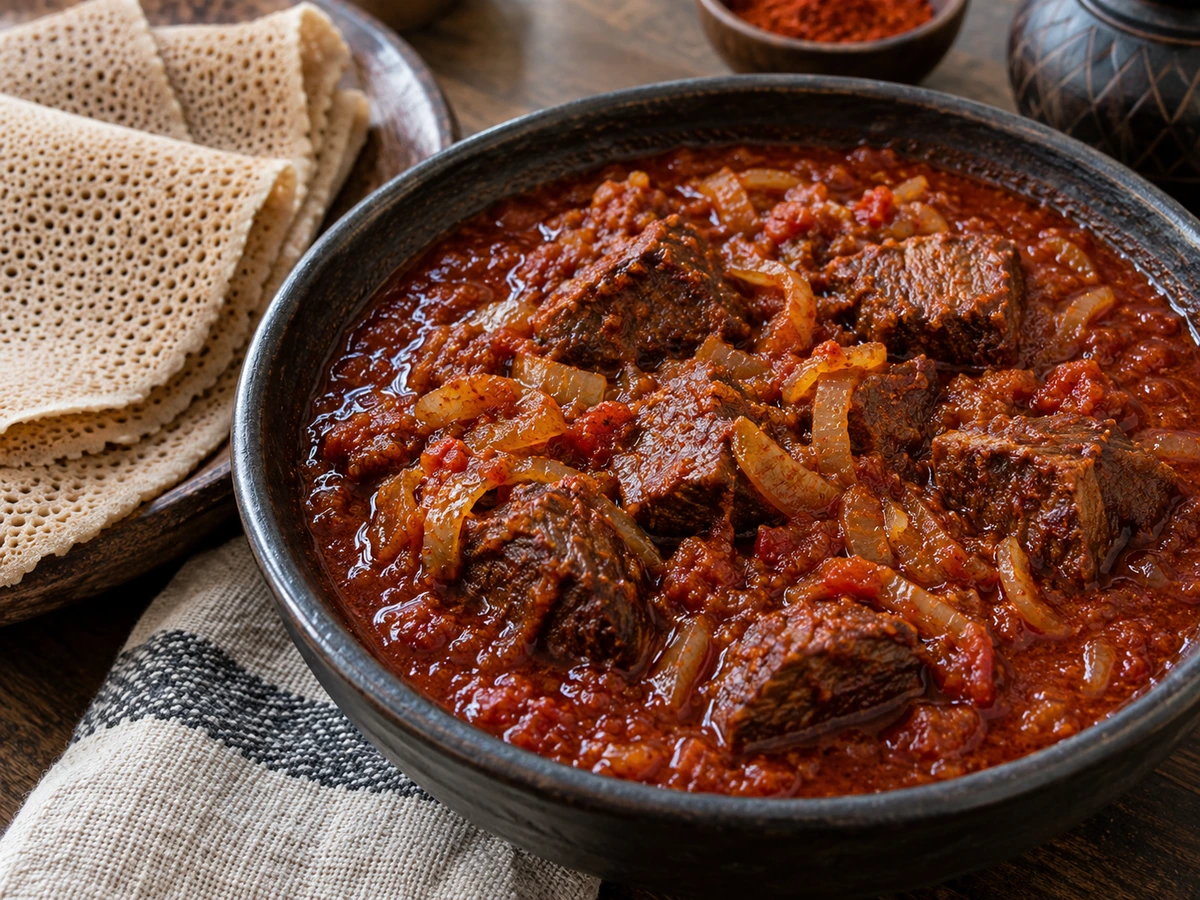
Zigni is one of the most emblematic dishes of Eritrean cuisine and, more broadly, of African cuisine from the Horn of Africa. Rich in spices, flavors, and traditions, this deep red stew is often associated with injerra (a sourdough-risen flatbread), the fermented bread that serves as a base or accompaniment. Zigni is not just a tasty dish: it represents an important part of the culinary, cultural, and family identity of Eritrea, as well as a major reference in the neighboring cuisines of Ethiopia and the region. In this detailed article on zigni and its place in African cuisine, we will explore its origins, ingredients, preparation methods, social uses, symbolic value, and its place in the continent's culinary world. Zigni perfectly illustrates how a recipe can become a marker of identity, a dish for sharing, and a gastronomic heritage passed down from generation to generation.
Prepare this speciality
Choose a detailed recipe, adjust the portions and prepare your ingredients before starting. Our cooking tips and food safety advice complement the steps described in the recipes.
Explore further: Cooking tips · Food hygiene and safety advice.
History and uses
WHAT IS ZIGNI?
Zigni is a spicy stew, generally prepared with meat—often beef, lamb, or sometimes chicken—slow-cooked in a rich sauce of onions, tomatoes, garlic, ginger, and especially a spice blend called berbere (a spice mixture). It is distinguished by its intense red color, its aromatic depth, and its thick texture. A simmered and fragrant dish Zigni is traditionally a dish simmered for a long time so that the meat absorbs all the flavors of the sauce. This slow cooking gives it a great richness of taste. A specialty of the Horn of Africa Although it is particularly linked to Eritrea, zigni is also present in neighboring culinary traditions. This makes it a representative dish of the cuisine of the Horn of Africa.
THE ORIGINS OF ZIGNI
Zigni is an ancient dish, linked to the food practices of the region. A local culinary tradition Its roots are found in the rural and family kitchens of Eritrea, where simple ingredients were transformed into nourishing and tasty dishes. An evolution through spice trade The importance of spices in zigni reflects the historical exchanges between the Horn of Africa, the Red Sea, Arabia, and the Indian Ocean. These networks have enriched local culinary traditions. A dish of identity Over time, zigni has become a symbol of Eritrean cuisine, served in homes, traditional restaurants, and during important moments of conviviality.
THE INGREDIENTS OF ZIGNI
The strength of zigni lies in the quality and combination of its ingredients. The meat Most often, beef or lamb is used, cut into pieces and simmered until tender. Onions Onions are the base of the sauce. They are often cooked for a long time to develop a melting texture and natural sweetness. Tomatoes Tomatoes bring acidity, color, and depth to the sauce. Garlic and ginger These aromatics enhance the dish's fragrance and add warmth to the final taste. BERBERE Berbere is the soul of zigni. This spice blend can contain chili pepper, fenugreek, coriander, cumin, cloves, cardamom, and other local spices. Clarified butter or oil Depending on practices, clarified butter or oil can be used to give body to the preparation.
HOW IS ZIGNI PREPARED?
The preparation of zigni requires time, patience, and a good mastery of spices. Cooking the onions Onions are first cooked for a long time until a very soft base is obtained. Adding aromatics Garlic, ginger, and spices are then incorporated to create the dish's aromatic signature. Cooking the meat The meat is added and gradually simmered to become tender and flavorful. Incorporating tomatoes and berbere Tomatoes and the spice blend are added to give the dish its characteristic red color. Final simmering The whole is left to cook slowly until a thick and well-bound sauce is obtained.
In my books

Continue exploring the continent’s cuisines with Africa at the Table — 54 countries, 54 iconic dishes, by Alioune FALL. This book is in English.
Explore further
ZIGNI AND INJERRA
Zigni is almost always associated with injerra, the emblematic fermented bread of the region. An essential culinary duo Injerra serves as both an accompaniment and an utensil. Zigni is placed on it and consumed together. A sharing experience In traditional meals, everyone often eats from a common dish, which reinforces conviviality and a sense of community. A complementary texture The light acidity of injerra balances the richness of zigni, creating a much-appreciated culinary harmony.
THE PLACE OF ZIGNI IN AFRICAN CUISINE
Zigni occupies an important place in African cuisine, particularly in East African and Horn of Africa cuisines. A cuisine of spices Zigni reflects the great African tradition of spicy, flavorful, and deeply aromatic dishes. A cuisine of simmering Like many African dishes, it relies on slow cooking, which allows flavors to develop and ingredients to tenderize. A cuisine of social connection Zigni is often consumed with family or in groups, which gives it a strong communal dimension.
ZIGNI IN ERITREAN CULTURE
Zigni is not just a dish: it is a cultural symbol. A daily and festive dish It can be found in ordinary meals as well as during festive occasions. A mark of tradition It is passed down from generation to generation as an important element of culinary heritage. A national pride For many Eritreans, zigni represents a part of their identity, just like injerra and other traditional dishes.
NUTRITIONAL VALUE OF ZIGNI
Zigni is a rich and complete dish. Rich in protein Thanks to the meat, it provides a significant amount of protein. Source of energy Associated with injerra, it constitutes a nourishing and energetic meal. Micronutrient intake Spices, tomatoes, and aromatics also provide nutrients and beneficial compounds.
VARIATIONS OF ZIGNI
There are different versions depending on tastes and regions. Beef Zigni This is the most common and appreciated version. Lamb Zigni In some contexts, lamb is used to give a more pronounced flavor. Vegetarian Zigni Meat-free versions also exist, with legumes or vegetables.
ZIGNI IN THE DIASPORA AND CULINARY TOURISM
Zigni has also spread beyond Eritrea. In African restaurants It can be found in Eritrean and Ethiopian restaurants around the world. A dish of discovery For travelers, zigni is a fascinating introduction to the flavors of the Horn of Africa.
CONCLUSION
Zigni is a dish deeply rooted in African cuisine, particularly in Eritrea and the Horn of Africa. Rich, spicy, convivial, and nourishing, it embodies tradition, sharing, and culinary identity. Its place in African gastronomy is important because it shows how local ingredients and spices can create a memorable and symbolic dish.
ENJOY YOUR MEAL! © Photo credit: recettesafricaines.com. All rights reserved.
In the kitchen : Zigni
Recipes from the site to put your knowledge into practice:
Discover these cuisines at a restaurant
Explore our restaurant and caterer directories. Choose your destination and check the establishment’s menu to confirm which dishes are offered and available.
Continue exploring
Enjoy discovering ingredients and African cuisines? Join our newsletter. The illustrated PDF 10 sauces africaines incontournables is in French and is offered after confirming a subscription to the French or bilingual edition.