Emasi
Eswatini
Understanding : Emasi
INTRODUCTION
Emasi is one of the most appreciated and emblematic traditional foods of the Kingdom of Eswatini. A fermented dairy product with a slightly acidic taste and thick texture, emasi holds an important place in daily nutrition, family meals, and the country's culinary heritage. Much more than a simple dairy product, it represents a tradition, a know-how, and a cultural identity deeply linked to rural life and African cuisine. In this detailed article on emasi and its place in African cuisine, we will explore what emasi is, how it is prepared, its nutritional qualities, its role in households, its place in Swazi traditions, and its importance in broader African cuisines. Emasi perfectly illustrates how fermented products play an essential role in African gastronomies, where preservation, transformation, and taste come together.
Where to find it
Look for the exact food-grade form required by the recipe at markets and specialist shops. Check the product name, ingredients, condition and storage instructions.
Explore further: Cooking tips · Food hygiene and safety advice.
History and uses
WHAT IS ESWATINI EMASI?
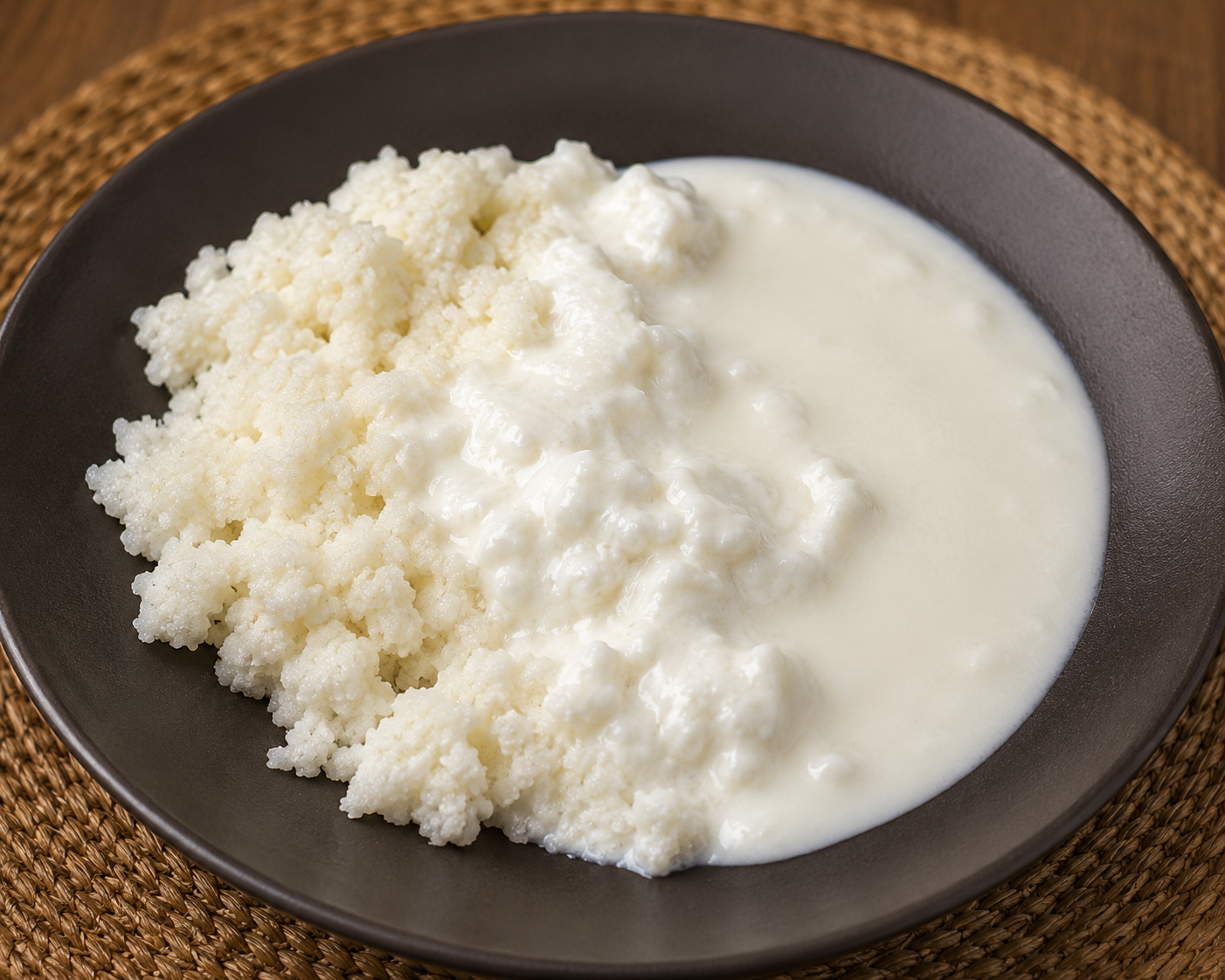
Emasi is a traditional fermented milk consumed in Eswatini. It is obtained from cow's milk, left to ferment naturally until it acquires a thick consistency and a tangy flavor. A traditional dairy product Emasi is a staple food for many families in Eswatini. It can be consumed alone or with other foods such as sorghum, corn, pap (a type of porridge made from maize meal), porridge, or certain vegetables. Natural fermentation Fermentation transforms milk into a more stable, more digestible product with a characteristic taste. This process makes emasi a highly appreciated traditional food in both rural and urban areas.
THE ORIGIN AND TRADITION OF EMASI
Emasi is deeply rooted in Swazi food culture. A pastoral heritage Eswatini has a long tradition of cattle farming. Milk therefore plays an essential role in nutrition and domestic practices. Family transmission The preparation and consumption of emasi are often passed down from generation to generation. Women, in particular, play an important role in the preservation and transformation of milk. A cultural food Emasi is not only nutritious: it is also associated with lifestyles, moments of sharing, and traditional meals.
HOW IS EMASI PREPARED?
The preparation of emasi follows simple but precise practices. Milk collection Fresh milk is first collected from cows raised on farms or in households. Fermentation The milk is left in a suitable container for a certain period. Fermentation can occur naturally thanks to the bacteria present in the milk or in the traditional container. Texture formation Gradually, the milk thickens and becomes slightly acidic. This texture is what characterizes emasi. Consumption Once ready, emasi can be consumed immediately or with other foods. It is often served fresh.
THE PLACE OF EMASI IN AFRICAN CUISINE
Emasi holds an important place in African cuisine, particularly in Southern African cuisines. A common fermented product in Africa Fermented dairy products are present in several regions of the continent. They are appreciated for their preservation, taste, and nutritional value. A cuisine of simplicity and tradition Emasi shows how African communities transform local resources into sustainable and flavorful foods. An essential accompaniment It often accompanies staple foods like cereals, making it a central element of the meal.
In my books

Continue exploring the continent’s cuisines with Africa at the Table — 54 countries, 54 iconic dishes, by Alioune FALL. This book is in English.
Explore further
NUTRITIONAL VALUE OF EMASI
Emasi is recognized for its nutritional qualities. A source of protein Milk provides essential proteins for the body. Important minerals Emasi provides calcium and other nutrients useful for growth and bone health. Improved digestibility Fermentation makes milk easier to digest for some people. Emasi and daily meals in Eswatini Emasi is part of the daily life of many families. A morning food It can be consumed for breakfast with corn or porridge. A lunch or dinner accompaniment It can also be served with other traditional dishes. A product of sharing In households, emasi is often associated with family sharing and conviviality.
EMASI IN SWAZI CULTURE
Emasi is not just a food: it reflects a way of life. A symbol of rurality and domestic wealth Owning cattle and producing emasi is often linked to food autonomy. A place in traditions It can accompany certain family events or traditional ceremonies. A value of identity Emasi is associated with the cultural identity of Eswatini and the continuity of ancestral practices.
COMPARISON WITH OTHER AFRICAN FERMENTED PRODUCTS
Emasi is part of a large family of African fermented products. Similar foods elsewhere in Africa Fermented milks are found in several African countries, with different names, textures, and uses. A common logic Fermentation allows milk to be preserved longer and its flavor to be enriched. African culinary diversity Each region adapts these products to its traditions, resources, and eating habits. Emasi and local agriculture Emasi is linked to livestock farming and rural economies. The role of cattle Milk depends directly on cattle farming, which is an important activity in some areas of the country. A domestic resource Emasi allows locally produced milk to be valorized and losses to be limited. A traditional economy In several communities, it represents a useful resource for both family consumption and local exchanges.
CHALLENGES AND EVOLUTION OF EMASI CONSUMPTION
Like many traditional foods, emasi is undergoing transformations. The influence of modernity Industrial dairy products and new consumption patterns are changing eating habits. Preservation of know-how It is important to maintain traditional fermentation and preparation techniques. Valorization of culinary heritage Emasi can also be highlighted in culinary tourism and local gastronomy.
CONCLUSION
Eswatini emasi is much more than just fermented milk. It is an emblematic product of African cuisine, a symbol of Swazi tradition, and a nourishing, accessible, and culturally important food. Its place in daily meals, in the domestic economy, and in Eswatini's culinary heritage makes it an essential subject for understanding the richness of African food practices.
ENJOY YOUR MEAL! © Photo credit: recettesafricaines.com. All rights reserved.
In the kitchen : Emasi
Recipes from the site to put your knowledge into practice:
Discover these cuisines at a restaurant
Explore our restaurant and caterer directories. Choose your destination and check the establishment’s menu to confirm which dishes are offered and available.
Continue exploring
Enjoy discovering ingredients and African cuisines? Join our newsletter. The illustrated PDF 10 sauces africaines incontournables is in French and is offered after confirming a subscription to the French or bilingual edition.