Nyembwe
Gabon, Central Africa
Understanding : Nyembwe
INTRODUCTION
Nyembwe is one of the most emblematic dishes of Central Africa, and particularly of Gabon, where it holds a major place in traditional gastronomy. Prepared with palm nut sauce or palm oil, depending on regional variations, nyembwe is much more than a simple dish: it represents a cultural marker, a symbol of identity, and a central element of family and ceremonial meals. Its aromatic richness, creamy texture, and deep flavor make it a particularly appreciated dish in many African households. In this detailed description, we will explore the origin of nyembwe, its composition, preparation methods, variations, social importance, and its place in African cuisine. This dish perfectly illustrates how African culinary traditions transform local ingredients into generous, nourishing, and memory-rich recipes.
Prepare this speciality
Choose a detailed recipe, adjust the portions and prepare your ingredients before starting. Our cooking tips and food safety advice complement the steps described in the recipes.
Explore further: Cooking tips · Food hygiene and safety advice.
History and uses
ORIGIN AND SIGNIFICANCE OF NYEMBWE
In several Central African culinary contexts, the word nyembwe refers to a preparation made from the fruit of the oil palm or its pulp. In some regions, the term more specifically designates the palm nut sauce used to accompany chicken, fish, meat, or other staple foods. In Gabon, nyembwe is particularly famous in the form of chicken nyembwe, a very popular festive and traditional dish.
A DISH DEEPLY ROOTED IN GABONESE TRADITION
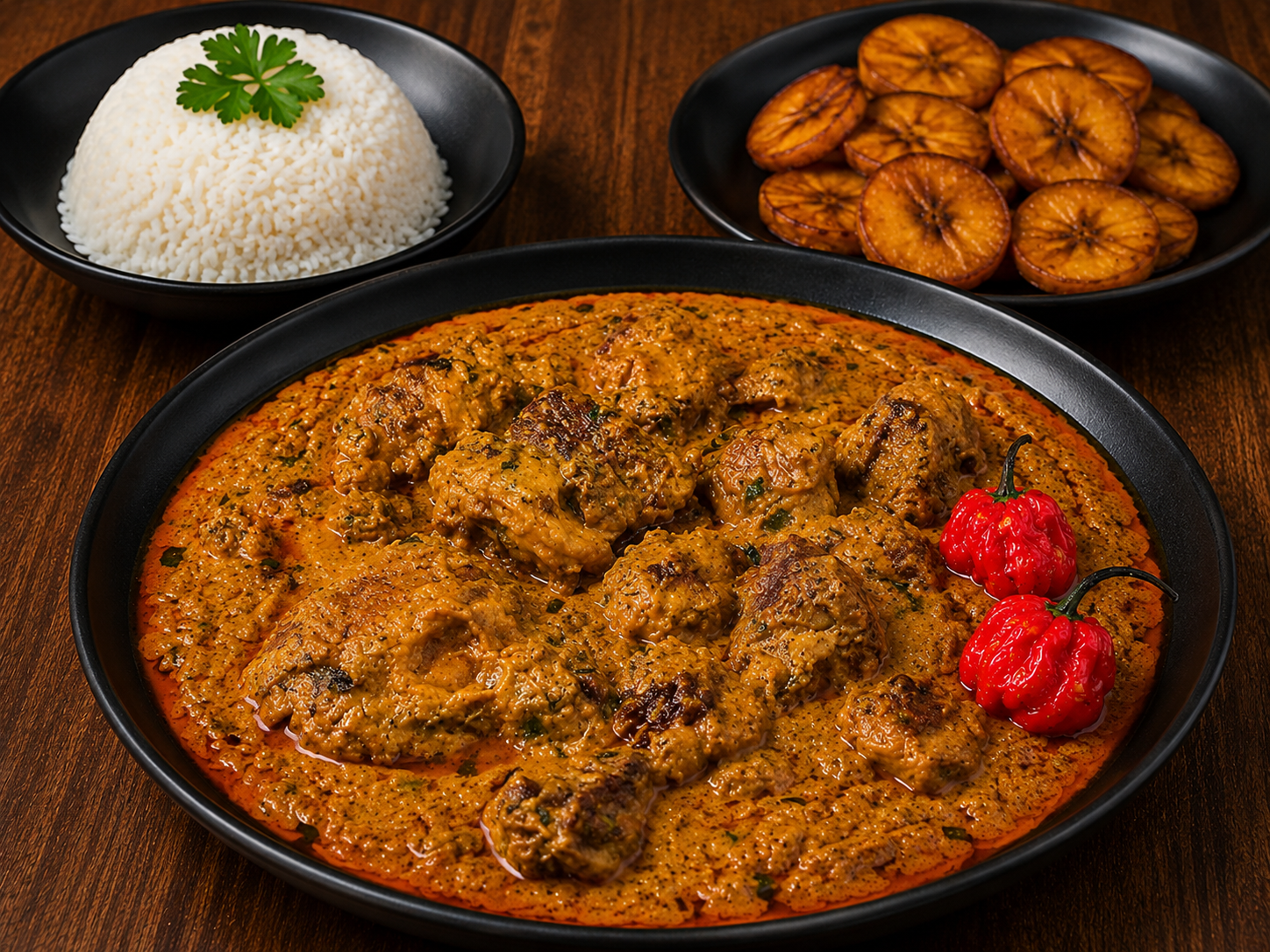
Nyembwe is one of those recipes that span generations. It is associated with festive meals, large family gatherings, and moments of sharing. In the Gabonese culinary imagination, it symbolizes conviviality, abundance, and the know-how of the women and men who have passed down the secrets of local cuisine. A base from the oil palm The particularity of nyembwe lies in the use of the oil palm, an abundant resource in tropical Africa. The fruit of the palm, once processed, yields a sauce rich in color and flavor. This sauce is the base of many traditional preparations in several Central and West African countries. Composition of nyembwe Nyembwe can be prepared in several ways, depending on the region, families, and occasions. However, there are generally a few essential ingredients that give it its identity. Main ingredients Among the most common elements are: • oil palm fruits or their pulp • red palm oil • chicken, fish, or sometimes meat • onion • garlic • chili pepper • salt • local spices • sometimes tomato, depending on modern variations A thick and flavorful sauce The nyembwe sauce has a particular consistency. It is often thick, creamy, and very fragrant. Its reddish-orange color comes from palm oil or palm nut pulp. This visual and gustatory richness makes it an immediately recognizable dish. Cuisine based on local products Nyembwe perfectly illustrates the ingenuity of traditional African cuisines: from simple, local, and available ingredients, a complex-tasting and highly nourishing dish is obtained. This is one of the reasons why it holds such an important place in African cuisine.
TRADITIONAL PREPARATION OF NYEMBWE
The preparation of nyembwe can vary, but it generally follows several precise steps. Culinary know-how is often transmitted orally, from generation to generation. Extraction or preparation of the sauce In traditional versions, palm fruits are cooked and then pounded to extract the pulp. This is then mixed with water and filtered to obtain an oily base or a rich sauce. In more modern versions, good quality palm oil is used directly. Cooking meat or fish Chicken is often the preferred choice, especially in the famous chicken nyembwe. The meat is first cleaned and seasoned, then browned or lightly boiled before being added to the sauce. Assembling flavors Onion, garlic, chili pepper, and spices are added to the sauce to enhance its aroma. The mixture simmers slowly until the flavors fully develop. This gentle cooking results in a homogeneous, dense, and flavorful sauce.
NYEMBWE IN TRADITIONAL MEALS
Nyembwe is not an ordinary dish. It is often reserved for important occasions or served to honor guests. Its presence at the table has strong symbolic value. A festive dish In many Gabonese families, nyembwe is prepared for weddings, baptisms, religious celebrations, or Sunday meals. It represents a generous dish, intended to mark major occasions. A dish for sharing Nyembwe is rarely eaten alone. It is usually accompanied by cassava, rice, plantain, cassava stick (bâton de manioc), or other starches. It is shared with family or friends, in a strong spirit of conviviality. A symbol of hospitality Serving nyembwe to a guest is a way of showing them respect and consideration. The dish embodies abundance and human warmth, two important values in African culinary culture.
In my books

Continue exploring the continent’s cuisines with Africa at the Table — 54 countries, 54 iconic dishes, by Alioune FALL. This book is in English.
Explore further
REGIONAL VARIATIONS OF NYEMBWE
Like many traditional African dishes, nyembwe has several variations depending on the country and region. Gabonese nyembwe In Gabon, it is often associated with chicken nyembwe. This version is one of the most well-known and representative of the national culinary heritage. The sauce is dense, fragrant, and enhanced by slow cooking. Similar preparations in other countries Similar recipes are found in other Central African countries such as Cameroon, Equatorial Guinea, or Congo. The names may vary, but the principle remains similar: a sauce made from palm oil, serving as a central element of the meal. Modern adaptations Today, some recipes incorporate more tomato, broth, or new ingredients to adapt to contemporary tastes. Despite these adaptations, the spirit of the dish remains the same: a rich, fragrant sauce rooted in tradition.
THE PLACE OF NYEMBWE IN AFRICAN CUISINE
Nyembwe holds a very special place in African cuisine, as it represents several essential dimensions: heritage, identity, terroir, and creativity. An example of oil palm cuisine African cuisine has long used oil palm in various forms. Nyembwe is one of its most famous expressions. It shows how a local ingredient can become the heart of an emblematic dish. A terroir cuisine Nyembwe belongs to the large family of African terroir cuisines. It relies on locally available resources and a fine knowledge of natural products. This proximity to the land and forest gives it strong authenticity. A representative dish of Central Africa While some African recipes are known continent-wide, nyembwe particularly represents Central Africa. It testifies to the culinary richness of this region, often less publicized than other African culinary traditions, but just as rich. A culinary heritage to be promoted In the current context, where local cuisines are experiencing renewed interest, nyembwe deserves to be further promoted. It can be presented in restaurants, cultural events, and initiatives promoting African heritage.
NUTRITIONAL VALUE AND GASTRONOMIC INTEREST
Nyembwe is not only tasty, it is also nourishing. Its nutritional interest varies according to the recipe, but it generally provides energy and essential nutrients. An energetic dish Palm oil is rich in calories and lipids, making it an important source of energy. Combined with chicken, fish, or meat, it makes for a substantial meal. Deep and complex flavors From a gastronomic perspective, nyembwe seduces with its deep taste, velvety texture, and characteristic aroma. It is a dish that leaves a lasting impression and reflects the richness of traditional African cuisine. A balanced cuisine As with many traditional dishes, the balance depends on the accompaniments. Served with cassava, rice, or plantain, nyembwe becomes a complete meal, suitable for family and festive uses.
WHY IS NYEMBWE SO FASCINATING?
Nyembwe is fascinating because it is both simple and refined, local and universal, traditional and still alive. An identity dish For many Gabonese, nyembwe is more than a dish: it is a part of their identity. It recalls childhood, family, celebrations, and the flavors of the country. A recipe that tells a story Each preparation of nyembwe tells a story of transmission, territory, and culinary memory. It is a dish that carries the voice of ancestors and the creativity of current generations. A showcase of African cuisine In African gastronomy, nyembwe plays an important role in showing the diversity, sophistication, and richness of the continent's culinary traditions. It deserves to be known beyond African borders.
CONCLUSION
Nyembwe is one of the most representative dishes of Gabonese cuisine and, more broadly, of Central African cuisine. Prepared with oil palm or palm nut sauce, it embodies generosity, transmission, know-how, and rootedness in the terroir. Its place in family meals, festivities, and ceremonies makes it a dish of strong cultural value. Understanding nyembwe means understanding a part of the culinary soul of Gabon and Central Africa. It also means recognizing the richness of African traditions, capable of transforming local products into emblematic dishes, rich in history and identity.
In the kitchen : Nyembwe
Recipes from the site to put your knowledge into practice:
Discover these cuisines at a restaurant
Explore our restaurant and caterer directories. Choose your destination and check the establishment’s menu to confirm which dishes are offered and available.
Continue exploring
Enjoy discovering ingredients and African cuisines? Join our newsletter. The illustrated PDF 10 sauces africaines incontournables is in French and is offered after confirming a subscription to the French or bilingual edition.