Domoda
Gambia, West Africa
Understanding : Domoda
INTRODUCTION
Domoda is one of the most emblematic dishes of West African cuisine, and particularly of Gambia, where it is considered an essential national dish. Rich, flavorful, nourishing, and deeply rooted in local culinary traditions, domoda is a thick sauce made from peanut paste, usually served with rice, meat or fish, and accompanied by vegetables. It perfectly illustrates the ability of African cuisines to transform simple ingredients into generous, balanced, and identity-rich dishes. In this detailed description, we will explore the origin of domoda, its ingredients, its preparation, its variations, its social importance, and its place in African cuisine. This dish is an excellent example of the rich African gastronomy, where peanuts, vegetables, spices, and animal proteins combine to create a complete and deeply comforting meal.
Prepare this speciality
Choose a detailed recipe, adjust the portions and prepare your ingredients before starting. Our cooking tips and food safety advice complement the steps described in the recipes.
Explore further: Cooking tips · Food hygiene and safety advice.
History and uses
ORIGIN AND SIGNIFICANCE OF DOMODA
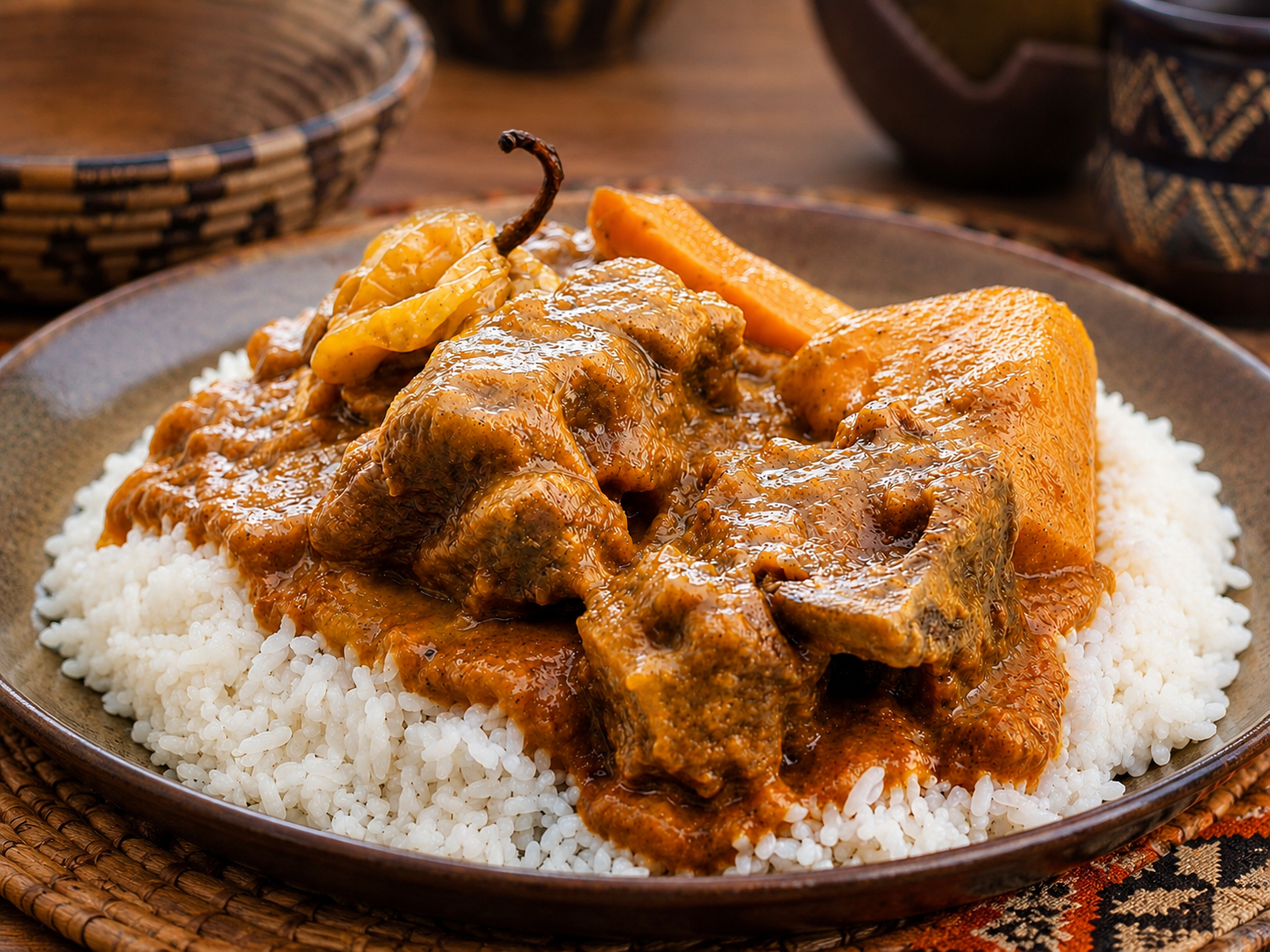
The word domoda is primarily associated with Gambia, where it refers to a peanut-based sauce that has become emblematic of the country. In the West African region, there are several similar dishes based on the same culinary logic: a creamy, fragrant, and slightly sweet-savory sauce, prepared with peanut paste and served with a cereal or starchy base. A dish deeply linked to Gambian identity In Gambia, domoda is one of the most popular dishes. It is often prepared for family meals, special occasions, or simply to feed the household with a substantial and universally appreciated dish. It is also present in the collective memory as one of the symbols of national gastronomy. A recipe derived from West African traditions Domoda belongs to the large family of peanut-based dishes found in several West African countries. The cultivation of peanuts, highly developed in this region, has strongly influenced culinary practices. Domoda is therefore both local and regional, specific to Gambia while belonging to a broader African culinary heritage.
THE INGREDIENTS OF DOMODA
One of the charms of domoda is its simple yet rich composition. Each ingredient plays a role in the overall balance of the dish. Basic ingredients Typically, you will find: • peanut paste • meat, often beef, chicken, or lamb • fish in some variations • tomatoes or tomato paste • onions • garlic • chili pepper • salt • carrots • potatoes • cabbage, depending on the version • water or broth • sometimes local spices
A THICK AND NUTRITIOUS SAUCE
Peanut paste gives domoda its creamy texture and characteristic taste. Combined with tomatoes and vegetables, it produces a thick, rich, and warm sauce, ideal for serving with rice. A balance of proteins, vegetables, and starches Domoda is a complete dish. It combines animal proteins, vegetable fats, carbohydrates, and vegetables. This is one of the reasons why it is so popular in African households: it is very nourishing while remaining flavorful.
TRADITIONAL PREPARATION OF DOMODA
The preparation of domoda varies slightly depending on families and regions, but it relies on common steps that ensure the success of the dish. Cooking the aromatic base One often starts by sautéing onions, garlic, and sometimes chili pepper in a little oil. This step helps develop the basic aromas. Adding meat or fish The meat is then added and lightly browned or simmered. It absorbs the flavors of the spices and aromatics before being covered with water or broth. Incorporating peanut paste Peanut paste is diluted then gradually incorporated to obtain a homogeneous sauce. This is the most important step, as it gives domoda its richness and consistency. Slow cooking with vegetables The vegetables are then added, and cooking continues over low heat. This slow cooking allows the sauce to thicken and the flavors to blend harmoniously. Serving with rice Traditionally, domoda is served with white rice. The rice absorbs the sauce and balances the aromatic intensity of the dish.
VARIATIONS OF DOMODA
Like many African dishes, domoda has several variations depending on regions, families, and available ingredients. Chicken domoda This is one of the most common versions. Chicken brings a mild flavor that pairs perfectly with the peanut sauce. Beef domoda This version is more robust and often richer in taste. It is appreciated for its nourishing character. Fish domoda In areas near rivers or the coast, fish is used instead of meat. It brings a lighter dimension to the dish. Modern adaptations Today, some recipes add more tomatoes, various vegetables, or new spices. Despite these adaptations, the spirit of domoda remains the same: a generous and flavorful peanut sauce.
In my books
Explore Senegalese cooking with Le Sénégal à table, my collection of 150 recipes, stories and traditions to share. This book is in French, by Alioune FALL.
Explore further
DOMODA IN MEALS AND SOCIAL LIFE
Domoda is not just an everyday dish. It also plays an important role in moments of sharing and family traditions. A convivial dish Domoda is often served during family or friends' meals. Its preparation and tasting invite sharing and conviviality. An economical and accessible dish Thanks to the availability of peanuts in many West African regions, domoda has remained a relatively accessible dish. It can be prepared with simple ingredients while being very nourishing. A symbol of generosity Serving domoda to guests is a way to show hospitality. The dish is often associated with generosity, family warmth, and abundance.
THE PLACE OF DOMODA IN AFRICAN CUISINE
Domoda holds an important place in African cuisine, as it reflects several essential characteristics of the continent's gastronomy. A peanut dish Peanuts are a major ingredient in African cuisine. They are used in many dishes in several countries. Domoda is one of its most famous expressions in Gambia. A sauce-based cuisine African cuisine places great importance on sauces. Domoda is fully in line with this tradition, where the sauce is not just an accompaniment, but the heart of the meal. A recognized regional dish Although it is very closely linked to Gambia, domoda is appreciated in a large part of West Africa. It therefore contributes to the regional culinary identity and the circulation of gastronomic traditions. A heritage value Domoda represents a precious culinary heritage. It bears witness to a history of transmission, adaptation, and creativity. It is a dish that tells the story of the link between the land, agricultural cultures, and family practices.
NUTRITIONAL VALUE AND GASTRONOMIC INTEREST
Domoda is appreciated not only for its taste but also for its nutritional value. An energy-rich dish Thanks to peanuts, domoda provides lipids, vegetable proteins, and high energy density. This makes it an ideal dish for a complete meal. A balanced diet Accompanied by rice and vegetables, domoda offers a good balance of proteins, carbohydrates, and fiber. It can constitute a very satisfying meal. A recognizable flavor From a gastronomic point of view, domoda seduces with its creamy character, its slightly spicy sweetness, and its aromatic depth. It is a dish that is both comforting and robust.
WHY IS DOMODA SO FASCINATING?
Domoda is fascinating because it embodies the very essence of many African cuisines: simplicity of ingredients, richness of flavors, conviviality, and cultural identity. An identity dish For Gambians, domoda is more than a meal: it is a national symbol. It evokes family, tradition, and cultural continuity. A recipe that travels Domoda, like other peanut-based African dishes, is appreciated far beyond its original borders. It travels with migrations, diasporas, and culinary curiosity. An ambassador of African cuisine Through domoda, we discover an important facet of African cuisine: its ability to transform local ingredients into memorable, identity-rich, and universally appreciated dishes.
CONCLUSION
Domoda is an emblematic dish of Gambia and a treasure of African cuisine. Prepared with peanut paste, meat or fish, vegetables, and spices, it embodies the generosity, conviviality, and richness of West African culinary traditions. Its place in African cuisine is essential, as it represents both a strong local heritage and an example of continental gastronomic creativity. Understanding domoda means understanding the value of African local cuisines, their role in social life, and their importance in cultural transmission. It also means recognizing that behind a seemingly simple dish lies a whole history of territory, memory, and sharing.
ENJOY YOUR MEAL! © Photo credit: recettesafricaines.com. All rights reserved.
In the kitchen : Domoda
Recipes from the site to put your knowledge into practice:
Discover these cuisines at a restaurant
Explore our restaurant and caterer directories. Choose your destination and check the establishment’s menu to confirm which dishes are offered and available.
Continue exploring
Enjoy discovering ingredients and African cuisines? Join our newsletter. The illustrated PDF 10 sauces africaines incontournables is in French and is offered after confirming a subscription to the French or bilingual edition.