Sobolo
Ghana, West and North Africa
Understanding : Sobolo
🍹 INTRODUCTION
Sobolo is a very popular traditional drink in West Africa, particularly in Ghana, Nigeria, and several neighboring countries where hibiscus-based recipes are appreciated for their refreshing taste and potential benefits. Prepared mainly from dried hibiscus sabdariffa flowers, often called bissap in other French-speaking regions, sobolo is distinguished by its deep red color, its slightly tart aroma, and its ability to accompany both daily meals and special occasions. In African cuisine, it holds an important place as a drink for conviviality, celebration, and natural refreshment.
In this detailed article, we will discover what sobolo is, its origin, its ingredients, its variations, its social uses, and its place in African cuisine. This traditional drink perfectly illustrates the richness of African culinary know-how, capable of transforming local plants into emblematic drinks, appreciated for their taste and cultural identity.
Prepare this speciality
Choose a detailed recipe, adjust the portions and prepare your ingredients before starting. Our cooking tips and food safety advice complement the steps described in the recipes.
Explore further: Cooking tips · Food hygiene and safety advice.
History and uses
🌺 ORIGIN AND MEANING OF SOBOLO
Sobolo is a drink made from the infusion of dried hibiscus flowers. This plant, widely cultivated in tropical and subtropical zones, has long been used in various African cultures to prepare drinks, syrups, and even some traditional remedies. Sobolo is best known as an emblematic drink of Ghana, but similar preparations exist in several other African countries under different names. A DRINK ROOTED IN LOCAL TRADITIONS Sobolo is one of those drinks that transcend generations. It is prepared at home, sold on the street, served at festive events, and enjoyed daily. Its popularity stems from its simplicity, pleasant taste, and image as a natural drink. A STRONG CULTURAL IDENTITY In many African homes, sobolo is not just a thirst-quenching drink. It is also associated with hospitality, sharing, and convivial moments. Serving sobolo to guests means offering a typically local drink, full of character and freshness.
🍷THE INGREDIENTS OF SOBOLO
Sobolo can be prepared in several ways depending on the region and family, but its base generally remains the same. Main ingredients Often found are:
- dried hibiscus flowers
- water
- ginger
- sugar or honey
- sometimes lemon or citrus juice
- cloves
- sometimes nutmeg
- mint or other aromatics
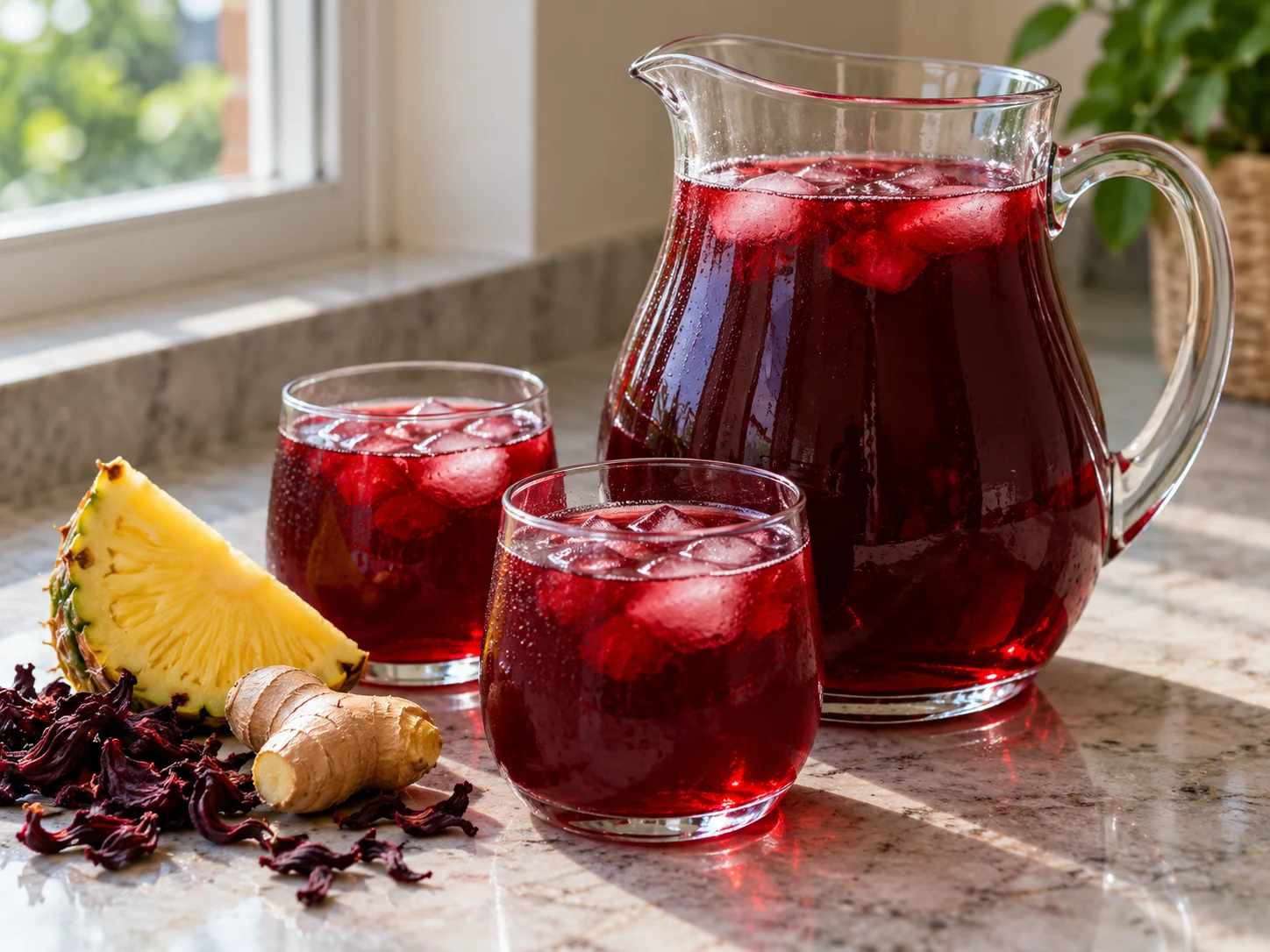
- sometimes local spices depending on variations An aromatic and balanced drink Hibiscus gives sobolo its characteristic red color and natural acidity. Ginger brings spiciness and freshness, while sugar or honey sweetens the whole. The result is a complex, balanced, and pleasant drink to enjoy chilled. A simple but refined product Even with modest ingredients, sobolo offers a rich taste experience. It is a perfect illustration of African culinary genius, which knows how to make the most of locally available resources.
🥤TRADITIONAL PREPARATION OF SOBOLO
The preparation of sobolo generally follows several simple but important steps. Infusion of hibiscus flowers The dried flowers are first washed, then boiled in water for several minutes. This step extracts the intense red color and tart flavors of the plant. Adding ginger and spices Ginger, cloves, and sometimes other spices are added to flavor the drink. These ingredients bring depth and a slight tonic effect. Filtering and sweetening Once the infusion is complete, the liquid is filtered to remove plant residues. Sugar, honey, or another sweetener is then added according to the desired taste. Cooling Sobolo is generally served cold. It can be stored in the refrigerator or in a cooler, especially in hot countries where it is consumed as a refreshing drink.
🌍 SOBOLO IN SOCIAL USES
Sobolo is not only consumed to quench thirst. It also plays an important social role in daily and festive life. A convivial drink Sobolo is often offered during visits, family meals, parties, and ceremonies. It contributes to the convivial atmosphere of gatherings and symbolizes the attention paid to guests. A street and market drink In many African cities, sobolo is sold by street vendors or in markets. This presence in public spaces testifies to its popularity and accessibility. A symbol of sharing Like many traditional African drinks, sobolo is associated with the idea of sharing. It is often prepared in large quantities to be distributed to several people, thus reinforcing the communal dimension of its consumption.
In my books

Continue exploring the continent’s cuisines with Africa at the Table — 54 countries, 54 iconic dishes, by Alioune FALL. This book is in English.
Explore further
🍽️ SOBOLO IN AFRICAN CUISINE
The place of sobolo in African cuisine is important, as it represents both a traditional drink, a local drink, and a product of popular culture. A complementary drink for meals Sobolo frequently accompanies rich or spicy African dishes. Its freshness and acidity balance the food, especially dishes based on rice, meat, fish, or spicy sauces. An emblematic hibiscus drink Hibiscus holds a prominent place in several African cuisines. Sobolo is one of its most well-known expressions. It shows how a local plant can become a central element of culinary identity. A recognized regional recipe Even though sobolo is primarily associated with Ghana, it is part of a larger set of African drinks based on flowers, spices, and medicinal plants. It thus contributes to the richness of continental gastronomy. A product undergoing valorization With the growing interest in natural, artisanal, and additive-free drinks, sobolo is experiencing renewed recognition. It attracts both tradition enthusiasts and consumers looking for healthy and authentic drinks.
🌿 NUTRITIONAL VALUE AND POTENTIAL BENEFITS
Sobolo is often appreciated for its taste qualities, but also for the properties traditionally associated with its ingredients. A naturally plant-based drink Made from hibiscus flowers and ginger, sobolo is a plant-based, non-alcoholic drink that is easy to prepare. This makes it accessible to a wide audience. A source of hydration In hot climates, sobolo is an excellent drink for hydration and refreshment. It is often consumed on sunny days or after a hearty meal. Wellness traditions In popular culture, hibiscus and ginger are sometimes associated with beneficial effects. Without entering into medical claims, it is clear that sobolo is perceived as a wellness drink in several African traditions.
⭐ WHY IS SOBOLO SO FASCINATING?
Sobolo fascinates because it brings together taste, culture, simplicity, and identity. An identity drink For many people in West Africa, sobolo is linked to childhood, family celebrations, markets, and daily life. It is part of the collective taste memory. A colorful and attractive drink Its intense red color immediately catches the eye. Sobolo is as beautiful to look at as it is pleasant to drink, which enhances its appeal. An ambassador of African cuisine Sobolo perfectly represents the creativity of African cuisine. From a simple dried flower, a delicious, refreshing, and deeply cultural drink is obtained.
✅ Conclusion Sobolo is much more than just a hibiscus-based drink. It is an emblematic traditional drink of West Africa, rich in history, conviviality, and flavors. Its place in African cuisine is important, as it illustrates the ingenuity of local recipes and the value of the continent's natural products. As a drink for celebration, sharing, and refreshment, sobolo continues to charm many generations. It embodies the richness of African culinary culture and deserves to be better known, valued, and transmitted.
In the kitchen : Sobolo
Recipes from the site to put your knowledge into practice:
Discover these cuisines at a restaurant
Explore our restaurant and caterer directories. Choose your destination and check the establishment’s menu to confirm which dishes are offered and available.
Continue exploring
Enjoy discovering ingredients and African cuisines? Join our newsletter. The illustrated PDF 10 sauces africaines incontournables is in French and is offered after confirming a subscription to the French or bilingual edition.