Lekhotloane
Lesotho
Understanding : Lekhotloane
INTRODUCTION
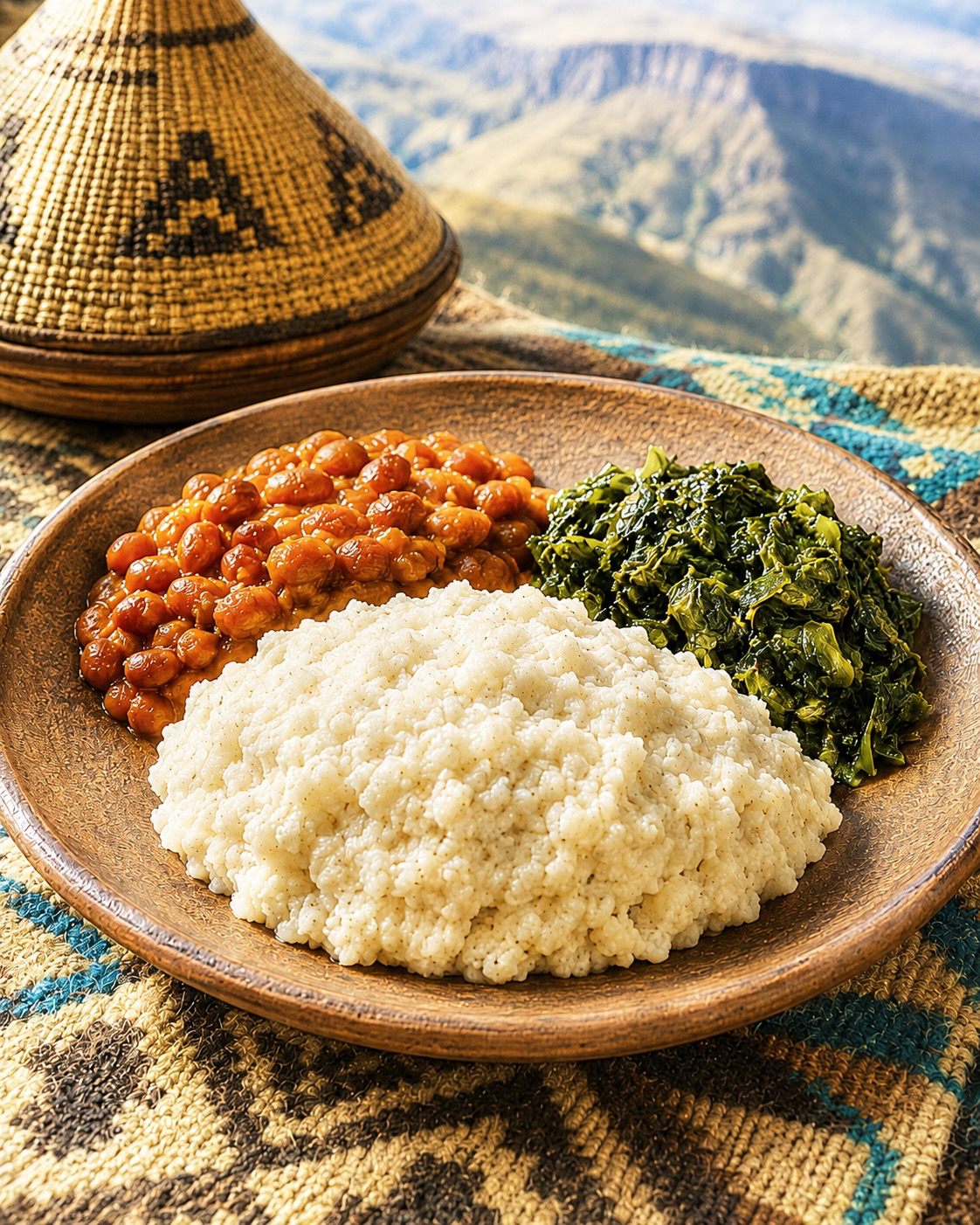
Lekhotloane is a traditional Southern African food, particularly associated with certain communities in Lesotho and neighboring regions. Less known internationally than maize or sorghum, it nevertheless holds an important place in local eating habits. Depending on the context, the term can refer to a preparation, a plant product, or a traditional local dish, integrated into simple, nourishing cuisine closely linked to the seasons.
In this detailed article, we will explore what lekhotloane is, its characteristics, its culinary uses, its preparation methods, its role in daily life, and especially its place in African cuisine. This food or dish reflects the richness of Southern African culinary traditions, where local resources are transformed into complete, healthy, and convivial meals.
Prepare this speciality
Choose a detailed recipe, adjust the portions and prepare your ingredients before starting. Our cooking tips and food safety advice complement the steps described in the recipes.
Explore further: Cooking tips · Food hygiene and safety advice.
History and uses
🌍 ORIGIN AND MEANING OF LEKHOTLOANE
Lekhotloane is part of the culinary world of Southern African peoples, where earth products, cereals, and vegetables play a central role. A local product Lekhotloane is above all linked to a rural food culture, based on proximity to nature and the transformation of local resources. It symbolizes a cuisine of adaptation and survival, but also of identity. A local name Like many traditional African foods, its name varies according to languages, villages, and communities. This shows the linguistic and cultural diversity of the region. A cultural landmark Lekhotloane is more than a food: it is part of the culinary heritage passed down from generation to generation, often through words, example, and daily gestures.
🌱 CHARACTERISTICS AND POSSIBLE INGREDIENTS
Lekhotloane (a traditional Southern African food) can refer, according to local traditions, to a plant product or a preparation made from cereals or legumes. The most common bases According to culinary interpretations, it can be found in the form of:
- local vegetable
- edible seed or plant
- leaf-based preparation
- dish cooked with maize or sorghum
- sauce accompaniment A seasonal cuisine Its availability often depends on the seasons and agricultural conditions. In rural areas, it is consumed when abundant, then dried or preserved for other periods. A simple preparation Lekhotloane is generally integrated into a sober cuisine, with few ingredients but great care in cooking and seasoning.
🔥 PREPARATION METHODS OF LEKHOTLOANE
Preparation depends on the form in which it is used: vegetable, leaf, seed, or basic ingredient. Cleaning and sorting Products are first sorted and washed carefully to remove impurities. Slow cooking Lekhotloane is often cooked gently in water, sometimes with onions, salt, and a little oil. This slow cooking preserves its texture and taste. Association with a sauce It can be served with a vegetable, tomato, meat, or bean sauce. In some families, it accompanies a cereal dish like sorghum or maize. Transformation into a complete dish Thanks to the addition of vegetable or animal proteins, it becomes a balanced meal, suitable for daily consumption.
👨👩👧 LEKHOTLOANE IN DAILY LIFE
Lekhotloane holds an important place in family and community cuisine. A daily food In households, it is consumed as a simple, nourishing, and economical meal. It meets the needs of rural families. A cuisine of sharing Like many African dishes, it is often prepared in quantity to be shared among several people. A transmitted heritage Young people learn to recognize, prepare, and cook lekhotloane through the experience of elders. This contributes to the transmission of culinary heritage.
In my books

Continue exploring the continent’s cuisines with Africa at the Table — 54 countries, 54 iconic dishes, by Alioune FALL. This book is in English.
Explore further
🍲 THE PLACE OF LEKHOTLOANE IN AFRICAN CUISINE
Lekhotloane has an interesting place in African cuisine because it illustrates several major principles of this gastronomy. A cuisine of local resources African cuisine values locally available products. Lekhotloane is a good example of this, as it is linked to local plants and foods. A sober but nutritious cuisine Like other traditional preparations, it shows that a simple dish can be both healthy, filling, and culturally strong. A cuisine adapted to the environment In Southern Africa, climatic and agricultural conditions strongly influence eating habits. Lekhotloane is part of this logic of adaptation. Regional diversity It contributes to the richness of African cuisines, where each region develops its own ingredients, techniques, and tastes.
🌾 NUTRITIONAL VALUE OF LEKHOTLOANE
The exact nutritional value depends on its precise nature, but several general qualities can be noted. Fibers If it is a vegetable or a leaf, it can provide a good amount of fiber, useful for digestion. Vitamins Local plant products often contain vitamins A, C, or B-group vitamins, depending on their variety. Minerals Lekhotloane can contribute to the intake of iron, calcium, magnesium, or potassium, especially if consumed fresh and minimally processed. Moderate energy intake Associated with maize, sorghum, or beans, it integrates into complete but generally unindustrialized meals.
🌍 CULTURAL AND HERITAGE IMPORTANCE
Lekhotloane is not just food: it is also an element of identity. A culinary memory It is part of the tastes and memories of local communities. Its consumption often evokes childhood, family, and the rural world. A link with the land Like many traditional African foods, it recalls the close relationship between humans and their environment. A heritage to preserve The modernization of food can weaken the transmission of these traditional products. Documenting and valuing them is therefore essential.
✅ Conclusion
Lekhotloane occupies a discreet but significant place in African cuisine, especially in Southern Africa. A local, seasonal, and transmitted food, it embodies a cuisine based on local resources, simplicity, and nutritional balance.
Its place in African gastronomy shows how diverse, inventive, and deeply linked to lifestyles the continent's culinary traditions are. Lekhotloane deserves to be better known as a symbol of this richness.
ENJOY YOUR MEAL! © Photo credit: recettesafricaines.com. All rights reserved.
In the kitchen : Lekhotloane
Recipes from the site to put your knowledge into practice:
Discover these cuisines at a restaurant
Explore our restaurant and caterer directories. Choose your destination and check the establishment’s menu to confirm which dishes are offered and available.
Continue exploring
Enjoy discovering ingredients and African cuisines? Join our newsletter. The illustrated PDF 10 sauces africaines incontournables is in French and is offered after confirming a subscription to the French or bilingual edition.