Zebu
Africa
Understanding : Zebu
🐂 INTRODUCTION
The zebu is an emblematic animal in many regions of Africa, particularly East Africa, the Horn of Africa, Southern Africa, and Madagascar. Recognizable by its fatty hump on its back and its long horns, it plays a central role in rural economies, pastoral traditions, and African food systems. The zebu is not just a livestock animal: it is also a symbol of wealth, prestige, fertility, and cultural identity in many societies.
In this detailed article, we will discover what the zebu is, its characteristics, its role in African societies, its culinary use, its nutritional value, and especially its place in African cuisine. This animal perfectly illustrates the importance of livestock in the continent's cultures, where food, social symbolism, and economy are deeply intertwined.
Where to find it
Look for the exact food-grade form required by the recipe at markets and specialist shops. Check the product name, ingredients, condition and storage instructions.
Explore further: Cooking tips · Food hygiene and safety advice.
History and uses
🌍 ORIGIN AND CHARACTERISTICS OF THE ZEBU
The zebu belongs to the group of domestic cattle adapted to hot and sometimes arid climates. Cattle adapted to tropical zones The zebu tolerates heat, long periods of drought, and harsh environments well. This resilience makes it a very important animal in semi-arid regions. The characteristic hump Its dorsal hump contains a fat reserve, which is a particular adaptation to its environment. Horns and a recognizable appearance Its horns, coat, and silhouette make it an immediately identifiable animal in African landscapes.
🐄 THE ZEBU IN AFRICAN SOCIETIES
The zebu occupies a much broader place than that of a simple livestock animal. A living wealth In many African cultures, owning zebus is a sign of wealth and social status. A ritual animal The zebu is involved in ceremonies, weddings, traditional rites, and certain symbolic offerings. A pastoral pillar It is at the heart of pastoral societies, where livestock structures the way of life, mobility, and social organization.
🍖 THE ZEBU IN AFRICAN CUISINE
The zebu plays a major role in African food, especially through its meat, milk, and sometimes its offal. Zebu meat Zebu meat is consumed in many African countries. It is often firmer and more flavorful than other beef, which gives it a particular character. Offal Liver, tripe, kidneys, and tongue are part of traditional cuisine in several regions. Milk In pastoral cultures, zebu milk is also very important and can be consumed fresh, fermented, or processed.
🔥 CULINARY PREPARATION OF ZEBU
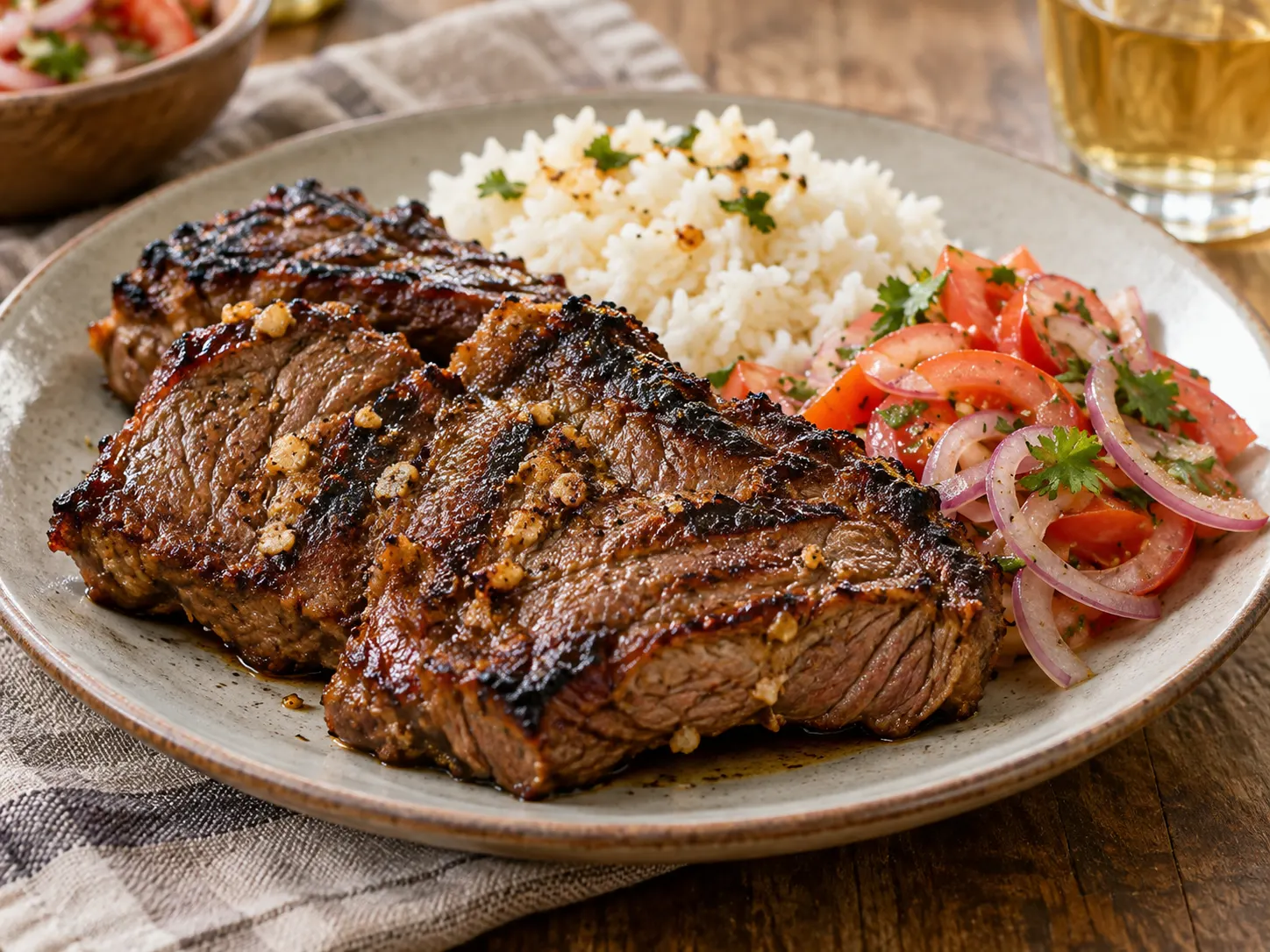
Zebu meat can be prepared in several ways according to local traditions. Grilled It can be grilled over coals, often seasoned with salt and spices. Stewed In stews and broths, it is slow-cooked to tenderize its fibers. Dried In some regions, the meat can be dried for longer preservation. Skewered It is also used in very popular skewers in African markets and streets.
In my books

Continue exploring the continent’s cuisines with Africa at the Table — 54 countries, 54 iconic dishes, by Alioune FALL. This book is in English.
Explore further
🌍 THE PLACE OF ZEBU IN AFRICAN CUISINE
The zebu occupies an important and symbolic place in African cuisine. A local meat It represents a cuisine linked to local livestock farming and the continent's natural conditions. A cuisine of sharing Zebu-based dishes are often prepared for several people and shared during large meals. A festive cuisine In many communities, zebu meat is reserved for celebrations and important events. A pastoral identity The zebu refers to cultures where livestock farming is at the heart of daily existence.
🥗 NUTRITIONAL VALUE OF ZEBU MEAT
Zebu meat is interesting from a nutritional perspective. Proteins It provides essential proteins for muscle building and proper body function. Iron It is a good source of iron, useful for preventing anemia. Vitamins It provides B vitamins, particularly B12. Variable lipids The fat content depends on the cut used and the farming method.
🌿 ZEBU, CULTURE AND SYMBOLISM
Beyond cuisine, the zebu has strong symbolic value. Symbol of prestige Owning many zebus is often associated with social success. Symbol of continuity In some societies, the zebu connects generations and lineages. Symbol of connection to the land It marks the communities' attachment to pastoral areas and rural traditions.
✅ CONCLUSION
The zebu is an essential animal in African life. Both a source of meat, milk, wealth, and symbols, it occupies a major place in African cuisine and in the continent's pastoral cultures. Its meat, offal, and milk nourish populations, while its presence in rites and social exchanges gives it a deep cultural dimension.
Understanding the zebu means understanding an important part of the African relationship to livestock, food, and identity. It is much more than an animal: it is a pillar of African living heritage.
In the kitchen : Zebu
Recipes from the site to put your knowledge into practice:
Discover these cuisines at a restaurant
Explore our restaurant and caterer directories. Choose your destination and check the establishment’s menu to confirm which dishes are offered and available.
Continue exploring
Enjoy discovering ingredients and African cuisines? Join our newsletter. The illustrated PDF 10 sauces africaines incontournables is in French and is offered after confirming a subscription to the French or bilingual edition.