Zobo
Africa
Understanding : Zobo
🇳🇬 INTRODUCTION
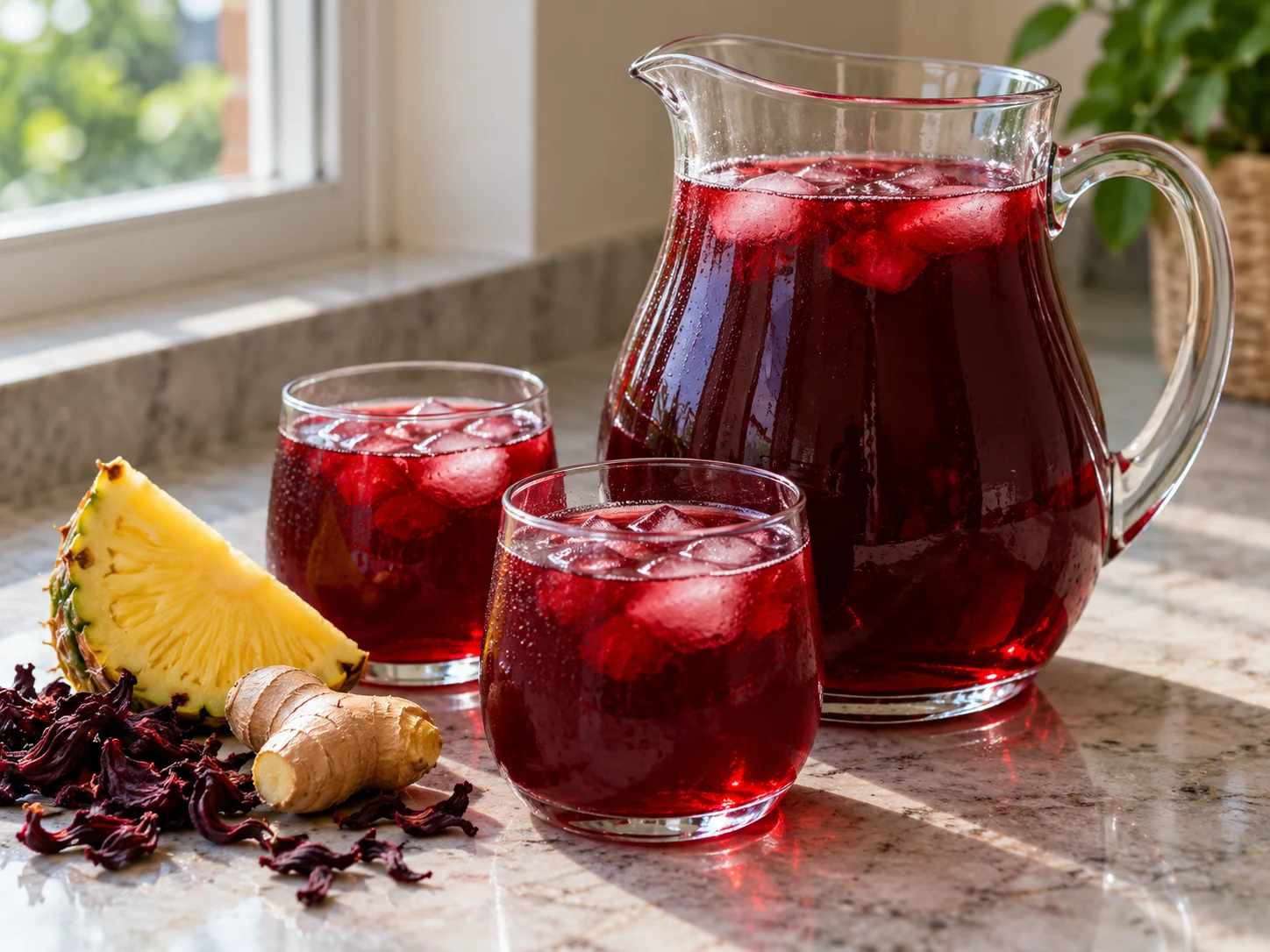
Zobo is a very popular African drink, especially in Nigeria, where it accompanies everyday meals as well as celebrations and major ceremonies. Prepared from dried red hibiscus flowers, it seduces with its ruby color, tangy taste, and freshness. In African cuisine, zobo holds an important place, as it represents a refreshing drink, traditional know-how, and a symbol of conviviality.
🌺 ORIGIN AND COMPOSITION OF ZOBO
Zobo is made from Hibiscus sabdariffa, a plant also known as roselle. The dried calyces are boiled in water, then filtered to obtain a naturally red infusion. This base can be enriched with ginger, pineapple, lemon, clove, mint, or other spices depending on the region and family.
🫖 A SIMPLE YET FLAVORFUL PREPARATION
What makes zobo so successful is the simplicity of its preparation. With a few accessible ingredients, you get a drink that is both economical and tasty. In many African households, each zobo recipe reflects a personal touch, passed down from generation to generation.
Prepare this speciality
Choose a detailed recipe, adjust the portions and prepare your ingredients before starting. Our cooking tips and food safety advice complement the steps described in the recipes.
Explore further: Cooking tips · Food hygiene and safety advice.
History and uses
🍽️ THE PLACE OF ZOBO IN AFRICAN CUISINE
In African cuisine, zobo is much more than a drink. It accompanies grilled dishes, spicy dishes, festive meals, and family sharing moments. It is highly appreciated for its ability to refresh the palate and balance the flavors of a generous meal.
🎉 A DRINK AT THE HEART OF AFRICAN HOSPITALITY
Zobo is often served at weddings, baptisms, family gatherings, and religious ceremonies. Offering zobo to a guest is a gesture of welcome and generosity. Its beautiful red color also makes it very visually appealing, which reinforces its role in celebrations.
💚 BENEFITS AND NATURAL IMAGE OF ZOBO
Zobo is often associated with traditional benefits. It is credited with refreshing, digestive, and sometimes revitalizing properties. Hibiscus is renowned in several African cultures for its richness in antioxidants.
🌿 AN ALTERNATIVE TO INDUSTRIAL DRINKS
Many people appreciate zobo because it can be consumed with little sugar, or even plain. It thus appears as a more natural alternative to overly sweet industrial drinks. This reinforces its place in contemporary African cuisine, where artisanal and authentic products are increasingly valued.
In my books

Continue exploring the continent’s cuisines with Africa at the Table — 54 countries, 54 iconic dishes, by Alioune FALL. This book is in English.
Explore further
🍍 MODERN VARIATIONS AND ADAPTATION OF ZOBO
Zobo has evolved with time. Today, modernized versions are found with fresh fruits, natural flavors, and more contemporary presentations. Some recipes include apple, orange, cucumber, cinnamon, or even honey.
✨ A LIVING TRADITION
This adaptability shows that African cuisine is not static. Zobo retains its traditional identity while opening up to new culinary trends. It appeals to both older and younger generations, which explains its longevity.
🤝 A STRONG CULTURAL AND SOCIAL SYMBOL
Zobo is deeply rooted in social life. In markets, streets, homes, and festive events, it recalls the warmth of African hospitality and the importance of sharing. It also evokes the role of artisanal drinks in transmitting tastes and eating habits.
🧡 A DRINK THAT BRINGS PEOPLE TOGETHER
Drinking zobo means participating in a common tradition. It embodies culinary memory, the link between generations, and the richness of local know-how. It is one of those products that tell a story, that of an inventive, warm, and rooted Africa.
🥤🇳🇬 CONCLUSION
Zobo is an emblematic drink of African cuisine, particularly in Nigeria and more broadly in West Africa. Its vibrant color, unique taste, and convivial dimension make it an essential preparation. Between tradition, health, creativity, and hospitality, zobo remains a strong symbol of African culinary heritage.
In the kitchen : Zobo
Recipes from the site to put your knowledge into practice:
Discover these cuisines at a restaurant
Explore our restaurant and caterer directories. Choose your destination and check the establishment’s menu to confirm which dishes are offered and available.
Continue exploring
Enjoy discovering ingredients and African cuisines? Join our newsletter. The illustrated PDF 10 sauces africaines incontournables is in French and is offered after confirming a subscription to the French or bilingual edition.