Pounded yam
Nigeria, West Africa
Understanding : Pounded yam
🇳🇬 INTRODUCTION
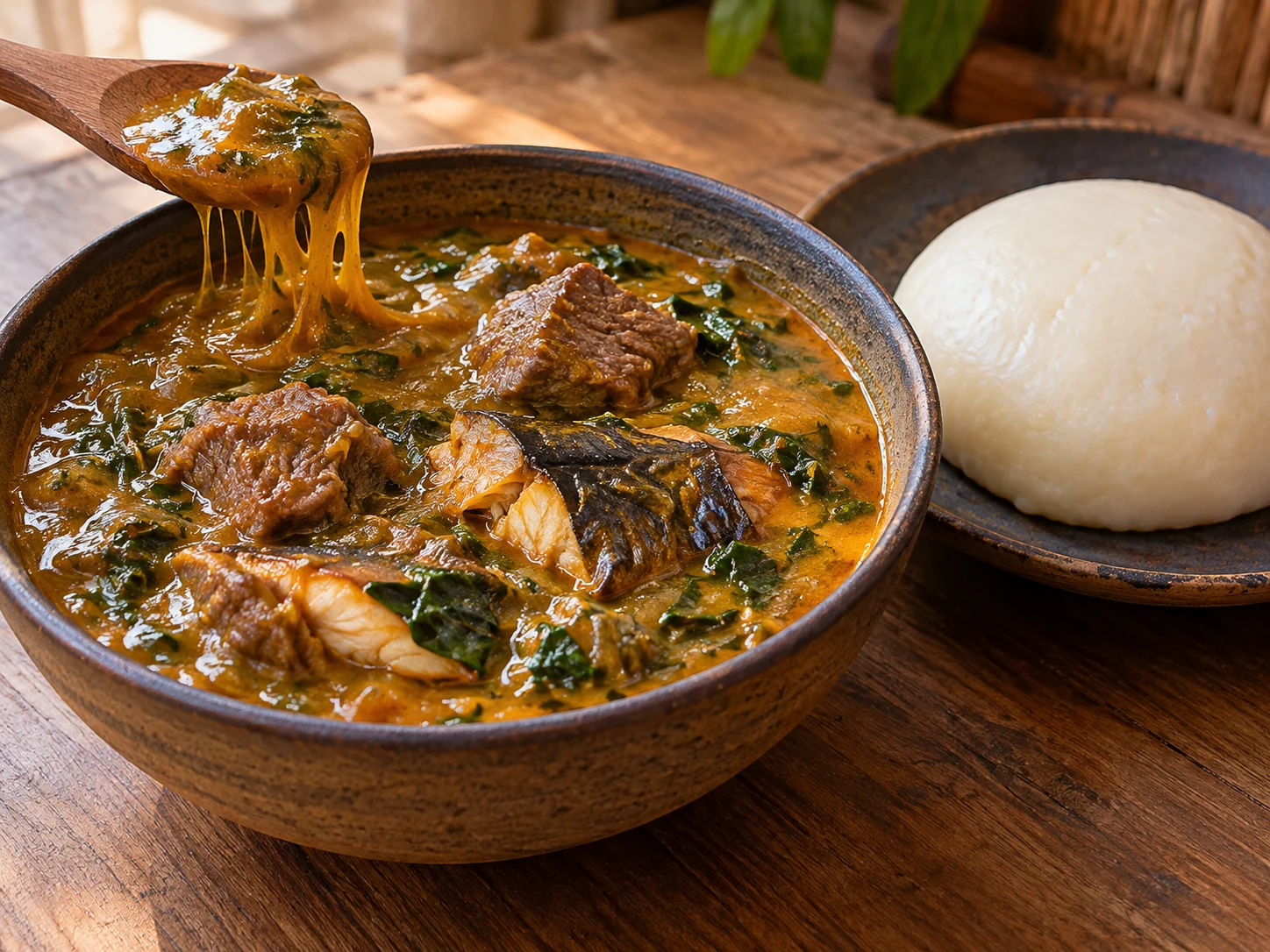
Pounded yam is one of the most iconic dishes in African cuisine, especially in Nigeria and several other West African countries. Prepared from yam pounded until it achieves a smooth, elastic, and homogeneous texture, it is appreciated for its soft consistency, neutral taste, and its ability to accompany a wide variety of soups and sauces. Much more than just food, pounded yam represents a culinary tradition deeply rooted in the social, family, and cultural life of many African communities.
Prepare this speciality
Choose a detailed recipe, adjust the portions and prepare your ingredients before starting. Our cooking tips and food safety advice complement the steps described in the recipes.
Explore further: Cooking tips · Food hygiene and safety advice.
History and uses
🥣 ORIGIN AND IDENTITY OF POUNDED YAM
Pounded yam finds its roots in regions where yam is a staple food. In West Africa, yam has long held a central place in the diet, particularly in Nigeria, Ghana, Benin, and Côte d'Ivoire. Pounded yam was born from the desire to transform this nutritious tuber into a soft paste, easy to eat with the hands and ideal for accompanying saucy dishes. Traditionally, yam is boiled then pounded in a large mortar using a pestle until an elastic paste is obtained. This method requires strength, rhythm, and sometimes good coordination between two people. Today, electric appliances can reproduce this result more quickly, but the traditional version remains highly valued.
🍽️ A unique texture and a particular taste What distinguishes pounded yam from other starches is its texture. It is soft, supple, and slightly sticky, which allows it to be easily molded into a ball before being dipped into a soup. Its taste is discreet, almost neutral, making it an excellent base for very spicy or very flavorful dishes. This gustatory neutrality is not a flaw; quite the opposite. It allows pounded yam to highlight the sauces that accompany it, such as ogbono soup, egusi soup (a soup made from ground melon seeds), akara soup, okra soup, or various preparations based on meat, fish, or vegetables.
🇳🇬 The place of pounded yam in African cuisine In African cuisine, pounded yam holds a prestigious place. It is one of those dishes that bring families together, mark special occasions, and embody the richness of culinary traditions. In Nigeria, in particular, it is considered a dish of choice, often reserved for important meals or distinguished guests. In many African cultures, serving pounded yam demonstrates a sense of hospitality and respect. It is a dish that requires time, attention, and sometimes real expertise. It is therefore not only appreciated for nourishment but also for what it represents: generosity, sharing, and cultural continuity.
In my books

Continue exploring the continent’s cuisines with Africa at the Table — 54 countries, 54 iconic dishes, by Alioune FALL. This book is in English.
Explore further
🫓 An accompaniment to great African soups Pounded yam is rarely eaten alone. It is almost always served with a thick and flavorful soup. It is this association that makes it so rich. Each bite marries the softness of the pounded yam with the depth of African sauces, creating a much-appreciated balance.
Among the most well-known accompaniments are:
- egusi soup, made from ground melon seeds;
- ogbono soup, very slimy and rich;
- egusi and vegetable soup;
- green vegetable soup;
- okra soup, particularly popular in several regions.
👨👩👧👦 A FAMILY AND CELEBRATION DISH
Pounded yam is not just an everyday dish. It is also strongly linked to festive meals, celebrations, and large family gatherings. In many households, it is prepared on weekends, for entertaining guests, or to mark a special event. Its importance goes beyond food. It contributes to conviviality around the table, respect for elders, and the transmission of traditions between generations. Older people often remember ancient preparation methods, while younger people discover or rediscover this dish through family meals and African restaurants.
🛠️ TRADITION, TECHNIQUE, AND MODERNITY
The preparation of pounded yam is a culinary act that requires technique and patience. The paste must be well beaten to become smooth, supple, and lump-free. The ideal result is a homogeneous mass that holds its shape well and is easily handled by hand. With modernization, alternatives like instant yam flour have been developed. They allow pounded yam to be prepared more quickly while retaining some of its traditional texture. However, many people believe that the taste and mouthfeel of the version made from fresh yam remain superior.
🌍 A CULINARY IDENTITY RECOGNIZED BEYOND BORDERS
Pounded yam is now known far beyond Nigeria. In the African diaspora, it is prepared in many countries and sold in specialized restaurants. It has become a symbol of West African cuisine worldwide. Its reputation is based on its authentic, nourishing, and deeply cultural character. For many Africans living abroad, eating pounded yam means finding a piece of home, childhood memories, and a direct link to their roots.
🇳🇬 CONCLUSION
Pounded yam is much more than a staple food. It is an identity dish, rich in history and symbols. In African cuisine, it represents the richness of traditions, the value of sharing, and the importance of meals as a social moment. Its unique texture, versatility, and cultural roots make it one of West Africa's great classics.
In the kitchen : Pounded yam
Recipes from the site to put your knowledge into practice:
Discover these cuisines at a restaurant
Explore our restaurant and caterer directories. Choose your destination and check the establishment’s menu to confirm which dishes are offered and available.
Continue exploring
Enjoy discovering ingredients and African cuisines? Join our newsletter. The illustrated PDF 10 sauces africaines incontournables is in French and is offered after confirming a subscription to the French or bilingual edition.