Chikwangue
DR Congo, Congo-Brazzaville
Understanding : Chikwangue
🇨🇩 INTRODUCTION
Chikwangue is a traditional food much appreciated in Central Africa, particularly in the Democratic Republic of Congo 🇨🇩, but also in Congo-Brazzaville 🇨🇬 and in some neighboring regions of Cameroon and Angola. Prepared from fermented cassava, then wrapped in leaves and cooked for a long time, it occupies an important place in African cuisine. Both nutritious, practical, and deeply rooted in eating habits, chikwangue is much more than just an accompaniment: it is a symbol of culture, transmission, and conviviality.
🥘 ORIGIN AND IDENTITY OF CHIKWANGUE
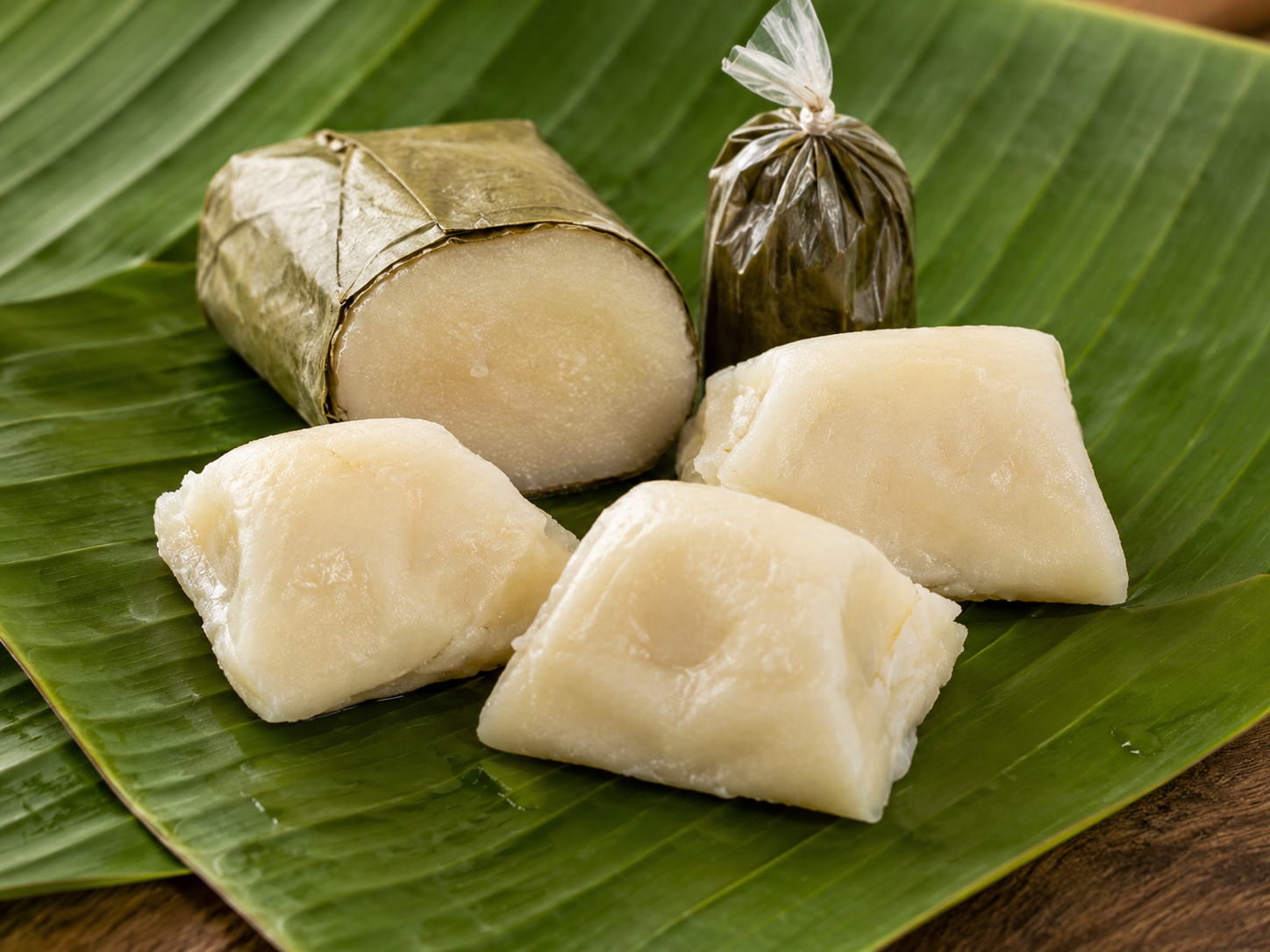
Chikwangue comes from the processing of cassava, a root widely used in many African cuisines. Its preparation involves several steps: peeling the cassava, fermentation, pounding or grinding, then shaping before cooking. The result is a compact, slightly elastic paste, with a dense texture and a discreet taste.
Where to find it
Look for the exact food-grade form required by the recipe at markets and specialist shops. Check the product name, ingredients, condition and storage instructions.
Explore further: Cooking tips · Food hygiene and safety advice.
History and uses
🌿 EXPERTISE INHERITED FROM LOCAL TRADITIONS
The preparation of chikwangue is often passed down from mother to daughter or within the community. Each step requires time and attention. The cassava must be well fermented to obtain the right flavor and consistency. This culinary expertise is part of the living heritage of Central Africa.
🍽️ THE PLACE OF CHIKWANGUE IN AFRICAN CUISINE
In African cuisine, chikwangue holds an important place among traditional starches. It accompanies many sauced dishes, including meat stews, grilled fish, vegetable sauces, cassava leaves, and peanut-based preparations.
🥩 AN ESSENTIAL ACCOMPANIMENT TO SAUCED DISHES
Its firm texture allows it to be easily cut and eaten with the hands. It is highly appreciated with:
- spicy tomato sauce;
- cassava leaf sauce;
- smoked or grilled fish;
- meat in sauce;
- peanut or palm-based dishes. Its neutral taste enhances rich and fragrant African sauces, making it an excellent culinary support.
🍃 TRADITIONAL MANUFACTURING AND PRESENTATION
Chikwangue is generally wrapped in banana leaves or other suitable foliage, then steamed or cooked in hot water. This natural packaging gives it a particular aroma and contributes to its preservation. It can be prepared in small or large portions depending on family or commercial needs.
In my books

Continue exploring the continent’s cuisines with Africa at the Table — 54 countries, 54 iconic dishes, by Alioune FALL. This book is in English.
Explore further
🫛 A PRACTICAL FORM FOR TRANSPORT AND PRESERVATION
Chikwangue is very practical because it keeps relatively well compared to other fresh foods. It is easy to transport, which explains its popularity in markets, on journeys, and for shared meals outside the home.
🤝 A FOOD FOR SHARING AND DAILY LIFE
Chikwangue is consumed in many families, daily as well as on special occasions. It accompanies ordinary meals, but it can also be served at parties, ceremonies, and family gatherings. Its importance therefore goes beyond its simple nutritional role.
👨👩👧👦 A SYMBOL OF CONVIVIALITY
In several regions, sharing chikwangue with a sauced dish is a way of expressing hospitality. It is often bought at the market or prepared in large quantities to feed several people. This makes it a food associated with social connection and solidarity.
🌍 A PILLAR OF CENTRAL AFRICAN CUISINE
Chikwangue is particularly emblematic of Central Africa. It reflects the central place of cassava in the diet of this region. It is similar to other traditional tuber-based preparations but is distinguished by its processing method and compact form.
✨ A STRONG CULINARY IDENTITY
In the Democratic Republic of Congo, Congo-Brazzaville, or Cameroon, chikwangue is a culinary marker known to all. It is part of the food identity of the populations and occupies an important place in markets, local restaurants, and family meals.
🇨🇩 CONCLUSION
Chikwangue is an essential traditional food in African cuisine, particularly in Central Africa. Prepared from fermented cassava and cooked in leaves, it symbolizes local know-how, conviviality, and the richness of African culinary traditions. Its place in daily meals as well as in festive events makes it a true pillar of regional food.
In the kitchen : Chikwangue
Recipes from the site to put your knowledge into practice:
Discover these cuisines at a restaurant
Explore our restaurant and caterer directories. Choose your destination and check the establishment’s menu to confirm which dishes are offered and available.
Continue exploring
Enjoy discovering ingredients and African cuisines? Join our newsletter. The illustrated PDF 10 sauces africaines incontournables is in French and is offered after confirming a subscription to the French or bilingual edition.