Isombe
Rwanda, Southern Africa
Understanding : Isombe
🇷🇼 INTRODUCTION
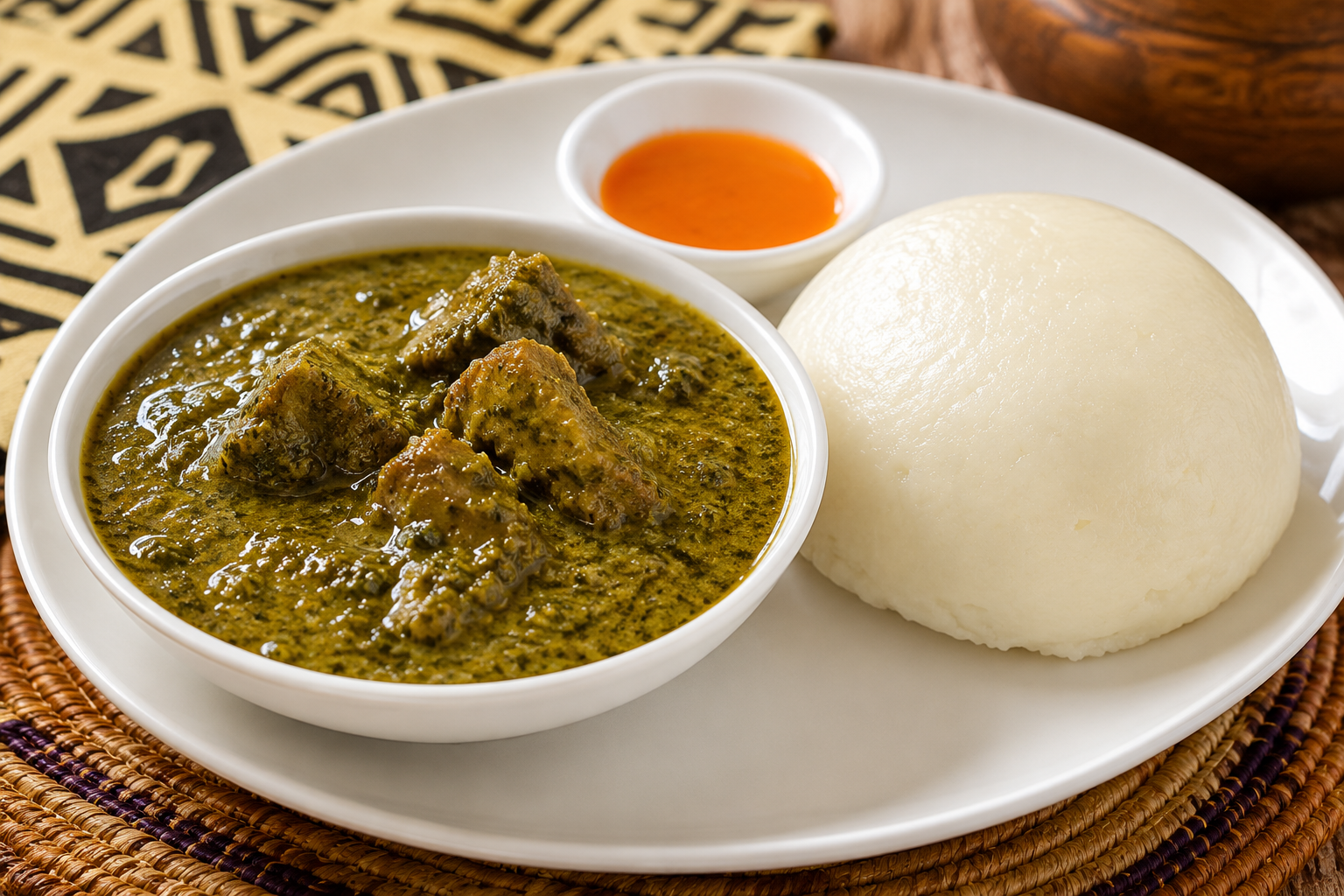
Isombe is one of the most popular dishes in the Great Lakes region, particularly in Rwanda 🇷🇼, Burundi 🇧🇮, and certain areas of eastern Democratic Republic of Congo 🇨🇩. Prepared from pounded cassava leaves, it holds an important place in African cuisine. Both nourishing, flavorful, and deeply linked to local traditions, isombe reflects the richness of African culinary know-how and the essential place of local products in daily diet.
🌿 ORIGIN AND IDENTITY OF ISOMBE
Isombe is a dish made from processed cassava leaves, also known as manioc leaves. These leaves are first gathered, cleaned, then pounded or finely ground before being slow-cooked. This preparation gives a creamy texture and a characteristic vegetal flavor.
🥘 A DISH BORN FROM THE INTELLIGENT USE OF LOCAL RESOURCES
In regions where cassava is abundant, nothing is wasted. The leaves, just like the root, are used in cooking. Isombe is therefore the result of ingenious cooking, which values available plants and allows for the creation of nourishing meals at a lower cost.
Prepare this speciality
Choose a detailed recipe, adjust the portions and prepare your ingredients before starting. Our cooking tips and food safety advice complement the steps described in the recipes.
Explore further: Cooking tips · Food hygiene and safety advice.
History and uses
🍽️ THE TRADITIONAL PREPARATION OF ISOMBE
The basic recipe for isombe relies on pounded cassava leaves, to which oil, onions, garlic, tomatoes, eggplants, or peanuts are often added, depending on regional customs. In some versions, smoked fish, meat, or beans are incorporated.
🔥 SLOW COOKING TO DEVELOP FLAVORS
Isombe takes time. The leaves must be well tenderized and simmered for a long time to eliminate their natural bitterness and develop a pleasant flavor. This slow cooking is part of the dish's charm and demonstrates the culinary patience passed down from generation to generation.
🇷🇼 THE PLACE OF ISOMBE IN AFRICAN CUISINE
In African cuisine, isombe holds a special place among leafy green dishes. It is highly appreciated in the Great Lakes region for its rich taste, creamy texture, and nutritional value. It is usually served with starches such as plantain, cassava, rice, or ugali (a type of stiff porridge made from cornmeal or other flours) depending on the region.
🌍 A DAILY DISH AND FOR SPECIAL OCCASIONS
Isombe is present in everyday meals as well as in more solemn moments. It is often served during family gatherings, visits from guests, and traditional celebrations. It symbolizes hospitality and the link between cuisine and social life.
In my books

Continue exploring the continent’s cuisines with Africa at the Table — 54 countries, 54 iconic dishes, by Alioune FALL. This book is in English.
Explore further
🥬 NUTRITIONAL VALUE AND DIETARY IMPORTANCE
Cassava leaves are rich in fiber, vitamins, and minerals. When properly prepared, they form an interesting dietary base. Combined with other ingredients like peanuts or fish, they make a complete and nourishing dish.
💚 HEALTHY AND BALANCED CUISINE
Isombe perfectly illustrates how African cuisine knows how to combine taste and nutrition. It shows that a traditional dish can be simple, flavorful, and beneficial for the body.
👨👩👧👦 A SYMBOL OF SHARING AND TRANSMISSION
Isombe is not just a dish; it is also an element of family memory. Recipes vary from one household to another, and each home has its own little habits. Children often learn the preparation from parents or grandparents.
🧡 A LIVING CULINARY HERITAGE
Preparing isombe means perpetuating ancestral know-how. This dish connects generations and recalls the importance of culinary traditions in African cultural identity.
🇷🇼 CONCLUSION
Isombe is a major dish in African cuisine, particularly in the Great Lakes region. Made from pounded and simmered cassava leaves, it represents the richness of local cuisines, the creativity of the people, and the importance of sharing around a meal. Nourishing, flavorful, and culturally important, it remains a strong symbol of African culinary heritage.
In the kitchen : Isombe
Recipes from the site to put your knowledge into practice:
Discover these cuisines at a restaurant
Explore our restaurant and caterer directories. Choose your destination and check the establishment’s menu to confirm which dishes are offered and available.
Continue exploring
Enjoy discovering ingredients and African cuisines? Join our newsletter. The illustrated PDF 10 sauces africaines incontournables is in French and is offered after confirming a subscription to the French or bilingual edition.