Banana-pão
São Tomé and Príncipe
Understanding : Banana-pão
🇸🇹 INTRODUCTION
Banana-pão is one of the most appreciated foods in São Tomé and Príncipe 🇸🇹, where it holds an important place in daily cuisine. Often called “bread-banana” in French, it is distinguished by its firmer texture and its versatility in cooking. Unlike dessert bananas, banana-pão is usually cooked before being eaten, making it a popular accompaniment in family meals. In African cuisine, it represents an excellent example of a local product transformed into a staple food, simple, nutritious, and culturally significant.
🍌 ORIGIN AND IDENTITY OF BANANA-PÃO
Banana-pão is one of the varieties of plantains or cooking bananas consumed in several tropical regions. In São Tomé and Príncipe, it is particularly appreciated for its ability to accompany fish, stews, and sauced dishes. Its firm flesh and delicate taste make it a very practical ingredient in cooking.
Where to find it
Look for the exact food-grade form required by the recipe at markets and specialist shops. Check the product name, ingredients, condition and storage instructions.
Explore further: Cooking tips · Food hygiene and safety advice.
History and uses
🌴 A DEEPLY LOCAL TROPICAL FOOD
Like many island foods, banana-pão is linked to the warm and humid climate of São Tomé and Príncipe. It grows in family gardens or on farms and is an accessible, useful, and traditional food resource.
🍲 CULINARY PREPARATION OF BANANA-PÃO
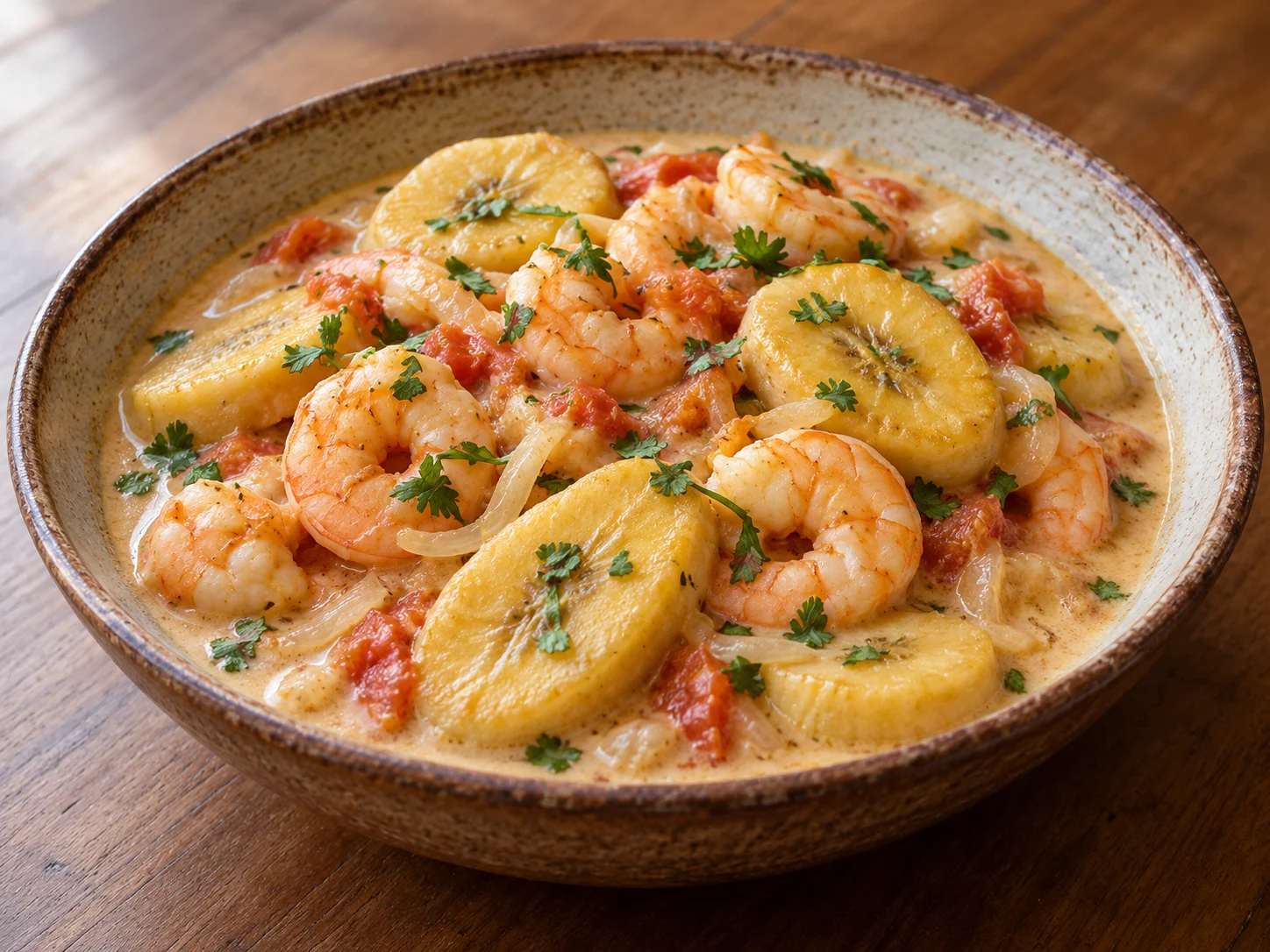
Banana-pão can be prepared in several ways: boiled, fried, grilled, or steamed. When ripe, it becomes softer and slightly sweet, but it is often eaten while still firm to accompany savory dishes.
🔥 SIMPLE AND VERSATILE COOKING
In many families, banana-pão is simply boiled with a pinch of salt, then served with fish, calulu (a traditional stew from São Tomé and Príncipe, typically made with fish or meat, palm oil, and various vegetables), or other traditional dishes. It can also be fried in slices or roasted, which gives it a golden and flavorful texture.
🍽️ THE PLACE OF BANANA-PÃO IN AFRICAN CUISINE
In African cuisine, banana-pão holds an important place among starches and traditional accompaniments. It is similar to plantain, which is widespread in Central and West Africa and in tropical areas. It provides energy, consistency, and a pleasant balance to meals.
🤝 A DAILY AND CONVIVIAL FOOD
Banana-pão is often served in family meals, for breakfast as well as lunch or dinner. It is one of those simple foods that nourish many people while remaining linked to the memory of local cuisines. Its presence on the plate evokes home, tradition, and sharing.
In my books

Continue exploring the continent’s cuisines with Africa at the Table — 54 countries, 54 iconic dishes, by Alioune FALL. This book is in English.
Explore further
🐟 ASSOCIATION WITH FISH DISHES AND SAUCES
In São Tomé and Príncipe, banana-pão is often served with grilled fish, fish in sauce, or calulu. It absorbs juices well and perfectly complements the rich flavors of dishes based on palm oil, tomato, onions, or local spices.
🌶️ A BALANCED ALLIANCE OF FLAVORS
The contrast between the sweetness of banana-pão and the intense taste of sauces is its strength. This combination demonstrates the culinary intelligence of African cuisines, where a simple food can become essential in a complete meal.
👨👩👧👦 CULINARY HERITAGE AND FAMILY MEMORY
Banana-pão is not just an everyday food. It is part of the food heritage passed down through families. The ways of cooking it, seasoning it, or combining it with other ingredients are often inherited from parents and grandparents.
🧡 A TRADITION STILL ALIVE
In the homes of São Tomé and Príncipe, banana-pão remains a marker of culinary continuity. It reminds us that African cuisine is made of local ingredients, simple gestures, and patiently transmitted know-how.
🇸🇹 CONCLUSION
Banana-pão is an essential food in São Tomé and Príncipe cuisine and an excellent example of the richness of African culinary traditions. Versatile, nutritious, and deeply rooted in local habits, it accompanies many traditional dishes and contributes to the food identity of the archipelago. Through it, one discovers a simple, generous, and meaningful local cuisine.
In the kitchen : Banana-pão
Recipes from the site to put your knowledge into practice:
Discover these cuisines at a restaurant
Explore our restaurant and caterer directories. Choose your destination and check the establishment’s menu to confirm which dishes are offered and available.
Continue exploring
Enjoy discovering ingredients and African cuisines? Join our newsletter. The illustrated PDF 10 sauces africaines incontournables is in French and is offered after confirming a subscription to the French or bilingual edition.