Bariis iskukaris
Somalia
Understanding : Bariis iskukaris
🌍 INTRODUCTION
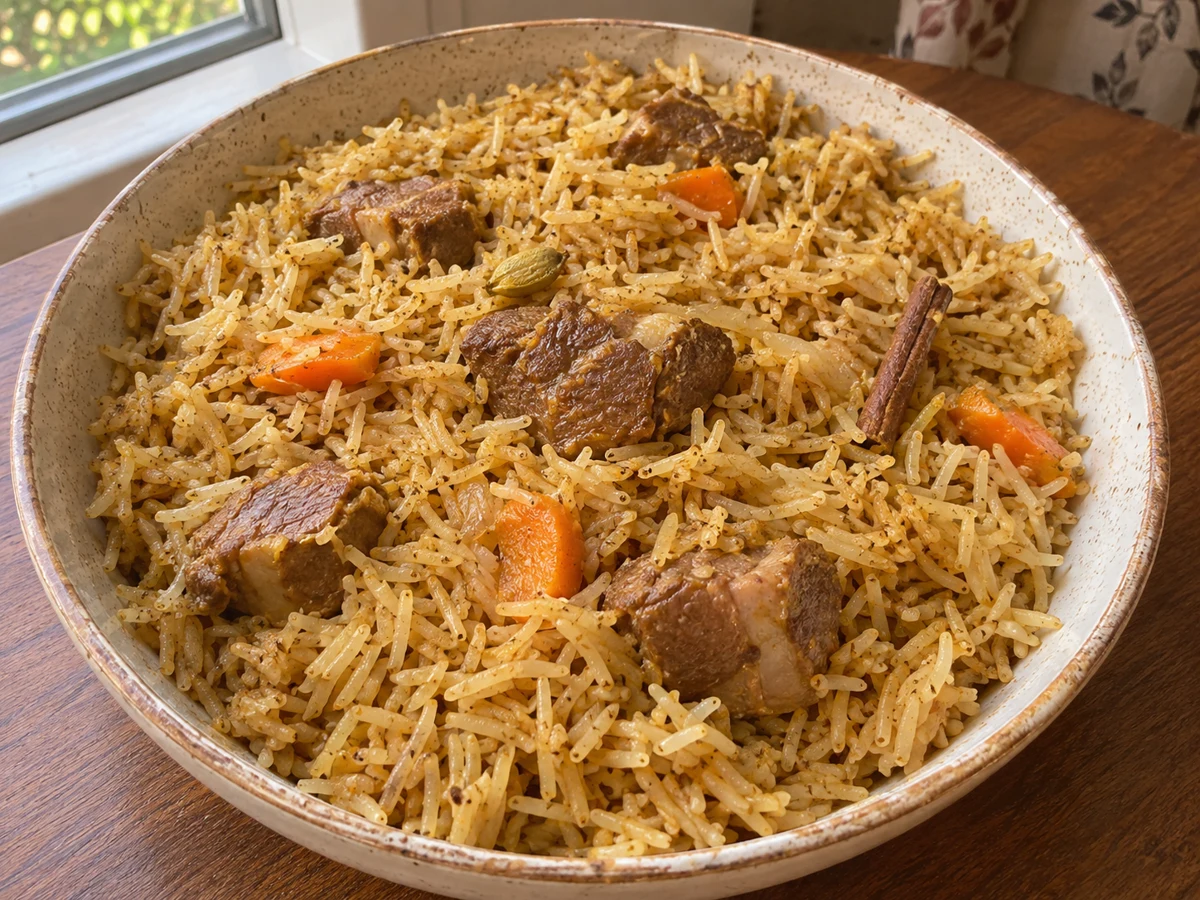
Bariis iskukaris is one of the most iconic dishes of Somalia and, more broadly, of the Horn of Africa. Made with fragrant rice, spices, onions, tomatoes, garlic, ginger, and often accompanied by meat, chicken, fish, or bananas, this dish holds a significant place in Somali culinary memory. It is both daily and festive, simple and rich, familial and symbolic. Its name, which evokes a “mixed” or “cooked together” rice, perfectly translates its essence: a cooking process where ingredients blend to create a harmonious whole.
In African cuisine, bariis iskukaris stands out for its use of spices, the subtlety of its seasoning, and the importance of rice as a staple food. It also reflects Somalia's position in the historical circulations of the Indian Ocean, where African, Arab, Indian, and Swahili influences meet. Through its balance of fragrance, color, and texture, this dish reflects a meal culture that values both generosity and mastery.
Prepare this speciality
Choose a detailed recipe, adjust the portions and prepare your ingredients before starting. Our cooking tips and food safety advice complement the steps described in the recipes.
Explore further: Cooking tips · Food hygiene and safety advice.
History and uses
🏺ORIGINS AND SOMALI ROOTS
Bariis iskukaris is deeply rooted in Somali culture. Somalia has an ancient culinary tradition, linked to its ports, trade routes, and its pastoral and coastal way of life. Rice holds a prominent place in certain contexts, particularly during festive meals, family gatherings, and special occasions. The word bariis means rice in Somali, while iskukaris refers to the idea of cooking together, mixing, or harmonious assembly. This culinary logic is very present in Somali cuisine: the dish relies on the fusion of aromas. The rice is not simply boiled; it is infused with fragrances, colored, and worked to become a complete preparation in itself. Bariis iskukaris is also the result of deep cultural exchanges. The Horn of Africa has long been a space of circulation between Africa, the Arabian Peninsula, and the Indian subcontinent. This is reflected in the spices used, the way the rice is cooked, and the attention paid to flavoring the dish.
🌶️ BARIIS ISKUKARIS INGREDIENTS
Bariis iskukaris is recognized by its base of spices and aromatics. Depending on families and regions, it often includes:
- long-grain rice
- onion
- garlic
- ginger
- tomato or tomato paste
- cardamom
- cinnamon
- cumin
- clove
- pepper
- turmeric or a spice blend that gives a golden color
- sometimes bay leaf or other herbs
- broth or a fragrant cooking stock Meat, when added, can be beef, lamb, chicken, or sometimes fish. The dish is often served with bananas, which may surprise some external observers but is a much-appreciated combination in the region. This combination of savory rice, spicy meat, and fruity sweetness creates a remarkable balance.
🍽️ TEXTURE, TASTE, AND PRESENTATION
Bariis iskukaris is appreciated for the delicacy of its texture. The rice should remain light, well-separated, but fully impregnated with the flavors of the cooking. The grains should neither stick excessively nor remain bland. The goal is to obtain fragrant, colorful, and balanced rice. The taste is warm, deep, and aromatic. The spices provide complexity without necessarily producing strong spicy aggression. The dish can be seasoned, but it generally remains harmonious and accessible to a wide audience. Caramelized onions, tomato, and spices create a flavorful base that envelops the rice. Presentation also matters. In many homes, bariis iskukaris is carefully arranged, sometimes accompanied by meat in sauce, bananas, salad, vegetables, or condiments. The dish has an important visual dimension, which reinforces its festive character.
🧑🍳 TRADITIONAL PREPARATION AND KNOW-HOW
The preparation of bariis iskukaris requires attention and mastery. The cook usually starts by sautéing onions, garlic, and ginger to build the aromatic base. Spices are then added to release their essential oils. Tomato sometimes adds color, acidity, and roundness. The rice is then incorporated and cooked in the fragrant liquid until fully absorbed. This process allows the grains to soak up the sauce without losing their structure. Depending on family habits, cooking can be done in a single pot or in several stages. This know-how is often passed down within the household. Precise gestures, spice dosage, and cooking time are learned through observation and repetition. Bariis iskukaris is therefore also a marker of culinary skill.
In my books

Continue exploring the continent’s cuisines with Africa at the Table — 54 countries, 54 iconic dishes, by Alioune FALL. This book is in English.
Explore further
🌍 Place of bariis iskukaris in African cuisine Bariis iskukaris holds an important place in African cuisine for several reasons. 🍚 1. Rice as a prestige and everyday food In many African regions, rice is both an everyday food and a food associated with celebrations. Bariis iskukaris illustrates this dual function. It can be prepared for the home as well as for large celebrations. 🌶️ 2. The tradition of fragrant dishes African cuisine places great importance on spice blends, sauces, and aromatic cooking. Bariis iskukaris is part of this culture of taste. It is not neutral; it carries a strong sensory identity. 🌊 3. Indian Ocean influences Somalia belongs to an extended culinary space where Africa meets Arabia and South Asia. Bariis iskukaris reflects this historical openness. It shows how African cuisine is traversed by ancient maritime circulations. 🥥 4. A logic of food harmony The dish combines rice, meat, banana, and sometimes salad or vegetables, creating a coherent whole. This logic of balance is very present in African cuisines, where one often seeks to combine sweetness, strength, texture, and color. 🐪 Social and symbolic dimension Bariis iskukaris is a socially important dish. It is often served at family gatherings, religious festivals, weddings, or receptions. Its presence at the table expresses the generosity and respect of the host. There is also a symbolic dimension in its serving method. The dish brings together several elements on the same plate, which evokes family unity and the idea of a shared meal. In a culture where conviviality is essential, bariis iskukaris becomes a marker of sociability.
🕌 IDENTITY, HERITAGE, AND CONTINUITY
Bariis iskukaris is one of those dishes that tell a continuous cultural story. It connects generations and keeps alive a Somali memory deeply rooted in cuisine. Even when modernized or adapted to new urban or diasporic contexts, it retains its core identity. In the Somali diaspora, this dish also plays an important role. It helps maintain a connection with the country of origin, with the language, family habits, and childhood memories. Cuisine then becomes a vector of cultural continuity.
🌺 CONCLUSION
Bariis iskukaris is much more than just a rice dish. It is a profound expression of Somali culture and an important contribution to African cuisine. Through its spices, cooking method, social roots, and festive dimension, it embodies a vision of the meal where harmony, sharing, and memory occupy a central place.
Its place in African cuisine is that of a dish of convergence: convergence of flavors, historical influences, family practices, and regional identities. It shows how diverse, refined, and open to the world African cuisine is.
In the kitchen : Bariis iskukaris
Recipes from the site to put your knowledge into practice:
Discover these cuisines at a restaurant
Explore our restaurant and caterer directories. Choose your destination and check the establishment’s menu to confirm which dishes are offered and available.
Continue exploring
Enjoy discovering ingredients and African cuisines? Join our newsletter. The illustrated PDF 10 sauces africaines incontournables is in French and is offered after confirming a subscription to the French or bilingual edition.