Xawaash
Somalia
Understanding : Xawaash
🌍 INTRODUCTION
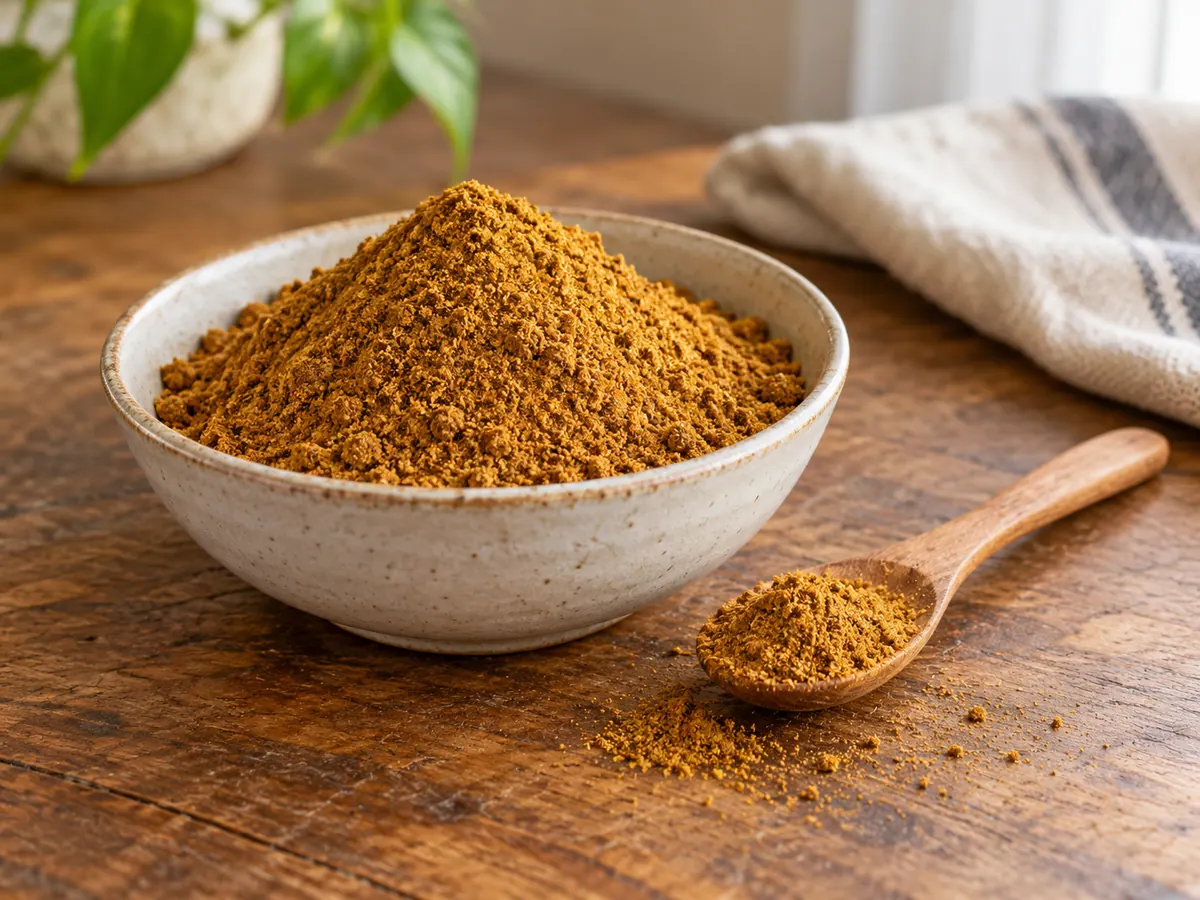
Xawaash is much more than a simple spice blend. In Somali cuisine, it represents an essential aromatic base, a concentrate of flavors that gives depth, warmth, and identity to many dishes. Its importance extends far beyond a particular recipe, as it embodies a way of cooking where spices are not just used to enhance food, but to build the taste itself. In African cuisine, and more particularly in that of the Horn of Africa, xawaash (a Somali spice blend) holds a prominent place due to its versatility, its sensory richness, and its close link with family culinary traditions.
Where to find it
Look for the exact food-grade form required by the recipe at markets and specialist shops. Check the product name, ingredients, condition and storage instructions.
Explore further: Cooking tips · Food hygiene and safety advice.
Search Amazon.fr — affiliate link →
Check availability and delivery on Amazon.fr. Compare ingredients, packaging and sellers.
As an Amazon Associate I earn from qualifying purchases.
History and uses
Through xawaash, we understand how Somali cuisine is linked to the historical circulations of the Indian Ocean, ancient trade routes, and exchanges between Africa, Arabia, India, and the Swahili coast. This spice blend tells a story of encounters, transmission, and adaptation. It gives dishes a recognizable signature and contributes to the construction of a strong culinary identity. 🏺 ORIGINS AND CULTURAL CONTEXT Xawaash has its roots in the culinary history of Somalia, a country whose geographical position has favored exchanges with many regions of the world. Somalia is a place where pastoral, maritime, and mercantile traditions have met, creating a very particular gastronomic culture. In this context, the spice blend has become a central element of domestic cuisine. The word xawaash refers both to the general idea of seasoning and, more specifically, to a precise blend of ground spices. Depending on families, regions, and uses, its composition may vary, but it always retains this fundamental function: to provide an aromatic base for dishes. It is used in rice, meats, sauces, soups, and sometimes even in certain fish preparations. Xawaash is not an impersonal industrial product. It is often prepared at home, with care, from whole or ground spices. This domestic preparation reinforces its cultural value, as it reflects a know-how passed down from generation to generation.
🌶️ COMPOSITION AND FLAVORS OF XAWAASH
Xawaash is based on a subtle balance between warmth, sweetness, depth, and spicy freshness. Its composition varies, but it frequently includes:
- cardamom
- cinnamon
- cumin
- coriander
- black pepper
- turmeric
- cloves
- paprika or sweet chili depending on the version
- sometimes dried ginger
- sometimes fennel or other aromatic seeds These spices are often lightly toasted before being ground into powder. This step helps to release their essential oils and intensify their fragrance. The result is a fine, complex, and deeply fragrant blend. Xawaash does not seek brutal taste. It aims for harmony instead. Cinnamon brings a gentle warmth, cardamom an almost floral note, cumin an earthy depth, cloves a singular intensity, and turmeric a characteristic golden color. Together, these elements compose an immediately recognizable olfactory signature.
🍚 USE IN SOMALI DISHES
Xawaash accompanies a wide variety of dishes. It is particularly present in:
- bariis iskukaris (a Somali rice dish)
- braised meats
- chicken dishes
- tomato and onion-based sauces
- certain soups
- fish preparations
- fragrant rice dishes In bariis iskukaris, for example, xawaash plays a decisive role. It is what gives the rice its aromatic depth and personality. Without it, the dish would lose part of its complexity and cultural roots. The blend can be incorporated at the beginning of cooking, with onions and oil, or added later to refine the aroma. In all cases, it acts as a gustatory backbone. It doesn't just enhance; it structures.
In my books

Continue exploring the continent’s cuisines with Africa at the Table — 54 countries, 54 iconic dishes, by Alioune FALL. This book is in English.
Explore further
🧑🍳 EXPERTISE AND FAMILY TRANSMISSION
The preparation of xawaash is an act of culinary transmission. In many Somali families, each household has its own version, with its proportions, preferences, and secrets. Some families like it milder, others more robust, and still others more fragrant. Learning to compose a good xawaash means learning to balance spices. One must know how to dose the power of cloves, prevent cinnamon from dominating, choose the right level of toasting, and obtain a homogeneous powder. This knowledge is not acquired in a day. It is built through experience, observation, and repetition. Xawaash is also often linked to women's cooking, who have long played a central role in transmitting recipes and techniques. But in the contemporary context, it has become shared knowledge in many households, including in Somali diasporas around the world.
🌍 PLACE OF XAWAASH IN AFRICAN CUISINE
Xawaash holds an important place in African cuisine because it represents a way of thinking about seasoning. In several regions of the continent, spice blends are essential for creating the identity of a dish. Xawaash belongs to this great African tradition of aromatic cuisine.🧂 1. A cuisine of blending Many African cuisines rely on carefully measured combinations of spices and aromatics. Xawaash fits into this logic: it is not a single spice, but an assembly. This culture of blending is very widespread in East Africa, the Horn of Africa, and along the Indian Ocean routes. 🌊 2. A heritage of the Indian Ocean Xawaash testifies to the ancient exchanges between Somalia, Arabia, India, and other regions of the Indian Ocean. This openness has profoundly influenced coastal African cuisine, where spices play a major role. Xawaash is a remarkable expression of this. 🔥 3. A cooking base and not a simple addition In African cuisine, good seasoning is not just added at the end. It often builds the dish from the start. Xawaash follows this logic. It participates in creating a taste base that will develop during cooking. 🍛 4. A richness common to many African traditions Although specifically Somali, xawaash is reminiscent of other African or Afro-Oceanic spice blends. It shows that African cuisine is far from uniform: it is traversed by very refined spice traditions, often linked to trade routes and cultural exchanges.
🏡 SOCIAL AND IDENTITY DIMENSION
Xawaash is also an identity marker. It allows immediate recognition of a Somali dish, even when served in the diaspora. Its scent evokes home, family meals, and childhood memories. In this sense, it plays a very strong emotional role. In Somali communities settled outside the country, xawaash becomes a form of cultural continuity. It helps maintain the link with the original cuisine and with daily practices. Preparing xawaash is often bringing a piece of collective memory back into the home.
🌟 MODERN ADAPTATIONS
Today, xawaash can be prepared traditionally or bought pre-mixed. Some people add personal variations according to dishes or taste preferences. In modern urban kitchens, it is sometimes simplified, but it retains its essence: to offer a recognizable Somali aromatic base. Despite these evolutions, xawaash remains deeply rooted in traditional cuisine. It continues to be a symbol of know-how, taste, and cultural continuity.
🌺 CONCLUSION
Xawaash is one of the great treasures of Somali cuisine and an important element of African culinary heritage. Through its aromatic richness, versatility, and its roots in family traditions, it embodies a way of cooking where spice becomes memory, identity, and culture.
In African cuisine, it represents the art of blending, the subtlety of balances, and the depth of Indian Ocean legacies. More than a seasoning, xawaash is a signature, a language of taste, and a symbol of cultural continuity.
In the kitchen : Xawaash
Recipes from the site to put your knowledge into practice:
Discover these cuisines at a restaurant
Explore our restaurant and caterer directories. Choose your destination and check the establishment’s menu to confirm which dishes are offered and available.
Continue exploring
Enjoy discovering ingredients and African cuisines? Join our newsletter. The illustrated PDF 10 sauces africaines incontournables is in French and is offered after confirming a subscription to the French or bilingual edition.