Canjeero
Somalia
Understanding : Canjeero
🌍 INTRODUCTION
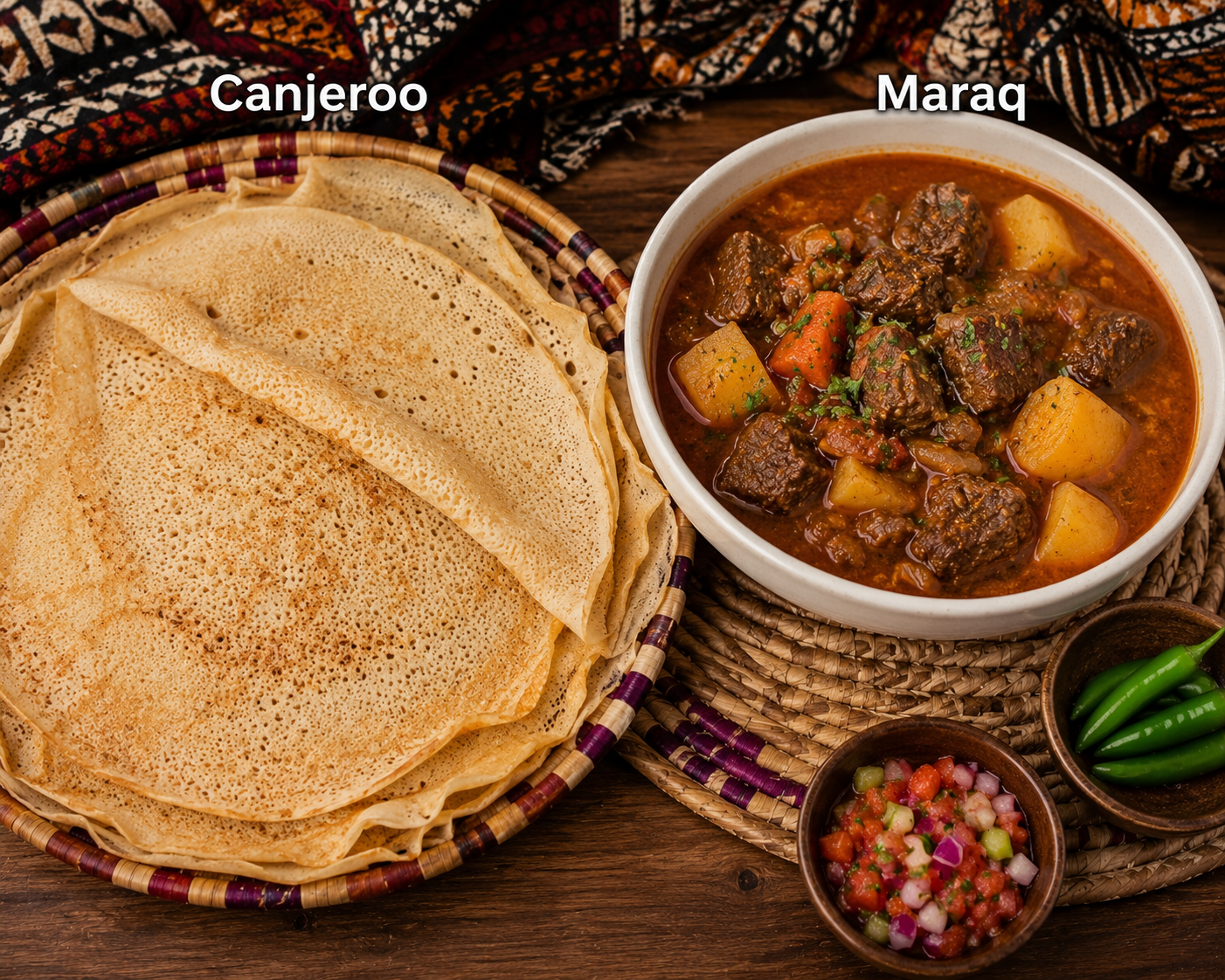
Canjeero, sometimes spelled canjeera depending on the transcription, is one of the most iconic foods of Somalia and the Horn of Africa. This soft, light, and slightly tangy pancake accompanies breakfast, lunch, or dinner depending on family habits. It holds a central place in daily nutrition because it is nourishing, versatile, and deeply rooted in Somali culinary culture. Its appearance may resemble other fermented flatbreads from Africa and elsewhere, but its texture, taste, and use make it a unique preparation.
In African cuisine, canjeero represents much more than a simple flatbread. It embodies a way of cooking that relies on fermentation, patience, and adaptation to local resources. It often accompanies savory dishes, sauces, honey, ghee, tea, or light stews. Its presence at the table reflects a food culture where sharing, simplicity, and mastery of textures are essential.
Where to find it
Look for the exact food-grade form required by the recipe at markets and specialist shops. Check the product name, ingredients, condition and storage instructions.
Explore further: Cooking tips · Food hygiene and safety advice.
History and uses
🏺 ORIGINS AND SOMALI ROOTS
Canjeero is deeply linked to the food history of Somalia. In an environment marked by maritime trade, African, Arab, and Asian influences have left visible traces in the cuisine. Canjeero is a beautiful example of this. It is part of a world where cereals, flours, and fermentation techniques are of great importance. Traditionally, canjeero is prepared with wheat flour, sorghum, or a mixture of cereals depending on the region and family. The dough is fermented, which gives it its slightly acidic taste and small bubbles when cooked. This fermentation is a very old technique, widespread in many African cuisines, as it improves flavor, digestibility, and preservation. The fact that canjeero is so present in daily life shows that it is not a secondary food. It is one of the household staples, from quick meals to more ceremonial occasions. It connects home cooking to cultural identity.
🥣 PREPARATION AND CHARACTERISTICS
Canjeero is distinguished by its thin and flexible appearance. It is cooked on a hot plate or pan, without being flipped like a classic pancake. Its surface often has small openings or alveoli, signs of successful fermentation and cooking. The texture is halfway between bread, pancake, and flatbread. Basic ingredients generally include:
- flour
- water
- sourdough or natural fermentation
- sometimes salt
- sometimes a little sugar depending on the variants The dough is often left to rest for several hours, or even overnight, to develop its character. Once ready, it is poured in small quantities onto the hot plate and cooked until the surface is set. The bottom may be slightly golden, while the top remains soft. Canjeero can be thicker or thinner depending on preference. Some versions are very flexible, others drier and more robust. This diversity reflects the richness of Somali family traditions.
🍯 WAYS TO CONSUME IT
Canjeero can be served in several ways. For breakfast, it is often accompanied by:
- honey
- butter or ghee
- black tea
- sugar
- milk But it can also accompany savory dishes, for example:
- stews
- meats in sauce
- soups
- lentils
- simmered vegetables
- spice and oil mixtures In some households, it is rolled or folded to pick up food, much like a table bread. It then becomes an edible utensil, practical and convivial. Its versatility makes it a particularly appreciated food.
🌍 PLACE OF CANJEERO IN AFRICAN CUISINE
Canjeero holds a remarkable place in African cuisine because it is part of a large family of flatbreads, fermented flatbreads, and traditional pancakes of the continent. It helps to understand several features of African food. 🍞 1. A diet based on processed cereals In many African societies, cereals are processed into porridges, flatbreads, breads, or pastes. Canjeero fits into this logic. It enhances flour by giving it a flexible and nourishing form. 🌾 2. Fermentation as a major culinary knowledge Fermentation is widely used in Africa for millet, sorghum, cassava, or other plant bases. Canjeero shows the importance of this technique, which enriches the flavor and demonstrates ancestral knowledge. 🥘 3. A meal support function Like many African flatbreads, canjeero serves to accompany and pick up dishes. It is not just a standalone food; it structures the meal. This function is essential in African cuisines, where bread or flatbread often serves as an interface between the hand and the dish. 🌊 4. A cuisine linked to the circulations of the Horn of Africa Canjeero is at the crossroads of multiple regional influences. It echoes other preparations from the Horn of Africa, but also fermented breads from other areas of the continent. It thus illustrates the circulation of culinary knowledge in Africa.
In my books

Continue exploring the continent’s cuisines with Africa at the Table — 54 countries, 54 iconic dishes, by Alioune FALL. This book is in English.
Explore further
🧑🍳 KNOW-HOW AND TRANSMISSION
Preparing a good canjeero requires experience. One must know how to recognize the right fermentation, the right dough density, and the right cooking time. If the dough is too liquid, the flatbread will not hold properly. If it has not fermented enough, it will lose its characteristic taste. This knowledge is passed down within families, often from mother to daughter, but not exclusively. It is a practical learning, based on sight, smell, and touch. Canjeero is a perfect example of home cooking where technical skill is discreet but essential.
🏡 SOCIAL AND FAMILY DIMENSION
Canjeero is strongly linked to family life. It is prepared to feed the household, to welcome guests, or to accompany convivial moments. Its simple and generous character makes it a local food. In the Somali diaspora, canjeero also takes on a strong memorial value. It recalls home, shared meals, and childhood tastes. It then becomes a link between generations and between the country of origin and exile.
🌟 CULINARY SYMBOLISM
Canjeero symbolizes several things at once:
- the patience of fermentation
- the sweetness of daily life
- food versatility
- family memory
- the elegance of simplicity It shows that African cuisine knows how to create foods that are both modest and sophisticated. A flatbread may seem humble, but it carries a great richness of gestures, tastes, and traditions.
🌺 CONCLUSION
Canjeero is one of the great emblems of Somali cuisine and a valuable contribution to African cuisine. Through its fermentation, flexibility, versatility, and roots in daily life, it embodies a way of eating that connects tradition, simplicity, and know-how.
In African cuisine, it holds an important place among the flatbreads and pancakes of the continent, while maintaining its own identity. It is at once a staple food, a meal support, a family memory, and a cultural symbol. Understanding canjeero means entering the warm, subtle, and deeply vibrant world of Somali cuisine.
In the kitchen : Canjeero
Recipes from the site to put your knowledge into practice:
Discover these cuisines at a restaurant
Explore our restaurant and caterer directories. Choose your destination and check the establishment’s menu to confirm which dishes are offered and available.
Continue exploring
Enjoy discovering ingredients and African cuisines? Join our newsletter. The illustrated PDF 10 sauces africaines incontournables is in French and is offered after confirming a subscription to the French or bilingual edition.