Fava Beans
Mediterranean region, Middle East, and North Africa
Understanding : Fava Beans
🫘 INTRODUCTION
Fava beans hold a significant place in the food history of Africa and the Mediterranean basin. Seemingly simple, they have nevertheless nourished entire generations and spanned centuries thanks to their nutritional richness, ease of cultivation, and versatility in cooking. In many African countries, fava beans are not just another vegetable or legume: they are a staple ingredient, used in daily dishes, festive recipes, and preparations inherited from ancient traditions.
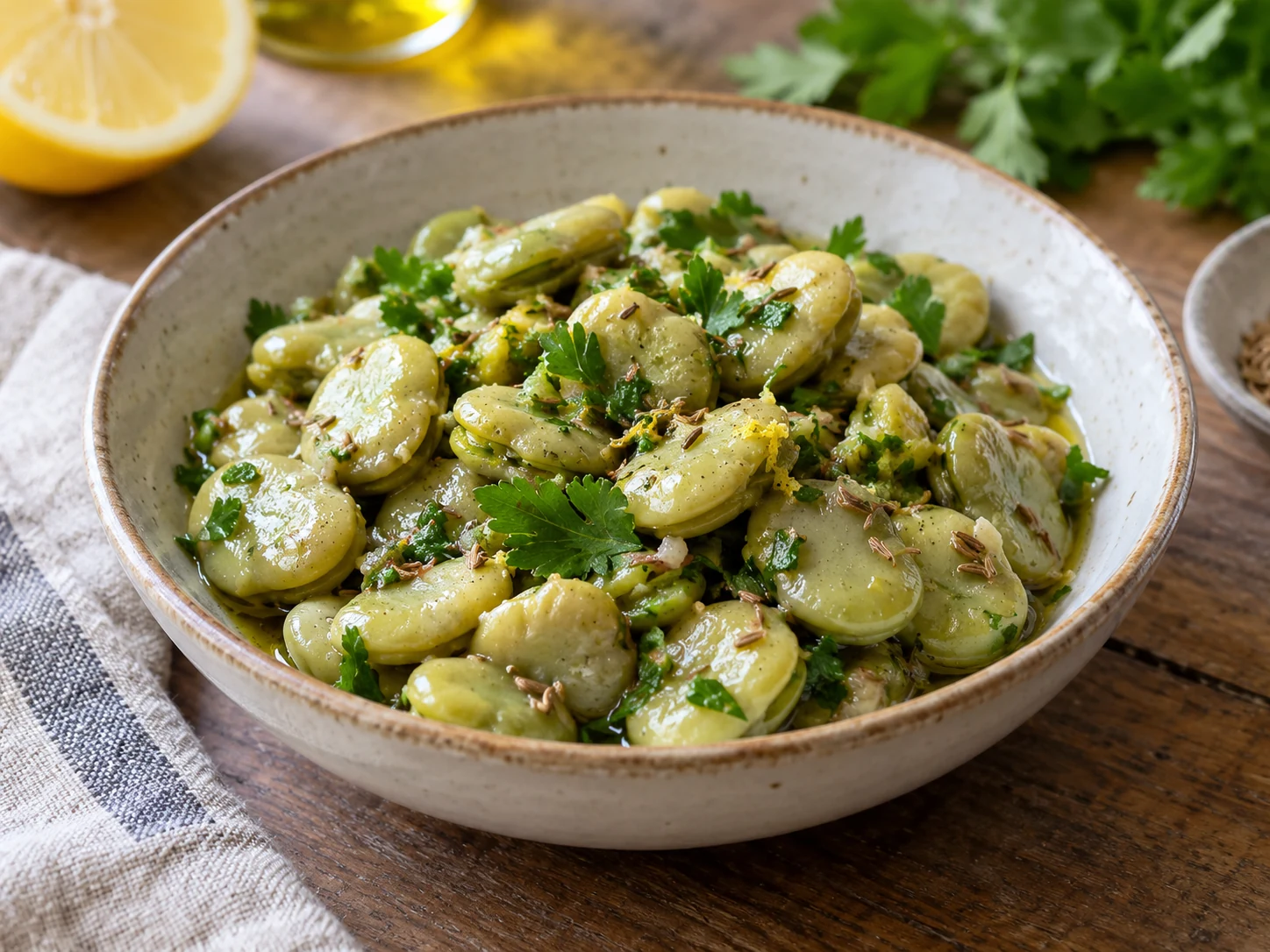
In African cuisine, fava beans appear in several forms: boiled, mashed, simmered in sauce, mixed with cereals, seasoned with spices, or incorporated into popular dishes like ful medames (a stew of cooked fava beans served with vegetable oil, cumin, and chopped parsley). They offer plant-based protein, fiber, and a soft texture that lends itself to many culinary transformations. Their place in African diets shows how essential legumes have been in balancing meals.
Where to find it
Look for the exact food-grade form required by the recipe at markets and specialist shops. Check the product name, ingredients, condition and storage instructions.
Explore further: Cooking tips · Food hygiene and safety advice.
Search Amazon.fr — affiliate link →
Check availability and delivery on Amazon.fr. Compare ingredients, packaging and sellers.
As an Amazon Associate I earn from qualifying purchases.
History and uses
🌱 ORIGINS AND SPREAD OF FAVA BEANS
Fava beans are among the plants cultivated since very early in human history. They have been known in the Mediterranean region, the Middle East, and North Africa since antiquity. Their spread to other African regions occurred gradually, through trade, migrations, and cultural exchanges. In North Africa, fava beans have a particularly ancient history. They have long been integrated into popular diets, especially in Egypt, Libya, Tunisia, Algeria, and Morocco. But they are also found in local or adapted forms in East Africa and parts of Sub-Saharan Africa, where they have been adopted and transformed according to regional culinary habits. This spread demonstrates a great capacity for adaptation. Fava beans have found their place in very different cuisines, while maintaining their fundamental role as a nourishing and accessible food.
🫘 NUTRITIONAL VALUE AND DIETARY INTEREST
Fava beans are particularly appreciated for their nutritional richness. They contain:
- plant proteins
- fiber
- complex carbohydrates
- iron
- magnesium
- potassium
- various B vitamins This composition makes them a very useful food in African diets, especially when large families need to be fed with limited resources. They provide a lasting feeling of satiety, which explains their popularity in main meals and hearty breakfasts. In many contexts, fava beans are an important alternative to more expensive animal proteins. They therefore play an essential role in food security and in balancing meals. Their ability to store relatively well in dried form further reinforces their importance.
🍲 FAVA BEANS IN AFRICAN CUISINES
African cuisine has developed many ways to prepare fava beans. They can be:
- boiled
- mashed into a puree
- simmered with tomatoes, onions, and spices
- incorporated into soups
- served with bread, rice, or flatbreads
- prepared as a salad or condiment depending on the region
🇪🇬 IN EGYPT AND NORTH AFRICA
Fava beans are at the heart of famous dishes like ful medames. They are cooked for a long time, then seasoned with oil, lemon, garlic, and cumin. This tradition shows the importance of fava beans as a staple food in the Arab and African world.
🌶️ IN EAST AFRICA
In some regions, fava beans are integrated into stews or served with cereals. They can be combined with local spices and seasonal vegetables.
In my books

Continue exploring the continent’s cuisines with Africa at the Table — 54 countries, 54 iconic dishes, by Alioune FALL. This book is in English.
Explore further
🫒 IN SUB-SAHARAN AFRICA
Fava beans are not always the main ingredient, but they appear in hybrid preparations or in urban cuisines influenced by Mediterranean and Middle Eastern exchanges. Their presence testifies to the constant circulation of ingredients across the continent.
🌍 PLACE OF FAVA BEANS IN AFRICAN CUISINE
Fava beans hold an important place in African cuisine for several reasons.
- An ancient and versatile legume Fava beans are among the oldest foods used on the continent. Their versatility allows them to be integrated into varied dishes, from the simplest to the most elaborate.
- An everyday food In many families, fava beans are part of ordinary meals. They are economical, filling, and easy to prepare once dried or soaked.
- A cuisine of slowness and patience Cooking fava beans takes time. This slowness is part of a culinary culture where ingredients are cared for and transformation is valued.
- A link between land, memory, and food Fava beans tell the story of agricultural and culinary exchanges. They are an example of a plant that has circulated between regions while integrating into strong local traditions.
- A base for popular and nourishing dishes They often serve as the foundation for complete meals. By combining them with bread, rice, or vegetables, one obtains balanced, simple dishes deeply rooted in African eating habits.
🧑🍳 PREPARATION AND EXPERTISE
The preparation of fava beans varies depending on the type used: fresh or dried. Dried fava beans are generally soaked for several hours before cooking. This step reduces cooking time and improves texture. They can then be:
- cooked until tender
- mashed into a puree
- seasoned with spices
- mixed with tomatoes, onions, and herbs
- served hot or cold Expertise lies in the dosage of seasonings and the choice of texture. Some recipes aim to keep the fava beans whole, while others transform them almost into a cream. This diversity reflects the creativity of African cuisines.
🌱 SOCIAL AND CULTURAL DIMENSION
Fava beans are not just food; they participate in social life. In many families, they are associated with breakfast, morning meals, or daily dishes. They can also be linked to childhood memories, neighborhood habits, or regional traditions. In African cities, fava beans are often sold in markets, stalls, and popular small restaurants. They therefore also belong to urban culture. They connect social classes, regions, and generations.
🌺 CONCLUSION
Fava beans hold a deep and lasting place in African cuisine. They embody an ancient, simple, nourishing, and adaptable food. Present in many countries and in many forms, they show how essential legumes are to the continent's culinary diversity.
Whether served alone, mashed, in sauce, or in emblematic dishes like ful medames, fava beans remain a symbol of nutritional richness and culinary memory. They remind us that African cuisine knows how to sublimate the most modest ingredients to make them central elements of food identity.
In the kitchen : Fava Beans
Recipes from the site to put your knowledge into practice:
Discover these cuisines at a restaurant
Explore our restaurant and caterer directories. Choose your destination and check the establishment’s menu to confirm which dishes are offered and available.
Continue exploring
Enjoy discovering ingredients and African cuisines? Join our newsletter. The illustrated PDF 10 sauces africaines incontournables is in French and is offered after confirming a subscription to the French or bilingual edition.