Boule
Chad
Understanding : Boule
🌍 INTRODUCTION
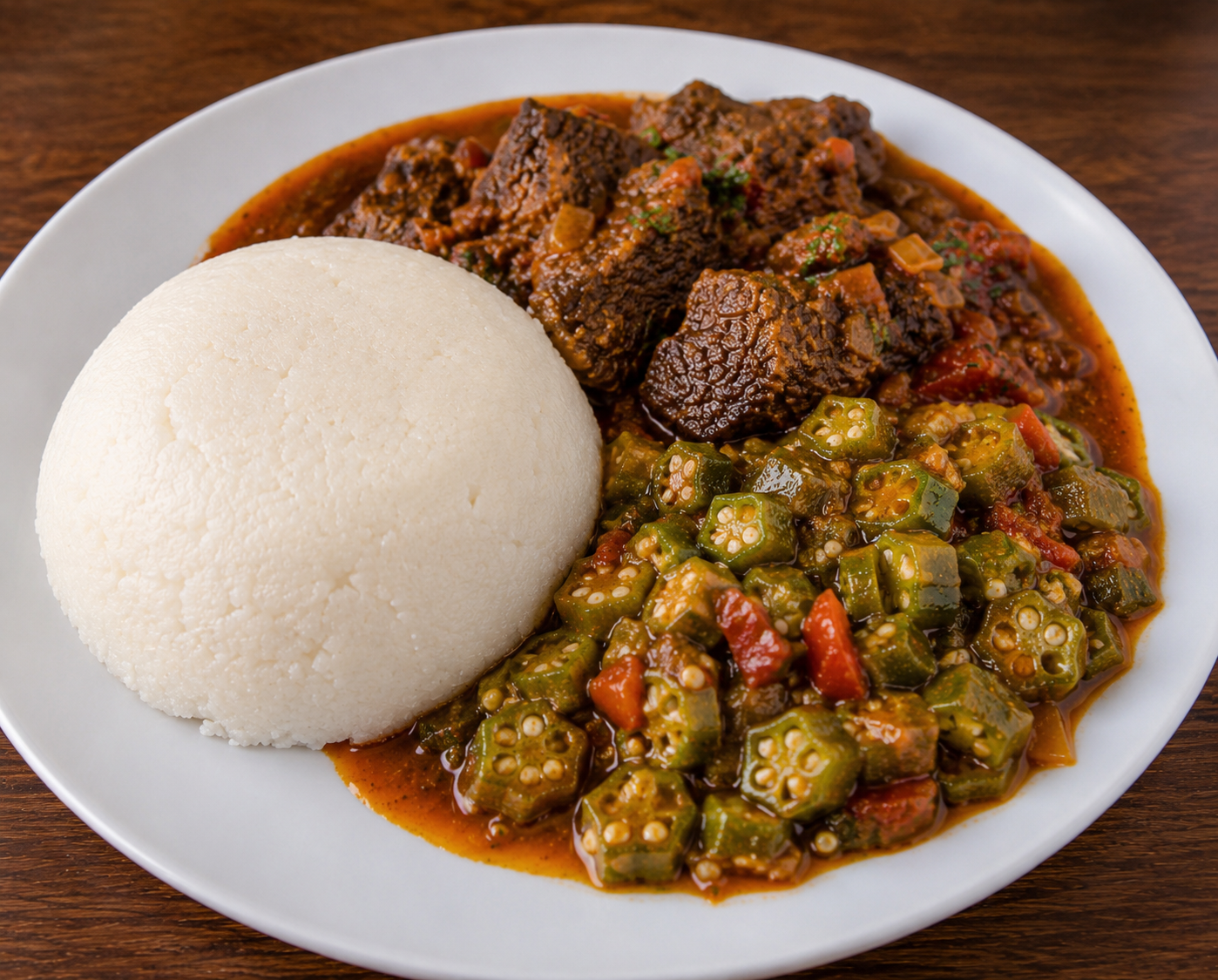
Chadian boule is one of the most representative dishes of daily life in the country. Simple in appearance, this dish nevertheless plays a central role in Chadian culinary and social life. Prepared from millet, sorghum, corn, or sometimes cassava flour, depending on the region and family habits, boule is a thick paste shaped and eaten with various sauces. It is a food of satiety, conviviality, and cultural transmission. In African cuisine, boule holds an important place because it belongs to a large family of dishes based on cereals or starches transformed into a paste. By its function, it is similar to other emblematic preparations of the continent such as foufou, ugali, tô, or sadza. In Chad, it reflects adaptation to local resources, Sahelian climatic conditions, and deeply rooted eating habits.
Prepare this speciality
Choose a detailed recipe, adjust the portions and prepare your ingredients before starting. Our cooking tips and food safety advice complement the steps described in the recipes.
Explore further: Cooking tips · Food hygiene and safety advice.
History and uses
🌾 ORIGINS AND CULTURAL ANCHORING
Boule is linked to Chad's agricultural history. In a country marked by ecological diversity, between Sahelian zones, savannas, and more humid areas, cereals such as millet and sorghum occupy an essential place. They are adapted to local conditions and constitute reliable food bases for many communities. The word boule refers to the paste prepared from flour cooked in water until it obtains a firm, smooth, and malleable consistency. This preparation is both modest and deeply symbolic. It expresses a way of cooking based on the simple transformation of local products into a complete food. Boule does not belong to a single ethnic group or a single region. It crosses many Chadian communities, making it a unifying element of the national food culture. It also testifies to the importance of shared meals, eating with hands, and sauce in the way of eating.
🍚 TRADITIONAL PREPARATION OF BOULE
The preparation of boule relies on precise know-how. Water is generally brought to a boil, then flour is gradually added while stirring constantly. This gesture requires strength, rhythm, and experience to avoid lumps and obtain a homogeneous texture. Depending on the regions, the following are used:
- millet flour
- sorghum flour
- corn flour
- sometimes mixtures of cereals
- more rarely other starches depending on the context The result is a compact paste that can be shaped into balls or served in portions. It is eaten with the fingers, accompanied by a sauce. Boule is not meant to be eaten alone; it is the base of a larger dish. Culinary expertise lies in mastering the texture. A boule that is too liquid loses its consistency, while a boule that is too hard becomes difficult to eat. Balance is therefore essential.
🍲 SAUCES THAT ACCOMPANY BOULE
Chadian boule takes on its full value in its association with sauces. These vary according to regions, seasons, and available resources. Among the most common are:
- leaf-based sauces
- peanut sauces
- tomato sauces
- meat sauces
- dried or fresh fish sauces
- vegetable sauces
- okra sauces The sauce provides moisture, flavor, and sometimes the main nutritional richness of the meal. Boule, on the other hand, plays the role of a nourishing base. This complementarity is at the heart of many African cuisines. It allows for a complete meal from simple elements. The choice of sauce often depends on the context. In rural areas, locally available ingredients are readily used. In the city, preparations can be more diversified, with regional or commercial influences.
In my books

Continue exploring the continent’s cuisines with Africa at the Table — 54 countries, 54 iconic dishes, by Alioune FALL. This book is in English.
Explore further
🌍 PLACE OF BOULE IN AFRICAN CUISINE
Chadian boule holds an important place in African cuisine for several reasons. 🌾 1. A cuisine of Sahelian cereals Millet and sorghum are major cereals in the Sahel. Boule shows how these grains are transformed into a staple food adapted to climatic realities. 🍛 2. A common logic to many African regions Like ugali in East Africa or tô in West Africa, boule is one of the dishes that structure the plate around a central paste and an accompanying sauce. 🤲 3. A cuisine of sharing Boule is often consumed collectively. It brings the family together around the same dish and promotes shared gestures, which gives it a strong social dimension. 🏺4. A resilient food In contexts where resources can vary according to seasons, boule constitutes a simple, economical, and nourishing solution. It embodies African culinary ingenuity. 🌍 5. A national identity marker In Chad, boule is a widely recognized and appreciated food. It contributes to the country's culinary identity while interacting with neighboring traditions of the Sahel and the Lake Chad basin.
🧑🍳 DOMESTIC KNOW-HOW AND TRANSMISSION
The preparation of boule is often passed down within families. Children observe adults, learn the gestures, understand the right consistency, and gradually learn the art of stirring the dough. This knowledge may seem simple, but it relies on extensive practice. In Chadian households, boule is not just a recipe; it is a daily landmark. It accompanies everyday meals, visits, family occasions, and convivial moments. Its preparation can be entrusted to several people, which strengthens the community bond around cooking.
🌿 NUTRITIONAL VALUE
Boule prepared with millet or sorghum offers several nutritional benefits. It provides:
- energy
- complex carbohydrates
- fiber
- minerals
- good satiety When combined with a sauce rich in vegetables, leaves, or protein, it forms a complete and balanced meal. This combination is particularly suited to the dietary needs of Sahelian populations.
🏡 SOCIAL AND CULTURAL DIMENSION
Boule has a strong social dimension in Chad. It is at the center of family meals where rules of sharing and respect are important. Eating together from the same dish strengthens bonds and emphasizes the importance of the collective. It is also linked to memory. Many people associate boule with childhood, the family home, and meals shared with elders. It thus becomes an emotional symbol as much as a food. In cities, boule can be sold in small restaurants, eateries, or markets. It therefore belongs as much to domestic cuisine as to popular urban cuisine.
🌺 CONCLUSION
Chadian boule is a fundamental dish of Chadian cuisine and a major contribution to African cuisine. From simple ingredients like millet or sorghum, it produces a nourishing, versatile, and deeply rooted food in daily life.
Its place in African cuisine is explained by its belonging to the large family of dishes made from cereals transformed into a paste, served with various sauces and shared with family. Boule tells the story of the Sahel, cereal crops, culinary transmission, and social connection. It shows that African cuisine knows how to transform simplicity into richness.
In the kitchen : Boule
Recipes from the site to put your knowledge into practice:
Discover these cuisines at a restaurant
Explore our restaurant and caterer directories. Choose your destination and check the establishment’s menu to confirm which dishes are offered and available.
Continue exploring
Enjoy discovering ingredients and African cuisines? Join our newsletter. The illustrated PDF 10 sauces africaines incontournables is in French and is offered after confirming a subscription to the French or bilingual edition.