Relish
Zambia
Understanding : Relish
🥣 INTRODUCTION
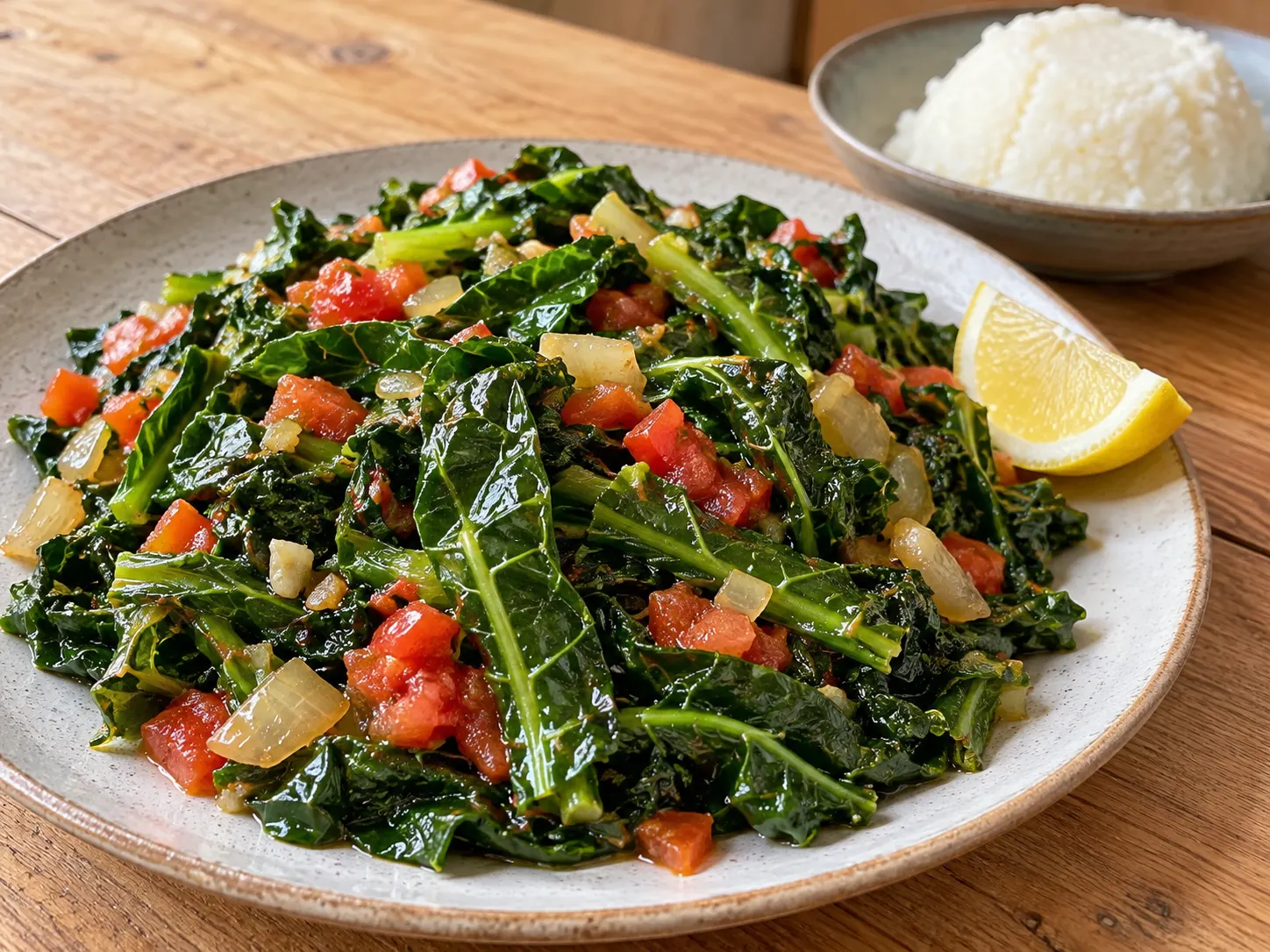
Relish is a culinary term that, depending on the context, refers to a preparation accompanying a main dish to enhance its taste, texture, and aromatic richness. In several African culinary traditions, the word can evoke a sauce, a garnish, a thick condiment, or a side dish made from vegetables, tomatoes, onions, spices, meat, or fish. Although the term is sometimes associated with broader English uses, it accurately describes a logic present in many African cuisines: that of a flavorful accompaniment that enhances a staple food like rice, porridge, bread, pap (a type of porridge), cassava, or cereals.
In African cuisine, relish is not just an extra. It is often at the heart of the meal, as it provides the main taste, moisture, and sometimes the most significant nutritional value. In contexts where daily food relies on a simple base, relish becomes a centerpiece of the dish. It can be spicy, mild, pungent, rich in vegetables, or more sober, depending on local resources and cultural habits.
Where to find it
Look for the exact food-grade form required by the recipe at markets and specialist shops. Check the product name, ingredients, condition and storage instructions.
Explore further: Cooking tips · Food hygiene and safety advice.
History and uses
🍅 ORIGINS AND CULINARY LOGIC
Relish does not have a single geographical origin. Instead, it corresponds to a category of preparations found in several cuisines around the world, including Africa. In English-speaking regions of the continent, the term is often used to describe a slightly thick accompaniment, often based on vegetables or proteins, served with starches. In local cuisines, the equivalent can take the form of a sauce, a light stew, a spicy salad, or a condiment prepared to accompany a main dish. Its logic is based on a simple idea: transforming modest ingredients into a very flavorful element. Relish allows for the use of seasonal products, culinary leftovers, market vegetables, or everyday condiments. It values domestic know-how and the creativity of African cooks.
🫑 INGREDIENTS AND VARIATIONS
Relish can be prepared with a wide variety of ingredients. Among the most frequent are:
- tomatoes
- onions
- bell peppers
- garlic
- chili
- fresh herbs
- local leaves
- fish
- meat
- beans
- various vegetables
- spices
- sometimes peanuts or peanut butter Depending on the region, it can be very liquid or thicker. In some cases, it resembles a simmered sauce; in others, a sautéed garnish or a cold-served condiment. This flexibility is one of the reasons for its popularity. Relish can also be vegetarian or non-vegetarian. Its composition depends on the availability of resources and the culinary context. In modest households, it may be limited to a few vegetables and condiments, while in richer meals, it will include fish, meat, or more elaborate sauces.
🍚 WITH WHICH DISHES IS IT EATEN?
Relish often accompanies a wide variety of staple foods. It can be served with:
- rice
- pap
- bread
- corn
- porridge
- cassava
- yam
- sweet potatoes
- local cereals
- flatbreads or dough balls Its function is to give depth to a relatively neutral food. Relish brings taste, but also sometimes fat, acidity, spiciness, or sweetness. It helps create a balance between the base and the garnish. In several African cuisines, the idea of relish is close to that of an accompanying sauce which, in practice, structures the entire meal. The difference may be in texture or vocabulary, but the function remains comparable.
In my books

Continue exploring the continent’s cuisines with Africa at the Table — 54 countries, 54 iconic dishes, by Alioune FALL. This book is in English.
Explore further
🌍 PLACE OF RELISH IN AFRICAN CUISINE
Relish holds an important place in African cuisine for several reasons. 🍅 1. A concentrate of flavor Relish enhances simple foods. It is often the main source of flavor in a meal. 🥗 2. A cuisine of availability It can be prepared with what is on hand: market vegetables, condiments, leftover meat or fish. 🍲 3. Great regional diversity Each African region may have its own way of preparing a relish, depending on local products and culinary traditions. 🤲 4. A domestic and practical logic Relish is often made in family kitchens. It is part of daily life and practical intelligence. 🌿 5. A cuisine of transmission Relish recipes are passed down through practice, observation, and experience. They are part of living culinary heritage.
🧑🍳 KNOW-HOW AND PREPARATION
Preparing relish requires a good balance of flavors. It often involves first sautéing onions, garlic, or spices, then adding vegetables, meat, or fish, before simmering or sautéing according to the recipe. Cooking time plays an important role: it allows flavors to develop and ingredients to meld together. Relish can be prepared quickly for a daily meal or longer for a special occasion. The know-how consists of knowing when to stop cooking to preserve the texture of the vegetables while achieving a harmonious taste. In some cultures, relish is prepared with great precision and can be adjusted to the season, the age of the guests, or the type of meal. This shows that African cuisine is attentive to contexts and people.
🏡 SOCIAL AND FAMILY DIMENSION
Relish is not just a culinary addition; it contributes to the identity of the meal. In African households, it often accompanies moments of sharing. The main dish is placed in the center, and everyone takes a portion with their share of relish. This gesture reinforces conviviality and a sense of belonging. It can also be linked to markets, where fresh ingredients are bought to prepare it. Women often play a central role, choosing vegetables, negotiating prices, and adapting recipes to available resources. Relish also has a memorial dimension. Many people associate certain variations with their childhood, their region, or their family.
🌺 CONCLUSION
Relish is a discreet but essential preparation in many African cuisines. It illustrates the continent's ability to transform simple ingredients into accompaniments rich in taste and meaning. Whether it is a sauce, a garnish, or a simmered condiment, relish occupies a central place in the balance of the meal.
In African cuisine, it represents everyday intelligence, domestic creativity, and the valorization of local products. It shows that taste often arises from simplicity, time, and transmitted know-how. Relish, in all its forms, thus remains a symbol of African culinary richness.
In the kitchen : Relish
Recipes from the site to put your knowledge into practice:
Discover these cuisines at a restaurant
Explore our restaurant and caterer directories. Choose your destination and check the establishment’s menu to confirm which dishes are offered and available.
Continue exploring
Enjoy discovering ingredients and African cuisines? Join our newsletter. The illustrated PDF 10 sauces africaines incontournables is in French and is offered after confirming a subscription to the French or bilingual edition.