Nyama
Zimbabwe, Southern Africa
Understanding : Nyama
🥩 INTRODUCTION
The word nyama generally means meat in several African languages, particularly in East and Southern Africa, where it refers to both the ingredient and, in some contexts, the dish prepared from it. Meat holds an important place in many African cuisines, and the term nyama has become, for many, a familiar word that evokes the richness of a meal, conviviality, and food satisfaction. Whether it's beef, goat, mutton, chicken, or sometimes game depending on local traditions, nyama is often at the center of celebrations, family meals, and special occasions.
In African cuisine, meat is not just a source of protein. It is also a symbol of prestige, generosity, and sharing. In societies where meat consumption may be reserved for important moments, nyama takes on a strong symbolic value. It accompanies sauces, grills, stews, and dishes made from cereals or tubers. It is a very versatile food, whose preparation methods vary according to regions, religions, resources, and traditions.
Prepare this speciality
Choose a detailed recipe, adjust the portions and prepare your ingredients before starting. Our cooking tips and food safety advice complement the steps described in the recipes.
Explore further: Cooking tips · Food hygiene and safety advice.
History and uses
🐄 ORIGINS AND USES OF THE TERM NYAMA
The term nyama is particularly well-known in several languages of the Great Lakes region and beyond. It literally means meat, but it can also be used in a broader sense to refer to a portion of meat served in a meal or a dish where meat plays a central role. In some languages and traditions, it can even take on broader symbolic connotations around vital force or nourishing substance. Nyama is present in both urban and rural cuisines. It is found in homes, popular restaurants, street barbecues, ceremonies, and festive meals. Its presence in a dish can transform it, as meat brings taste, texture, and a particular social value.
🔥 PREPARATION AND COOKING METHODS
Nyama can be prepared in multiple ways. Among the most common are:
- grilling
- frying
- simmering
- roasting
- cooking in sauce
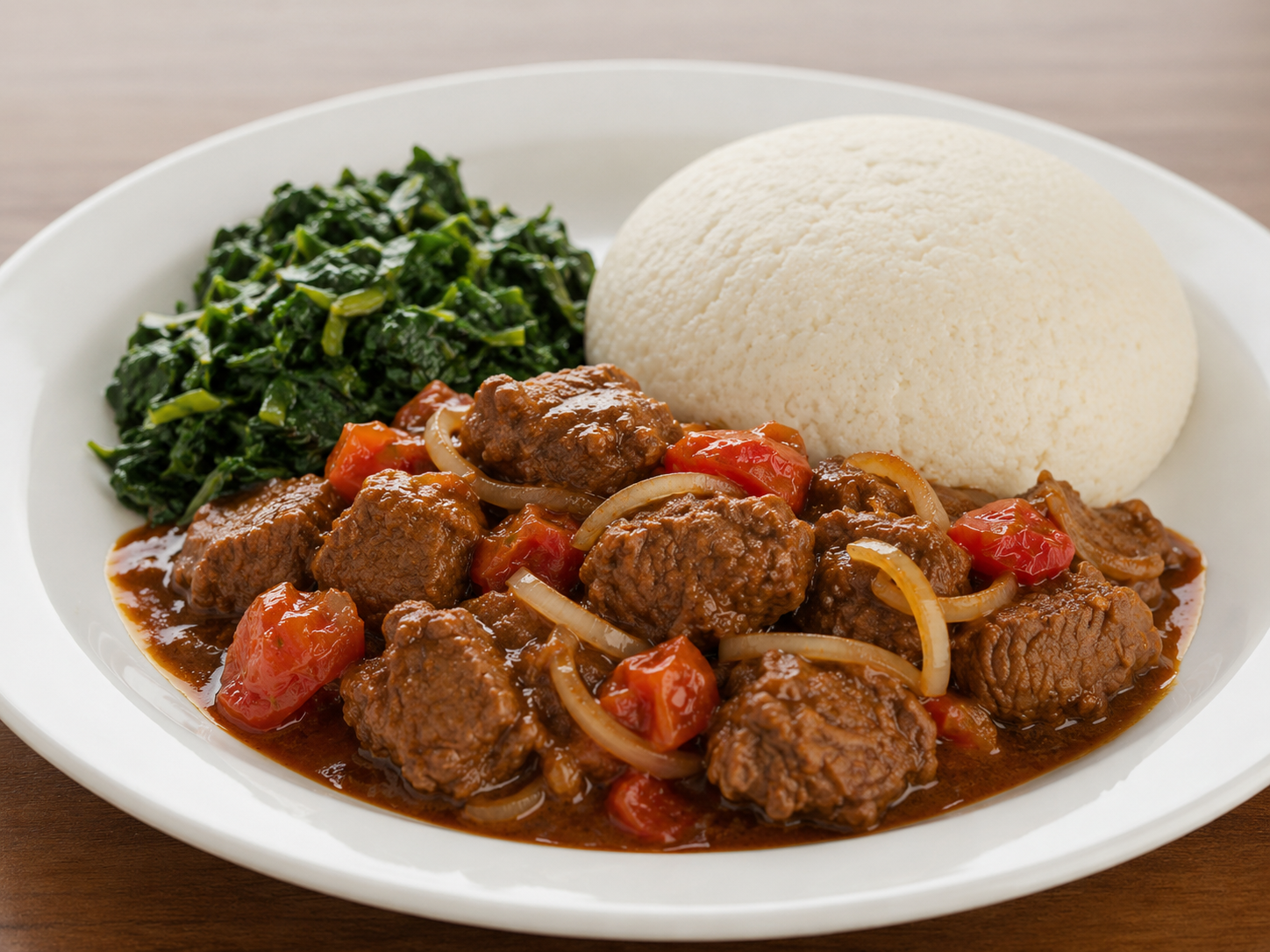
- cooking over embers Each cooking method gives a different identity to the dish. Grilled meat, for example, is often appreciated for its smoky taste and simplicity. Stews, on the other hand, allow the meat to simmer slowly with onions, tomatoes, spices, and sometimes vegetables, which gives it a tender texture and a deep flavor. In some regions, meat is marinated before cooking, with salt, lemon, ginger, garlic, chili, or other local condiments. The preparation of nyama therefore depends heavily on the availability of ingredients and local culinary traditions.
🍲 WITH WHICH DISHES IS NYAMA SERVED?
Nyama often accompanies staple foods that help balance the meal. Among the frequent accompaniments are:
- sadza (a thick porridge made from maize meal)
- ugali (a thick porridge made from maize flour)
- rice
- fufu (a dough-like food made from starchy root vegetables)
- matoke (steamed green bananas)
- beans
- green vegetables
- potatoes
- yam
- millet or sorghum balls Meat provides the richest and most valued part of the meal. In many African contexts, a well-prepared nyama dish is seen as a sign of attention towards guests or family members. It is often the dish served during an important event.
🌍 PLACE OF NYAMA IN AFRICAN CUISINE
Nyama occupies a central place in African cuisine for several reasons. 🥩 1. An important source of protein Meat provides significant nutritional value in diets where dietary balance depends on the combination of cereals, vegetables, and proteins. 🎉 2. A food linked to celebration Nyama is often reserved for celebrations, ceremonies, and large family meals. 🍲 3. A great diversity of preparations Grilled, stewed, smoked, or roasted, meat adapts to many African cuisines. 🤲 4. A symbol of generosity Offering meat to guests is a strong gesture of welcome and respect. 🌍 5. A presence in many traditions Nyama is important in very diverse regions, making it a transversal element of African food culture.
In my books

Continue exploring the continent’s cuisines with Africa at the Table — 54 countries, 54 iconic dishes, by Alioune FALL. This book is in English.
Explore further
🏡 SOCIAL AND SYMBOLIC DIMENSION
Nyama has a value that goes beyond simple food. In many African societies, meat is associated with success, abundance, and sharing. It can mark a wedding, a birth, a religious festival, a community ceremony, or the visit of a loved one. The act of preparing nyama can also signal a desire to receive guests with dignity. Pieces of meat are sometimes distributed according to precise social rules, which take into account age, status, or one's place in the family. In some communities, hunting and consuming wild meat also have a particular cultural significance, even if modern practices are evolving towards livestock farming and commercial channels.
🌿 Nutritional value and food economy Nyama is an excellent source of protein, iron, and other essential nutrients. When accompanied by vegetables or cereals, it constitutes a complete meal. However, its availability varies depending on price, season, access to livestock, and religious or cultural habits. In rural areas, livestock farming contributes to meat access, while in urban areas, the market plays a central role. Nyama is therefore part of a living economy, connecting producers, breeders, butchers, cooks, and consumers.
🌟 CONTEMPORARY CHALLENGES
Today, meat consumption in Africa faces several challenges: cost, access, sustainability, health, urbanization, and changing eating habits. Some populations are reducing their nyama consumption for economic or health reasons. Others, on the contrary, value local meats and traditional cooking methods. Despite these developments, nyama remains a very important food in African cuisine. It retains a strong symbolic charge and continues to be associated with moments when one wants to emphasize the importance of the meal.
🌺 CONCLUSION
Nyama is much more than just a piece of meat. It represents a major component of African cuisine, being at once nourishing, festive, social, and identity-forming. Present in varied forms depending on the region, it accompanies staple dishes, enriches meals, and strengthens human bonds.
In African culinary culture, nyama reminds us that meat is often a valuable product, reserved for important occasions or carefully prepared meals. It embodies sharing, generosity, and the richness of the continent's food traditions.
In the kitchen : Nyama
Recipes from the site to put your knowledge into practice:
Discover these cuisines at a restaurant
Explore our restaurant and caterer directories. Choose your destination and check the establishment’s menu to confirm which dishes are offered and available.
Continue exploring
Enjoy discovering ingredients and African cuisines? Join our newsletter. The illustrated PDF 10 sauces africaines incontournables is in French and is offered after confirming a subscription to the French or bilingual edition.