Muboora
Zimbabwe, Southern Africa
Understanding : Muboora
🌿 INTRODUCTION
Muboora is a well-known term in certain parts of Southern Africa, particularly in Zimbabwe, where it refers to pumpkin or squash leaves and/or young shoots, prepared as a green vegetable. In several local languages and cuisines, muboora is a simple, accessible food, yet deeply rooted in daily eating habits. It can be sautéed, boiled, stewed, or cooked with oil, onions, tomatoes, peanuts, or other condiments according to family traditions. Its place in African cuisine is important because it illustrates the valorization of local vegetables, the culinary intelligence of households, and the art of using the entire plant.
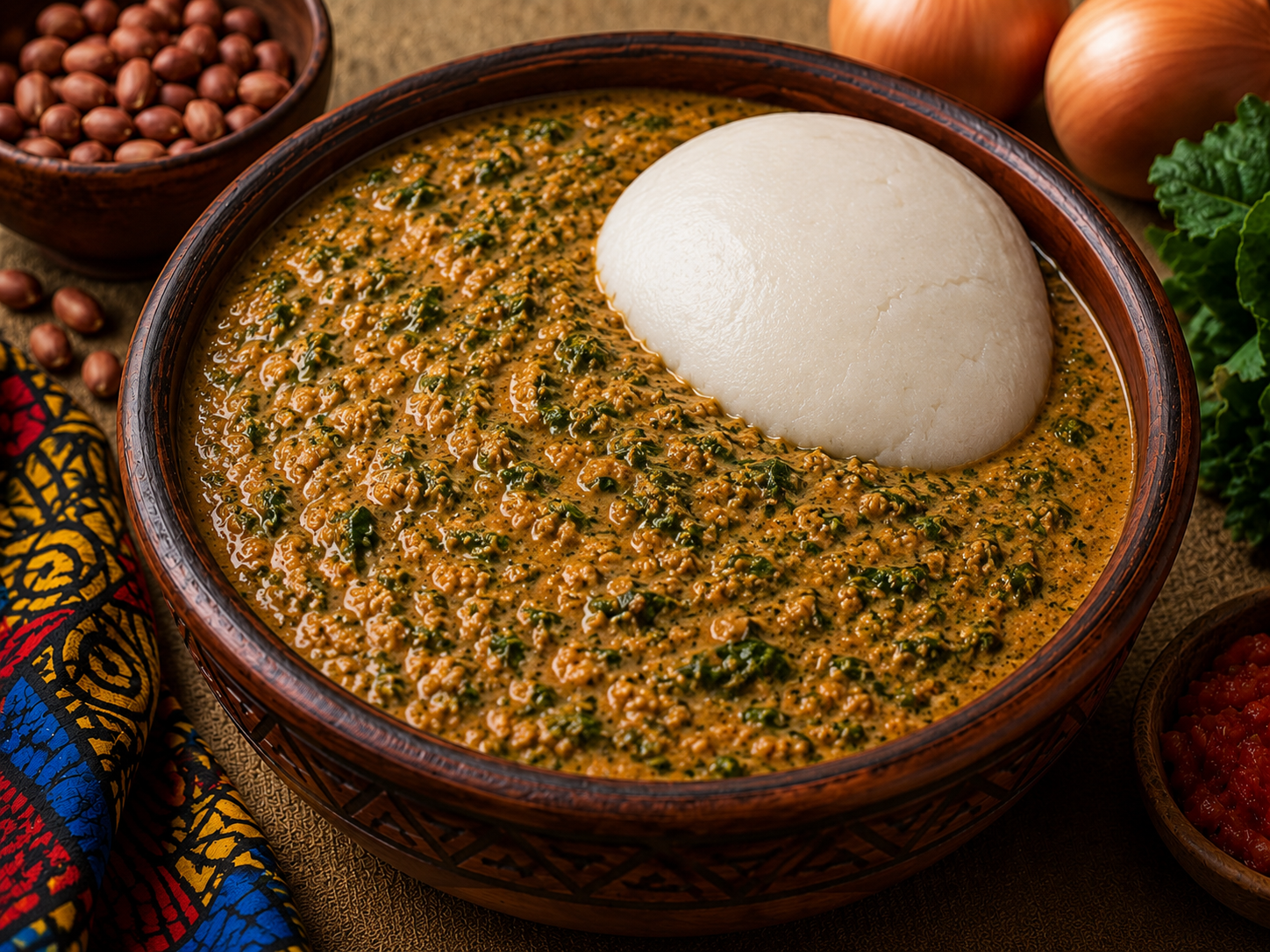
Muboora is not just a side dish. In many African meals, it is an essential component of the plate, especially when paired with cereals like sadza (a thick porridge made from maize meal), ugali (a stiff porridge made from maize flour), or other flour balls. Its presence shows how African cuisine transforms modest garden produce into flavorful, nutritious, and identity-rich dishes.
Where to find it
Look for the exact food-grade form required by the recipe at markets and specialist shops. Check the product name, ingredients, condition and storage instructions.
Explore further: Cooking tips · Food hygiene and safety advice.
History and uses
🌱 ORIGIN AND DEFINITION OF MUBOORA
The word muboora is used in certain linguistic contexts to refer to squash or pumpkin leaves, sometimes with the young stems. These parts of the plant, often considered secondary in other culinary traditions, instead hold a valued place in African cuisine. Muboora belongs to a culinary logic of sobriety and intelligent resourcefulness. Nothing is wasted: tender leaves, stems, sometimes even flowers depending on the region, are cooked to produce a tasty accompaniment. This demonstrates a fine knowledge of local plant resources. It is an accessible food, often grown in family gardens. Its availability makes it an everyday vegetable, particularly in rural areas where local plants are central to the diet.
🍲 TRADITIONAL PREPARATION OF MUBOORA
Muboora can be prepared in different ways depending on the region and family. The most common methods include:
- quick sautéing with onions
- braising
- stewing with tomatoes
- adding peanut paste
- cooking with pounded peanuts
- mixing with other green vegetables Squash leaves are usually washed, cut, and then cooked until tender. They can be seasoned with salt, garlic, spices, or chili. In some recipes, oil is added to give more richness to the dish. In others, it remains very simple, relying on the natural flavor of the vegetable. Muboora is sometimes cooked with peanuts or a slightly thick sauce, which gives it a more nourishing texture. It then perfectly accompanies staple foods like sadza.
🥣 WHAT IS MUBOORA EATEN WITH?
Muboora is most often served with grain or paste dishes. Among the frequent accompaniments are:
- sadza
- ugali
- nsima (a thick porridge made from maize flour, similar to ugali)
- rice
- pounded millet
- local bread or flatbreads In this combination, muboora plays the role of a vegetable-sauce. It brings color, freshness, and nutrients. Its slightly vegetal taste, sometimes softened by peanuts or tomato, makes it a popular complement to family meals. Muboora can also be eaten alone as a light dish, especially when well-seasoned. But in most cases, it accompanies a starchy base that makes it a complete meal.
In my books

Continue exploring the continent’s cuisines with Africa at the Table — 54 countries, 54 iconic dishes, by Alioune FALL. This book is in English.
Explore further
🌍 PLACE OF MUBOORA IN AFRICAN CUISINE
Muboora holds an important place in African cuisine for several reasons. 🌿 1. Valorization of local vegetables Muboora shows that squash or pumpkin leaves can become a central food and not just vegetable waste. 🥣 2. An everyday accompaniment It is one of the simple, regular, and nourishing dishes that structure the family table. 🤲 3. A cuisine of domestic economy Muboora allows families to be fed with few resources while maintaining good nutritional value. 🌱 4. Traditional know-how Its preparation relies on gestures passed down in households and adapted to local resources. 🌍 5. A symbol of culinary identity In regions where it is known, muboora is part of the familiar and identity-rich food universe.
👩🏾🍳 TRANSMISSION AND FAMILY KNOWLEDGE
Muboora is often prepared in family kitchens by mothers, grandmothers, or other household members. Its use is transmitted through observation and practice. Children learn to recognize the right leaves, wash them, cut them, and cook them correctly. This transmission is important because it contributes to culinary continuity. Muboora is not a show-off dish; it is an everyday dish, linked to domestic life and family memory. It recalls simple meals, home gardens, and knowledge of the land.
🌿 NUTRITIONAL VALUE
Muboora offers several nutritional benefits. Squash or pumpkin leaves provide:
- fiber
- vitamins
- minerals
- a certain digestive lightness
- a useful plant contribution to meal balance When combined with peanuts, oil, or a sauce, it becomes more complete and nourishing. With a base like sadza, it forms a meal that is both simple and balanced. In regions where access to varied vegetables can be limited, muboora is a valuable resource. It is easy to grow and integrate into the diet.
🌺 CONCLUSION
Muboora is much more than just a green vegetable. It represents African culinary knowledge based on the valorization of local plants, simplicity, and domestic creativity. In African cuisine, it holds an important place as an accompaniment, as an everyday dish, and as a symbol of food rooted in the local terroir.
Its preparation and consumption show how African cuisines transform modest resources into flavorful and identity-rich dishes. Muboora also reminds us that culinary richness does not depend on complexity, but on the connection between the earth, the hand, and the table.
In the kitchen : Muboora
Recipes from the site to put your knowledge into practice:
Discover these cuisines at a restaurant
Explore our restaurant and caterer directories. Choose your destination and check the establishment’s menu to confirm which dishes are offered and available.
Continue exploring
Enjoy discovering ingredients and African cuisines? Join our newsletter. The illustrated PDF 10 sauces africaines incontournables is in French and is offered after confirming a subscription to the French or bilingual edition.