Skoudehkaris
Chad, Djibouti
Understanding : Skoudehkaris
🌍 INTRODUCTION
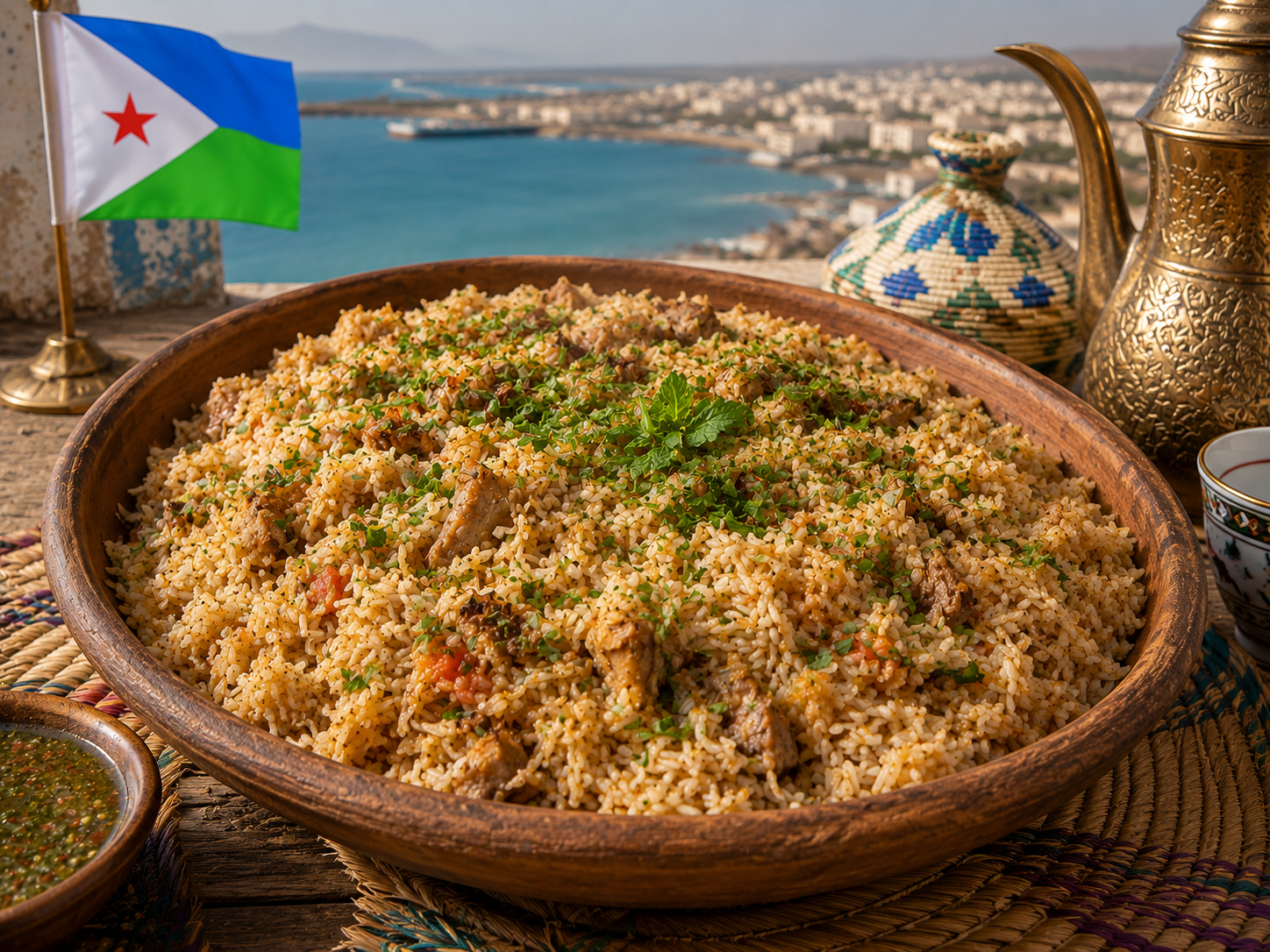
Skoudehkaris is one of the most famous dishes in Chad, but also in Djibouti, where it is often considered a national dish by some. It is a generous, fragrant dish deeply linked to Sahelian culinary culture. Prepared with rice, meat, vegetables, spices, and sometimes oil, it represents a complete, nourishing, and convivial meal. In Chad, this dish holds an important place in family meals, celebrations, and special occasions. It reflects both the taste of local cuisine and the influence of cultural exchanges with neighboring Sahelian regions.
Skoudehkaris is not just a popular dish. It also symbolizes a way of cooking with accessible products, while achieving a rich flavor. Its name, ingredients, and variations bear witness to a culinary history shaped by mobility, nomadic traditions, and the eating habits of the Chadian basin. Through this dish, one discovers a cuisine of sharing, warmth, and identity.
Prepare this speciality
Choose a detailed recipe, adjust the portions and prepare your ingredients before starting. Our cooking tips and food safety advice complement the steps described in the recipes.
Explore further: Cooking tips · Food hygiene and safety advice.
History and uses
🏺 HISTORICAL AND CULTURAL CONTEXT
Skoudehkaris is often associated with the cuisine of southern and central Chad, but it is appreciated in different regions of the country. It is part of a culinary heritage marked by the importance of rice, spicy sauces, and stewed meats. Chad, located at the crossroads of several cultural influences, has seen the development of a gastronomy that blends Sahelian and Central African traditions with contributions from regional exchanges. Historically, rice has progressively occupied an increasingly important place in the diet, especially in urban areas and festive meals. Skoudehkaris has thus gained popularity as a dish capable of feeding several people at once. It is often prepared during gatherings, as it can be cooked in large quantities and adapts to different types of meat or vegetables. Culturally, this dish is linked to conviviality. It is often served in families, at weddings, baptisms, religious holidays, or community meetings. It is also present in some restaurants and eateries, where it is appreciated for its frank taste and generous consistency.
🧾 INGREDIENTS FOR 6 PEOPLE
Main ingredients
- 500 g rice
- 500 g beef, mutton, or goat meat
- 2 medium onions
- 3 ripe tomatoes
- 2 cloves garlic
- 1 bell pepper
- 2 carrots
- 2 to 3 tablespoons oil
- 1 seasoning cube or salt to taste
- 1 teaspoon black pepper
- 1 teaspoon grated ginger
- 1 to 2 chilies (piments) depending on preference
- Approximately 1 liter of water
- 1 bay leaf, optional
Optional ingredients
- peas
- potatoes
- cabbage
- eggplant
- meat broth
- coriander or parsley
⏱️ PREPARATION AND COOKING TIME
- Ingredient preparation: 20 to 30 minutes
- Meat cooking: 30 to 45 minutes
- Rice and vegetable cooking: 20 to 25 minutes
- Total time: approximately 1 hour 15 minutes to 1 hour 45 minutes 👩🏾🍳 Detailed instructions
1. Prepare the meat
Cut the meat into regular pieces, then wash it. In a pot, cook it with a little water, salt, garlic, ginger, and a sliced onion. Simmer until tender. If the meat is a little fatty, you can remove some of the fat from the surface.
2. Prepare the vegetables
Slice the second onion. Cut the tomatoes, bell pepper, and carrots into small pieces. Also prepare the chili (piment) according to your taste. The vegetables give skoudehkaris its color and a good part of its flavor.
3. Sauté the base
In a large pot, heat the oil. Add the onion, then the garlic and ginger. Sauté for a few minutes. Then add the tomatoes and bell pepper. Let it reduce gently to obtain a thick and fragrant sauce.
4. Add the meat
Incorporate the pre-cooked meat into the sauce. Mix well so that the pieces absorb the flavors. Then add the carrots and, if desired, other vegetables such as potatoes or peas.
5. Add the rice
Rinse the rice, then pour it into the pot. Mix gently to distribute the rice evenly in the sauce. Add the necessary water for cooking, then season with the cube, salt, pepper, and bay leaf.
6. Final cooking
Cook over medium heat until all the liquid is absorbed. Check the doneness of the rice and the tenderness of the vegetables. If necessary, add a little hot water. The skoudehkaris should remain moist, well-flavored, and slightly wet without being too liquid.
7. Serve
Serve hot in a large dish. The dish can be garnished with parsley or coriander. It is often shared with family or guests.
In my books

Continue exploring the continent’s cuisines with Africa at the Table — 54 countries, 54 iconic dishes, by Alioune FALL. This book is in English.
Explore further
🍳 CHEF'S TIPS
- Use slightly fatty meat for more flavor.
- Reduce the tomato sauce well before adding the rice.
- Don't add too much water at once: adjust gradually.
- For a deeper taste, let the meat marinate a little before cooking.
- The rice should be rinsed to prevent it from sticking.
- Add vegetables according to their cooking time so they remain tender but not mushy.
- If you like spicy flavors, add chili (piment) at the end of cooking.
🌍 REGIONAL VARIATIONS
Skoudehkaris can vary according to the regions of Chad and according to families:
- with mutton in more festive versions
- with chicken in some urban areas
- with more vegetables in more balanced versions
- with fragrant or local rice depending on availability
- with a spicier sauce in some regions
- with additional spices like cloves or paprika Some families prepare it very dry, others with a more generous sauce. This depends on local tastes and habits.
🍽️ ACCOMPANIMENTS AND DRINKS
Skoudehkaris is often sufficient on its own, but it can be accompanied by:
- fresh salad
- crushed chili (piment écrasé)
- sautéed vegetables
- plantains
- extra sauce As for drinks, it can be paired with:
- fresh water
- bissap (hibiscus) juice
- ginger juice
- tamarind juice
- light local drink
🧠 NUTRITIONAL BENEFITS
Skoudehkaris is a complete dish that provides energy, protein, and micronutrients.
Rice
It mainly provides carbohydrates, thus energy.
Meat
It provides protein, iron, zinc, and B vitamins.
Vegetables
They contribute fiber, vitamins, and antioxidants.
Oil
It provides lipids and helps with satiety.
📊 APPROXIMATE NUTRITIONAL VALUES PER SERVING
For an average serving of approximately 300 to 400 g, we can estimate:
- Calories: 450 to 650 kcal
- Carbohydrates: 45 to 70 g
- Fiber: 3 to 7 g
- Protein: 18 to 30 g
- Lipids: 12 to 22 g
- Salt: 1 to 2.5 g depending on seasoning
Vitamins present
- vitamin B1
- vitamin B6
- vitamin B12
- vitamin C
- vitamin A if vegetables are well present
🌿 TIPS FOR A LIGHTER VERSION
- reduce the amount of oil
- add more vegetables
- use lean meat
- limit salt and seasoning cubes
- serve moderate portions
🌺 CONCLUSION
Skoudehkaris is an emblematic dish of Chad and Djibouti, illustrating the richness and generosity of local cuisine. Simple to prepare, nourishing, and flavorful, it accompanies moments of sharing and conviviality. Between rice, meat, vegetables, and spices, it embodies an everyday cuisine deeply linked to Chadian identity.
In the kitchen : Skoudehkaris
Recipes from the site to put your knowledge into practice:
Discover these cuisines at a restaurant
Explore our restaurant and caterer directories. Choose your destination and check the establishment’s menu to confirm which dishes are offered and available.
Continue exploring
Enjoy discovering ingredients and African cuisines? Join our newsletter. The illustrated PDF 10 sauces africaines incontournables is in French and is offered after confirming a subscription to the French or bilingual edition.