Matoké
East Africa
Understanding : Matoké
🌍 INTRODUCTION
Matoké — often also spelled matoke — is one of the most emblematic foods of East Africa and the Great Lakes region. Made from green plantains, it is prepared in multiple ways: boiled, mashed, stewed, served with peanut sauce, meat, fish, or vegetables. Its presence in daily meals as well as on special occasions makes it a staple food in several African countries, particularly in Uganda, Rwanda, Burundi, Tanzania, Kenya, and certain areas of the Democratic Republic of Congo.
Matoké is not just a staple food. It is also a powerful cultural marker. It evokes the land, agriculture, home, the transmission of culinary know-how, and the deep connection between communities and their environment. In many families, cooking matoké is seemingly a simple act, but it is laden with memory, domestic routine, and conviviality. It is a dish that brings people together and satisfies, while carrying a strong identity.
Where to find it
Look for the exact food-grade form required by the recipe at markets and specialist shops. Check the product name, ingredients, condition and storage instructions.
Explore further: Cooking tips · Food hygiene and safety advice.
History and uses
#🌱 WHAT IS MATOKÉ?
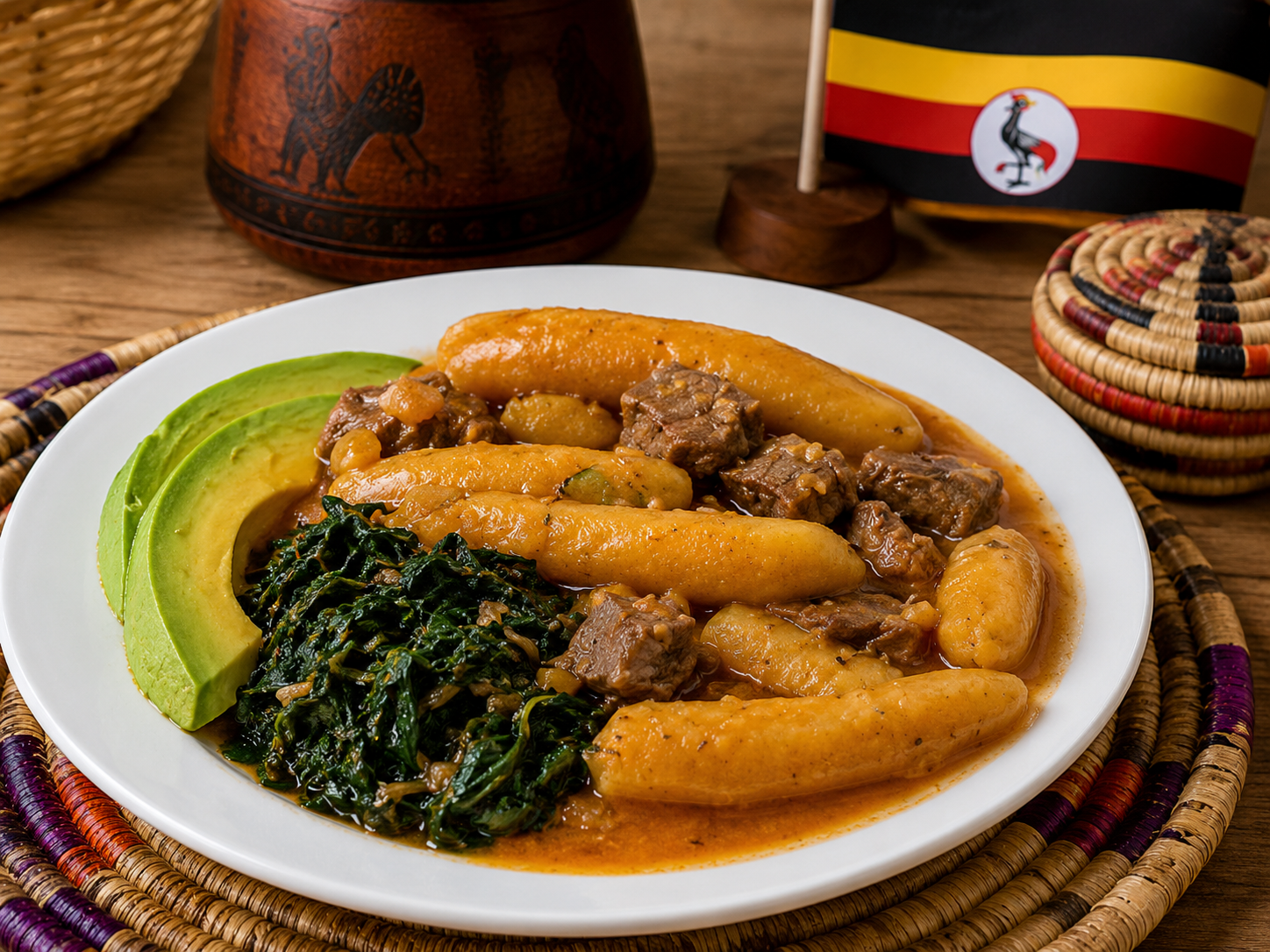
Matoké primarily refers to the green plantain used as food. Unlike sweet bananas consumed ripe as dessert, matoké is harvested before maturity, when it is firm, rich in starch, and suitable for cooking. Once prepared, it takes on a tender, slightly floury, and very comforting texture.
🍃 IN WHAT FORM IS IT CONSUMED?
Matoké can be:
- boiled in pieces
- steamed in banana leaves
- mashed into a purée
- stewed in a sauce
- served with legumes, meat, or fish In some regions, the term “matoké” can refer to both the raw product and the prepared dish. It is therefore a culinary word that is both simple and nuanced depending on the country and context.
🏞️ A MAJOR STAPLE FOOD IN EAST AFRICA
Matoké holds a very important place in the cuisine of several East African countries. In terms of its daily role, it is often comparable to rice, corn, or cassava in other regions of the continent. 🇺🇬 In Uganda Uganda is undoubtedly the country most associated with matoké. It is often considered a national food there. Served with peanut, bean, or meat sauce, it constitutes a central meal in many households. 🇷🇼 In Rwanda and 🇧🇮 Burundi In the Great Lakes region, matoké is highly appreciated as a side dish or main course. It often accompanies beans, vegetable sauces, stews, and fish or meat preparations. 🇹🇿 In Tanzania and elsewhere In certain Tanzanian and border areas, matoké is also very present, in slightly different forms according to local traditions.
🍽️ PLACE OF MATOKÉ IN AFRICAN CUISINE
Matoké is important in African cuisine for several essential reasons.
- 🍌 A nourishing staple food Matoké is rich in complex carbohydrates, making it a sustainable source of energy. It is filling without being too heavy and forms an ideal base for family meals.
- 🤝 A food for sharing Like many African staple foods, matoké is often served in a large communal dish. People eat together, which strengthens family and community ties.
- 🌾 An accessible agricultural product Plantains are widely cultivated in tropical regions. Their seasonal or near-continuous availability makes them a strategic ingredient for food security.
- 👩🏾🍳 A versatile food Matoké lends itself to many preparations:
- simple version with salt and water
- version in sauce
- version with vegetables
- version with peanuts
- version with meat or fish
- 🌍 A strong regional symbol Matoké is one of the most recognized culinary markers of East Africa. It connects cuisine to the local land, rural habits, and domestic traditions.
In my books

Continue exploring the continent’s cuisines with Africa at the Table — 54 countries, 54 iconic dishes, by Alioune FALL. This book is in English.
Explore further
👩🏾🍳 PREPARATION METHODS
The preparation of matoké varies by region and family, but some principles often recur. 🧺 Step 1: peeling Green plantains are first carefully peeled. Their thick skin and latex require a bit of technique. 🔪 Step 2: cutting They are cut into medium pieces to facilitate cooking. 🔥 Step 3: cooking They can be cooked:
- in water
- steamed
- in a banana leaf
- directly with a sauce 🥄 Step 4: mashing or mixing In some recipes, the pieces are lightly mashed to obtain a more homogeneous texture.
🌿 NUTRITIONAL VALUE OF MATOKÉ
Matoké is appreciated not only for its mild flavor but also for its nutritional value. ✅ Main contributions
- carbohydrates: source of energy
- fiber: supports intestinal transit
- potassium: useful for water and muscle balance
- vitamin B6: contributes to energy metabolism
- magnesium: beneficial for the body
- low fat content Matoké is therefore a satisfying and relatively healthy food when prepared without excessive fat.
🍲 MATOKÉ AND AFRICAN SAUCES
Matoké is rarely consumed alone in traditional meals. It takes on its full dimension when paired with a sauce. 🫘 With beans This is one of the most classic pairings. Beans provide the vegetable protein necessary for a balanced meal. 🥜 With peanut sauce Peanut sauce gives matoké a rich texture and deep flavor. 🐟 With fish Matoké goes very well with grilled, smoked, or stewed fish. 🍖 With meat Beef, goat, or chicken stews pair very well with its mild texture.
🧭 CULTURAL AND SYMBOLIC PLACE
Matoké is not limited to its dietary role. It is also a cultural and identity marker. 🏡 In family life It often represents the home meal, prepared with care and shared in a spirit of simplicity. 🎉 In ceremonies Matoké can be served at weddings, family celebrations, community gatherings, or welcoming moments. 📚 In transmission Preparation techniques are passed down from generation to generation, often through observation and practice.
🌟 CONCLUSION
Matoké holds a prominent place in African cuisine, particularly in East Africa and the Great Lakes region. A staple food, a symbol of sharing, and a local product, it connects agriculture, family life, and cultural identity. Its versatility, nutritional value, and place in culinary traditions make it an essential dish, both simple and deeply significant.
In African cuisine, matoké embodies a simple truth: the humblest foods are often the richest in history, culture, and human connection. 🍌🌍
In the kitchen : Matoké
Recipes from the site to put your knowledge into practice:
Discover these cuisines at a restaurant
Explore our restaurant and caterer directories. Choose your destination and check the establishment’s menu to confirm which dishes are offered and available.
Continue exploring
Enjoy discovering ingredients and African cuisines? Join our newsletter. The illustrated PDF 10 sauces africaines incontournables is in French and is offered after confirming a subscription to the French or bilingual edition.