Amiwo
Benin, Togo, Ghana
Understanding : Amiwo
🌍 INTRODUCTION
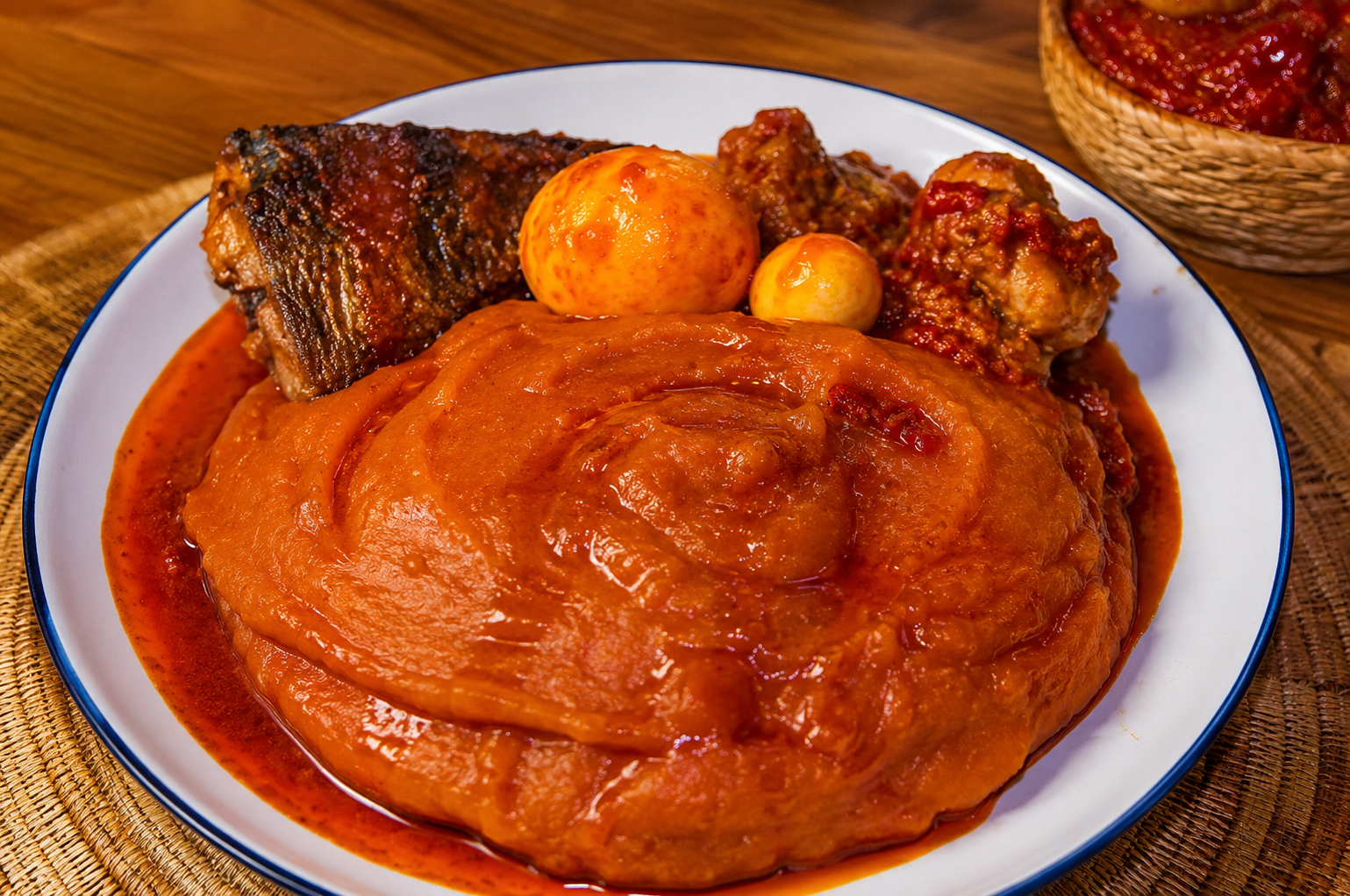
Amiwo is a very popular traditional dish in West Africa, particularly in Togo and in some neighboring regions of Benin and Ghana. It is a preparation based on cooked corn flour, often served with a spicy tomato sauce, fish, meat, or vegetables. Simple in its composition, amiwo is nevertheless a dish rich in identity, conviviality, and culinary memory. It holds an important place in family meals, ceremonies, celebrations, and everyday tables. In African cuisine, amiwo represents one of those staple dishes that nourish, bring people together, and tell the story of a people. It embodies the ingenuity of traditional cuisines, capable of transforming modest ingredients into complete, tasty, and generous meals. Prepared with care, amiwo offers a flexible texture, a slightly sweet taste, and an excellent ability to pair with many sauces.
Prepare this speciality
Choose a detailed recipe, adjust the portions and prepare your ingredients before starting. Our cooking tips and food safety advice complement the steps described in the recipes.
Explore further: Cooking tips · Food hygiene and safety advice.
History and uses
🌾 WHAT IS AMIWO?
Amiwo is essentially a red or white corn paste, cooked for a long time in water with condiments, until it obtains a firm but tender consistency. Depending on the region and family habits, it can be drier, stickier, or more flexible. #🍲 A versatile food base Amiwo is not a very complex dish, but it plays a fundamental role:
- it serves as a filling base
- it accompanies thick sauces
- it helps to promote local corn
- it adapts to festive recipes as well as simple meals In some families, it is also referred to as red corn paste, especially when the sauce or condiments give it a more sustained color.
🏞️ Place of amiwo in Togo and West Africa
Amiwo is very present in Togolese cuisine, where it is associated with fish, meat, or vegetable sauces. In West Africa, corn-based preparations are numerous, but amiwo has a particular identity thanks to its texture and seasoning. 🇹🇬 In Togo Amiwo is a common dish in homes and popular restaurants. It is often served with:
- a spicy tomato sauce
- chicken
- fish
- meat in sauce 🇧🇯 In Benin Similar preparations exist, with local variations in texture, sauce, and seasoning. 🌍 In the sub-region Corn is a central food in many West African cuisines, which brings amiwo closer to other paste or semolina dishes based on cereals.
👩🏾🍳 HOW IS AMIWO PREPARED?
The preparation of amiwo requires attention, as the corn flour must be well cooked to avoid lumps and obtain a homogeneous texture. 🧺 Step 1: preparation of the base Start by mixing corn flour with cold water to form a smooth paste. 🔥 Step 2: gradual cooking This paste is then poured into boiling water or a hot sauce. It must be stirred constantly to prevent the preparation from sticking. 🥄 Step 3: thickening As it cooks, the amiwo thickens and takes on a firm consistency. 🌶️ Step 4: seasoning Salt, tomato, onion, sometimes chili, and local spices are added to enrich the flavor.
In my books

Continue exploring the continent’s cuisines with Africa at the Table — 54 countries, 54 iconic dishes, by Alioune FALL. This book is in English.
Explore further
🍅 WITH WHICH SAUCES IS AMIWO EATEN?
Amiwo is rarely eaten alone. Its strength lies in its association with flavorful sauces. 🐟 Fish sauce Very popular, it combines fresh or smoked fish, tomatoes, onions, and spices. 🍖 Meat sauce Beef, mutton, or chicken are often used in thick sauces. 🌿 Vegetable sauce Amiwo also goes very well with sauces based on eggplants, okra, or leafy greens. 🥜 Peanut sauce In some variations, a peanut sauce can also be served with the corn.
🌿 NUTRITIONAL VALUE OF AMIWO
Amiwo is primarily a source of energy thanks to corn. ✅ Main contributions
- carbohydrates: source of quick and lasting energy
- fiber: useful for intestinal transit, especially if the corn is minimally refined
- a little vegetable protein
- low fat content if the dish is not too oily 🧠 Nutritional interest Amiwo is very filling and provides an excellent base to accompany sauces rich in protein and vegetables. Eaten alone, however, it remains relatively low in protein, hence the importance of pairing it with a balanced sauce.
🍽️ PLACE OF AMIWO IN AFRICAN CUISINE
Amiwo holds an important place in African cuisine for several reasons.
- 🌾 An emblematic cereal dish It promotes corn, a cereal very present in African food systems.
- 🤝 A dish for sharing It is often prepared in large quantities and shared with family.
- 🍲 An economical dish Corn is accessible and can feed several people at a lower cost.
- 🎉 A festive dish Amiwo can be served during ceremonies, visits, or important meals.
- 🧑🏾🍳 Transmitted culinary knowledge Its success depends on the technique, cooking time, and seasoning.
🧭 CULTURAL SIGNIFICANCE
Amiwo is not just food: it belongs to a set of culinary practices that tell the story of daily life, conviviality, and transmission. 🏡 In the home It is often prepared to feed the family with simplicity and efficiency. 🎊 In celebrations It can be associated with richer dishes to mark the event. 📚 In culinary memory It represents a basic cuisine, but also an identity cuisine.
🌟 CONCLUSION
Amiwo holds an important place in African cuisine, especially in Togo and neighboring countries. A simple but nourishing corn dish, it accompanies meat, fish, or vegetable sauces and embodies the richness of everyday cuisines. Its value lies as much in its nutritional function as in its social and cultural role. Like many traditional African dishes, it shows that a humble ingredient can become a strong symbol of sharing, identity, and know-how.
In the kitchen : Amiwo
Recipes from the site to put your knowledge into practice:
Discover these cuisines at a restaurant
Explore our restaurant and caterer directories. Choose your destination and check the establishment’s menu to confirm which dishes are offered and available.
Continue exploring
Enjoy discovering ingredients and African cuisines? Join our newsletter. The illustrated PDF 10 sauces africaines incontournables is in French and is offered after confirming a subscription to the French or bilingual edition.