Ibiharage
Rwanda, Burundi
Understanding : Ibiharage
🌱 INTRODUCTION
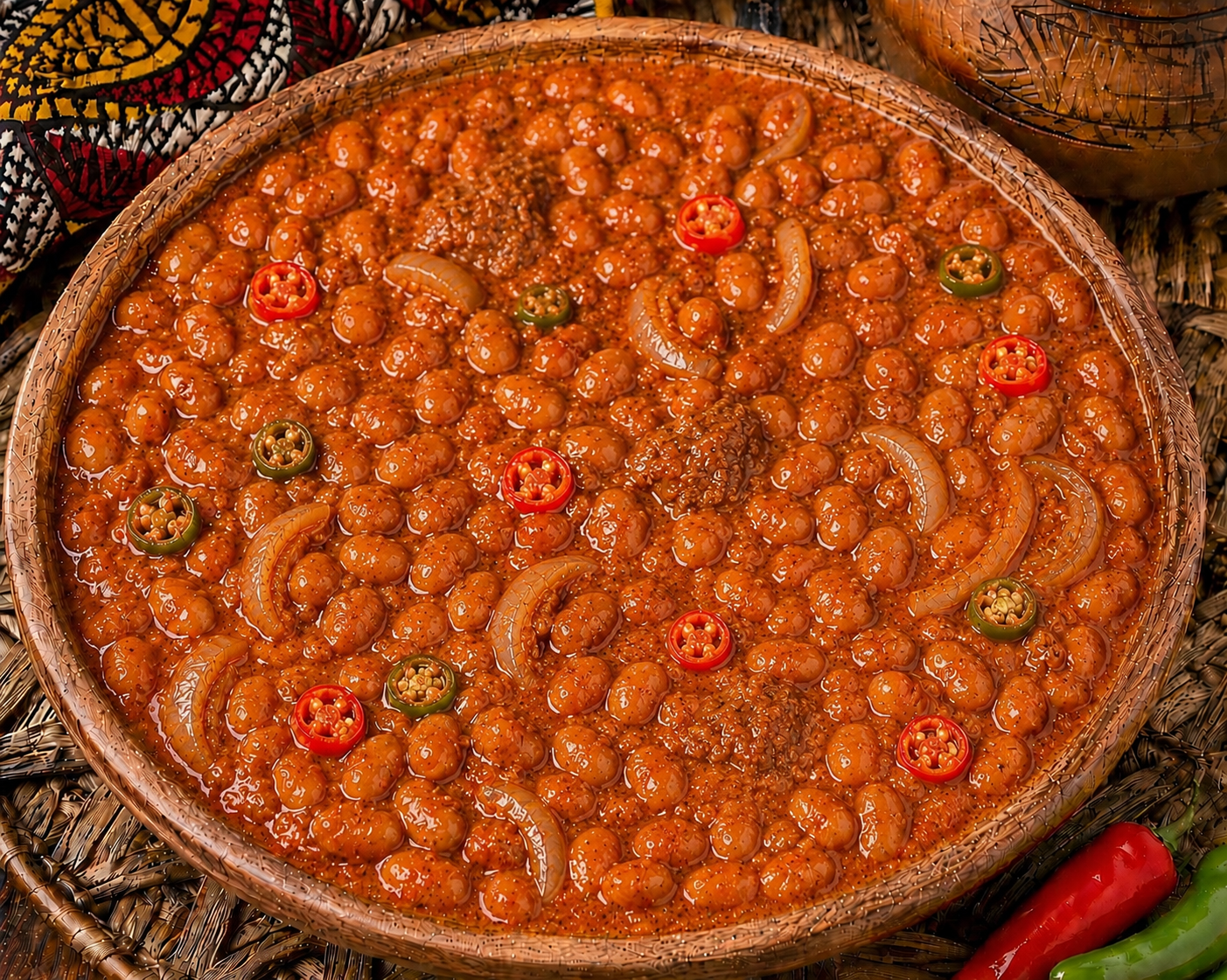
Ibiharage is an emblematic dish of Rwandan cuisine, and more broadly of certain culinary traditions in the Great Lakes region. The word ibiharage refers to beans, a fundamental food in the daily diet of many families in Rwanda, Burundi, and neighboring areas. When ibiharage is mentioned in a culinary context, it often refers to stewed beans, prepared with onions, tomatoes, oil, and sometimes spices or local vegetables. It is a simple, economical, nutritious dish deeply rooted in domestic life.
In African cuisine, beans hold a prominent place, as they provide vegetable protein, fiber, and a lasting feeling of satiety. Ibiharage is one of the best examples of how a modest food can become a dietary pillar, a cultural landmark, and an essential part of family meals. It is appreciated in both rural homes and cities, and its simplicity does not detract from its symbolic richness.
Prepare this speciality
Choose a detailed recipe, adjust the portions and prepare your ingredients before starting. Our cooking tips and food safety advice complement the steps described in the recipes.
Explore further: Cooking tips · Food hygiene and safety advice.
History and uses
🫘 WHAT IS IBIHARAGE?
Ibiharage primarily refers to beans cooked in a sauce or simply stewed until tender. Depending on the household, they can be red, white, speckled, or black. The most important aspect remains the slow cooking, which allows the beans to become tender and flavorful.
🍲 A DAILY FOOD STAPLE
Ibiharage is regularly consumed in many households because it is:
- affordable
- nutritious
- easy to store
- rich in nutrients
- adaptable to several recipes It can be served alone, but it is most often accompanied by a starchy food such as rice, plantain, cassava, ugali (a stiff porridge made from cornmeal or other flours), fufu (a dough-like food made from starchy root vegetables or grains), or matoke (steamed green bananas).
🏞️ PLACE OF IBIHARAGE IN RWANDA AND THE GREAT LAKES REGION
Ibiharage holds an essential place in Rwandan meals. In many families, it is a common, almost indispensable food, prepared several times a week. Its popularity is explained by its availability, but also by its nutritional role. 🇷🇼 In Rwanda In Rwanda, beans are one of the pillars of the diet. They are often cooked with vegetables and served with local accompaniments. Ibiharage is considered a family dish, filling and practical. 🇧🇮 In Burundi Burundi shares many culinary traditions with Rwanda. Beans are also very present there, often prepared in a similar way to Rwandan ibiharage. 🌍 In the African region Throughout East Africa and the Great Lakes, legumes play a crucial role in food security. Ibiharage is therefore part of a broader food culture based on pulses, cereals, and tubers.
👩🏾🍳 HOW IS IBIHARAGE PREPARED?
The preparation of ibiharage is simple, but it requires time to achieve a pleasant texture. 🧺 Step 1: Washing and sorting The beans are first sorted to remove small stones or damaged grains. 🧺 Step 2: Soaking They can be soaked for several hours to reduce cooking time. 🔥 Step 3: Slow cooking The beans are then cooked in water until tender. This cooking can take a long time depending on the variety. 🧅 Step 4: Adding aromatics Onions, tomatoes, garlic, salt, and sometimes oil are often added. 🍅 Step 5: Final simmering Everything simmers together to create a fragrant and homogeneous preparation.
In my books

Continue exploring the continent’s cuisines with Africa at the Table — 54 countries, 54 iconic dishes, by Alioune FALL. This book is in English.
Explore further
🍽️ WHAT TO EAT IBIHARAGE WITH?
Ibiharage pairs very well with several staple foods. 🍚 With rice This is a very popular and balanced combination. 🍌 With matoke In the Great Lakes region, this is a classic accompaniment. 🌽 With ugali or corn paste Very common in East Africa. 🍠 With cassava Boiled or pounded cassava complements the texture of the beans well. 🥔 With potato In some modern versions, potatoes complete the dish.
🌿 NUTRITIONAL VALUE OF IBIHARAGE
Ibiharage is particularly interesting from a nutritional point of view. ✅ Main contributions
- vegetable proteins
- dietary fiber
- complex carbohydrates
- iron
- magnesium
- potassium
- folates 🧠 Health benefits Beans help maintain satiety, support digestion, and contribute to protein intake, especially in diets where meat is less frequent.
🍲 PLACE OF IBIHARAGE IN AFRICAN CUISINE
Ibiharage has great importance in African cuisine, as it embodies several fundamental values.
- 🫘 An economical and nutritious food It allows entire families to be fed at a moderate cost.
- 🤝 A dish for sharing It is often prepared in large quantities and consumed together.
- 🌱 A symbol of useful simplicity It shows that a basic ingredient can become a complete and satisfying dish.
- 🧑🏾🍳 A modular dish It can be enriched with oil, vegetables, meat, or fish depending on the means.
- 🌍 A strong regional landmark It is part of the culinary identities of the Great Lakes region.
🧭 CULTURAL SIGNIFICANCE
Ibiharage is associated with daily life, family solidarity, and the transmission of culinary know-how. 🏡 In the family It is often prepared for ordinary meals, to feed the whole household. 🎊 During celebrations It can accompany richer dishes during ceremonies. 📚 In transmission The way of cooking beans is passed down from mother to daughter, or more broadly within the family.
🌟 CONCLUSION
Ibiharage is much more than just a simple bean dish. It is an essential base of Rwandan cuisine and the Great Lakes region, an everyday food that carries strong cultural, social, and nutritional value. Its place in African cuisine is explained by its nourishing, economical, and adaptable nature. It represents a deeply human daily cuisine, where simplicity rhymes with memory, sharing, and balance.
In the kitchen : Ibiharage
Recipes from the site to put your knowledge into practice:
Discover these cuisines at a restaurant
Explore our restaurant and caterer directories. Choose your destination and check the establishment’s menu to confirm which dishes are offered and available.
Continue exploring
Enjoy discovering ingredients and African cuisines? Join our newsletter. The illustrated PDF 10 sauces africaines incontournables is in French and is offered after confirming a subscription to the French or bilingual edition.