Ngoundja
Central African Republic, Central Africa
Understanding : Ngoundja
🌍 INTRODUCTION
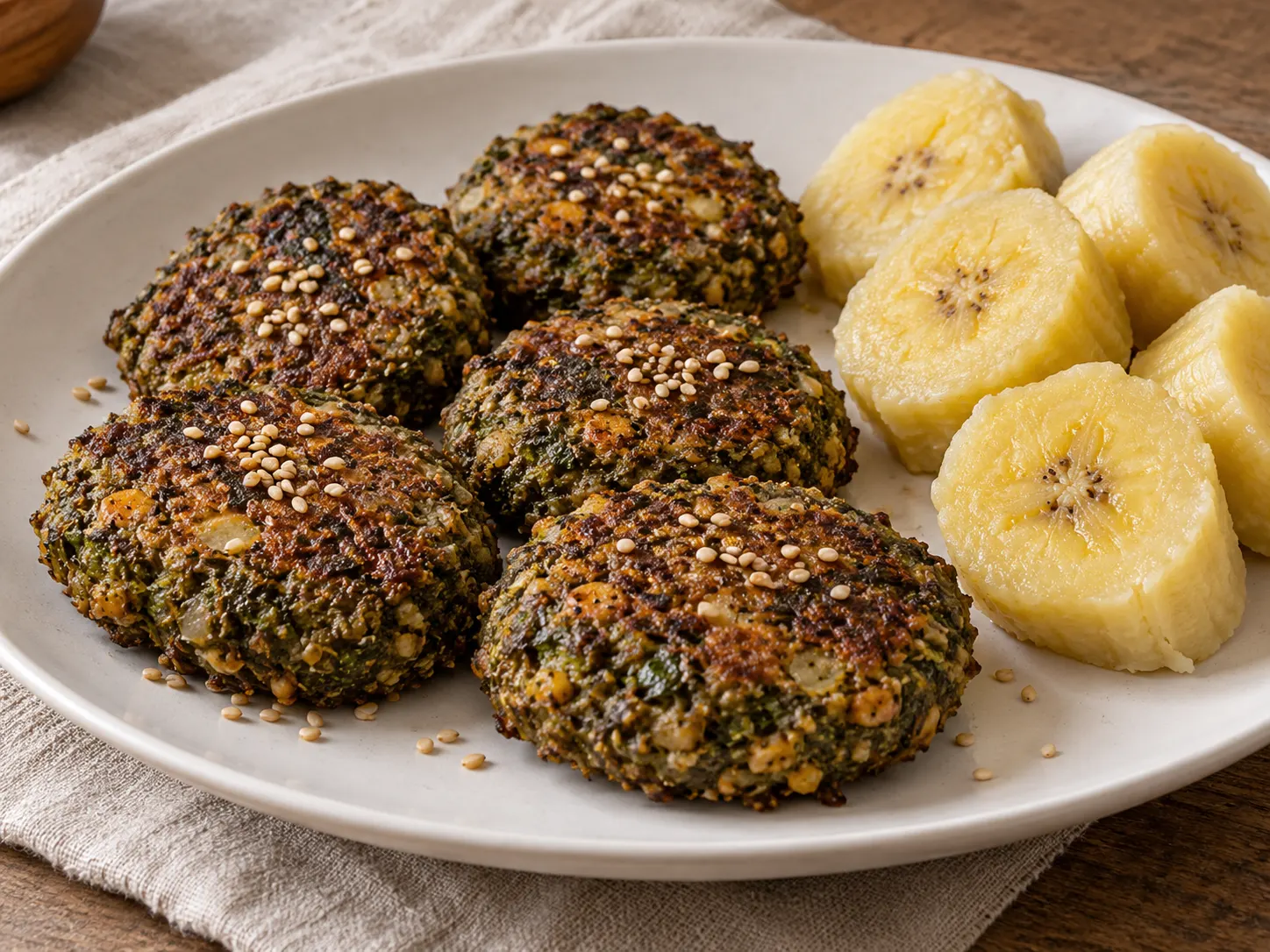
Ngoundja, often compared to saka-saka in several regions of Central Africa, is a traditional dish made from cassava leaves, meticulously prepared, pounded or finely chopped, then simmered with condiments, oil, fish, meat, or other ingredients according to local customs. Highly appreciated in Congo, Central African Republic, DRC, Gabon, and some neighboring areas, it is one of those dishes that embody everyday cooking, family memory, and the richness of the land.
In African cuisine, ngoundja holds an essential place because it highlights an available, robust ingredient deeply linked to local agriculture: the cassava leaf. This dish shows how communities have transformed a simple resource into a flavorful, nourishing, and symbolic preparation. It often accompanies foufou, cassava, rice, or gozo, and is served in both ordinary meals and special occasions.
Prepare this speciality
Choose a detailed recipe, adjust the portions and prepare your ingredients before starting. Our cooking tips and food safety advice complement the steps described in the recipes.
Explore further: Cooking tips · Food hygiene and safety advice.
History and uses
🌱 WHAT IS NGOUNDJA?
The term ngoundja generally refers to a sauce or stew of pounded cassava leaves. The word ngoundja can, depending on the regions and languages, designate a similar or equivalent preparation, sometimes with variations in texture, ingredients, or name. What brings them together is the central use of cassava leaves as a base.
🍲 A VEGETABLE AND FLAVORFUL PREPARATION
Ngoundja is often cooked with:
- cassava leaves
- palm oil or vegetable oil
- onions
- tomatoes
- garlic
- smoked fish
- dried shrimp
- meat
- peanut paste in some variations
The recipe changes from one family to another, but the spirit remains the same: a rich, creamy dish rooted in local customs.
🏞️ NGOUNDJA'S PLACE IN CENTRAL AFRICA
This dish is particularly important in Central Africa, where cassava is a staple food crop. 🇨🇬 In Congo Saka-saka is a very well-known dish, often served with foufou or rice. It is considered a popular and identity-defining meal. 🇨🇩 In DRC Cassava leaves are very present in the diet, with versions similar to saka-saka, pondu, or leaf sauce. 🇨🇫 In Central African Republic Ngoundja or similar preparations are consumed in households, often with cassava, gozo, or foufou. 🌍 In neighboring countries The principle is also found in Gabon, Angola, and other regions where cassava plays a strategic role.
👩🏾🍳 HOW IS NGOUNDJA PREPARED?
Preparation requires time and know-how, especially to properly process the cassava leaves. 🧺 Step 1: Leaf preparation The leaves are washed, destemmed, then pounded or finely chopped. 💧Step 2: Pre-cooking They are often boiled to remove bitterness and make them more digestible. 🔥 Step 3: Cooking in sauce Onion, garlic, tomato, oil, then fish or meat are added. 🥄 Step 4: Simmering Everything cooks slowly until a thick and fragrant sauce is obtained.
In my books

Continue exploring the continent’s cuisines with Africa at the Table — 54 countries, 54 iconic dishes, by Alioune FALL. This book is in English.
Explore further
🍽️ WHAT TO EAT NGOUNDJA WITH?
This dish is rarely eaten alone. 🍚 With rice Very common in cities and modern households. 🍠 With cassava Boiled or fermented cassava perfectly accompanies the sauce. 🍽️ With foufou This is one of the most traditional pairings. 🌽 With gozo or local pastes Depending on the region, it can accompany corn or root-based preparations.
🌿 NUTRITIONAL VALUE
Ngoundja is an interesting dish from a nutritional perspective. ✅ What it provides
- dietary fiber
- vitamins, especially A and C depending on cooking
- minerals like iron and calcium
- protein if fish, meat, or peanuts are added
- energy if palm oil is used 🧠 Nutritional interest Cassava leaves provide useful nutrients, especially when well cooked and combined with a protein source.
🍲 PLACE IN AFRICAN CUISINE
Ngoundja holds a very important place in African cuisine.
- 🌿 A dish that highlights leaves It shows that edible leaves are noble ingredients.
- 🤝 A dish for sharing It is often prepared in large quantities for family or guests.
- 🧑🏾🍳 Transmitted know-how Pounding, cooking, and seasoning are learned over time.
- 🌍 A regional landmark It is associated with Central Africa, but similar forms exist in other parts of the continent.
- 🍽️ A complete dish With fish, meat, or peanuts, it becomes a very balanced meal.
🧭 CULTURAL DIMENSION
Ngoundja or saka-saka is linked to culinary memory, domestic life, and communal meals. 🏡 In families It represents an everyday dish, often prepared with care. 🎉 In ceremonies It can be served at celebrations, reunions, and large meals. 📚 In transmission It is one of the recipes passed down through observation and practice.
🌟 CONCLUSION
Ngoundja or saka-saka holds a major place in African cuisine, especially in Central Africa. A cassava leaf dish, rich in meaning and flavors, it connects the land, know-how, and conviviality. It shows how simple cuisine can become a strong symbol of identity, sharing, and cultural continuity. 🍲🌿🌍
In the kitchen : Ngoundja
Recipes from the site to put your knowledge into practice:
Discover these cuisines at a restaurant
Explore our restaurant and caterer directories. Choose your destination and check the establishment’s menu to confirm which dishes are offered and available.
Continue exploring
Enjoy discovering ingredients and African cuisines? Join our newsletter. The illustrated PDF 10 sauces africaines incontournables is in French and is offered after confirming a subscription to the French or bilingual edition.