Cassava Stick
Central Africa, West Africa
Understanding : Cassava Stick
🌿 INTRODUCTION
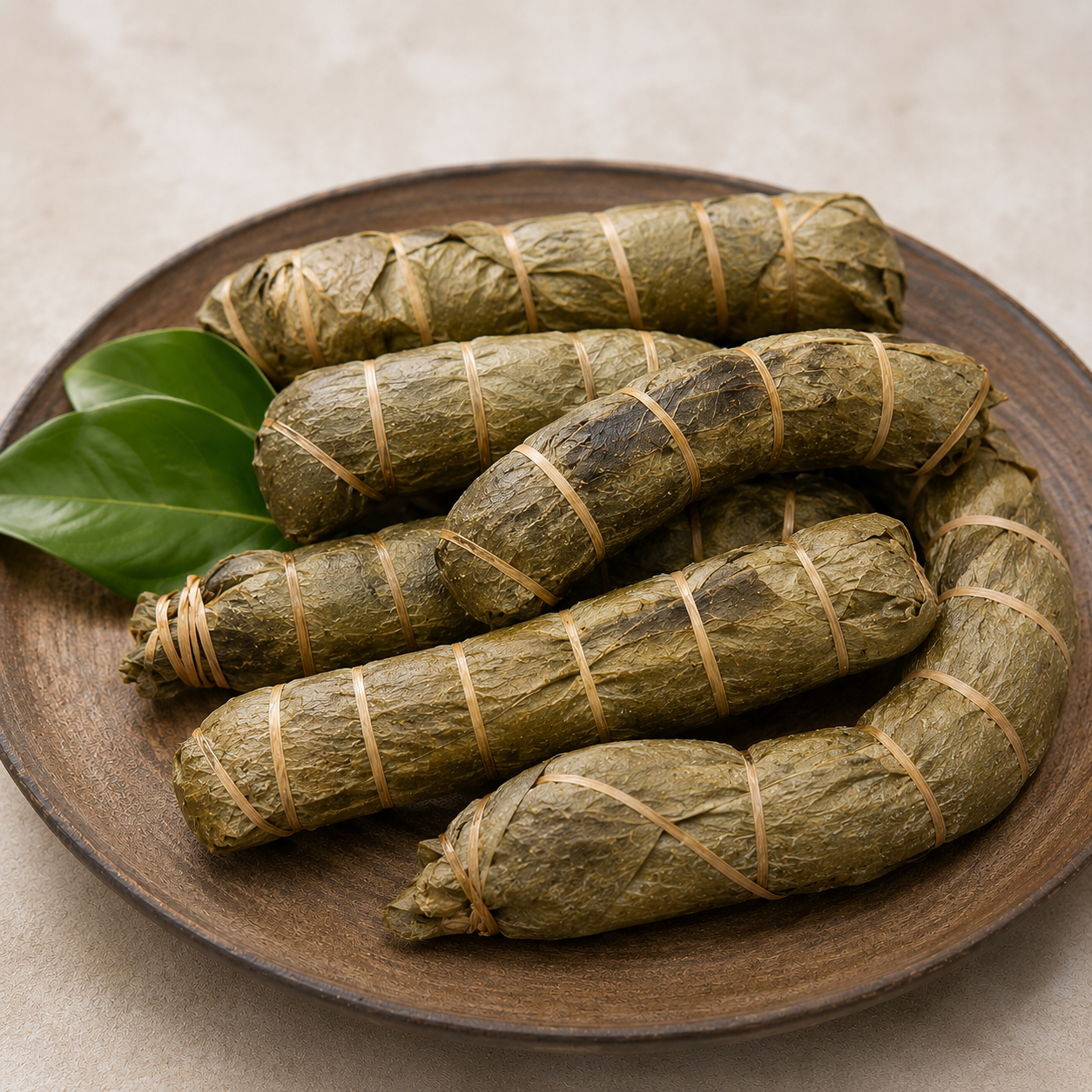
The cassava stick is one of the most emblematic foods in many regions of Central and West Africa. At first glance, it may seem simple: processed cassava paste, shaped into an elongated form, wrapped in leaves, then cooked. Yet, behind this apparent simplicity lies an immense culinary heritage, a deep agricultural history, demanding technical expertise, and an essential social function. The cassava stick is not just a side dish placed on the plate 🍽️; it is a living memory passed down from generation to generation, a bridge between the land 🌍, the kitchen 🍲, and the community 🤝.
In many African homes, it is associated with familiar scenes: morning markets, steaming pots, family meals, village festivals, Sundays at grandparents' houses. For the African diaspora, it often becomes a food of nostalgia and cultural reconnection ❤️. Understanding the cassava stick means understanding an essential part of African cuisine: its practical intelligence, its regional diversity, and its ability to create connections.
Where to find it
Look for the exact food-grade form required by the recipe at markets and specialist shops. Check the product name, ingredients, condition and storage instructions.
Explore further: Cooking tips · Food hygiene and safety advice.
History and uses
🌱 AGRICULTURAL ORIGINS AND THE IMPORTANCE OF CASSAVA IN AFRICA
Before discussing the stick itself, we must return to the raw material: cassava. Cassava is a root that holds a central place in the diet of millions of people in Africa. Its main strength is its resilience: it grows in sometimes poor soils, withstands difficult climatic conditions, and provides a food safety net for many rural communities 👩🏾🌾👨🏾🌾. This robustness explains its success. In several countries, cassava has become a strategic crop, not only for feeding families but also for supporting local economies. It can be processed into multiple forms: flour, semolina, paste, chips, gari, attiéké, fufu, tapioca, and of course, cassava stick. This versatility makes it an extraordinary culinary asset. Each transformation meets a specific need: preservation, transport, taste, texture, digestibility, festive or daily use. The cassava stick, in this logic, is a particularly ingenious form: it concentrates energy and practicality, while offering good shelf life compared to the fresh root.
🧺 TRADITIONAL MANUFACTURING: patient and precise expertise The preparation of cassava stick requires experience. It is not an improvised operation. The steps vary by region, but a common structure is often found:
- Peeling and washing the roots
- Controlled fermentation
- Grinding or pounding
- Pressing to adjust moisture
- Shaping into elongated portions
- Wrapping in plant leaves
- Steaming or boiling Fermentation is a key step 🧪. It influences taste, texture, and food safety. Raw cassava contains compounds that must be reduced by appropriate processes. Traditional knowledge has developed these techniques empirically, with impressive precision: resting time, expected odor, desired acidity level, pressure applied to the paste, choice of leaves. The wrapping in leaves is not just aesthetic 🍃. It protects the paste, sometimes imparts a particular flavor, facilitates cooking, and allows for transport. In some regions, the type of leaf is a marker of local culinary identity.
🍲 TASTE PROFILE AND USES AT THE TABLE
The cassava stick has a relatively neutral taste with a slight acidity depending on the level of fermentation. This discretion is its strength: it accompanies powerful sauces without stealing the show. It acts as a taste and textural support.
It is often consumed with:
- peanut sauces 🥜
- spicy sauces 🌶️
- pounded leafy greens 🥬
- smoked or grilled fish 🐟
- meat stews
- okra preparations
Its texture, both dense and supple, allows sauces to be easily scooped up. In many African culinary cultures, the “starch + sauce” combination is the basic structure of a complete meal. The cassava stick plays the same role as other regional side dishes: it satisfies, balances, and brings people together.
🗺️ REGIONAL DIVERSITY: one food, multiple identities There is no single “standard” cassava stick. Depending on the country, language, and region, significant differences are observed:
- length and diameter of the stick
- acidity level
- fermentation time
- type of leaves
- cooking time and method
- serving method (hot, warm, reheated) Some versions are more compact, others more tender. Some have a stronger fermented smell, others are milder. This diversity reflects the richness of African cuisines: the same base is adapted according to ecosystems, tastes, and local histories 🌍. This plurality is valuable because it avoids reducing African cuisine to a uniform image. The cassava stick is an excellent example of cultural variation around a shared product.
In my books

Continue exploring the continent’s cuisines with Africa at the Table — 54 countries, 54 iconic dishes, by Alioune FALL. This book is in English.
Explore further
🤝 SOCIAL FUNCTION: food for sharing and memory The cassava stick is deeply linked to conviviality. It appears in ordinary family meals but also in important moments: ceremonies, celebrations, community gatherings, returns to the village, religious festivals 🎉. In these contexts, it symbolizes generosity and hospitality. Sauces are shared, portions are distributed, and people eat together around the same dish. This food gesture strengthens social bonds: respect for elders, attention to guests, and the learning of culinary codes by the younger generation. For African diasporas, it also has strong emotional value 🧡. Finding it in a specialized grocery store or preparing it at home helps maintain a connection with one's origins. It's not just “eating a product from home”; it's reliving an atmosphere, a language, a way of being together.
💼 ECONOMIC ROLE: markets, processing, and local incomes** The cassava stick is also a strategic economic product. Its value chain involves many actors:
- root farmers
- artisanal processors
- transporters
- market vendors 🛍️
- street and neighborhood restaurateurs In several regions, women play a central role in this economy, particularly in processing and marketing 👩🏾🍳. The cassava stick creates value from a perishable raw material. Quickly transforming cassava into a more stable product limits post-harvest losses and improves incomes. In urban areas, it also meets a practical demand: a familiar, filling, available, and relatively affordable food. In bus stations, markets, and popular canteens, it circulates as daily food, ready to accompany many sauces.
📚 CULINARY HERITAGE AND RECOGNITION OF AFRICAN KNOWLEDGE
The cassava stick embodies the technical intelligence of African cuisines. Fermenting, pressing, wrapping, cooking, preserving: these actions demonstrate a deep knowledge of materials and local constraints. For a long time, this knowledge was underestimated in dominant gastronomic narratives. Today, it deserves full recognition, just like other global culinary traditions. Talking about the cassava stick also means defending the idea that gastronomy is not limited to the haute cuisine of Michelin-starred restaurants. It also lives in popular markets, family kitchens, repeated gestures, and orally transmitted recipes. This is where true cultural food sovereignty is built ✨.
🔄 MODERNITY AND EVOLUTION: between tradition and innovation The tradition of the cassava stick continues to evolve. In some cities, we observe:
- modernized packaging
- reinforced hygiene processes
- formats adapted for quick sale
- revisited presentations in contemporary restaurants These changes do not mean the disappearance of tradition. On the contrary, they show its vitality. A culinary tradition survives when it knows how to adapt without losing its profound meaning. The cassava stick is a good example of this: it remains faithful to its foundations while responding to the urban, economic, and diasporic realities of our time 🌆.
🏁 CONCLUSION: a discreet but central pillar of African cuisine The cassava stick holds a major place in African cuisine because it brings together several dimensions at once: nutrition, culture, economy, memory, and sociability. It is a staple food, yes, but also a symbol of continuity between generations, a marker of belonging, and a demonstration of African culinary genius.
It connects the field to the plate, technique to emotion, history to the future. In every stick, there are hands working, knowledge circulating, families sharing, and territories expressing themselves. That is why its place is so important: it not only nourishes the body but also nourishes social connection, identity, and cultural dignity 🙌🏾🌍🍽️.
In the kitchen : Cassava Stick
Recipes from the site to put your knowledge into practice:
Discover these cuisines at a restaurant
Explore our restaurant and caterer directories. Choose your destination and check the establishment’s menu to confirm which dishes are offered and available.
Continue exploring
Enjoy discovering ingredients and African cuisines? Join our newsletter. The illustrated PDF 10 sauces africaines incontournables is in French and is offered after confirming a subscription to the French or bilingual edition.