Abobo
Côte d'Ivoire, Africa
Understanding : Abobo
🌍 INTRODUCTION
Abobo is first and foremost a large, popular commune in Abidjan, Côte d'Ivoire. But beyond its urban, administrative, and social reality, Abobo also evokes a very strong culinary imagination. It is not a unique “dish” like attiéké (a couscous-like dish made from cassava), alloco (fried plantains), or garba (fried attiéké with fried tuna); it is rather a gourmet territory, a space where Ivorian, West African, and Pan-African food traditions intersect. To speak of “Abobo's place in African cuisine” is therefore to speak of how a dynamic commune becomes a living scene of street food, family cooking, internal migration recipes, and popular daily innovations.
In large African metropolises, certain neighborhoods become culinary references due to their energy, human density, and the diversity of their inhabitants. Abobo is one of these places. People eat there early, late, quickly, or at length. Food is cooked for family, for neighbors, for busy workers, for students, for travelers, for party-goers. The food there is practical, generous, accessible, and full of character. It tells stories of work, solidarity, identity, and resourcefulness. 🍲🚶🏾♀️🔥
Where to find it
Look for the exact food-grade form required by the recipe at markets and specialist shops. Check the product name, ingredients, condition and storage instructions.
Explore further: Cooking tips · Food hygiene and safety advice.
History and uses
🏙️ ABOBO AS A POPULAR URBAN CULINARY SPACE
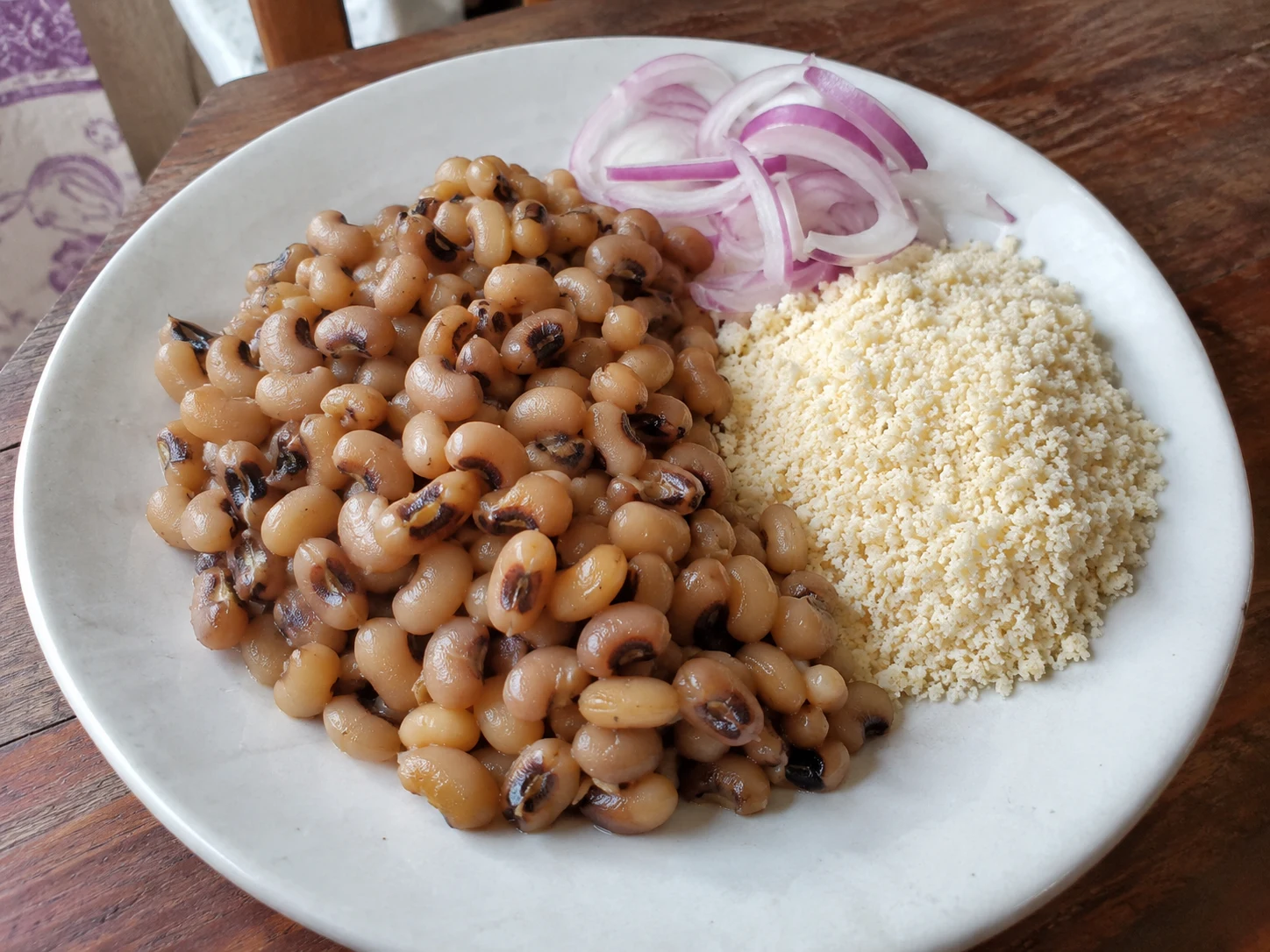
In the Abidjan context, Abobo is often associated with intense neighborhood life. This intensity is directly reflected in the food. Streets, markets, train stations, school surroundings, and crossroads become permanent places of culinary production and consumption. Cooking is not confined to the home: it spills over into public space. A wide variety of preparations can be found there: riz gras (fatty rice), riz sauce (rice with sauce), foutou (a dough-like staple food), placali (a cassava-based dough), attiéké-poisson (attiéké with fish), garba, alloco, beans, porridges, grilled foods, soups, leaf sauces, dishes based on okra, peanuts, or palm kernel. This diversity is explained by the plurality of the inhabitants' origins. Abobo has long welcomed populations from different Ivorian regions and neighboring countries. Each brings its techniques, products, seasoning preferences, and serving methods. In this logic, Abobo acts as a “kitchen-laboratory” of the modern African city: recipes circulate, mix, sometimes simplify, and elsewhere enrich. This blending is a major characteristic of many metropolises on the continent, and Abobo is a very telling example. 🌆🥘🌍
🍛 THE PILLARS OF DAILY FOOD IN ABOBO
Abobo's cuisine is characterized by a few major principles found in many African cities, but with a marked local signature:
- Economic accessibility Dishes must remain affordable for a large population. Controlling the cost of portions is essential. Quantities are therefore adapted, accompaniments are varied, and options are offered according to budget.
- Speed of service Street food responds to the urban rhythm: leaving for work, short breaks, late returns. Vendors develop efficient logistics, with anticipated preparations and continuous service.
- Satiety and energy Dishes often favor filling bases: cassava, rice, plantain, corn, yam. The goal is to last the day, especially for physical jobs or demanding schedules.
- Assertive taste Seasonings are frank: chili, onion, tomato, garlic, ginger, broths, local herbs. Sauces are often rich in aromas, with a real depth of flavor.
- Conviviality Even in its speed, the meal remains a social moment. People chat, comment on current events, recommend a vendor, compare sauces from one corner to another. This combination makes Abobo's cuisine both deeply functional and warm. 🍚🌶️🤝
👩🏾🍳 THE CENTRAL ROLE OF WOMEN AND THE INFORMAL ECONOMY
As in many African culinary ecosystems, women play a structuring role in Abobo's food life. Many produce, process, sell, and distribute daily dishes. They manage family micro-enterprises, sometimes employ relatives, train apprentices, and build loyalty among neighborhood customers. Street food is not just a food service; it is also a local economic driver. It allows for:
- the creation of regular income
- the circulation of local agricultural products
- local employment
- household resilience in the face of economic uncertainties In Abobo, the act of cooking and selling contributes to social balance. It finances children's schooling, rent, healthcare, and unforeseen expenses. Behind every dish sold, there is a survival strategy, but also professional pride. Many customers choose “their” point of sale for the quality of taste, consistency, hygiene, welcome, and generosity. 🛍️💪🏾🍽️
In my books

Continue exploring the continent’s cuisines with Africa at the Table — 54 countries, 54 iconic dishes, by Alioune FALL. This book is in English.
Explore further
🔥 STREET FOOD, IDENTITY, AND CREATIVITY
Abobo's street food is inventive. It adapts recipes to real constraints: charcoal prices, fish availability, vegetable seasons, household purchasing power, and evolving tastes of young people. Portions are adjusted, new combinations are created, and presentation is modernized while maintaining the popular spirit. This creativity is often underestimated. Yet, it corresponds to a true culinary intelligence: knowing how to feed many people, quickly, with limited resources, without sacrificing flavor. This is one of the great strengths of urban African cuisines. Abobo also illustrates the oral transmission of knowledge: one learns by observing, helping, and repeating. Recipes are rarely fixed in books; they live in gestures, corrections, and field tips: “add the chili at this moment,” “let it reduce more,” “don't cover too early,” “dose the oil according to the fish.” This daily pedagogy constitutes a living heritage. 📚🍳🧠
🧭 ABOBO'S PLACE IN AFRICAN CUISINE: a symbol of the African world-city On a continental scale, Abobo can be seen as an example of what African cuisine is becoming in dense urban environments:
- a cuisine of mobility
- a cuisine of regional blending
- an economically strategic cuisine
- a cuisine that feeds quickly but carries a long memory In cities like Lagos, Dakar, Accra, Cotonou, Douala, Kinshasa, or Nairobi, similar phenomena are found: popular neighborhoods become informal gastronomic hubs, where contemporary eating habits are redefined. Abobo is fully part of this dynamic. Its place in African cuisine is therefore not due to a unique recipe stamped “Abobo dish,” but to its function: an incubator of African urban culinary practices. It is a place where one sees how tradition and modernity coexist on the plate, how migration transforms tastes, and how economic constraints stimulate culinary inventiveness. 🌍🚦🥣
🥬 NUTRITION, BALANCE, AND CONTEMPORARY CHALLENGES
Abobo's popular cuisine, like elsewhere, faces challenges: cost of foodstuffs, quality of oils, access to fresh produce, preservation, and hygiene in dense areas. At the same time, it possesses notable nutritional assets when it relies on varied local products: cereals, tubers, legumes, leafy vegetables, fish, natural spices. Current challenges often involve strengthening:
- the hygiene of sales points
- the quality of raw materials
- dietary diversification
- nutritional education without devaluing local habits It is important to avoid simplistic judgments about street food. Well-supervised and supported, it can be a powerful lever for urban food security. In Abobo, it feeds thousands of people every day; it is therefore an essential component of public food health, not a marginal phenomenon. 🧴🐟🥗
🎉 CUISINE AND SOCIAL CONNECTION: Abobo as collective memory Eating in Abobo is also participating in a common memory. Some stands have been known for years; generations succeed each other there. Flavors become biographical landmarks: breakfast before school, evening meal after work, shared meal during a celebration, the taste that reminds one of a mother, an aunt, a neighbor. This emotional dimension is central to African cuisine. Food is not just a caloric intake; it is a social language. It expresses welcome, respect, solidarity, celebration, sometimes even reconciliation. In this regard, Abobo is a territory of high relational density, where cuisine structures the rhythms of collective life. ❤️👨🏾👩🏾👧🏾👦🏾🎶
🏁 CONCLUSION: Abobo, a reference for popular African cuisine in motion** Abobo occupies an important place in African cuisine not as a codified dish, but as a complete culinary ecosystem. It is a space where one observes the power of popular African cuisines: feeding massively, creating employment, preserving heritage, integrating new influences, and maintaining a high level of conviviality.
Its contribution is that of a crossroads: a crossroads of populations, recipes, techniques, and economies. Abobo shows that African gastronomy is not limited to high-end restaurants or fixed heritage recipes. It lives intensely in neighborhoods, in markets, in street pots, in the hands of daily vendors and cooks.
In this sense, Abobo is a major scene of African culinary modernity: popular, inventive, resilient, and profoundly human. 🍽️🌍🔥
In the kitchen : Abobo
Recipes from the site to put your knowledge into practice:
Discover these cuisines at a restaurant
Explore our restaurant and caterer directories. Choose your destination and check the establishment’s menu to confirm which dishes are offered and available.
Continue exploring
Enjoy discovering ingredients and African cuisines? Join our newsletter. The illustrated PDF 10 sauces africaines incontournables is in French and is offered after confirming a subscription to the French or bilingual edition.