Delele
Zambia, Zimbabwe
Understanding : Delele
🌍 INTRODUCTION
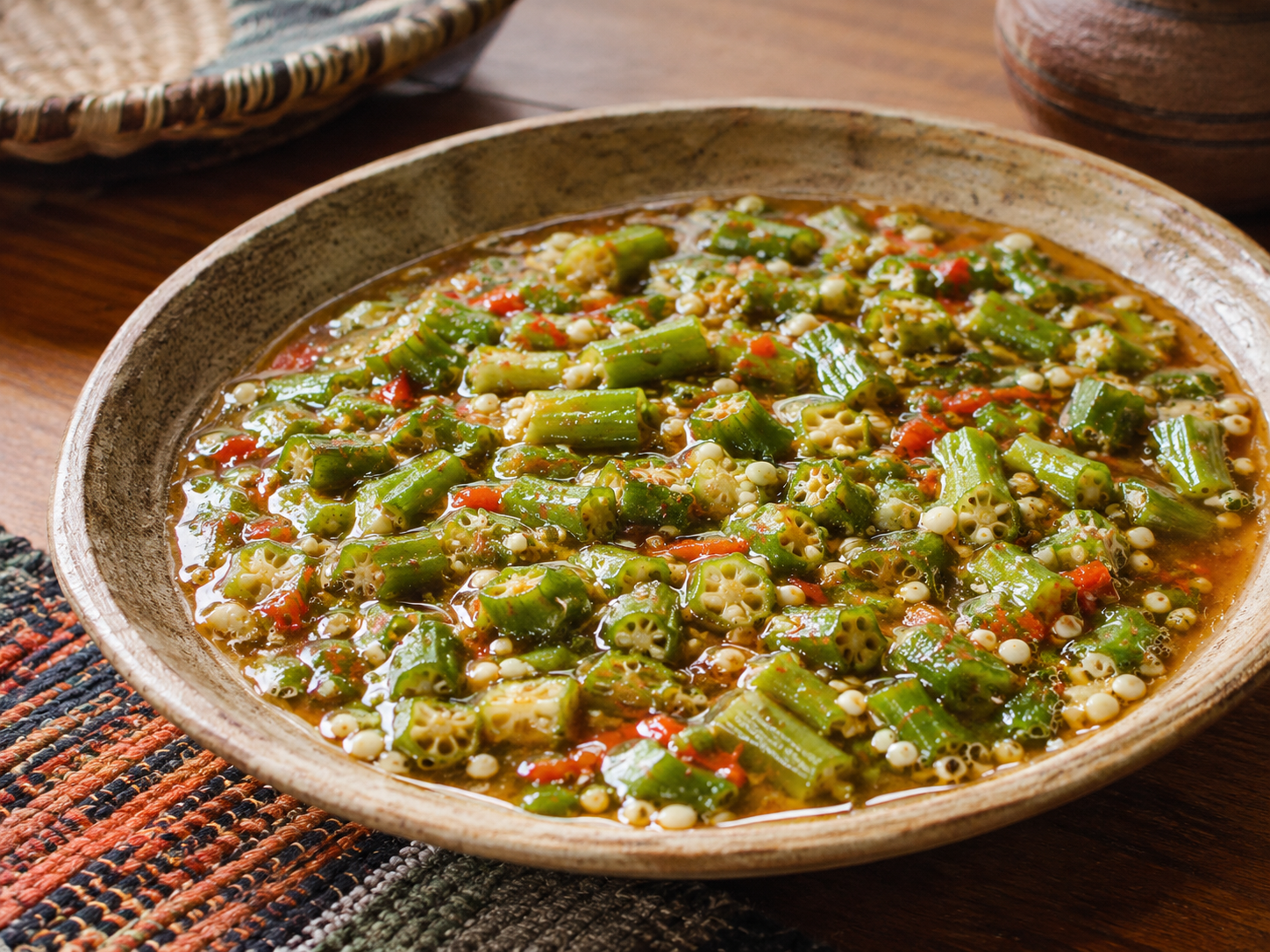
Delele is an emblematic sauce-dish from Southern Africa, particularly known in Zambia and Zimbabwe, with linguistic and culinary variations depending on the communities. The term generally refers to okra, or an okra-based preparation, often cooked in a sauce to accompany staple foods like nshima (corn paste), other cereal pastes, or sometimes rice in urban contexts. In many households, delele is not just a secondary garnish: it is a central component of the meal, a marker of taste, texture, and identity. Its place in African cuisine is important because it embodies several fundamental logics of the continent: valorization of local vegetables, mastery of textures, nutritional complementarity with starchy bases, and family transmission of culinary practices.
Prepare this speciality
Choose a detailed recipe, adjust the portions and prepare your ingredients before starting. Our cooking tips and food safety advice complement the steps described in the recipes.
Explore further: Cooking tips · Food hygiene and safety advice.
History and uses
🌿🌍 A LOCAL DISH CENTERED ON OKRA AND LOCAL KNOWLEDGE
Okra holds a privileged place in many African cuisines, and delele is a particularly clear expression of this in the Zambian-Zimbabwean region. The vegetable can be used fresh, dried, or sometimes powdered depending on the seasons and preservation habits. This versatility ensures the continuity of the dish even when supplies fluctuate. In rural areas as well as in some urban neighborhoods, the ability to transform a locally available product into a nourishing and appreciated sauce is a key element of domestic food security.
Delele also shows how a plant ingredient can become a complete culinary signature. Okra not only brings a mild vegetable taste; it especially brings a characteristic mucilaginous texture, sometimes called "stringy" or "slippery" texture, which is fully valued in many African traditions. Where some external cuisines may perceive this texture as unusual, local cuisines, on the contrary, see it as a sought-after quality, associated with meal comfort, good sauce binding, and a specific sensory experience.
This valorization of texture is essential to understanding delele. This dish teaches that gastronomy is not limited to flavors; it is also based on mouthfeel, fluidity, consistency, and the way the sauce coats the cereal paste. From this perspective, delele is a dish of technical finesse as much as it is a popular dish.
🍲🔥 PREPARATION TECHNIQUES AND MASTERY OF CONSISTENCY
The preparation of delele may seem simple, but it requires precise attention to detail. Okra is generally washed then finely chopped, pounded, or minced according to preference. Some methods favor visible slices, others an almost homogeneous texture. The cooking method also varies: some cooks start with a base of onions and tomatoes, others cook the okra more directly with water and seasonings before enriching the sauce.
The critical point is managing viscosity. If undercooked, the sauce may lack integration; if overcooked, it may lose some of its character or become too thick. The heat, the amount of water, the order of ingredient addition, and the stirring time determine the result. The best delele achieve a balance: a supple, coating, just-stringy-enough sauce, with a clear okra flavor and well-adjusted seasoning.
Depending on the regions and households, complementary ingredients can be added:
- tomato for acidity and color;
- onion for aromatic sweetness;
- baking soda or alkaline agents in some practices to influence texture and color;
- ground peanuts in some variations;
- dried fish, meat, or other proteins depending on means and habits.
This diversity proves that delele is a living culinary framework, not a rigid formula. Its identity lies in its technical core (okra + texture + starchy accompaniment), while its contours remain adaptable.
🥣🌽 DELELE AND NSHIMA: A CENTRAL COMPLEMENTARITY
In many Zambian and Zimbabwean households, delele is intimately linked to nshima (corn paste), a dense white corn paste that constitutes a daily staple food. The logic of the meal is based on complementarity: nshima provides energy and structure, delele provides moisture, flavor, and a vegetable dimension that facilitates the consumption of the paste. The act of eating reflects this complementarity: a portion of nshima is taken, shaped, then dipped in delele.
This relationship between cereal base and sauce is one of the great principles of many African cuisines. Delele perfectly illustrates this food system: an affordable and filling base, enriched by a sauce that increases the sensory variety and nutritional interest of the meal. In this architecture, delele is not accessory; it is the key that makes the base lively, appetizing, and balanced.
In my books

Continue exploring the continent’s cuisines with Africa at the Table — 54 countries, 54 iconic dishes, by Alioune FALL. This book is in English.
Explore further
🥬🐟 Nutritional value and economic flexibility
Okra contains fiber, micronutrients, and compounds interesting for dietary balance. Served in a sauce with a starchy base, delele contributes to making the meal more complete. When enriched with dried fish, peanuts, legumes, or meat, its nutritional density increases further. This capacity for progressive enrichment is very important in households where resources vary according to periods.
Delele is also economically flexible. In its simple version, it can be prepared at low cost with few ingredients. In its richer version, it can incorporate animal proteins and more complex seasonings. This elasticity makes it a sustainable dish in everyday life: it remains accessible without losing its gustatory relevance. This is a major quality of everyday African cuisines, often built to reconcile pleasure, nutrition, and real constraints.
From a public health perspective, the valorization of vegetable sauces like delele can also contribute to maintaining dietary diversity in the face of the progression of ultra-processed products in urban areas. The dish reminds us that a local, minimally processed, and technically mastered cuisine can remain modern, practical, and nourishing.
🤝🏾🏠 TRANSMISSION, IDENTITY, AND FAMILY MEMORY
Delele is a dish of transmission. The gestures to obtain the right texture are not entirely improvised; they are learned by observing, repeating, and correcting. Many cooks say they learned in family kitchens, watching elders manage the cutting of okra, cooking time, seasoning, and final consistency. This pedagogical dimension is essential: the recipe exists, but it is the hand that makes the difference.
The dish also carries a strong identity. In some contexts, simply mentioning delele immediately evokes a region, a language, a way of life and eating. It is present in ordinary meals, but also in moments when one wants to rediscover "the taste of home." In the Southern African diaspora, its preparation can become an act of memory: a known dish is recreated, available ingredients are adapted, and a part of the culinary heritage is transmitted to children.
This ability to travel while retaining its essence reinforces its cultural place. Delele is both local and mobile: deeply rooted in a terroir, but capable of existing elsewhere thanks to the communities that carry it.
🧭🌍 ITS PLACE IN AFRICAN CUISINE ON A CONTINENTAL SCALE
On a continental scale, delele belongs to a large family of okra sauces present in many regions of Africa, each with its own name, techniques, and accompaniments. This culinary kinship is important: it shows historical and sensory continuities between different African areas, while respecting local singularities.
The specific contribution of delele lies in its anchoring in Southern Africa and its close dialogue with nshima. It illustrates how a cuisine can transform the same pan-African ingredient (okra) into a distinct regional expression. This internal diversity is one of the great riches of African cuisine: a shared logic, multiple forms.
In international gastronomic narratives, staple dishes like delele are sometimes less visible than festive preparations. Yet, they are what truly structure the food life of millions of people. Their importance is therefore immense. They show an everyday gastronomy based on technical mastery, sustainability, conviviality, and transmission.
❤️🔥 Why delele remains a lasting pillar Delele remains central because it meets essential needs while offering a strong gustatory identity. It is adaptable to seasons, modulable according to means, quick to integrate into domestic routines, and deeply compatible with local cereal bases. It is also culturally powerful: it connects generations, marks belonging, and retains an emotional place in family memories.
🌍 CONCLUSION
Ultimately, delele is much more than an okra sauce. It is a complete expression of Southern African cuisine: a cuisine that values local resources, respects textures, builds meal balance through complementarity, and transmits its knowledge through daily practice. Its place in African cuisine is therefore fully legitimate and sustainable. It represents the quiet strength of everyday dishes which, without being spectacular, carry the essential: to nourish, connect, transmit.
In the kitchen : Delele
Recipes from the site to put your knowledge into practice:
Discover these cuisines at a restaurant
Explore our restaurant and caterer directories. Choose your destination and check the establishment’s menu to confirm which dishes are offered and available.
Continue exploring
Enjoy discovering ingredients and African cuisines? Join our newsletter. The illustrated PDF 10 sauces africaines incontournables is in French and is offered after confirming a subscription to the French or bilingual edition.