Shito
Ghana
Understanding : Shito
🌶️🖤 INTRODUCTION
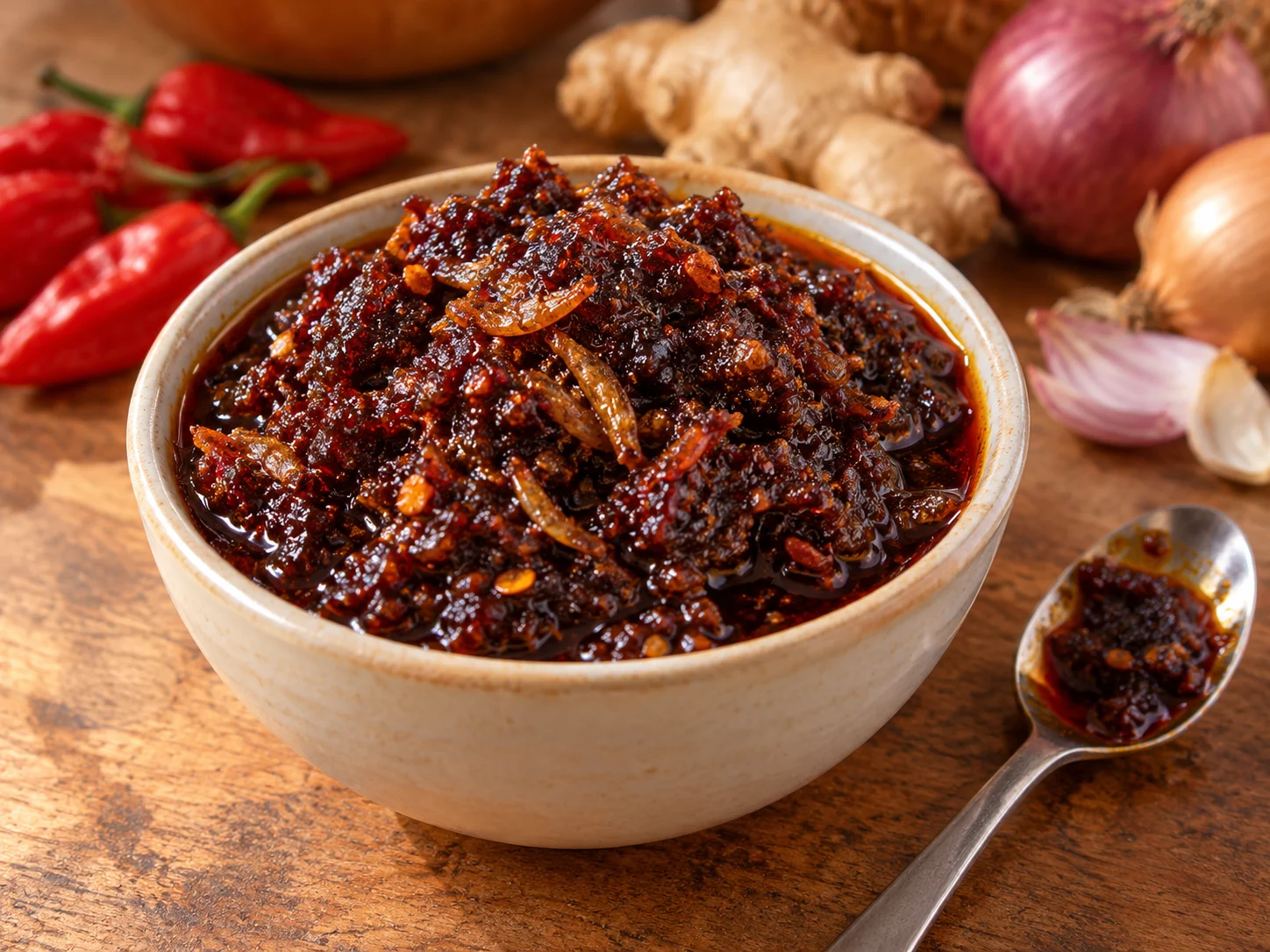
Shito is one of the most powerful, distinctive, and versatile condiments in Ghanaian cuisine. Often described as a black chili sauce, it is in reality much more than a simple spicy accompaniment. It is a long-cooked, concentrated, complex preparation where chili, oil, onion, garlic, ginger, spices, and very often dried marine elements like fish or shrimp, depending on the version, meet. The result is a dense, dark, intensely aromatic paste or sauce, capable of transforming a simple dish into a complete culinary experience.
Where to find it
Look for the exact food-grade form required by the recipe at markets and specialist shops. Check the product name, ingredients, condition and storage instructions.
Explore further: Cooking tips · Food hygiene and safety advice.
History and uses
In daily use, shito accompanies a wide variety of foods: rice, waakye (a Ghanaian dish of cooked rice and beans), kenkey (a staple food, similar to a dumpling, made from fermented corn dough), banku (a Ghanaian dish made from fermented corn and cassava dough), yam, gari (a granular flour from cassava), eggs, grilled meats, fried fish, street sandwiches, and even some modern fusion dishes. This versatility explains its almost indispensable status in Ghana, both in homes and in popular eateries. A small amount is enough to alter the balance of a plate: it adds warmth, depth, saltiness, umami, potential smokiness, and a remarkable lingering flavor.
Its place in African cuisine is significant because it embodies several fundamental traits of the continent's culinary traditions: the art of concentrated condiments, the mastery of preservation through prolonged cooking and fat, the valorization of dried products (especially seafood), and the ability to create complexity with accessible ingredients. Shito is not just “spicy”; it is structuring. It acts as a flavor engine that connects the components of a meal.
🔥🥄 A DEMANDING TECHNIQUE: long cooking, reduction, and aromatic balance Preparing quality shito requires patience and precision. The base often starts with a mixture of onions, garlic, ginger, and chilies, fresh or dried according to family traditions. This base is cooked slowly in oil to evaporate moisture, concentrate aromas, and develop the characteristic dark color. Heat management is crucial: too high, the mixture burns and becomes bitter; too low, it remains moist and less stable.
In many recipes, powdered dried fish, ground dried shrimp, or other marine components are added, which provide saline depth and umami. Some include concentrated tomato, while others omit it to preserve a drier, spicier profile. Spices like cloves, pepper, anise, or local blends can be added in subtle touches. Salt must be carefully calibrated, as dried ingredients are already flavorful.
The desired end point is not just the black color. It is a state of concentration where the oil carries the aromas without excessive residual liquid, with a thick but pliable texture, easy to scoop with a spoon. Good shito doesn't just taste of chili: it unfolds successive layers, from the caramelized sweetness of onion to the bite of chili, down to the marine and spicy background notes.
This technical sophistication shows that shito is a culinary expertise in its own right. Many African cuisines have comparable condiments in their logic (reduction, concentration, potency), but Ghanaian shito stands out for its dark, oily, long-cooked, immediately recognizable profile.
🌍🧭 CULINARY HISTORY, COASTLINE AND THE ECONOMY OF FLAVORS
Shito is part of a historical context where seafood, fresh and dried, plays an important role in West African coastal cuisines. Ghana, with its maritime and commercial dynamics, has developed a robust condiment culture, capable of extending flavors and enhancing daily starchy dishes. The use of dried ingredients responds to ancient practical logics: availability, preservation, transport, and intense flavor.
Over time, shito has moved beyond its strictly coastal roots to become national, then diasporic. It circulates in artisanal jars, semi-industrial productions, and jealously guarded family recipes. Each version claims an authenticity: smokier, spicier, more marine, more aromatic, smoother, or more granular. This diversity is a sign of a living condiment.
In my books

Continue exploring the continent’s cuisines with Africa at the Table — 54 countries, 54 iconic dishes, by Alioune FALL. This book is in English.
Explore further
In African cuisine at large, shito holds a strong symbolic place because it demonstrates the importance of “small quantities with big effect.” A spoonful of condiment can carry a history of techniques, trade, fishing grounds, and family transmissions. The condiment is not secondary; it is often where identity is concentrated.
🍚🤝 SHITO IN DAILY LIFE: popular table, street, home, diaspora Shito is omnipresent in everyday uses. At home, it is prepared in quantity and then stored to accompany several meals. In the street, it becomes a style marker: one waakye vendor is renowned for their more intense shito, another eatery for its milder but very fragrant version. In restaurants, it can be offered separately to allow everyone to adjust the amount.
This freedom of dosage reinforces its social function. Shito allows for the personalization of the shared plate. Two diners eating the same base (rice, kenkey, yam) can have different taste experiences depending on the amount added. It thus creates a space for individual expression within a collective meal.
In Ghanaian diasporas, shito is a major object of culinary memory. Many families transport jars, reproduce the recipe with local adjustments, or order it from community artisans. The condiment becomes a tangible link to the country of origin. Its smell, texture, and warmth in the mouth activate immediate memories, often more powerful than those of a more rarely prepared complete dish.
🧪🥗 NUTRITION, SAFETY AND REASONED USE
Shito is a concentrated condiment, so it should be consumed in small quantities. It primarily provides aromatic compounds, fat, and depending on its composition, nutrients from dried marine products. Its flavor density allows for using little to achieve a lot of flavor. This is a culinary strength, but also a point of nutritional vigilance: some versions can be rich in salt and oil.
Safety and preservation depend on proper cooking and control of residual moisture. Well-cooked shito, handled with clean utensils and stored correctly, can last relatively long. In both artisanal and domestic productions, attention to hygiene and packaging is essential.
From a contemporary culinary perspective, shito easily adapts to new uses: marinade, spicy vinaigrette base, finishing touch on roasted vegetables, accompaniment to non-traditional grilled proteins. This modernity of use shows that African condiments can interact with global cuisines without losing their identity.
✨🏆 A MAJOR PLACE IN AFRICAN CUISINE: intensity, modularity and living heritage Shito deserves a prominent place in African cuisine because it combines rare qualities: strong identity, transformative power, great modularity of use, historical roots, and contemporary vitality. It is both deeply Ghanaian and universal in its function: to add depth, extend flavors, and sign a plate.
It also highlights an important truth about African gastronomies: sophistication is not limited to main dishes. It is often found in the sauces, pastes, powders, fermentations, and condiments that structure daily taste. Shito is one of the best examples of this condiment intelligence.
🌍 CONCLUSION
Ultimately, shito is much more than a black chili sauce. It is a grammar of taste, a concentrate of maritime and urban history, a tool for personalizing meals, a vector of diasporic memory, and a living culinary heritage in constant evolution. In the African mosaic, it occupies a strategic position: that of a condiment capable of connecting tradition and modernity, domestic economy and creativity, simplicity of gesture and depth of result.
Its continued presence on Ghanaian tables and beyond confirms its status: shito is not an accessory, it is an aromatic backbone. And in the global understanding of African cuisines, it beautifully represents the power of concentrated preparations which, in a spoonful, tell a whole world.
In the kitchen : Shito
Recipes from the site to put your knowledge into practice:
Discover these cuisines at a restaurant
Explore our restaurant and caterer directories. Choose your destination and check the establishment’s menu to confirm which dishes are offered and available.
Continue exploring
Enjoy discovering ingredients and African cuisines? Join our newsletter. The illustrated PDF 10 sauces africaines incontournables is in French and is offered after confirming a subscription to the French or bilingual edition.