Thiébou yapp
Senegal
Understanding : Thiébou yapp
🍚🥩 INTRODUCTION
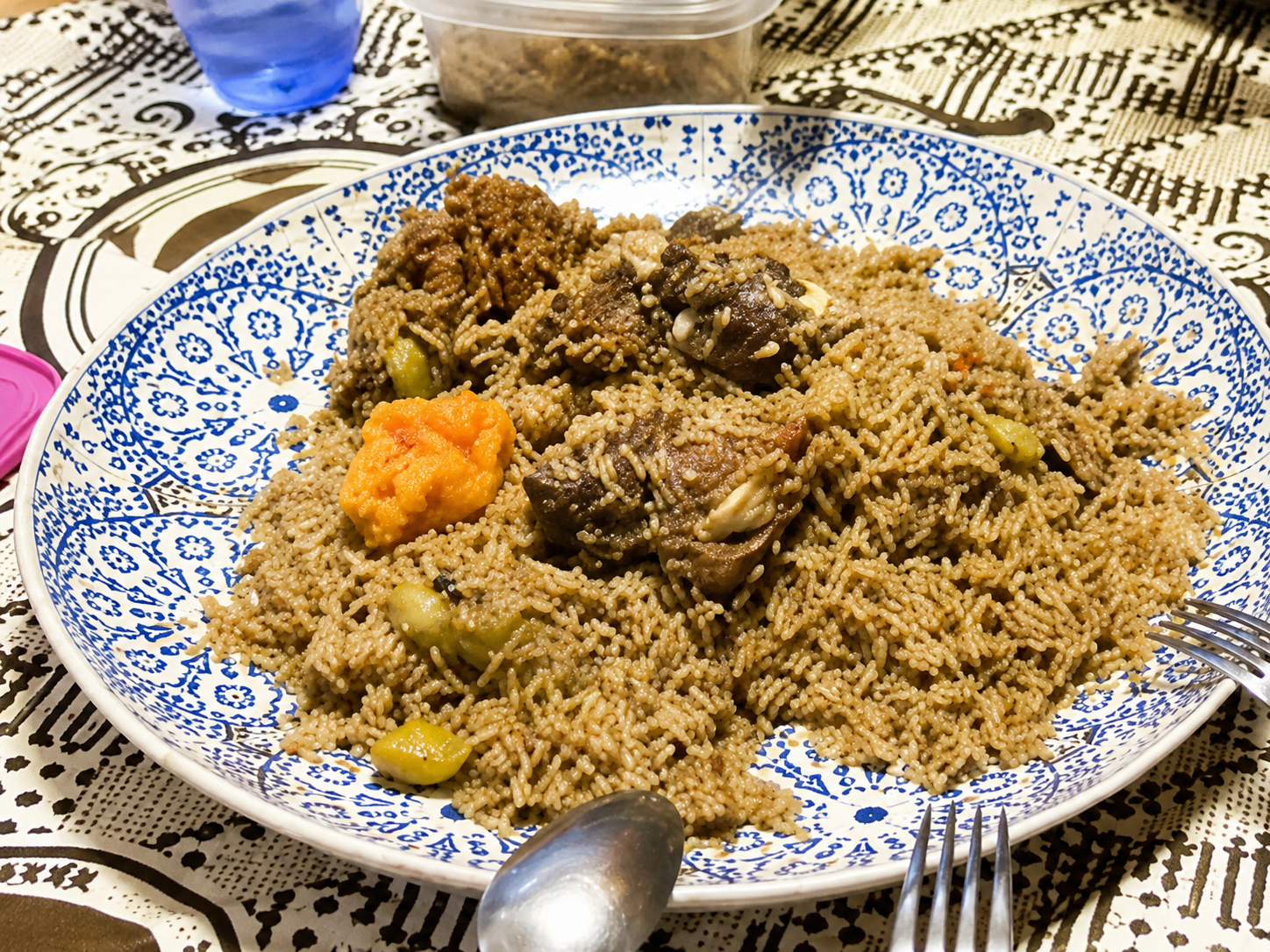
Thiébou Yapp, often spelled Thiebou Yapp, is one of the great dishes of Senegalese cuisine. Its name, in Wolof, directly evokes its structure: rice and meat. Behind this apparent simplicity lies a demanding preparation, highly codified in its logic of taste, texture, and service. The dish generally consists of rice cooked with a powerful aromatic base and meat, often beef or lamb depending on the context, with family variations that may include other choices. It is distinguished by its balance between meaty richness, the depth of stewed onions, the vibrancy of mustard or lemon in some versions, and a more or less pronounced presence of chili.
Prepare this speciality
Choose a detailed recipe, adjust the portions and prepare your ingredients before starting. Our cooking tips and food safety advice complement the steps described in the recipes.
Explore further: Cooking tips · Food hygiene and safety advice.
History and uses
In the West African culinary landscape, Thiébou Yapp holds an important place because it represents a Senegalese way of conceiving a complete dish: grain + protein + integrated sauce + condiments. It belongs to the large family of African rice dishes where cooking is not just an addition of elements, but a construction of a whole, in which the grain must carry the memory of the sauce and meat juices. The expected result is not neutral rice served separately, but rice imbued with the dish.
Its place in African cuisine is major because it embodies several fundamental traits of the continent: mastery of rice as a central cultural support, the art of the shared pot, the intensity of aromatic bases (onion, garlic, chili, local or imported spices), the conviviality of collective service, and constant adaptation to available resources. Thiébou Yapp is a dish of the city and the home, for everyday and for special occasions, of tradition and modernity.
🌍📜 CULINARY HISTORY, WOLOF LANGUAGE AND SENEGALESE IDENTITY
Understanding Thiébou Yapp requires placing it within the Senegalese culinary universe, where rice has become a major historical pivot of food practices, especially in urban areas. In large cities like Dakar, rice dishes structure daily life, with nuances depending on the days, markets, budgets, and family events. Thiébou Yapp fits into this dynamic as a meat-centric offering, both generous and relatively flexible.
Its Wolof name is not a folkloric detail: it reminds us that African cuisines are also systems of knowledge rooted in local languages, with their own categories. To say Thiébou Yapp is already to describe a culinary and social logic understood by the community. Language and cuisine advance together.
Historically, the dish also reflects the circulation of ingredients and techniques: the use of tomatoes in different forms, the spread of mustard in certain urban marinades, the coexistence of ancient slow-cooking practices and more rapid contemporary adaptations. This ability to integrate new contributions without losing the dish's framework is one of the signatures of great African cuisines.
🧅🔥 THIÉBOU YAPP TECHNIQUE: marinade, stewed onions, and impregnated rice The success of Thiébou Yapp relies on a precise technical chain. Often, the meat is first seasoned, sometimes marinated, with garlic, pepper, salt, chili, mustard, lemon, or vinegar, depending on habits. This phase prepares the depth of flavor and contributes to tenderizing. Then, the meat is seared or browned to develop the juices, before a longer cooking with a large quantity of sliced onions.
Onions are the aromatic heart of the dish. They must melt, concentrate their sugars, absorb the meat juices, and form a cohesive base, neither completely dry nor watery. In some versions, a little tomato reinforces the structure and color; in others, the focus remains on the meat-onion-mustard combination. Chili can be integrated into the cooking or served separately to manage the heat.
Rice, a decisive step, is cooked to absorb this aromatic base. Depending on the practice, it can cook directly in the pot with the sauce adjusted with water, or be pre-cooked and then finished in the juices. The objective is always the same: well-cooked grains, separate but impregnated, carrying the taste of the meat and onions. The dish fails if the rice remains bland or if the meat is dissociated from the aromatic framework.
In my books
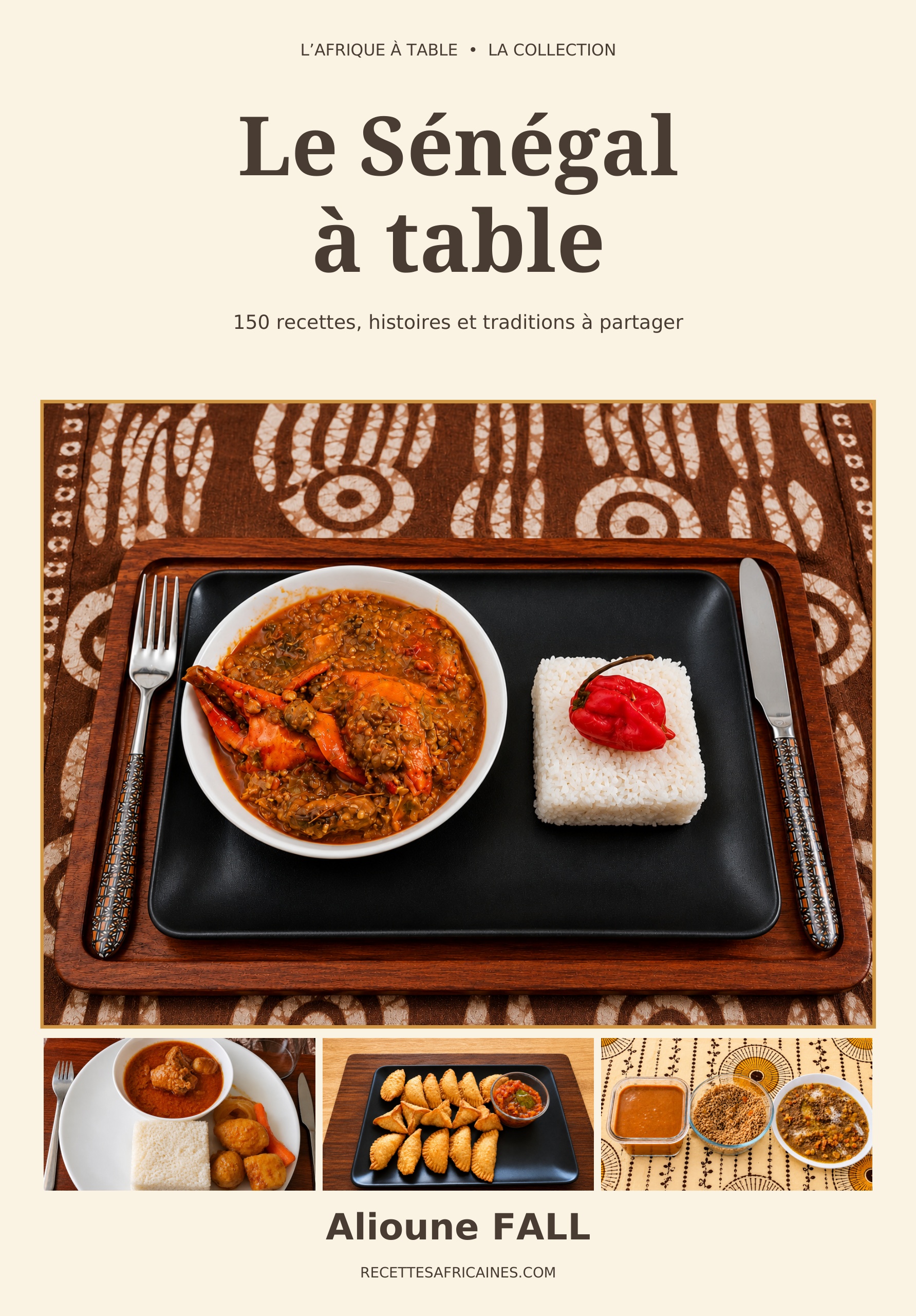
Explore Senegalese cooking with Le Sénégal à table, my collection of 150 recipes, stories and traditions to share. This book is in French, by Alioune FALL.
Explore further
The desired final texture combines the tenderness of the meat, the creaminess of the onions, and the consistency of the rice. It is a cuisine of thermal control and patience: too much heat burns the onions; too much water dilutes; too little water hardens the rice. A good Thiébou Yapp is a balance.
🏡🤝 CONVIVIALITY, SERVICE AND SOCIAL ROLE
Like many West African dishes, Thiébou Yapp is part of a culture of sharing. Served in a large communal dish or divided into portions depending on the context, it fosters a direct relationship between diners and food. The meal becomes a strong social moment, where people eat, discuss, and symbolically negotiate places, gestures, and rhythms.
In homes, it can be a weekend dish, for invitations, or modest celebrations. In popular restaurants, it represents a popular offering for its satisfying power and frank taste. This dual presence, domestic and commercial, reinforces its status as a living classic.
Thiébou Yapp is also a field of transmission. Knowledge is passed on through observation: how to cut the onion, when to add the marinade, when to cover, how to judge the cooking of the rice without a thermometer. These embodied skills are at the heart of African culinary heritage.
🌍🍽️ PLACE IN AFRICAN CUISINE: between Senegalese specificity and continental logic On an African scale, Thiébou Yapp dialogues with many traditions of rice with meat, but retains a distinct personality. Its Senegalese identity lies notably in the place of the onion, the seasoning style, and the way of unifying meat and grain in the same taste narrative. It is not a simple generic “rice with meat,” but a dish coded by local practices.
It contributes to the visibility of West African cuisines, which have strongly contributed to the global history of rice, pot cooking techniques, and communal dishes. In this panorama, Thiébou Yapp shows that Senegalese cuisine is not limited to a single iconic dish: it possesses a wide, nuanced, structured repertoire.
In diasporas, it functions as a powerful cultural marker. Preparing it outside Senegal involves ingredient adjustments, but the essential remains: the alliance of rice, meat, and the spicy onion base. This continuity helps maintain transnational culinary ties.
🥗📊 NUTRITIONAL READING AND MODERN ADAPTATIONS
Nutritionally, Thiébou Yapp is a complete energetic dish, centered on the combination of carbohydrates (rice) and proteins (meat), with a variable contribution of lipids depending on the cuts chosen and the amount of fat used. Onions provide volume, sweetness, and aromatic compounds; condiments can enrich the digestive and sensory interest.
In contemporary practices, several adaptations exist: use of leaner cuts, reduction of oil, increase in the proportion of accompanying vegetables, salt control, gentler cooking to limit excessive caramelization. These adjustments address health concerns without denaturing the dish.
Thiébou Yapp remains particularly relevant in an efficient family cooking logic: a single pot can feed several people with accessible ingredients, while offering strong gustatory satisfaction. It is an example of well-mastered culinary density.
✨🏁 A GREAT AFRICAN CLASSIC, DURABLE AND TRANSMISSIBLE
Thiébou Yapp fully deserves its place among the major dishes of African cuisine. It brings together what great culinary traditions do best: start from a clear base, transform it through technique, produce deep taste, nourish widely, and create social connection around the meal.
It also embodies a discreet modernity: adaptable, reproducible, compatible with urban rhythms, while remaining faithful to its foundations. It is this ability to remain itself while changing context that defines lasting classics.
🌍 CONCLUSION
Ultimately, Thiébou Yapp is more than a beloved Senegalese dish. It is a form of living heritage of West Africa, a language of the shared pot, proof that African cuisine combines technical intelligence, cultural memory, and active conviviality. As long as it is cooked in homes, eateries, and diasporas, it will continue to tell the same essential idea: to nourish together, with intensity, precision, and generosity.
In the kitchen : Thiébou yapp
Recipes from the site to put your knowledge into practice:
Discover these cuisines at a restaurant
Explore our restaurant and caterer directories. Choose your destination and check the establishment’s menu to confirm which dishes are offered and available.
Continue exploring
Enjoy discovering ingredients and African cuisines? Join our newsletter. The illustrated PDF 10 sauces africaines incontournables is in French and is offered after confirming a subscription to the French or bilingual edition.