Lakh
Senegal
Understanding : Lakh
🥣🌾 INTRODUCTION
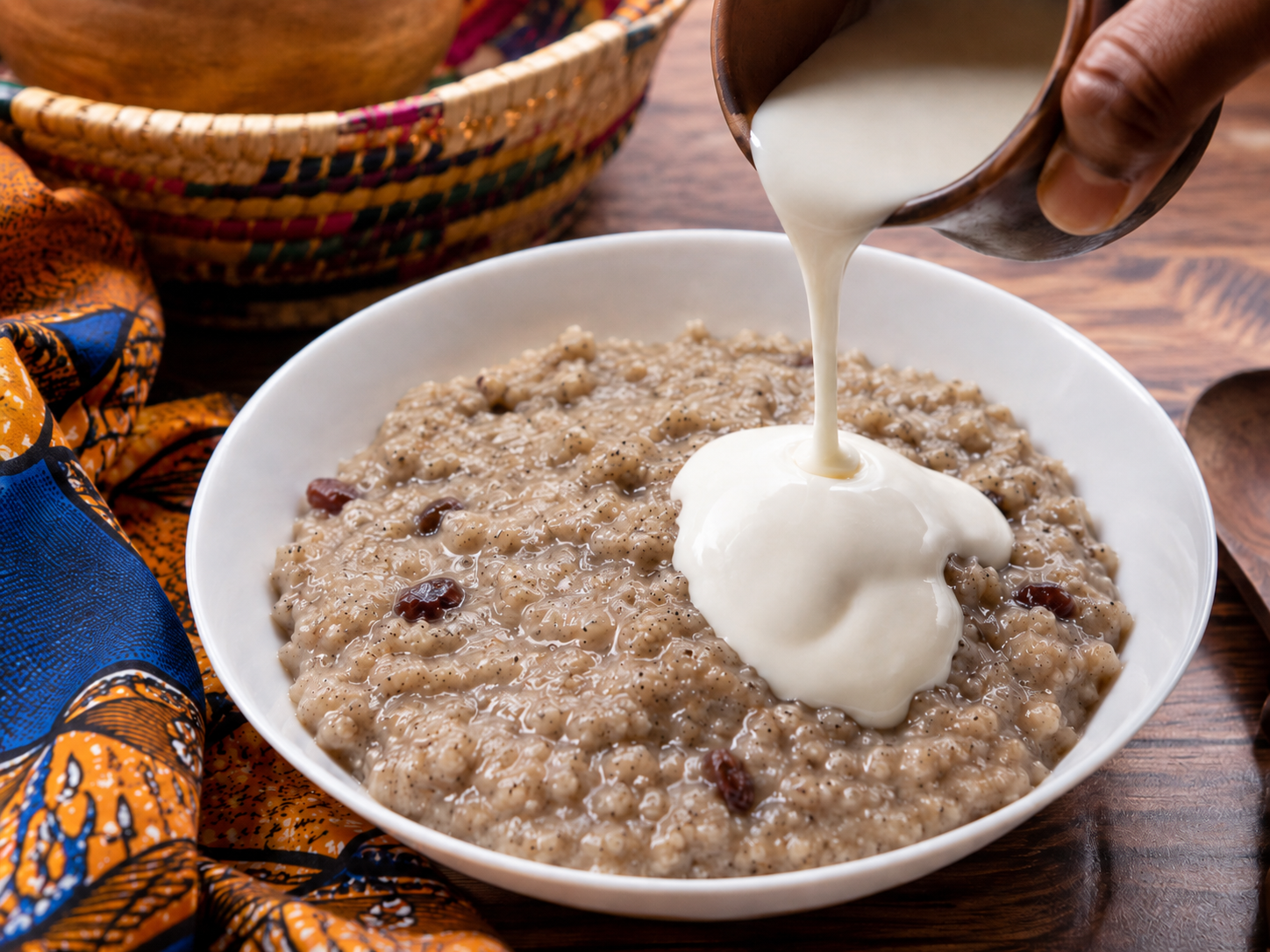
Lakh is an emblematic preparation from Senegal and, more broadly, from West Africa's Sahel region, where local cereals have structured daily, festive, and ritual diets for centuries. Depending on the region, families, and context, the word can refer to the grain itself (small granules rolled from millet flour, sometimes corn) or to the final dish, often served with a fermented dairy or sweet-and-savory accompaniment, depending on local customs. This dual meaning already conveys something essential: lakh is not a fixed product; it is a complete culinary chain, from grain processing to the act of sharing the bowl.
Prepare this speciality
Choose a detailed recipe, adjust the portions and prepare your ingredients before starting. Our cooking tips and food safety advice complement the steps described in the recipes.
Explore further: Cooking tips · Food hygiene and safety advice.
History and uses
At first glance, it might be compared to other fine couscous or granular porridge-like preparations. But lakh has its own distinct personality, linked to the place of millet in West African food cultures, specific granulation techniques, desired textures balancing lightness and density, and taste combinations that oscillate between milky freshness, sweetness, and cereal depth. Lakh is both simple and demanding: simple in its basic ingredients, demanding in the mastery of gestures that produce regular grains, proper cooking, and a harmonious texture.
In African cuisine, its place is major because it embodies a fundamental principle of the continent: the intelligent valorization of local cereals adapted to climates, soils, and domestic economies. Lakh tells a culinary African story that transforms millet into a plurality of nourishing, convivial, and culturally significant forms. It is a dish of memory, transmission, and future.
📜🌍 MILLET, SAHELIAN TERROIRS AND HISTORICAL CONTINUITIES
Lakh is part of a long history of millet domestication, cultivation, and transformation in West Africa. Long before the massive spread of certain imported cereals, millet was a dietary pillar in many Sahelian societies: drought-resistant, storable, energy-dense, and adaptable to multiple preparations. Lakh is one of the most accomplished expressions of this cereal civilization.
In Senegal, it fits into a culinary landscape where rice, millet, corn, fonio, and sorghum coexist depending on the areas and habits. Its persistence shows that ancient practices do not necessarily disappear in the face of urbanization; they reconfigure themselves. Lakh can be found in rural households where rolling techniques are still deeply rooted, but also in urban contexts where ready-to-cook forms circulate in markets.
This historical continuity is essential to understanding its African place. Lakh is not just “a traditional dish”: it is a system of knowledge, with expertise in flour selection, progressive humidification, grain formation, steaming or boiling depending on variations, and final pairings (curdled milk, yogurt, sugar, sometimes dried fruits or local flavors). Each step reflects a fine adaptation to available resources.
🧑🏽🍳🌀 LAKH TECHNIQUE: the art of the living grain The most remarkable aspect of lakh lies in the making of its granules. From millet flour (or other cereal depending on the version), controlled humidification and circular movements are used to form small beads. This gesture requires experience and tactile sense: too much water creates clumps; too little prevents agglomeration. The goal is a consistent particle size to ensure uniform cooking.
Once the grains are formed, they can be sieved, sometimes pre-steamed, partially dried, or cooked directly according to family practices. The final cooking must preserve the identity of the grains: they must be tender but not pasty, separated but bound by the accompaniment. This point is crucial. A successful lakh offers a pleasant granular sensation, without heaviness or raw flour.
The dairy accompaniment, very common, can take various forms: fermented milk, curdled milk, beaten yogurt, a sweet mixture with a hint of salt for balance, sometimes flavored. The alliance between the warm or lukewarm cereal and the fresh dairy element creates a characteristic thermal and gustatory contrast. In some versions, sweetness dominates; in others, lactic acidity is more pronounced.
This final assembly is not anecdotal. It determines the dish's personality: more fluid and refreshing, or denser and more nourishing. Here again, lakh demonstrates the flexibility of African cuisines, capable of modulating the same technical base according to the time of day, seasons, and audience.
In my books
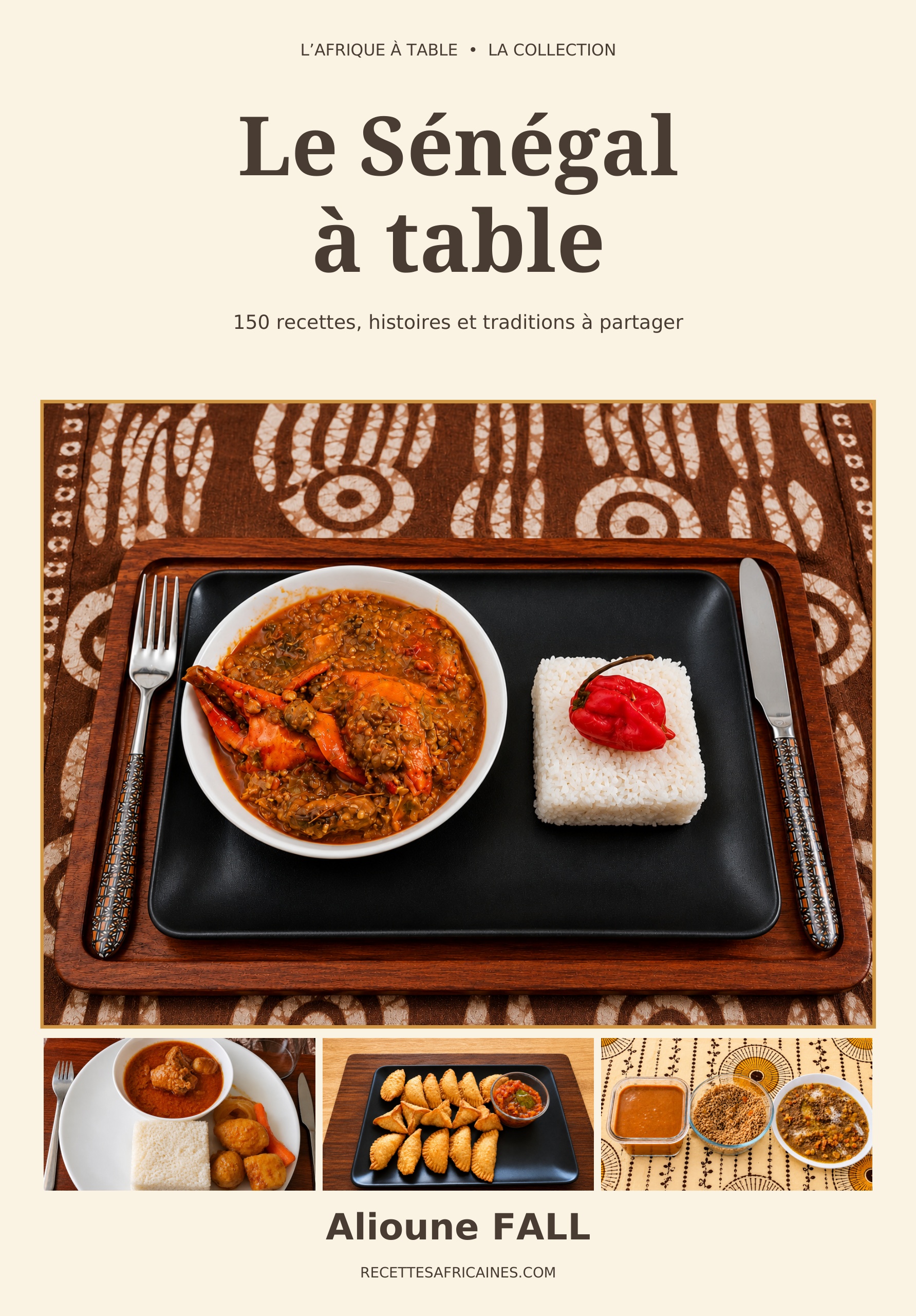
Explore Senegalese cooking with Le Sénégal à table, my collection of 150 recipes, stories and traditions to share. This book is in French, by Alioune FALL.
Explore further
🏡🤝 SOCIAL USES: daily life, hospitality, and transmission Lakh fulfills several social functions. It can be a satisfying family meal, a welcoming service, a preparation associated with certain community moments, or a practical food to feed several people at a controlled cost. This versatility is one of the reasons for its longevity.
In many contexts, it also evokes childhood, home, and family continuity. The cereal and milky tastes of lakh carry a strong emotional charge. Serving lakh is often offering more than food: it is offering familiarity, stability, a connection.
The transmission of know-how is at the heart of this dynamic. Granulation and cooking techniques are learned by observing, touching, and correcting. Measurements are often approximate in volume but precise in gesture. This mode of oral and practical transmission is typical of many African culinary heritages and explains the richness of local variations.
🌍🍽️ LAKH'S PLACE IN CONTEMPORARY AFRICAN CUISINE
Across the continent, lakh represents the strength of African cereal cuisines in the face of global food standardization. It reminds us that local cereals are not relics of the past, but relevant bases for current diets: nutritious, adaptable, culturally rooted.
Its place is also strategic in debates on food sovereignty. Valuing lakh means valuing local millet supply chains, artisanal know-how, and local economies. It means reducing dependence on imported products when local alternatives exist and are mastered.
In cities and diasporas, reinterpretations are observed: lakh served in verrines, versions enriched with fruits, less sweet variations, higher quality instant formats. These innovations can support its dissemination provided they respect the basic texture and taste that define its identity.
🥗📊 NUTRITION, DIGESTIBILITY, AND CURRENT INTEREST
Lakh, especially when made from whole or semi-whole millet, can provide good energy intake with complex carbohydrates, fiber (depending on refining), minerals, and a certain micronutrient density. The dairy accompaniment adds protein, calcium, and ferments depending on the products used. The whole can constitute a balanced meal, particularly interesting in contexts of high energy expenditure.
Digestibility depends on the fineness of the flour, the quality of cooking, and the fermentation of the dairy component. Careful cooking and a good balance of textures significantly improve digestive comfort. Modern adjustments also allow for modulating the glycemic load and caloric density: adapted portion, controlled sugar, addition of fresh fruits, use of less sweet fermented milks.
From a sustainable nutrition perspective, lakh has strong assets: agronomically robust main ingredient, minimally industrialized processing, low dependence on additives, high capacity to nourish at an accessible cost.
🧭✨ A HERITAGE FOR THE FUTURE
Lakh is not just a heritage; it is a resource for the African culinary future. It addresses major contemporary issues: food relocalization, climate resilience, valorization of women's and domestic knowledge, maintenance of cereal diversity. Its apparent simplicity makes it easily transmissible, and its technical depth gives it true gastronomic dignity.
To strengthen its place, several levers exist: documentation of regional variations, support for artisanal producers and processors, improvement of quality chains, increased presence in local and diasporic restaurants, culinary education for younger generations. Lakh can thus continue to live without being folklorized.
🏁🌾 Lakh, a major expression of African culinary intelligence Ultimately, lakh holds an essential place in African cuisine because it condenses fundamental dimensions: adaptation to the environment, mastery of grain, nutritional value, conviviality of service, transmission of gestures, and capacity for evolution. It is a deeply Senegalese dish in its most known forms, but also fully African in its cereal and community logic.
It proves that culinary greatness does not depend on the rarity of ingredients, but on the intelligence of techniques and the depth of social uses. A well-prepared bowl of lakh tells a long story: that of millet fields, hands rolling the grain, family kitchens, markets, migrations, and shared tables.
🏁CONCLUSION
As long as it continues to be cooked, transmitted, and reinvented with respect, lakh will remain what it already is: a living, nourishing, and identity-defining classic, at the heart of African gastronomic richness.
Practical notes and Senegalese terminology
Lakh is a porridge, often made with arraw or sankhal and served with fermented milk. It should not be confused with thiéré, a rolled couscous, or ngalakh, which combines a cereal base with a peanut and baobab-pulp sauce. Add the granules gradually and stir: the final texture should remain supple.
In the kitchen : Lakh
Recipes from the site to put your knowledge into practice:
Discover these cuisines at a restaurant
Explore our restaurant and caterer directories. Choose your destination and check the establishment’s menu to confirm which dishes are offered and available.
Continue exploring
Enjoy discovering ingredients and African cuisines? Join our newsletter. The illustrated PDF 10 sauces africaines incontournables is in French and is offered after confirming a subscription to the French or bilingual edition.