Moringa
Africa
Understanding : Moringa
🌿 MORINGA: DEFINITION AND IDENTITY
Moringa is a tropical tree whose leaves, flowers, young pods, seeds, and sometimes oil play an important role in several cuisines across Africa, Asia, and the Middle East. The most well-known species is Moringa oleifera, often called the “tree of life” or “miracle tree” due to its ability to grow in harsh conditions and the nutritional richness of its leaves. In Africa, moringa is not only perceived as a useful or medicinal plant: it is also a food, a leafy vegetable, a condiment, a bridging resource, and a symbol of sustainable cooking. The FAO highlights its potential for nutrition, rural incomes, land restoration, and food resilience, particularly in dry areas. ([FAOHome][1])
Where to find it
Look for the exact food-grade form required by the recipe at markets and specialist shops. Check the product name, ingredients, condition and storage instructions.
Explore further: Cooking tips · Food hygiene and safety advice.
History and uses
In African cuisines, moringa is primarily used through its leaves. Fresh, they can be cooked like spinach, incorporated into sauces, added to broths, mixed with cereals, or dried and then ground into powder. This powder is then used to enrich dishes, porridges, sauces, or drinks. The leaves are renowned for their nutritional density, especially in proteins, vitamins, and minerals, which explains their importance in regions facing food insecurity or malnutrition. Recent scientific summaries on moringa in Africa confirm that the leaves are generally considered the most nutritious part of the plant. ([PMC][2])
🥬 A FULL-FLEDGED AFRICAN LEAFY VEGETABLE
Moringa belongs to the large family of leafy vegetables that form an essential part of the African diet. On the continent, edible leaves hold a considerable place: cassava leaves, sweet potato leaves, amaranth leaves, baobab leaves, pumpkin leaves, cowpea leaves, Guinea sorrel, jute mallow, morogo, gomen, saka-saka, eru, ndolé, or African spinach. In this very rich plant world, moringa stands out for the delicacy of its small leaves, their slightly herbaceous taste, and their ability to be easily integrated into very different dishes.
Moringa leaves can be consumed young and tender, when their flavor is mild, or more mature, when they become more vegetal and sometimes slightly bitter. This subtle bitterness is not a defect: it is part of the character of many African leaves. It helps balance rich sauces, cereal pastes, peanut broths, and dishes made from millet, rice, corn, or sorghum. In some cuisines, the leaves are cooked for a long time to tenderize them; in others, they are added at the end of cooking to preserve their color and freshness.
Moringa is thus a connecting food. It links daily cooking to nutrition, sauce to garden, family meal to plant knowledge. It reminds us that African cuisine is not only built around meats, fish, or cereals, but also around an immense heritage of edible leaves. These leaves add taste, color, volume, and nutritional value to the simplest meals.
🍲 MORINGA IN SAUCES, PORRIDGES, AND CEREAL DISHES
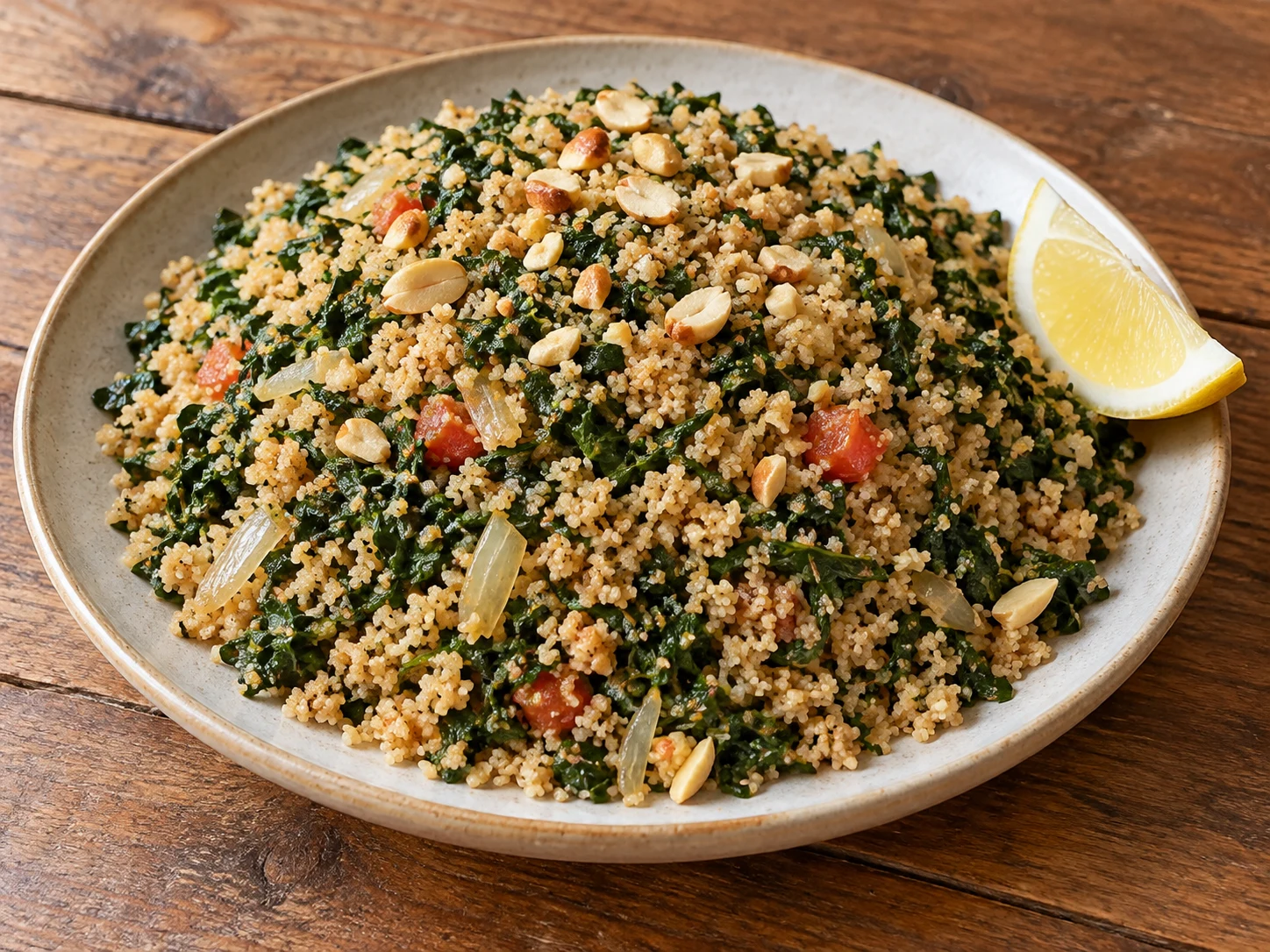
In several regions of West Africa, moringa is used in sauces served with rice, tô, millet couscous, boule, fonio, or other cereal preparations. The leaves can be combined with peanuts, tomatoes, onions, dried fish, spices, chili, or oil. Their role is twofold: they slightly thicken the preparation and bring a vegetal note that balances the flavors. They can also replace other leaves when these are not available.
In Senegal, moringa is often known as nébéday or nebeday. This popular name is sometimes associated with the idea that the tree “never dies,” as it is drought-resistant and regrows easily after pruning. In domestic uses, the leaves can be incorporated into sauces, broths, or family preparations, especially when seeking to enhance the nutritional value of the meal. In Niger and some Sahelian areas, moringa leaves can accompany cereal-based preparations, such as couscous or mixtures of grains and leaves, in a logic of nourishing and economical cooking.
Moringa is also present in the diet in powdered form. This dried form allows the leaves to be preserved longer, transported easily, and added in small quantities to already prepared dishes. It can be incorporated into a child's porridge, a light sauce, a soup, a cereal paste, or a drink. This practice aligns with an ancient logic of African cuisines: drying, pounding, preserving, and reusing plants to extend their availability. Moringa leaves are generally cooked, pan-fried, boiled, added to soups and sauces, or dried and then ground into powder. ([Feedipedia][3])
🌾 A BRIDGING PLANT FOR RESILIENCE
The place of moringa in African cuisine cannot be separated from its role in food security. In Sahelian, semi-arid, or rural areas, certain plants become essential because they resist difficult periods better than others. Moringa grows quickly, tolerates relatively dry conditions, and can provide leaves even when other vegetables become scarce. This capacity makes it a valuable resource during lean seasons, when food reserves dwindle before new harvests.
In my books

Continue exploring the continent’s cuisines with Africa at the Table — 54 countries, 54 iconic dishes, by Alioune FALL. This book is in English.
Explore further
Recent work on moringa in Africa highlights its importance in agroforestry systems and its potential contribution to the stability of food production in the face of climate change. Moringa is also described as a bridging food in certain contexts, particularly in Niger, Kenya, and Ethiopia. ([jukuri.luke.fi][4]) This dimension is fundamental: in African cuisine, a food is not only judged by its taste, but also by its ability to nourish, support families, and endure through the seasons.
Moringa thus embodies a form of ecological intelligence. It grows near homes, in courtyards, gardens, fields, or hedges. It can be pruned regularly, and its leaves regrow. It does not always require extensive resources to cultivate. This availability makes it a plant close to women, families, local markets, and local kitchens.
👩🏾🍳 DOMESTIC, FEMININE, AND TRANSMITTED CUISINE
Like many African leafy vegetables, moringa is deeply linked to domestic cooking. It is often women who know how to choose the leaves, wash them, stem them, cook them, dry them, or pound them. They know the right combinations: moringa and peanuts, moringa and dried fish, moringa and millet, moringa and chili, moringa and porridge. They also know how to introduce it into the diet of children or vulnerable people, not as an isolated food, but by integrating it into familiar dishes.
Moringa illustrates an important idea: traditional African nutrition is not only based on medical discourse or processed products. It is primarily based on ordinary culinary knowledge. Adding a handful of leaves to a sauce, enriching a porridge with green powder, preparing a leaf soup, accompanying a cereal paste with a vegetable stew: these simple gestures carry health, memory, and transmission.
In African markets, moringa can appear as fresh leaves, small bunches, dried leaves, or powder. Its presence testifies to the encounter between tradition and modernity. On one hand, it belongs to ancient knowledge; on the other, it is now valued by nutrition programs, NGOs, food companies, and African diasporas.
🌍 A PLACE IN CONTEMPORARY AFRICAN CUISINE
Today, moringa is gaining new visibility. It is presented as a “superfood” in international discourse, but this appellation can sometimes obscure its primary reality: before being a trendy powder sold in sachets, moringa is first and foremost a cooked leaf, a familiar tree, an everyday ingredient. Its modernity comes not only from its nutritional value; it comes from its ability to connect traditional African cuisines to contemporary issues: sustainable food, valorization of local plants, food autonomy, resilient agriculture, and the transmission of heritage.
In contemporary African cuisine, moringa can be used very creatively. It can be added to traditional sauces, incorporated into breads, flatbreads, composite flours, smoothies, soups, savory fritters, or seasonings. Some African and Afro-descendant chefs use it to add a vegetal touch to modern dishes, while recalling its local roots. It can thus enter restaurant cuisine, family cuisine, health-focused cuisine, or cuisine that promotes African products.
However, a balanced approach is necessary. Moringa alone is not a miracle solution. Its nutritional richness is real, but it makes full sense when it is part of a varied diet, with cereals, legumes, vegetables, fruits, proteins, and quality fats. Recent scientific studies highlight its nutritional benefits, but also show that its valorization must be accompanied by research, safe practices, and better integration into local food systems. (PMC)
🍃 A LEAF OF MEMORY, TASTE, AND FUTURE
Moringa holds a unique place in African cuisine because it brings together three dimensions: taste, nutrition, and resilience. It gives a vegetal flavor to sauces, enriches simple dishes, accompanies cereals, supports families during difficult times, and reminds us of the value of nourishing trees. It belongs to that category of African foods that are modest in appearance but essential in daily life.
Its strength is that it is not just an ingredient. Moringa is a landscape, a practice, a domestic memory. It evokes family courtyards where useful trees grow, markets where leaves are sold, hands that wash and pound, pots where sauces simmer, enriched porridges for children, seasonal meals, and knowledge transmitted quietly.
At the great African table, moringa reminds us that the continent's culinary richness is also found in its leaves, its trees, and its local plants. It represents an Africa capable of nourishing with little, transforming nature into cuisine, making plants a pillar of the meal, and combining tradition with the future. Through it, African cuisine asserts one of its great lessons: the most discreet foods are sometimes those that carry the most memory, strength, and hope.
In the kitchen : Moringa
Recipes from the site to put your knowledge into practice:
Discover these cuisines at a restaurant
Explore our restaurant and caterer directories. Choose your destination and check the establishment’s menu to confirm which dishes are offered and available.
Continue exploring
Enjoy discovering ingredients and African cuisines? Join our newsletter. The illustrated PDF 10 sauces africaines incontournables is in French and is offered after confirming a subscription to the French or bilingual edition.