Dried Shrimp
Africa
Understanding : Dried Shrimp
🦐 CULINARY IDENTITY AND DEFINITION
Dried shrimp are small crustaceans preserved by drying, sometimes after salting, light cooking, smoking, or sun exposure. They can be used whole, crushed, pounded, or ground into a powder. In many African cuisines, they are not just considered a seafood product, but a true condiment, capable of adding depth, aroma, and an umami flavor to sauces, soups, stews, broths, and grain dishes. Their strength comes from their concentration: by losing much of their water, shrimp develop a more intense taste than when fresh. A small amount is often enough to transform the character of a dish.
Where to find it
Look for the exact food-grade form required by the recipe at markets and specialist shops. Check the product name, ingredients, condition and storage instructions.
Explore further: Cooking tips · Food hygiene and safety advice.
Search Amazon.fr — affiliate link →
Check availability and delivery on Amazon.fr. Compare ingredients, packaging and sellers.
As an Amazon Associate I earn from qualifying purchases.
History and uses
In African markets, dried shrimp come in various forms: small whole shrimp, larger dried and broken shrimp, fine powder, or a mixture of fragments intended for seasoning. Their color varies from orange-pink to light brown, depending on the species, drying method, degree of smoking, and storage time. They belong to the large family of dried products that play an essential role in the continent's cuisines: smoked fish, dried fish, dried shellfish, dried meat, dried leaves, spices, fermented seeds, and aromatic powders. Technical guides on dried shrimp production emphasize that their quality heavily depends on processing methods, handling, and hygiene at all stages, from fishing to drying. ([Open Knowledge FAO][1])
🌍 A MAJOR ROLE IN AFRICAN CUISINES
Dried shrimp hold a particularly important place in African cuisine, especially in West Africa, notably Nigeria, Ghana, Benin, Togo, Ivory Coast, Cameroon, and several coastal or riverine regions. However, their use extends far beyond just coastal areas. Thanks to drying, they can travel far from fishing zones and enter inland kitchens. This is precisely one of the advantages of dried products: they allow the sea, lagoons, rivers, and mangroves to journey into distant kitchens.
In Nigeria, dried shrimp are often called crayfish in local English culinary usage. This term can be confusing, as it does not always refer to crayfish in the European or North American sense, but often to small dried shrimp or prawns, whole or ground. In Nigerian pantries, dried crayfish is considered a fundamental ingredient, alongside palm oil, dried fish, fermented seeds, chilies, flours, and leafy greens. It is used to flavor soups, stews, sauces, and some rice dishes. ([Serious Eats][2])
🍲 AN UMAMI AND DEPTH CONDIMENT
Dried shrimp's primary function is to provide savory depth. They impart a taste now described as umami: a full, persistent flavor that is simultaneously marine, salty, slightly sweet, and very aromatic. In an African sauce, they don't always dominate the dish, but they provide a foundation. They complement tomatoes, onions, garlic, ginger, chili, leafy greens, seeds, nuts, and oils. They pair particularly well with red palm oil, groundnuts, egusi, okra, bitter leaves, cassava leaves, African spinach, and spicy broths.
In an egusi soup, for example, dried shrimp powder enhances the taste of melon seeds and balances the richness of the oil. In an okra soup, it adds depth to the mucilaginous texture of the okra. In an ogbono soup, it complements the dense and slightly slippery character of wild mango seeds. In a leafy green stew, it provides a marine note that sometimes replaces fish or complements meat. In some Nigerian recipes, soups and stews are precisely built around a seasoned stock, animal or marine proteins, vegetables, vegetable thickeners, and umami ingredients like dried fish or crayfish powder. ([Serious Eats][3])
🐟 BETWEEN SEAFOOD PRODUCT AND POPULAR SPICE
Dried shrimp occupy an interesting position: they are both an animal product and a spice. They provide protein, but are often used in modest quantities, more for flavoring than as the main component of a meal. This dual identity is very important in African cuisines. Many ingredients play an intermediate role: they nourish, but they also season. Smoked fish, fermented seeds like iru or soumbala, dried shrimp, fish powders, or certain traditional broths fall into this category.
This function is particularly evident in sauces. A handful of dried shrimp, pounded with onions, chili, and sometimes garlic, can serve as an aromatic base. Whole, they provide texture and mouthfeel. Ground, they blend into the sauce and become almost invisible. Crushed, they offer a compromise between aroma and texture. In home cooking, the choice depends on the desired effect: a fine powder for subtle flavoring, fragments to make the dish more pronounced, whole shrimp to clearly indicate the presence of the marine product.
🌶️ THE CASE OF GHANAIAN SHITO
One of the most well-known examples of dried shrimp use in West Africa is Ghanaian shito. Shito is a dark, rich, concentrated chili sauce, prepared with oil, chilies, onions, garlic, ginger, spices, dried fish, and often dried shrimp or prawns. It accompanies rice, waakye, kenkey, grilled foods, eggs, fish, meats, and even some simple everyday dishes. In this sauce, dried shrimp are not a minor detail: they contribute to the depth, saltiness, smoky aroma, and umami power of the preparation. Culinary sources describe shito as a Ghanaian sauce made from chili, dried fish, dried shrimp, onions, garlic, and spices. ([TasteAtlas][4])
In my books

Continue exploring the continent’s cuisines with Africa at the Table — 54 countries, 54 iconic dishes, by Alioune FALL. This book is in English.
Explore further
Shito perfectly illustrates how dried shrimp can become an ingredient of memory. The sauce can be stored, transported, sometimes given as a gift, accompanies meals away from home, and connects home cooking to the market, the street, the diaspora, and travel. It also shows that dried shrimp are not only used in stews: they can be incorporated into powerful, almost concentrated condiments, capable of accompanying a wide variety of foods.
☀️ AN ANCIENT PRESERVATION TECHNIQUE
Dried shrimp bear witness to African ingenuity in preservation. Before the widespread use of industrial refrigeration, fishing communities had to quickly preserve fragile products. Shrimp, like fish, spoil quickly when fresh. Drying, salting, and sometimes smoking reduce moisture, slow down spoilage, and extend their availability. Traditional preservation methods in West Africa include sun-drying, salting, smoking, fermentation, and other techniques aimed at keeping food available for longer. (sfjesgs.com)
But this preservation is not just technical. It is also cultural. Dried shrimp tell the story of the relationship between African societies and their environment: sea, lagoons, rivers, mangroves, markets, trade routes, home cooking. They allow for using periods of abundance to prepare for times of scarcity. They reduce waste, facilitate transport, and make delicious cuisine possible even when fresh produce is not accessible.
🧂 TASTE, DOSAGE, AND BALANCE
Dried shrimp should be used sparingly. Their taste is powerful, sometimes very salty, sometimes strongly marked by drying or smoking. In a sauce, they should support other ingredients without overpowering them. Too much shrimp powder can make a dish aggressive, too marine, or too salty. When properly dosed, however, they provide remarkable depth. They can be added at the beginning of cooking to flavor the broth, in the middle of cooking to enrich the sauce, or towards the end to retain a sharper note.
In some cuisines, they are quickly rinsed to remove excess sand, salt, or impurities. In others, they are lightly toasted before pounding to intensify their aroma. They can also be soaked for a few minutes in warm water, especially when whole and very dry. This soaking water can be added to the sauce, as it contains some of the flavors. The key is to respect their potency: dried shrimp are a precision ingredient.
🥣 A SIGNATURE OF AFRICAN SAUCES
In the grand African culinary landscape, dried shrimp are among the ingredients that are not always seen, but are immediately felt. They give the dish depth, identity, and memory. They remind us that African cuisine is a cuisine of aromatic layers: a base of onions, chilies, and oil; a smoky or dried note; a spice; a leaf; a thickener; a protein; a grain or a paste to accompany.
They also show the importance of small ingredients in great popular cuisines. A handful of dried shrimp can transform a vegetable sauce into a complete dish, a simple broth into a fragrant soup, a tomato sauce into a savory base, rice into a deeper dish. Their value is therefore not only nutritional or economic: it is gustatory, cultural, and symbolic.
📚 A MARINE MEMORY IN AFRICAN CUISINE
Dried shrimp can be understood as preserved marine memory. They carry the taste of water, salt, sun, and time. They connect fishermen to markets, markets to kitchens, kitchens to family meals. They embody an African culinary approach attentive to preservation, concentrated taste, domestic economy, and transmission.
Their place in African cuisine is therefore essential. They are not always at the center of the plate, but they often give the dish its true depth. They represent that discreet but decisive part of African culinary heritage: that of condiments, dried products, powders, pounding gestures, fragrant pots, and knowledge passed down from generation to generation. Through dried shrimp, African cuisine reminds us that taste comes not only from abundance, but also from the art of concentrating, preserving, and sublimating the simplest products.
In the kitchen : Dried Shrimp
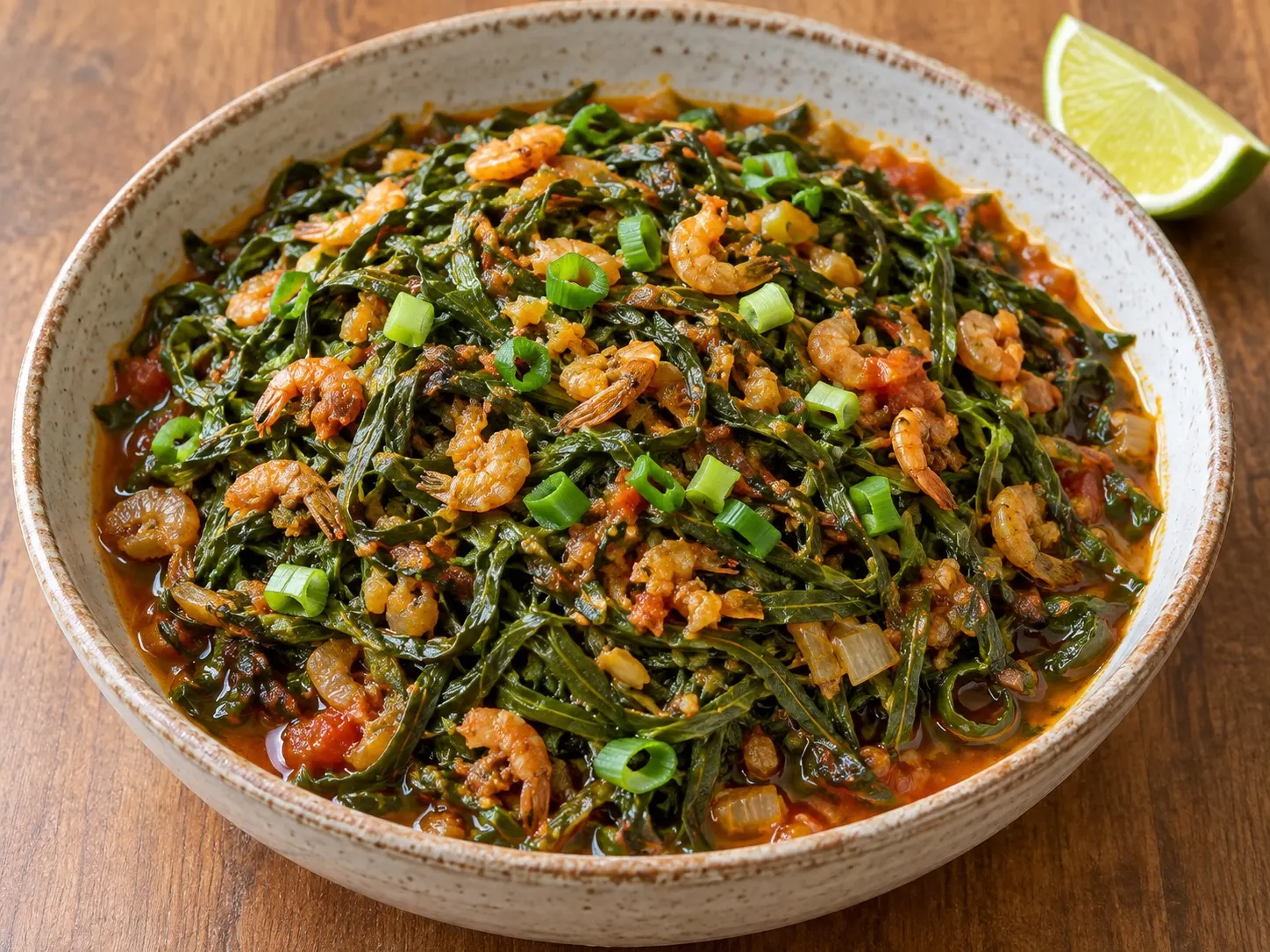
Recipes from the site to put your knowledge into practice:
Discover these cuisines at a restaurant
Explore our restaurant and caterer directories. Choose your destination and check the establishment’s menu to confirm which dishes are offered and available.
Continue exploring
Enjoy discovering ingredients and African cuisines? Join our newsletter. The illustrated PDF 10 sauces africaines incontournables is in French and is offered after confirming a subscription to the French or bilingual edition.