Kenkey
Ghana
Understanding : Kenkey
INTRODUCTION AND ORIGINS OF KENKEY 🌽🇬🇭
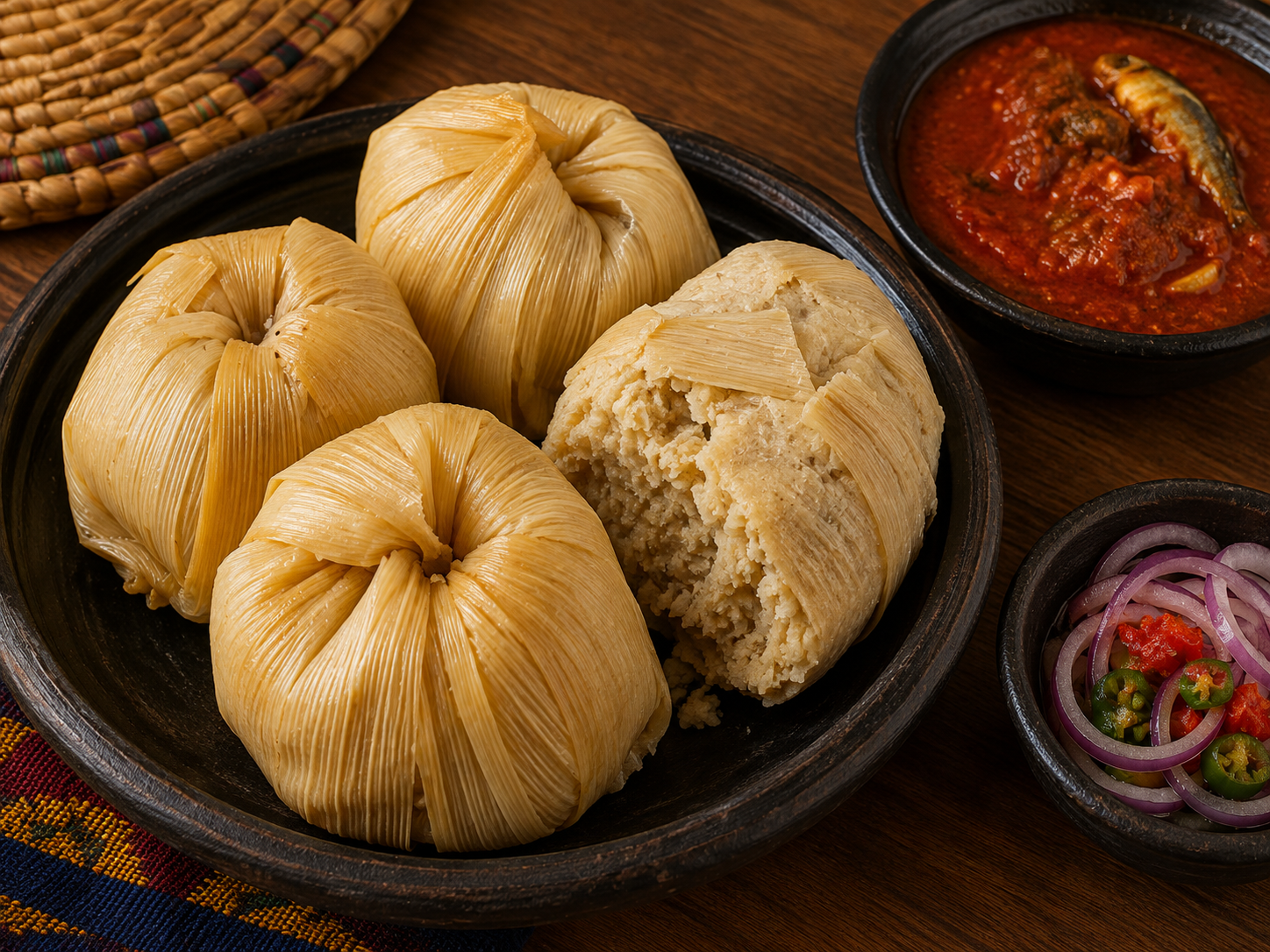
Kenkey is much more than a simple staple food in West Africa; it is a true monument of culinary identity, especially in Ghana where it originated. Locally known as kom, kormi, or dorkunu, this traditional dish comes in the form of a ball of fermented corn dough, steamed and wrapped in dried corn husks or banana leaves. Its origins date back to the Ga and Fante peoples living along the Ghanaian coast. These coastal communities developed this ingenious preservation method to cope with periods of scarcity and to feed fishermen who went out to sea for several days. Thanks to natural lactic fermentation, kenkey could be preserved for an extremely long time without refrigeration, making it the ideal travel food. Over the centuries, this technique spread throughout the country and crossed borders to establish itself permanently in Togo, Benin, and certain regions of Côte d'Ivoire. Today, it embodies the soul of African street food, consumed from morning to night by all social classes with the same fervor.
ARTISANAL PRODUCTION: A UNIQUE FERMENTATION PROCESS 🥣⏳
The preparation of kenkey is an ancestral art that requires patience, precision, and know-how passed down from generation to generation. It all begins with the selection of high-quality white corn kernels. These kernels are carefully cleaned and then soaked in clear water for one to three days to soften them and initiate fermentation. Once this step is completed, the wet corn is finely ground to obtain a wet meal. A little water is then added to form a thick paste called dough. This is when the magic of spontaneous lactic fermentation occurs: the dough is left to rest for two to three days in a warm place. Natural microorganisms, including lactic acid bacteria and yeasts, develop to give the dough its characteristic tangy aroma and unique texture.
After this maturation period, the fermented dough is divided into two equal portions. The first portion is mixed with water and cooked in a large pot while stirring constantly until an extremely dense and sticky porridge called aflata is obtained. This partial cooking step, called starch gelatinization, is essential for the final consistency of the product. The hot aflata is then vigorously incorporated into the second portion of raw fermented dough. This hybrid mixture of cooked and raw is then shaped into compact balls. Each ball is tightly wrapped in corn husks previously washed and softened in water, then placed in a large pot for a long steaming process that lasts several hours. This double cooking guarantees a soft texture inside and firm on the outside.
THE TWO MAIN VARIETIES OF KENKEY: GA AND FANTE 🍃🌽
There are two major variants of kenkey in Ghana, each reflecting the history and preferences of its people of origin.
The first is Ga Kenkey, originating from the Accra region and its surroundings. This version is the most widespread and is immediately distinguished by its packaging made of dried corn husks. The balls are medium-sized, whitish in color, and have a very pronounced tangy taste. Ga Kenkey is generally salted before steaming, which gives it a unique flavor that perfectly balances the acidity of the fermentation.
The second variant is Fante Kenkey, originating from the central region of Ghana. Unlike Ga Kenkey, it is wrapped in dry or fresh banana leaves, which gives it a slightly brown or greenish hue and an inimitable woody and earthy aroma. Fante Kenkey balls are often larger and denser. Salt is generally not added, and the fermentation process is often extended by an extra day, which gives it an even more complex aromatic profile. Moreover, thanks to the thick banana leaf wrapper, Fante Kenkey can be stored for more than a week without spoiling, becoming increasingly flavorful over time.
THE PLACE OF KENKEY IN WEST AFRICAN SOCIETY AND CULTURE 🤝🎉
Kenkey is not just food; it is a strong social symbol and a cultural binder in West Africa. In the bustling streets of Accra, bus stations, night markets, and small neighborhood stalls, the hiss of steam escaping from large kenkey cauldrons is a familiar soundtrack to daily life. Kenkey sellers, often called 'Kenkey sellers', are respected figures in the community. They hold manufacturing secrets passed down from their mothers and feed hundreds of people every day at a very affordable price. For manual laborers, students, and modest families, kenkey represents the quintessential subsistence meal: it is economical, extremely filling, and provides energy for the entire day.
Beyond its daily nourishing function, kenkey is invited to traditional ceremonies, weddings, funerals, and community gatherings. Sharing a ball of kenkey with loved ones or guests is a gesture of fraternity and welcome. In Ghana, there are even popular festivals and informal competitions to celebrate this national dish, showing how deeply this simple food is rooted in cultural pride and collective identity. It transcends ethnic and regional barriers to unite people around a common table.
HOW TO ENJOY KENKEY: ACCOMPANIMENTS AND RITUALS 🐟🌶️
Eating kenkey is a sensory ritual traditionally done with clean hands. To fully appreciate this dish, one begins by delicately removing the leaf wrapper, releasing a delicious aroma of corn and fermentation. A small piece of the warm dough is then taken with the fingers, rolled into a ball, and dipped into the accompanying sauces.
The essential partner of kenkey is shito, a black chili sauce of Ghanaian origin, prepared from dried chilies, onions, ginger, garlic, dried fish, and ground shrimp, all fried for a long time in oil until a dark, concentrated paste consistency is obtained. This is often accompanied by a sauce of tomatoes and raw onions pounded with fresh green chili, locally called raw pepper sauce, which provides a biting freshness.
For protein, kenkey is almost always accompanied by crispy fried fish, especially sardines, mackerel, or river tilapia. In festive versions, fried beef, cooked beef skin called wele, or hard-boiled eggs are added. For an even richer experience, some gourmets like to accompany kenkey with slices of ripe avocado, whose creamy texture softens the spiciness of the sauces.
There is also a very popular refreshing drink derived from kenkey called mashke or kenkey smoothie. To prepare it, cold kenkey is blended with water, sugar, condensed milk, and ice. This thick and energizing drink is perfect for quenching thirst and regaining strength under the afternoon sun.
NUTRITIONAL VALUES AND BENEFITS OF A FERMENTED FOOD 🔬❤️
From a nutritional point of view, kenkey is a treasure trove of often underestimated benefits. The fact that corn undergoes prolonged fermentation profoundly changes its chemical structure and significantly improves its digestibility. Lactic acid bacteria destroy a large part of the phytic acid naturally present in corn, a compound that usually prevents the absorption of minerals by the human body. Thanks to this fermentation, the iron, zinc, and calcium contained in corn become highly bioavailable for our body.
Moreover, kenkey is rich in dietary fiber that promotes excellent intestinal transit and contributes to microbiome health. It is a major source of complex carbohydrates, providing a slow and sustained energy release, ideal for avoiding blood sugar spikes. It also contains B vitamins, including thiamine, riboflavin, and niacin, which play a crucial role in energy metabolism. Combined with protein-rich fish and omega-3s, as well as spicy sauces full of antioxidants, kenkey constitutes a nutritionally complete and perfectly balanced meal to meet the physical demands of daily life.
CONCLUSION: A CULINARY HERITAGE TO PRESERVE 🌍⭐
In conclusion, kenkey is much more than a simple culinary specialty of West Africa: it is a masterpiece of human ingenuity in facing the challenges of food preservation. Through its meticulous preparation and tasting rituals, it tells the story of coastal peoples, their sense of community, and their legendary hospitality. While modern cuisine sometimes turns to standardized industrial products, kenkey remains a bastion of tradition, a bridge between the past and the present that continues to delight palates and nourish souls. Whether you enjoy it on the go in a bustling street of Accra or in a gourmet African restaurant around the world, every bite of kenkey connects you directly to the rich and vibrant history of African gastronomy.
🔑 Tags : Fermentation (the key biological process that gives it its tangy taste) Ghana (its country of origin and main place of consumption) Shito (the black chili sauce with shrimp/fish that traditionally accompanies it) Corn husk (the natural plant wrapper used for steaming) African cuisine (the West African gastronomic heritage to which it belongs)
Prepare this speciality
Choose a detailed recipe, adjust the portions and prepare your ingredients before starting. Our cooking tips and food safety advice complement the steps described in the recipes.
Explore further: Cooking tips · Food hygiene and safety advice.
In my books

Continue exploring the continent’s cuisines with Africa at the Table — 54 countries, 54 iconic dishes, by Alioune FALL. This book is in English.
In the kitchen : Kenkey
Recipes from the site to put your knowledge into practice:
Discover these cuisines at a restaurant
Explore our restaurant and caterer directories. Choose your destination and check the establishment’s menu to confirm which dishes are offered and available.
Continue exploring
Enjoy discovering ingredients and African cuisines? Join our newsletter. The illustrated PDF 10 sauces africaines incontournables is in French and is offered after confirming a subscription to the French or bilingual edition.