Gomen
Ethiopia, Eritrea
Understanding : Gomen
INTRODUCTION AND ORIGINS OF GOMEN 🥬🇪🇹
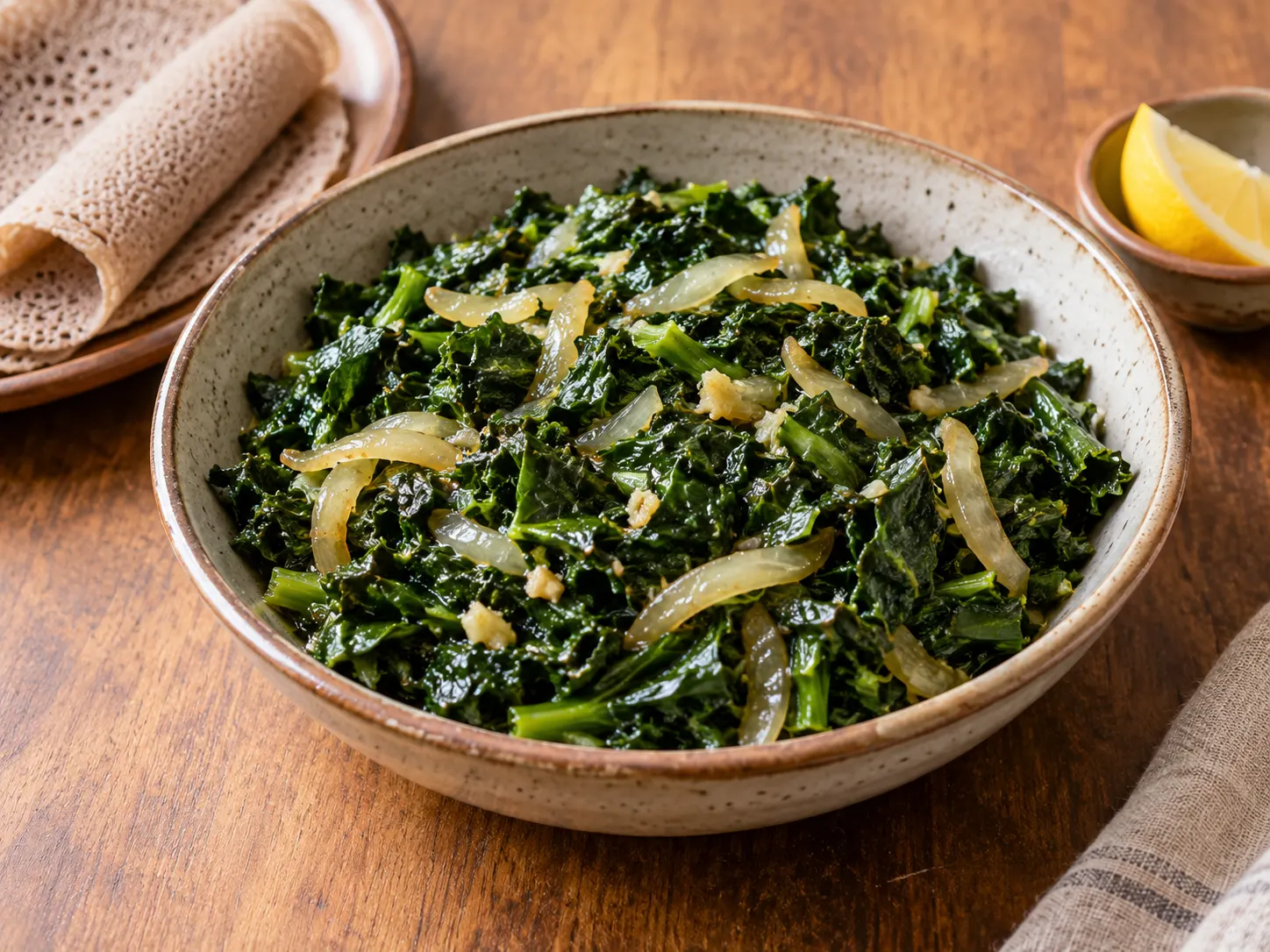
Gomen is an emblematic vegetable staple of Ethiopian and Eritrean cuisine, representing the ancestral love of the Horn of Africa for leafy green vegetables. Scientifically known as Brassica carinata, or Ethiopian kale, gomen refers to both the plant itself, which grows vigorously on the fertile highlands of East Africa, and the traditional stewed dish made from it. Unlike Western cabbage or lettuce, gomen leaves are thick, fleshy, slightly bitter, and extremely resistant to cooking.
Prepare this speciality
Choose a detailed recipe, adjust the portions and prepare your ingredients before starting. Our cooking tips and food safety advice complement the steps described in the recipes.
Explore further: Cooking tips · Food hygiene and safety advice.
History and uses
Historically, the cultivation of gomen dates back several millennia in the Horn of Africa, where this hardy plant perfectly adapted to the temperate climate of the Ethiopian mountains. For local populations, gomen has always represented a vital and accessible food resource, capable of growing year-round with minimal irrigation. In a region of the world where cattle farming is a sign of prestige and meat is often reserved for festive days, gomen has established itself as the queen of daily tables. It embodies a philosophy of simple and healthy living, where nature offers everything necessary to nourish the body and spirit. Over the centuries, this green vegetable has become much more than a mere subsistence food: it has transformed into a cultural symbol of endurance, agricultural fertility, and family sharing.
THE MEANING OF TRADITIONAL PREPARATION AND ITS VARIATIONS 🍳🌿
The preparation of gomen is a domestic art that requires patience and meticulous adherence to cutting and cooking steps. It all begins with selecting fresh, vibrant green leaves. The first step for an Ethiopian cook is to separate the leaf from its fibrous central stem. This cleaning stage is followed by rigorous washing with plenty of water to remove soil and small impurities.
Once washed, the gomen leaves are stacked, tightly rolled, and cut extremely finely. This meticulous cutting is a point of pride for Ethiopian cooks, as it allows the greens to cook evenly and absorb the aromas of the spices. The most classic cooking method involves briefly boiling the cut leaves to reduce their natural bitterness and soften them. Then, the greens are drained and gently sautéed in a pot with minced red onions, crushed garlic, grated fresh ginger, and sliced green jalapeño peppers.
The type of fat used to cook gomen defines its character and its place on the table. On religious fasting days, gomen is cooked exclusively with neutral vegetable oil, such as sunflower or canola oil, resulting in ye'tsom gomen. Outside these periods of restriction, niter kibbeh, the famous Ethiopian clarified butter infused with fenugreek, cardamom, and black cumin, is added. This butter brings a milky richness, toasted notes, and an incomparable creaminess to the vegetable.
There are also richer variations, such as gomen besiga, where the greens are slow-cooked with tender pieces of beef or lamb and marrow bones, creating a comforting stew. Another prestigious recipe is gomen kitfo, a festive specialty where cooked gomen is pressed to remove its water, then intimately mixed with ayib, Ethiopian fresh cheese, and a generous amount of hot clarified butter, offering an absolutely divine contrast of textures and flavors.
THE HISTORICAL AND SOCIETAL PLACE OF GOMEN IN AFRICA AND ETHIOPIA 🍽️🌍
Gomen holds a central place in the spiritual and social life of Ethiopia, a country deeply marked by the traditions of the Tewahedo Orthodox Church. Adherents observe more than two hundred and fifty fasting days a year, during which the consumption of meat, dairy products, eggs, and animal fats is strictly prohibited. It is during these periods, called tsom, that gomen becomes the main actor on the table.
In my books

Continue exploring the continent’s cuisines with Africa at the Table — 54 countries, 54 iconic dishes, by Alioune FALL. This book is in English.
Explore further
It is the centerpiece of beyaynetu, the multicolored vegan fasting platter served on injera, the large fermented teff flatbread that serves as both plate and utensil. On this platter, a hill of dark green gomen provides a striking visual and gustatory contrast alongside spicy red lentil wat, yellow split pea puree, and tomato salads. Eating gomen on injera is a strong communal act. Families gather around the large shared platter, taking small bites of greens with pieces of flatbread, in a spirit of conviviality and gratitude.
In a broader African context, gomen belongs to a large family of leafy green vegetable dishes found across the continent. It shares a spiritual and culinary kinship with sukuma wiki from Kenya and Tanzania, mpondu or saka-saka from Central Africa made from cassava leaves, and efó from West Africa. Each of these dishes testifies to the ability of African peoples to transform simple green leaves into highly nutritious, flavorful stews capable of feeding large gatherings. Gomen embodies this African culinary resilience, combining the simplicity of agricultural resources with the complexity of seasoning techniques.
THE NUTRITIONAL BENEFITS OF A GREEN SUPERFOOD 🩺💪
Gomen is a true nutritional treasure, often described as a superfood due to its exceptional density of essential nutrients. Its regular consumption brings numerous health benefits, widely recognized by modern nutritionists.
First, gomen is an exceptional source of plant-based iron, making it a valuable ally in combating anemia and fatigue, especially as part of a vegetarian or vegan fasting diet. It is also extremely rich in calcium and magnesium, essential minerals for bone mass consolidation, dental health, and proper nervous system function.
Furthermore, this green vegetable is packed with essential vitamins. It contains a high concentration of vitamin A in the form of beta-carotene, beneficial for vision and skin protection, as well as vitamin C, a powerful antioxidant that supports the immune system. The massive presence of vitamin K plays a key role in blood clotting and cardiovascular health. Finally, gomen's richness in dietary fiber promotes excellent digestion, helps regulate blood sugar levels, and supports the health of the gut microbiome. It is a pure, healthy food, low in calories but rich in vital energy, which purifies the body while delighting the palate.
SYNONYMS FOR GOMEN 🔄🗣️
Depending on translations, linguistic regions, and culinary contexts, gomen is known by several names:
Ye'abesha gomen (traditional Amharic designation meaning Ethiopian cabbage) Gomen wat (when prepared as a stew) Ethiopian collard greens (botanical and culinary comparison) Abyssinian mustard greens (English term referring to ancient Abyssinia) East African kale (modern culinary popularization translation)
LIST OF 5 KEYWORDS TO REMEMBER THE ESSENTIALS 🔑📝
Injera (the fermented teff flatbread on which gomen is traditionally served) Fasting (the Orthodox Christian religious periods when this vegetable reigns supreme) Niter kibbeh (the spiced clarified butter that gives it its richness and aroma) Green (the vibrant color of its leaves, symbolizing freshness and vitality) Ethiopia (the historical and cultural cradle of this plant and its recipe)
In the kitchen : Gomen
Recipes from the site to put your knowledge into practice:
Discover these cuisines at a restaurant
Explore our restaurant and caterer directories. Choose your destination and check the establishment’s menu to confirm which dishes are offered and available.
Continue exploring
Enjoy discovering ingredients and African cuisines? Join our newsletter. The illustrated PDF 10 sauces africaines incontournables is in French and is offered after confirming a subscription to the French or bilingual edition.