Kocho
Ethiopia
Understanding : Kocho
INTRODUCTION AND ORIGINS OF KOCHO: THE SACRED BREAD OF ENSET 🌲🇪🇹
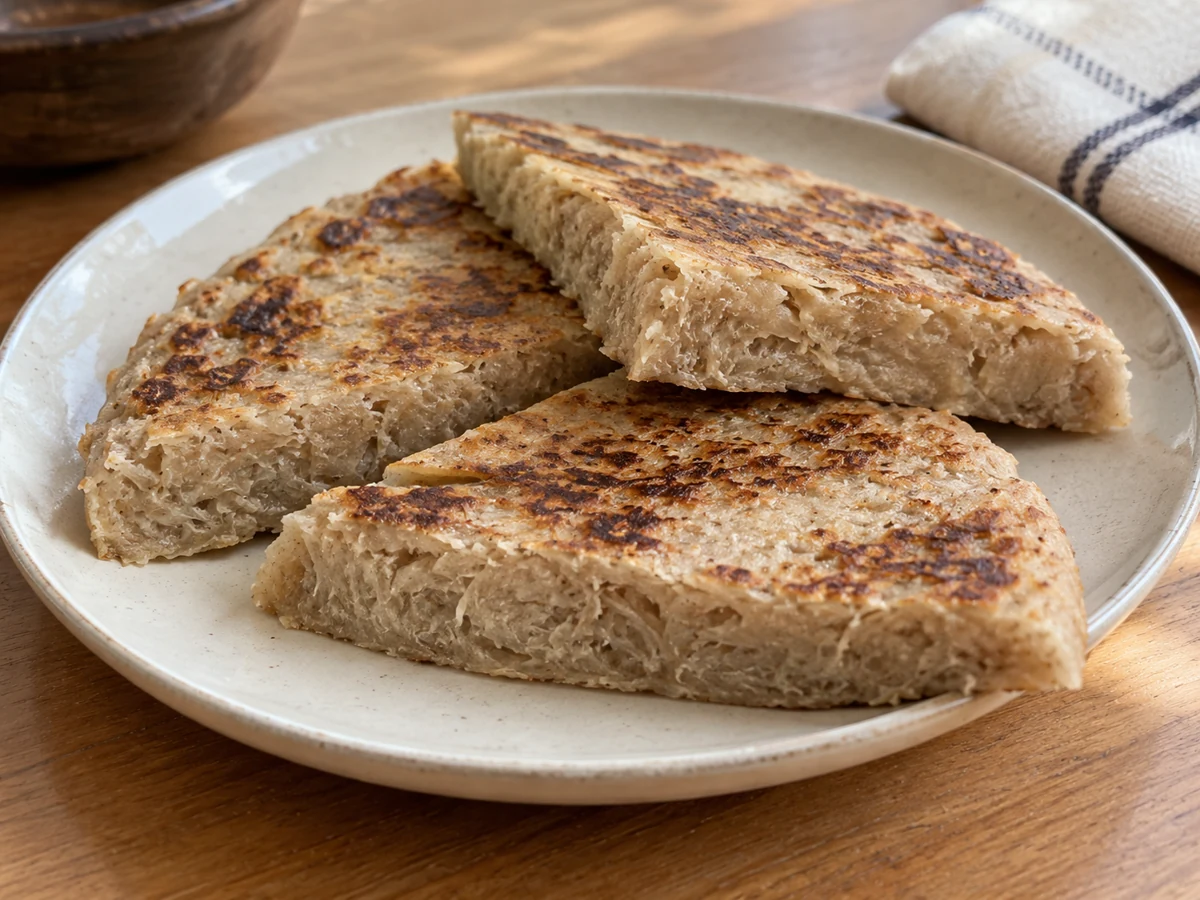
Kocho is the traditional fermented bread that forms the dietary staple for millions of people in southern and southwestern Ethiopia, particularly within the Gurage, Sidama, Wolayta, and Hadiya communities. This unique food product is a flat, dense, elastic bread, gray to beige in color, made from the fermented pulp of enset, also known by its scientific name Ensete ventricosum or false banana. Unlike many regions of East and North Africa where cereals like teff, millet, or wheat reign supreme on the table, southern Ethiopia has developed an agrarian and culinary culture entirely centered on this miracle tree.
Where to find it
Look for the exact food-grade form required by the recipe at markets and specialist shops. Check the product name, ingredients, condition and storage instructions.
Explore further: Cooking tips · Food hygiene and safety advice.
History and uses
Historically, kocho is the result of the ingenious adaptation of local populations to their mid-mountain environment. Not producing edible fruits, enset was domesticated for its trunk and underground root, which are rich in pure starch. To make this starch digestible and to preserve it for very long periods, the ancestors of the Gurage people developed a method of underground anaerobic fermentation of remarkable scientific efficiency. Kocho thus became the very symbol of food security and agricultural independence in the face of periodic droughts that sometimes struck other regions of the Horn of Africa. Today, far more than a mere subsistence food, kocho is a strong marker of cultural identity, a festive ingredient, and the inseparable partner of the most noble dishes of southern Ethiopian gastronomy.
THE UNDERGROUND MANUFACTURING PROCESS AND ARTISANAL FERMENTATION 🏺⏳
The production of kocho from the living enset plant is a laborious, physical, and technically complex process, based on ancestral knowledge transmitted exclusively by women. When an enset tree reaches maturity, after a slow growth of four to seven years, the women of the family unite to harvest and process it, a task that often takes several days and is organized collectively at the neighborhood level.
The first step is to fell the tree and detach its giant leaves. The pseudo-stem, formed by the interlocking fleshy leaf sheaths, is cut into manageable sections. Women sit on the ground, leaning against a wooden support, and scrape the inside of these sheaths with a sharp traditional tool, often a split piece of bamboo, to extract the white, moist pulp while separating the tough fibers. In parallel, the corm, which is the giant underground bulb of the plant containing a massive amount of starch, is unearthed, cleaned, and reduced to a fine puree using a heavy wooden pestle.
All this crushed and moist plant material is then gathered and introduced into a fermentation pit dug directly into the soil of the plantation. This pit, one to two meters deep, is meticulously lined with fresh, overlapping enset leaves to create a perfect seal against air and water. The paste is vigorously compacted to expel oxygen bubbles, then inoculated with a little already fermented kocho from a previous harvest, which acts as a fermentation starter rich in wild lactic acid bacteria. The pit is then sealed with several layers of enset leaves and covered with earth and heavy stones to ensure strict anaerobic fermentation conditions.
The underground fermentation lasts a minimum of one month for the immediate needs of the family, but it ideally extends over several months, or even several years for the most prized versions. During this period, Bacillus bacteria and yeasts transform the plant's sugars and starch into organic acids, mainly lactic acid. This natural process acidifies the paste, eliminates impurities and pathogenic microorganisms, and develops a complex, acidic, musky, and slightly woody aromatic profile. It is this protective acidity that allows raw kocho to be preserved for years in the underground pit without ever deteriorating, thus constituting a living and inviolable food granary for the community.
THE ART OF COOKING AND TASTING IN AFRICAN CUISINE 🍽️🔥
Transforming fermented kocho paste into a cooked, flavorful bread is a culinary step that requires precision. When the paste is removed from the fermentation pit, it is grayish-white, very moist, and interspersed with fine plant fibers. The cook's first task is to press the paste into clean bags to extract excess acidic water.
Next, the squeezed paste is placed on a large wooden board. Using a large kitchen knife or a traditional hatchet, the cook repeatedly and rhythmically chops the paste for long minutes. This technical gesture is crucial because it cuts the remaining enset fibers into microscopic fragments, thus ensuring that the finished bread is tender and easy to chew. The chopped paste is then mixed with a little warm water and kneaded vigorously to give it elasticity.
In my books

Continue exploring the continent’s cuisines with Africa at the Table — 54 countries, 54 iconic dishes, by Alioune FALL. This book is in English.
Explore further
For cooking, the paste is flattened to form a circular galette about one centimeter thick. This galette is delicately wrapped between two fresh, washed enset leaves. It is then placed on a large round clay griddle, called a mitad, previously heated over an open wood fire. Dry cooking takes about ten to fifteen minutes on each side. The enset leaves wrapping the bread burn slightly from the heat, imparting a subtle smoky flavor and an incomparable rustic aroma to the kocho, while preventing the bread from drying out and losing its internal moisture.
Once cooked, the kocho is cut into portions and served immediately, preferably still hot and steaming. In Ethiopian cuisine, kocho is the quintessential side dish for kitfo, the national festive dish made of raw or lightly warmed minced beef (leb leb), seasoned with spiced clarified butter (niter kibbeh) and hot chili (mitmita). It is also enjoyed with ayib, the local fresh cheese, and gomen, a sautéed collard greens stew. Eating kocho with kitfo is a highly appreciated sensory ritual: a piece of elastic and spongy bread is used to pinch a portion of melting and spicy beef, creating an absolutely sublime contrast of textures and temperatures in the mouth.
SOCIAL SIGNIFICANCE AND PROMINENT PLACE IN GURAGE AGRO-ECOLOGY 🤝🌾
In southern Ethiopia, kocho extends far beyond the simple framework of daily food to be at the heart of social organization, household economy, and cultural identity. For the Gurage people, enset is a sacred tree, and kocho is perceived as an indispensable earthly blessing for the family's survival.
The number of enset plantations surrounding a traditional house and the quantity of active fermentation pits containing kocho are direct indicators of a family's wealth, foresight, and social status within the community. A family with several pits of well-fermented kocho is considered to be free from want and able to show generosity towards its neighbors in times of hardship. During traditional weddings, funerals, or community reconciliation feasts, serving fresh, high-quality kocho to guests is a sign of deep respect and celebration of social unity.
Agriculturally, the kocho production system is one of the most sustainable and resilient agro-ecological models on the African continent. Unlike annual cereal crops that quickly deplete soil nutrients and require significant chemical inputs, enset plantations create a humid and fertile forest microclimate. The giant enset leaves protect the soil from erosion caused by torrential rains in the highlands, while its organic waste continuously nourishes the earth. It is a perfect example of sustainable agriculture where a single plant provides food, fibers for making ropes and mats, fodder for livestock, and shelter for local biodiversity.
NUTRITIONAL PROPERTIES AND HEALTH BENEFITS FOR THE MICROBIOME 🩺💪
Nutritionally, kocho has unique characteristics that make it a food of choice for a healthy and active life. Composed mainly of fermented enset starch, it is an excellent source of slow-release complex carbohydrates, providing sustained and stable energy to farmers and physical laborers without causing harmful blood sugar spikes.
The high dietary fiber content of kocho is another of its great assets. These insoluble fibers promote excellent intestinal transit and actively participate in the prevention of digestive disorders. Furthermore, the prolonged lactic fermentation process underground acts as a biological pre-digestion of the food. Lactic acid bacteria destroy antinutritional compounds present in the raw plant, thus releasing essential minerals such as iron, calcium, magnesium, and zinc, making them highly bioavailable and easy for the human body to absorb.
Finally, kocho is a naturally gluten-free food, making it an ideal alternative for people suffering from wheat intolerance or celiac disease. Although low in protein in its raw form, its traditional consumption in association with beef kitfo, fresh ayib cheese, and gomen green vegetables ensures a complete and perfectly balanced intake of essential amino acids, vitamins, and lipids for the body.
SYNONYMS OF KOCHO 🔄🗣️
According to local Ethiopian languages, Western translations, and agronomic research, kocho is referred to by several terms:
Qocho (alternative spelling reflecting the exact local pronunciation) Enset bread (the most common descriptive translation in English) Fermented enset flatbread (technical description of its form and preparation) False banana bread (reference to the plant of origin of its paste) Gurage bread (popular Amharic name referring to the community that popularized it) LIST OF 5 KEYWORDS TO REMEMBER THE ESSENTIALS 🔑📝
Enset (the false banana whose internal pulp serves as raw material for making the paste) Fermentation (the underground anaerobic biological process that allows for preservation and acidic taste) Ethiopia (the country in the Horn of Africa whose south is the cradle of this tradition) Mitad (the traditional wood-fired clay griddle used to cook the leaf-wrapped flatbread) Resilience (the unique ability of this staple food to ensure food security in the face of climate crises)
In the kitchen : Kocho
Recipes from the site to put your knowledge into practice:
Discover these cuisines at a restaurant
Explore our restaurant and caterer directories. Choose your destination and check the establishment’s menu to confirm which dishes are offered and available.
Continue exploring
Enjoy discovering ingredients and African cuisines? Join our newsletter. The illustrated PDF 10 sauces africaines incontournables is in French and is offered after confirming a subscription to the French or bilingual edition.