Placali
Côte d'Ivoire
Understanding : Placali
🇨🇮 AN IVORIAN CULINARY TREASURE MADE FROM CASSAVA
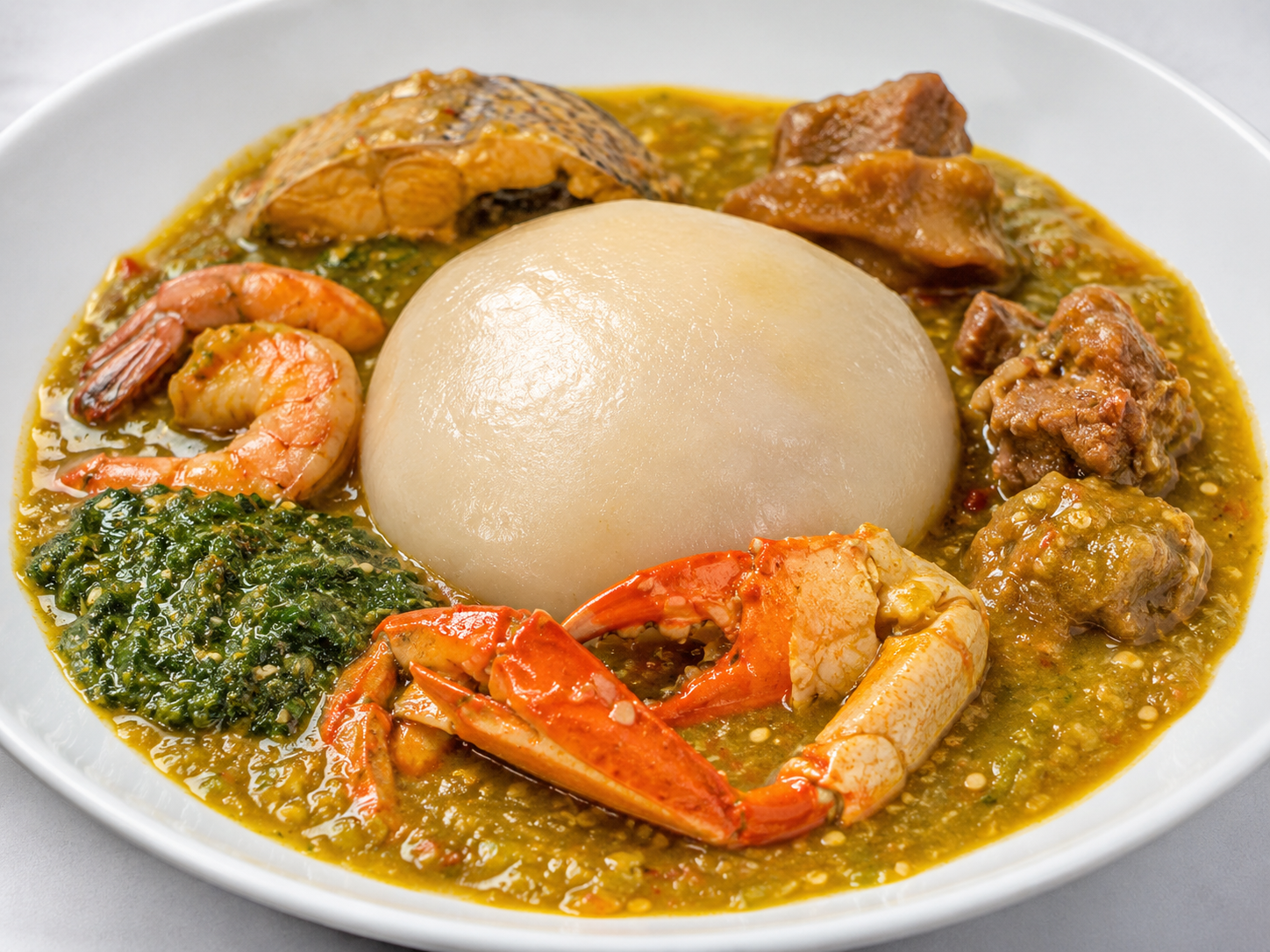
Placali is an essential and highly appreciated culinary preparation in Côte d'Ivoire, which has gradually established itself as one of the jewels of West African gastronomy. This specialty comes in the form of a translucent, extremely elastic, unctuous, and slightly gelatinous paste, distinguished by its subtly tangy taste. Born within the lagoon communities of southern Côte d'Ivoire, particularly among the Ébrié, Attié, and Avikam peoples, placali has won the hearts of the entire Ivorian population to become an indispensable national dish. Unlike other starches in the region that are pounded or cooked directly dry, placali derives its uniqueness from a rigorous process of wet cassava fermentation. In West Africa, where cassava is a vital resource, placali represents a method of rare intelligence for enhancing this rustic tuber, making it not only delicious but also easy to preserve and particularly digestible.
Where to find it
Look for the exact food-grade form required by the recipe at markets and specialist shops. Check the product name, ingredients, condition and storage instructions.
Explore further: Cooking tips · Food hygiene and safety advice.
History and uses
🌿 THE ART AND SCIENCE OF CASSAVA FERMENTATION
The preparation of placali relies on natural and wet lactic fermentation, which is the fundamental step determining the quality of the final paste. The process begins with harvesting fresh, good quality cassava tubers. These tubers are carefully peeled, thoroughly washed, then grated or ground to obtain a raw paste. This cassava paste is then immersed in large containers filled with clear water, where it is left to ferment at room temperature for a period ranging from two to four days. During this immersion, beneficial microorganisms develop, producing organic acids that give the paste its slightly sour smell and characteristic tangy flavor. This biological fermentation is essential because it plays a dual role: it effectively eliminates the toxic cyanogenic compounds naturally present in raw cassava, thus ensuring the perfect food safety of the product, and it pre-digests complex starches, which will greatly facilitate the work of the human digestive system during consumption.
🔥 THE PHYSICAL TOUCH FOR PERFECT COOKING
Once the cassava is properly fermented, the surface water is carefully removed, and the residual paste is drained and sieved to extract hard fibers and obtain an absolutely fine texture. For cooking, this fluid fermented paste is diluted with a little cold water in a thick-bottomed saucepan. The saucepan is then placed over high heat. It is at this precise moment that the cook's real work begins, requiring undeniable technique and physical strength. Using a robust wooden spatula, the cook must stir the paste continuously, vigorously, and circularly to prevent lumps from forming. Under the combined action of heat and movement, the white and opaque paste begins to thicken and gelatinize, gradually becoming translucent and a brilliant off-white. The stirring must be maintained for about twenty to thirty minutes, pressing the paste against the sides of the saucepan to ensure perfectly uniform cooking of the starch. When the paste becomes very elastic, smooth, and stretches without breaking, the placali is cooked. It is then portioned hot into shiny balls using a wet bowl.
🌶️ THE HARMONIOUS MARRIAGE WITH SAUCES AND SPICES
Placali, with its neutrality and slightly slippery unctuousness, is the ideal companion for the richest and most flavorful sauces in the African culinary repertoire. In Côte d'Ivoire, the traditional and legendary association is with kpala sauce, a viscous sauce prepared from okra leaves or other dried and ground local leaves, garnished with smoked fish, crabs, and various meats. Another mythical alliance is that of placali with fresh okra sauce or dji sauce, a spicy fish broth. The combination with palm nut sauce, extracted from palm kernels, or eggplant sauce is also very popular. The elastic and slippery texture of placali allows each piece of paste to be generously coated with the sauce, creating a perfect harmony in the mouth. To enhance the whole, a touch of crushed fresh chili, dried fish, or powdered shrimp is often added, transforming this meal into a true explosion of earthy, marine, and spicy flavors that delight thrill-seekers.
In my books

Continue exploring the continent’s cuisines with Africa at the Table — 54 countries, 54 iconic dishes, by Alioune FALL. This book is in English.
Explore further
🏷️ SYNONYMS AND VARIATIONS OF PLACALI IN THE SUB-REGION
Although the term placali is of Ivorian origin and primarily used in that country, this fermented cassava preparation has equivalents and functional synonyms in other West African countries. In Togo and Benin, a very similar preparation based on fermented and cooked cassava paste is called agbéli, cassava paste, or gari fufu depending on local variations. In Ghana, a related version called banku or sometimes kokonte is found, although drying and mixing techniques vary slightly. In Nigeria, the word akpu refers to a fermented cassava paste very similar in its manufacturing process, although it is often denser than Ivorian placali. Francophones in the region sometimes use the generic term "pâte de manioc aigre" (sour cassava paste) to refer to all these specialties. These different appellations highlight how the same cassava fermentation techniques unite the culinary cultures of the West African coast, simply adapting to the languages and tastes of each people.
👥 SOCIAL ANCHORING AND CONSUMPTION RITUALS
In Côte d'Ivoire, placali is much more than a simple subsistence food: it is a true social phenomenon. It is the breakfast meal par excellence for many workers, who stop at dawn in placalidromes, these allocodromes and maquis specializing in the exclusive sale of hot placali. These popular living places are unique spaces of social diversity, where workers, civil servants, students, and traders rub shoulders in a lively and friendly atmosphere. Eating placali in the morning is reputed to provide the necessary strength to face tough days of physical or office work. The dish is traditionally eaten by hand, with a bowl of water always available to wash fingers before and after the meal. This collective and informal consumption strengthens community ties and encourages spontaneous verbal exchanges, making placali an essential vector of social cohesion and the Ivorian way of life.
💪 NUTRITIONAL AND DIGESTIVE BENEFITS
From a health perspective, placali offers particularly interesting nutritional characteristics. Composed mainly of cassava, it is a major source of complex carbohydrates that provide continuous energy to the body, ideal for avoiding energy slumps during the day. The wet fermentation process brings great physiological benefits. By significantly reducing the cyanogenic compound content of cassava, fermentation guarantees the absolute safety of the dish. Furthermore, the activity of lactic bacteria during fermentation allows for the synthesis of B vitamins and makes the minerals present in cassava, such as calcium, phosphorus, and iron, much easier for our body to absorb by eliminating phytic acids. As a fermented and cooked food, placali is extremely gentle on the digestive system, facilitating transit and preventing feelings of bloating. Naturally free of gluten and added fats in its base, it is perfectly suited for a healthy and balanced diet.
🚀 MODERNIZATION AND NEW FUTURE PROSPECTS
In the contemporary era, placali successfully adapts to the demands of modernity and opens up to new industrial and international perspectives. As the traditional preparation of fermented cassava paste is laborious, local companies now offer ready-to-cook placali paste, vacuum-packed and available in urban supermarkets. This innovation allows families to prepare their favorite dish in a flash, without the constraints of peeling and fermentation time. For the African diaspora living abroad, these packaged products represent a precious link to their homeland. Moreover, new African cuisine chefs are now incorporating placali into bold gastronomic creations, playing on its unique elastic texture to surprise gourmets worldwide. By asserting itself as a healthy, gluten-free, and entirely plant-based alternative, placali demonstrates that it has its rightful place in the diet of the future, combining ancestral tradition and culinary modernity.
Its synonyms: agbéli, akpu, fermented cassava paste, sour cassava paste, wet gari fufu.
Keywords:
Cassava Côte d'Ivoire Fermentation Kpala Okra
In the kitchen : Placali
Recipes from the site to put your knowledge into practice:
Discover these cuisines at a restaurant
Explore our restaurant and caterer directories. Choose your destination and check the establishment’s menu to confirm which dishes are offered and available.
Continue exploring
Enjoy discovering ingredients and African cuisines? Join our newsletter. The illustrated PDF 10 sauces africaines incontournables is in French and is offered after confirming a subscription to the French or bilingual edition.