Lafun
Nigeria
Understanding : Lafun
🇳🇬 A SPECIALTY OPENLY LINKED TO CASSAVA INGENUITY
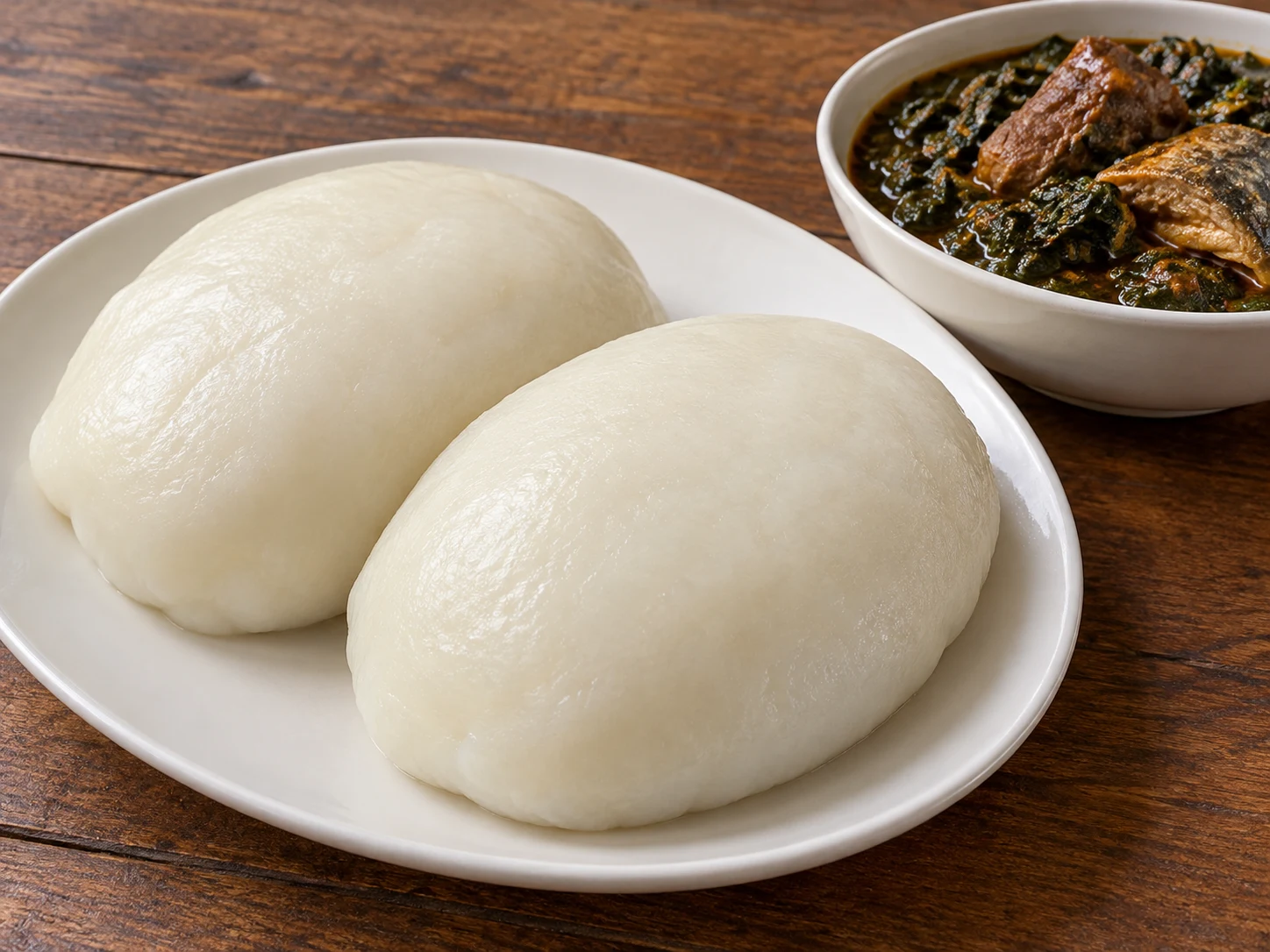
Lafun is a major traditional culinary preparation from West Africa, holding a prominent place in the gastronomic heritage of Nigeria, Benin, and Togo. Also popularly known as white amala, lafun is a hot-cooked paste, characterized by its great fineness, smoothness, elasticity, and brilliant white color. This specialty is made from fermented and sun-dried cassava flour, a processing method that perfectly illustrates the ingenuity of preservation techniques developed by West African populations, particularly the Yoruba. In a region where climate and storage conditions can be challenging, lafun represents a remarkably effective solution for transforming perishable cassava tubers into a stable, highly nutritious flour available year-round. Consumed daily by millions of people, lafun embodies the convergence of tradition, food security, and simple, authentic culinary pleasure.
Where to find it
Look for the exact food-grade form required by the recipe at markets and specialist shops. Check the product name, ingredients, condition and storage instructions.
Explore further: Cooking tips · Food hygiene and safety advice.
History and uses
🌿 THE BIOLOGY AND STAGES OF TUBER PROCESSING
The uniqueness of lafun lies entirely in the method of processing and fermenting cassava, a rigorous biological process passed down from generation to generation. It all begins with the selection of fresh, starch-rich cassava tubers. After being carefully peeled and thoroughly washed with clean water to remove soil and impurities, the cassava pieces are immersed in large barrels of water for a soaking and wet fermentation phase that typically lasts between three and five days. This spontaneous fermentation is initiated by lactic acid bacteria and yeasts naturally present in the environment. It softens the fibrous structure of the tuber, gives it its characteristic tangy aromatic notes, and breaks down toxic cyanogenic glucosides, ensuring the absolute safety of the finished product. Once fermented and very tender, the cassava pieces are removed from the water, pressed to extract excess moisture, and stripped of their hard central fibers. The resulting paste is then spread on large clean mats or concrete slabs to be intensively dried under the scorching West African sun until it becomes pure white and perfectly brittle.
🪵 GRINDING AND COOKING TECHNIQUE OF WHITE AMALA
After the drying stage, the dehydrated cassava pieces are ground using traditional mortars or modern disc mills to obtain an extremely fine, immaculate white flour, called lafun flour. Preparing the cooked paste from this flour is a quick operation that, however, requires precise skill to avoid lumps. To prepare it, water is brought to a boil in a saucepan or cast-iron pot. Once the water is boiling vigorously, the pot is removed from the heat or left on a bed of very gentle embers. The cook then gradually pours the lafun flour into the boiling water while stirring vigorously with a flat wooden spatula called orogun in the Yoruba language. The mixture thickens and gelatinizes under the action of heat. The cook must knead and press the paste energetically against the sides of the pot to ensure complete gelatinization of the starch. If necessary, a small amount of hot water is added to perfect the steaming for a few minutes, before a final intense kneading that gives the paste its shiny, supple, stretchable, and perfectly homogeneous texture.
🌶️ ACCOMPANIMENTS AND SAUCE PAIRINGS
Lafun is a paste with a rather neutral and mild texture, making it an extraordinary vessel for absorbing and enhancing the complexity of West African sauces and stews. The most famous and traditional pairing is undoubtedly lafun with ewedu, a green, viscous, and extremely slippery sauce prepared from pounded or blended jute leaves, typical of Yoruba gastronomy. Ewedu is often accompanied by a tomato and red pepper stew called gbegiri, a creamy sauce made from pureed white or brown beans, and smoked fish or meat. This tripartite combination is known as abula, a dish of choice worthy of special occasions. Lafun also pairs wonderfully with egusi soup, made from ground melon seeds and cooked in palm oil, or with ogbono soup, a slimy preparation based on wild mango seeds. The soft and elastic consistency of lafun allows one to pick up pieces by hand, roll them in these coating sauces, and swallow them with delight, revealing all the aromatic richness of the region's herbs and spices.
In my books

Continue exploring the continent’s cuisines with Africa at the Table — 54 countries, 54 iconic dishes, by Alioune FALL. This book is in English.
Explore further
🏷️ SYNONYMS AND TECHNICAL DISTINCTIONS OF LAFUN
In the African culinary world, lafun shares conceptual boundaries with other dishes but maintains a very precise technical identity that distinguishes it from its peers. Its most famous synonym is white amala, a term that refers to its resemblance in shape and texture to classic amala or black amala. However, the technical difference is major: classic amala is made from dried yam flour called elubo, which gives it its characteristic brown or black color, while lafun is made exclusively from fermented cassava and remains brilliantly white. In Benin and Togo, lafun is often called dry cassava paste or cooked cassava flour to distinguish it from the wet and fresh cassava paste used for placali. In English, it is sometimes referred to as cassava flour swallow or fermented cassava dumpling. Although it shares ingredients with fufu or eba, the complete drying process of cassava into flour before cooking is unique to lafun, giving it a lightness and airy texture not found in its denser cousins.
👥 SOCIAL ANCHORAGE AND COMMUNITY CODES OF SHARING
Lafun is a food deeply rooted in the daily life and social rituals of West African populations. In Yoruba land and southern Benin, it is a family and democratic dish, accessible to the humblest while being highly appreciated by the wealthy. Its tasting is a moment of communion and gathering. Traditionally served hot in large communal dishes, lafun invites sharing and fraternity. The meal is eaten with the fingers of the right hand, according to ancestral rules of etiquette that value respect for elders and the equitable sharing of meat or fish pieces hidden under the accompanying sauces. In large urban areas like Lagos, Ibadan, or Porto-Novo, lafun is an undisputed star of bukka and chop bars, these small popular restaurants where all segments of society meet to savor a steaming plate of abula in an atmosphere punctuated by local conversations and traditional music, thus sealing cultural unity through food.
🌱 NUTRITIONAL VIRTUES AND DIGESTIVE BENEFITS
From a health perspective, lafun is a food with remarkable nutritional and digestive properties, particularly well-suited to modern diets. Made from fermented cassava, it is a major energy source of complex carbohydrates, offering sustained caloric intake without causing sudden glycemic spikes. The wet fermentation that cassava undergoes before being reduced to flour profoundly modifies its composition: it significantly reduces the presence of phytic acids and other antinutritional factors, dramatically increasing the bioavailability of essential minerals like calcium, magnesium, and iron. Moreover, fermentation partially gelatinizes the starch, which makes lafun extremely light, easy to digest, and gentle on the stomach, thus avoiding feelings of heaviness or postprandial fatigue often associated with starchy meals. Naturally gluten-free and prepared without any added fat, lafun is perfectly suitable for people with food intolerances or those concerned with maintaining their intestinal well-being.
🚀 MODERNIZATION AND EXPORT PROSPECTS OF LAFUN
In the era of rapid urbanization and globalization, lafun is undergoing an exciting evolution that is opening the doors to the global food market. Lafun flour, by its dehydrated nature, preserves exceptionally well, making it an ideal product for trade and export. Today, agricultural cooperatives and agri-food companies in Nigeria, Benin, and Togo are modernizing lafun flour production lines. They are standardizing peeling, controlled fermentation, and mechanical drying processes to ensure impeccable hygiene and consistent whiteness, thus meeting the strictest international sanitary standards. Available in modern sachets in urban supermarkets and exotic grocery stores worldwide, lafun flour allows the African diaspora to recreate the comforting flavors of childhood in minutes. Furthermore, its gluten-free and exclusively plant-based nature is attracting increasing interest from Western consumers curious to discover healthy alternatives to industrial wheat flours, heralding a bright future for this traditional West African treasure.
Its synonyms: white amala, cooked fermented cassava flour, cassava swallow, lafun paste, dry cassava paste.
Keywords:
Cassava Fermentation Nigeria Ewedu Amala
In the kitchen : Lafun
Recipes from the site to put your knowledge into practice:
Discover these cuisines at a restaurant
Explore our restaurant and caterer directories. Choose your destination and check the establishment’s menu to confirm which dishes are offered and available.
Continue exploring
Enjoy discovering ingredients and African cuisines? Join our newsletter. The illustrated PDF 10 sauces africaines incontournables is in French and is offered after confirming a subscription to the French or bilingual edition.