Amala
Nigeria
Understanding : Amala
🇳🇬 THE HISTORICAL ORIGIN AND IDENTITY OF AMALA IN WEST AFRICA
Amala is a staple of West African cuisine, originating from the southern regions of Nigeria, specifically the Yoruba land. This traditional dish has spread widely throughout the sub-region, becoming extremely popular in Benin and Togo. The history of amala is intimately linked to the cultivation of yam and cassava, two major food crops in this geographical area. For the Yoruba people, food goes far beyond the simple biological need for caloric intake to become a symbol of hospitality, family unity, and respect for ancestral traditions. Amala is the food of the people par excellence, a comforting dish consumed daily by families of all social classes. From popular bukkas, these typical street restaurants in Lagos or Ibadan, to the most prestigious celebratory banquets, amala always holds a place of honor, asserting itself as the ultimate symbol of cultural and culinary pride in this part of Africa.
Where to find it
Look for the exact food-grade form required by the recipe at markets and specialist shops. Check the product name, ingredients, condition and storage instructions.
Explore further: Cooking tips · Food hygiene and safety advice.
History and uses
🍠 THE DIFFERENT TYPES OF AMALA AND THEIR SPECIFIC INGREDIENTS
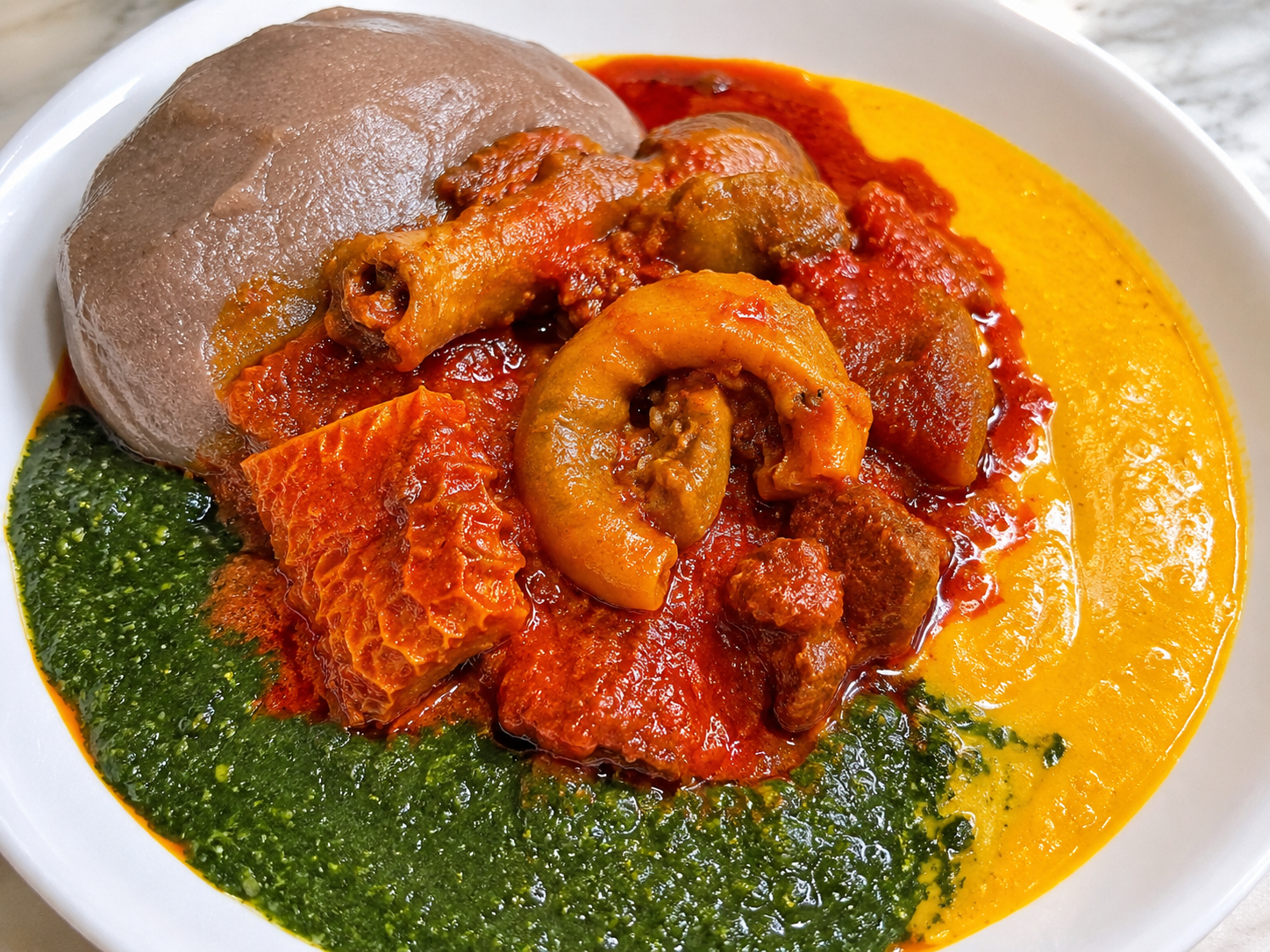
Amala primarily comes in three distinct variants, each defined by the base ingredient used for its preparation. The most prestigious and widely consumed version is amala isu, also known as amala dudu or black amala. This dish is prepared exclusively from dried yam flour. During the dehydration process of yam tubers, the natural oxidation of the flesh gives the paste its very characteristic dark brown to black color. The second variety is amala lafun, which is made from fermented cassava flour. Unlike the yam version, amala lafun retains a whitish or cream color because the cassava pieces undergo wet fermentation before being dried. The third variety is amala ogede, made from unripe green plantain flour. This variant is particularly appreciated for its slightly different texture and grayish or beige color. Each type of amala thus has its own visual identity, specific texture, and unique taste profile, reflecting the great agricultural diversity of African terroirs.
☀️ THE TRADITIONAL METHOD OF MAKING ELUBO FLOUR
The quality of amala depends entirely on the care taken in making its raw material, the dried yam flour locally known as elubo. The production process of elubo is a demanding artisanal skill, usually carried out during the harvest season. Fresh yam tubers are first carefully peeled, thoroughly washed, and then cut into thin slices. These yam slices are then immersed in water heated to a precise temperature for blanching, a crucial step that stops enzymatic activity and prevents the deterioration of the tuber. After this thermal bath, the yam slices are left to soak in water for about twenty-four hours to soften and undergo a very slight fermentation that enriches their taste. The slices are then spread on large mats or clean concrete surfaces to be intensively dried under the tropical sun. It is during this drying that the yam naturally browns under the effect of oxidation. Once completely dehydrated, the crispy slices are finely ground in local mills to produce a fine and volatile flour, ready for cooking.
🥣 THE COOKING TECHNIQUE FOR A LUMP-FREE TEXTURE
Cooking amala is an intense physical exercise that requires excellent technique and great speed to achieve the perfect texture. This process of transforming flour into paste is called lulala in culinary tradition. To begin, water is boiled in a cast-iron pot or a deep saucepan. As soon as the water boils vigorously, the pot is removed from the heat or kept on a very low heat. The cook then continuously and gradually pours the elubo flour into the hot water while stirring vigorously with a flat wooden spatula called omorogun. The goal is to quickly mix the flour with the water to prevent lumps from forming. The cook must knead the dough forcefully, crushing it against the inner walls of the pot. A small amount of hot water is then poured over the edges, and the pot is covered to let the dough steam for a few minutes. Finally, a last vigorous kneading is performed to give the amala its final consistency: an extremely smooth, light, supple, stretchable, and shiny paste.
In my books

Continue exploring the continent’s cuisines with Africa at the Table — 54 countries, 54 iconic dishes, by Alioune FALL. This book is in English.
Explore further
🌶️ ABULA AND THE SYNERGY WITH SAUCES AND SOUPS
Amala is essentially a soft-textured food that cannot be conceived without its liquid accompaniment. The most famous and traditional way to enjoy amala is to combine it with abula, a harmonious blend of three distinct sauces that enhance the yam paste. Abula consists of ewedu, a green and slimy sauce made from pounded jute leaves flavored with fermented locust bean seeds called iru. To this is added gbegiri, a creamy and smooth yellow soup prepared from peeled white beans, boiled, sieved, and cooked with palm oil and powdered crayfish. The whole is topped with a spicy red pepper stew containing various meats or fish. When amala is dipped into this mixture of sauces, the slippery texture of the ewedu envelops the yam paste, while the creamy sweetness of the gbegiri and the spiciness of the stew create an exceptional balance of flavors. Each bite slides easily down the throat, offering an unforgettable taste experience.
👥 THE SOCIAL ROLE AND CULTURAL IMPORTANCE IN COMMUNITIES
The consumption of amala is surrounded by social codes and rituals that strengthen unity and community cohesion in West Africa. This dish is traditionally eaten with the fingers of the right hand. Sharing a plate of amala in a common bowl is a common practice within families, symbolizing love, equality, and solidarity. On major social occasions, such as weddings, baptisms, funerals, and Yoruba cultural festivals, amala is the essential dish served to honor guests. In urban areas of Nigeria and Benin, bukkas are true democratic institutions where hot amala is served all day long. In these warm spaces, social barriers disappear: businessmen in suits sit at the same table as artisans and taxi drivers, all united by their common passion for this steaming traditional paste, testifying to the unifying power of gastronomy.
🌱 NUTRITIONAL QUALITIES AND HEALTH BENEFITS
Beyond its comforting role, amala offers many nutritional qualities beneficial to the human body. Being prepared from whole yam or plantain flour, it is an excellent source of complex carbohydrates with a low glycemic index, which ensures a stable and gradual release of energy into the blood. Its richness in dietary fiber promotes excellent intestinal transit, prevents constipation, and helps regulate cholesterol levels. Yam amala also contains valuable minerals such as potassium, essential for heart health, and magnesium. The version made from green plantain, amala ogede, is particularly recommended for diabetics or those mindful of their weight, as it contains resistant starch that improves insulin sensitivity. Finally, the slight fermentation undergone by the raw materials during processing greatly facilitates digestion, making amala a particularly light and gentle meal for the stomach.
🚀 THE FUTURE OF AMALA IN MODERNITY AND ITS INTERNATIONAL DIMENSION
With migratory movements and the growing interest in world cuisines, amala is now experiencing remarkable international expansion. For the African diaspora established in Europe, America, or Asia, the import of elubo flour is a vital link to the original culture. Flour manufacturing methods have been modernized to meet international hygiene standards, using industrial dryers rather than traditional sun drying to ensure perfect purity. In global capitals, gourmet African restaurants are revisiting amala with refined and aesthetic presentations, attracting an international clientele curious to discover new textures and healthy gluten-free alternatives. By becoming a culinary curiosity appreciated on a global scale, amala proves that traditional African preservation and cooking know-how possesses universal value capable of sustainably enriching the landscape of modern gastronomy.
Its synonyms: amala dudu, black amala, dried yam paste, cooked elubo, amala isu.
Keywords:
Yam Nigeria Abula Gbegiri Elubo
In the kitchen : Amala
Recipes from the site to put your knowledge into practice:
Discover these cuisines at a restaurant
Explore our restaurant and caterer directories. Choose your destination and check the establishment’s menu to confirm which dishes are offered and available.
Continue exploring
Enjoy discovering ingredients and African cuisines? Join our newsletter. The illustrated PDF 10 sauces africaines incontournables is in French and is offered after confirming a subscription to the French or bilingual edition.