Tuwo shinkafa
Nigeria
Understanding : Tuwo shinkafa
🌾 A CULINARY TREASURE FROM THE LANDS OF NORTHERN NIGERIA
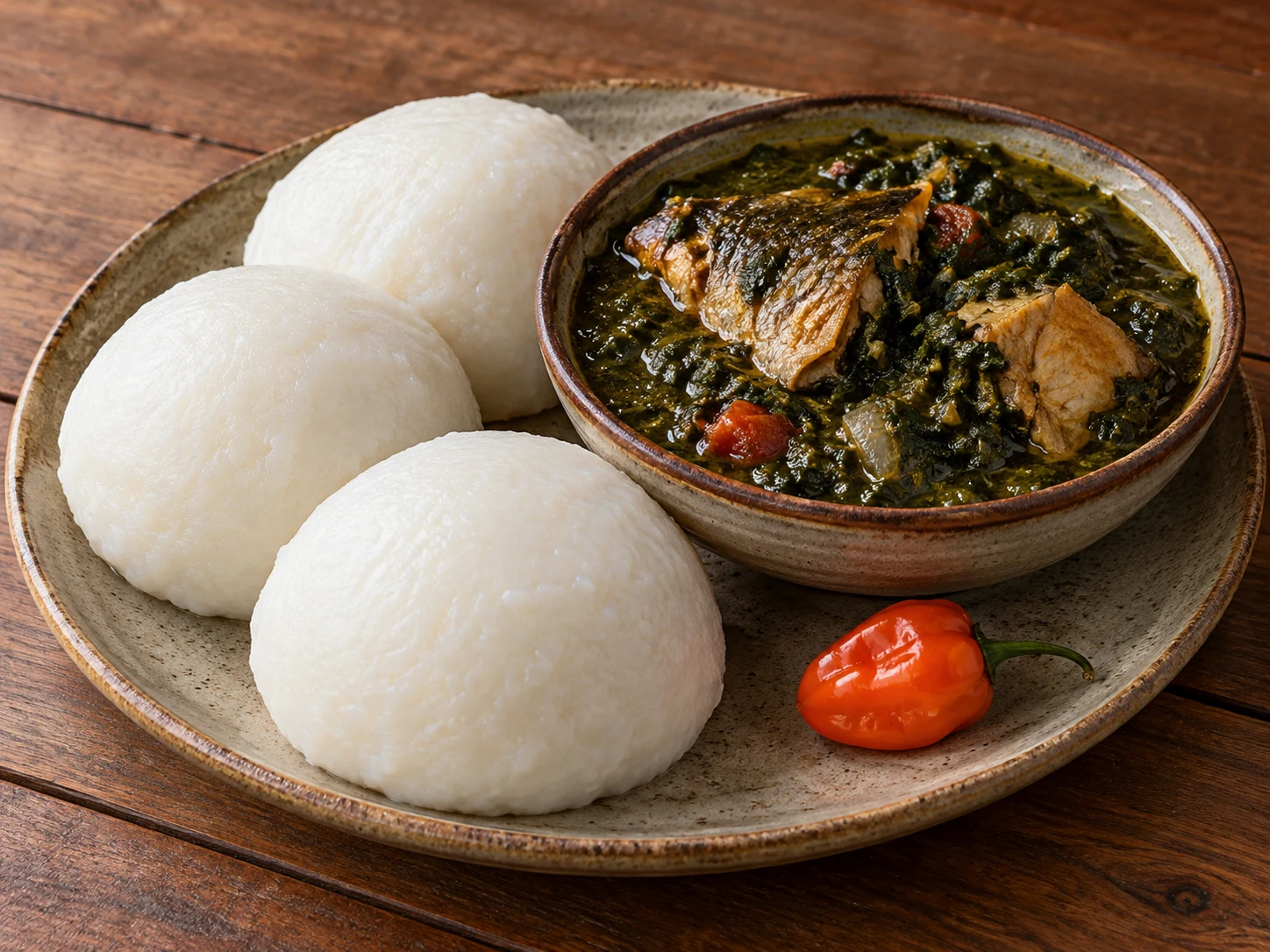
Tuwo shinkafa is an essential culinary gem originating from Northern Nigeria, particularly inseparable from the identity and gastronomic heritage of the Hausa people. This traditional dish, which comes in the form of a white, compact, soft, and slightly sticky rice paste, is a staple of daily diet in this semi-arid region of West Africa. Over time, its popularity has largely crossed ethnic and regional borders to become firmly established in Niger, Cameroon, Ghana, and Benin, where significant communities of Hausa origin live. Unlike other swallow-type starches prepared from tubers like yam or cassava, tuwo shinkafa derives its specificity from the complete transformation of rice. It embodies the spirit of conviviality, sharing, and resilience of the Northern populations, forming the heart of ordinary family meals as well as wedding banquets, Muslim religious celebrations like Eid, and welcoming ceremonies for distinguished guests.
Where to find it
Look for the exact food-grade form required by the recipe at markets and specialist shops. Check the product name, ingredients, condition and storage instructions.
Explore further: Cooking tips · Food hygiene and safety advice.
History and uses
🍚 THE PRECISE CHOICE OF SHORT-GRAIN RICE AND ITS PREPARATION
The success of tuwo shinkafa depends on a fundamental technical parameter: the careful selection of the rice variety. Traditional cooks categorically refuse to use long-grain rice or parboiled rice that remains firm after cooking. They exclusively seek local short- or medium-grain rice varieties, often broken, rich in starch, and with a high water absorption capacity. This type of rice, sometimes called glutinous rice or tuwo rice, allows for the sticky and homogeneous texture required during the kneading phase. The process begins with intensive washing of the rice with plenty of water to remove grinding dust, while ensuring enough surface starch is retained. The rice is then poured into a large quantity of boiling water. The rice is cooked well beyond the usual cooking time, until the grains absorb all the water, swell to their maximum, and become extremely soft, almost overcooked. This controlled overcooking is the essential physical step to allow for the complete gelatinization of the rice starch.
🔥 ENERGETIC KNEADING FOR A VELVETY CONSISTENCY
As soon as the rice is perfectly tender and the water has completely evaporated, the decisive kneading step begins. Without removing the pot from low heat, the cook uses a robust, flat, and short wooden spatula to vigorously work the hot rice. This rhythmic motion consists of continuously crushing the softened rice grains against the inner walls of the pot to break their individual structure and amalgamate them. Under the effect of this constant kneading, the grains gradually fuse to form a white, smooth, thick, supple, and shiny paste. If the consistency is too firm, a tiny amount of hot water is added to the stew before resuming work with the spatula. The final result should not contain any visible whole rice grains, but rather present the appearance of a perfectly homogeneous paste dome. Once this velvety consistency is obtained, the tuwo shinkafa is taken hot and shaped into round or oval balls, often individually wrapped in cling film or placed directly in insulated containers to maintain their warmth and softness.
🌶️ MAJOR ACCOMPANIMENTS AND SOUGHT-AFTER PAIRINGS
Tuwo shinkafa, with its neutral flavor and soft, comforting texture, is pre-eminently a base designed to absorb and magnify complex and fragrant sauces. In Hausa culinary tradition, tuwo shinkafa is almost exclusively enjoyed with two prestigious sauces. The first is miyan taushe, a creamy and flavorful stew prepared with pumpkin or butternut squash puree, roasted and ground peanuts, palm oil, beef or mutton, enriched with sorrel leaves that add a tangy note. The second emblematic pairing is with miyan kuka, a dark green sauce made from dried baobab leaf powder, flavored with smoked fish, crayfish, and local spices. Although surprising for the uninitiated due to its slightly slimy texture, kuka sauce is considered a delicacy of great nutritional value that pairs wonderfully with the sweetness of tuwo shinkafa. Other soups like miyan ogbono or miyan karkashi also make excellent side dishes.
In my books

Continue exploring the continent’s cuisines with Africa at the Table — 54 countries, 54 iconic dishes, by Alioune FALL. This book is in English.
Explore further
🏷️ SYNONYMS AND TEXTURES OF TUWO SHINKAFA
In the linguistic landscape of West Africa, tuwo shinkafa is known by different names that reflect its universality and composition. In the Hausa language, the word tuwo generally refers to any thick paste obtained from boiled and crushed cereal, while shinkafa specifically means rice. It is thus distinguished from tuwo masara, prepared from corn, or tuwo dawa, made from sorghum or millet. In English-speaking countries, it is frequently called rice fufu or mashed rice swallow to facilitate understanding for foreign visitors, as it shares with classic cassava fufu this texture that is traditionally swallowed without chewing. In French, in French-speaking countries in the region like Niger, Benin, or Togo, it is often referred to as pâte de riz or riz pilé to designate this dish. These synonyms highlight how rice, processed using this particular technique, harmoniously integrates into the large family of traditional African side dishes.
👥 SOCIAL ANCHORAGE AND ETIQUETTE IN THE NORTH
Tuwo shinkafa is at the heart of the values of sharing and hospitality that characterize societies in Northern Nigeria and Niger. Eating tuwo shinkafa is a collective experience governed by strict and respectful codes of etiquette. The dish is presented hot in the center of the meal mat, surrounded by different sauces. Family members sit together on the floor and share the meal using only the fingers of their right hand. The diner delicately takes a small portion of rice paste, shapes it slightly with their fingers to form a compact bite, generously dips it in the fragrant sauce, then swallows it. Sharing this dish strengthens family and community unity, and portions of meat or fish are distributed by the head of the family according to an order of respect for age. It is also the meal traditionally offered to passing travelers or neighbors during neighborhood festivities, thus sealing friendship and social solidarity.
🌱 NUTRITIONAL VIRTUES AND DIGESTIBILITY OF RICE
From a nutritional and health perspective, tuwo shinkafa has qualities particularly suited to the body's needs. Rice being the sole ingredient, this dish is a healthy energy source, rich in easily assimilated complex carbohydrates, ideal for providing constant vigor throughout the day without weighing down the digestive system. Due to its prolonged cooking process and intensive kneading, tuwo shinkafa is extremely easy to digest, making it a recommended food for young children, the elderly, or those with sensitive stomachs. Furthermore, rice is naturally gluten-free, making tuwo shinkafa an excellent alternative for people suffering from celiac disease or various intolerances. When accompanied by traditional sauces rich in vegetables like the pumpkin in miyan taushe or essential iron and minerals from the baobab leaves in miyan kuka, tuwo shinkafa integrates into a meal of perfect nutritional balance, providing vitamins, fiber, and high-quality proteins.
🚀 MODERNIZATION AND THE FUTURE OF THIS DISH IN AFRICA AND BEYOND
In the era of globalization and modern urban life, tuwo shinkafa continues to adapt and reinvent itself successfully. Although traditional preparation from fresh rice grains remains widely popular in households, new practical alternatives have emerged to simplify the lives of busy city dwellers and the African diaspora. It is now possible to find pre-cooked rice flours specially designed for instant tuwo shinkafa preparation in stores. These rice flours allow for the reconstitution of a smooth and elastic paste in just a few minutes by simply mixing in boiling water, thus significantly reducing cooking time and the physical effort of kneading. Moreover, contemporary chefs are appropriating this traditional dish to offer it on the menus of major hotels and gourmet restaurants in Abuja, Lagos, or Niamey, presenting it in a modern and elegant way to attract an international clientele eager to discover the authentic culinary riches of the African continent.
Its synonyms: rice fufu, pâte de riz, riz pilé hausa, mashed rice swallow, tuwo de riz.
Keywords:
Rice Nigeria Hausa Miyan taushe Starch
In the kitchen : Tuwo shinkafa
Recipes from the site to put your knowledge into practice:
Discover these cuisines at a restaurant
Explore our restaurant and caterer directories. Choose your destination and check the establishment’s menu to confirm which dishes are offered and available.
Continue exploring
Enjoy discovering ingredients and African cuisines? Join our newsletter. The illustrated PDF 10 sauces africaines incontournables is in French and is offered after confirming a subscription to the French or bilingual edition.