Kabato
Côte d'Ivoire
Understanding : Kabato
🌽 GEOGRAPHICAL ORIGIN AND THE ESSENCE OF KABATO'S IDENTITY
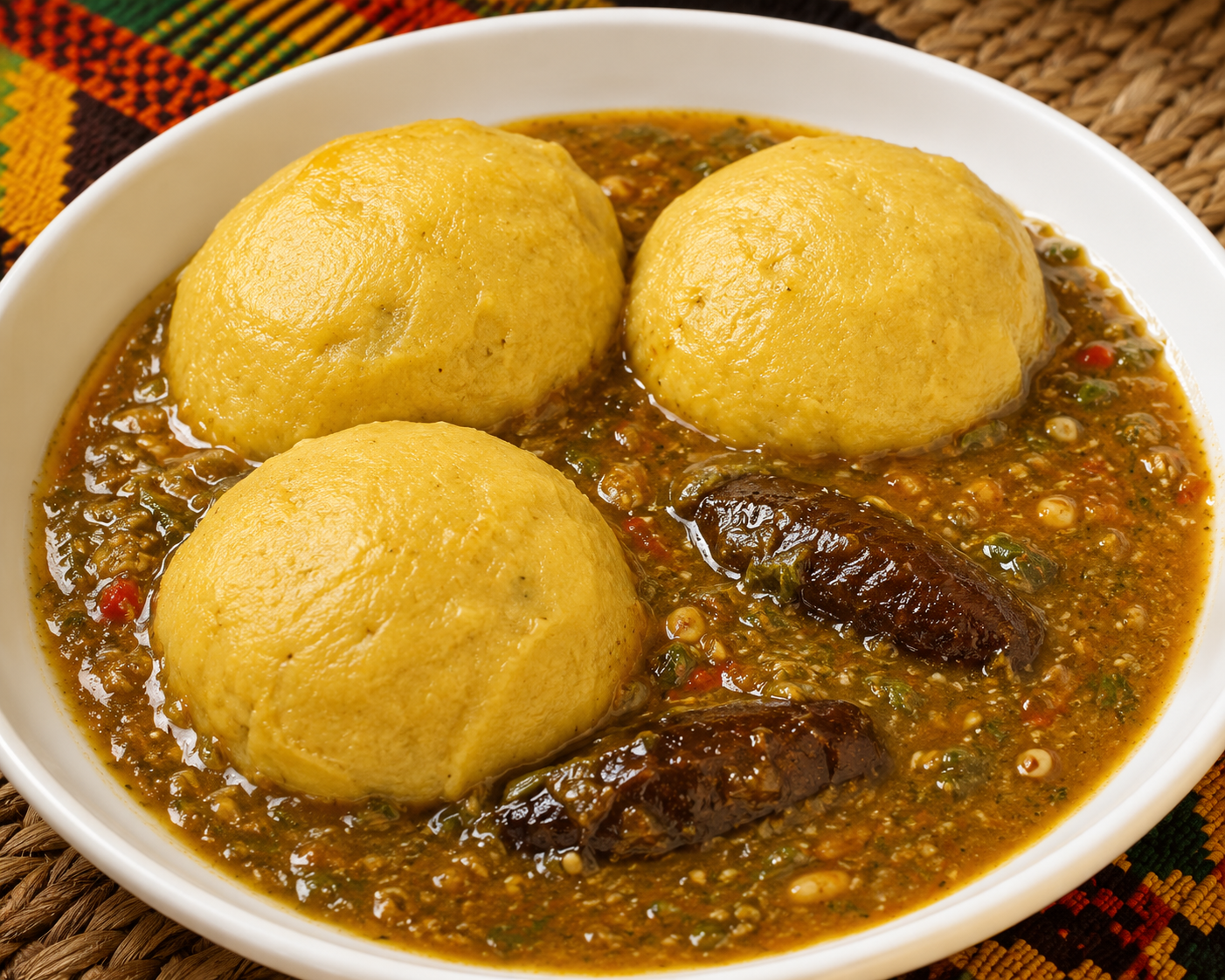
Kabato, sometimes spelled cabato or kabatô, is a masterpiece of simplicity and one of the pillars of West African gastronomy, primarily rooted in northern Côte d'Ivoire, as well as in the southern regions of Mali, Burkina Faso, and Guinea. At the heart of this vast geographical and cultural area inhabited by the Senufo, Malinke, Dioula, and Bambara peoples, corn has established itself as a major staple grain, shaping the daily diet of populations for centuries. Kabato specifically refers to a smooth, dense, and remarkably elastic paste obtained by cooking corn flour in water. Unlike other similar preparations in Sahelian Africa that use millet or sorghum, kabato celebrates the sweetness, texture, and versatility of corn, offering a filling and comforting food.
Where to find it
Look for the exact food-grade form required by the recipe at markets and specialist shops. Check the product name, ingredients, condition and storage instructions.
Explore further: Cooking tips · Food hygiene and safety advice.
History and uses
For the Senufo and Dioula people of Côte d'Ivoire, kabato embodies much more than just a source of calories. It is a symbol of agricultural identity and food sovereignty jealously preserved. In the compounds of the great Ivorian North, preparing corn flour is a noble task that requires meticulous know-how: sun-dried corn kernels are carefully sorted, cleaned, then pounded in large wooden mortars or ground at the village mill to obtain flour of absolute fineness. This corn flour, free of any industrial additives, is the sacred ingredient from which kabato is born. Thus, each portion of hot kabato served recalls the unbreakable bond that unites these peoples to their land and to the cycles of agricultural seasons, celebrating a culinary heritage passed down by ancestors.
🥣 THE TECHNICAL MASTERY OF PREPARATION AND TRADITIONAL GESTURES
The preparation of kabato is a physical test and a culinary art that demands rigor, precise fire control, and a keen sense of proportions. The traditional recipe requires only two ingredients: finely sieved corn flour and pure water. In some families, a pinch of salt or a subtle touch of traditional potash is added to the cooking water to alter its pH, which helps to tenderize the corn starch fibers and enhance the elasticity of the final paste, but the original version remains of absolute purity.
The process begins by boiling a large quantity of water in a heavy cast iron or aluminum pot placed on a traditional three-stone hearth, usually fueled by firewood whose smoke subtly perfumes the dish. Before the water boils, the cook takes a cup of corn flour and carefully mixes it with cold water to form a perfectly smooth slurry. This slurry is then poured into the simmering water in the pot, creating a thickened and binding liquid base. As soon as this initial preparation comes to a boil and begins to form small bubbles on the surface, the active cooking phase begins.
The cook then gradually adds the rest of the dry corn flour in a steady stream, while grasping her large, sturdy wooden spatula, called a kambsga or tô spoon. With a rapid, firm, and uninterrupted circular motion, she works the dough to instantly eliminate any lumps. This gesture requires considerable physical strength, as corn flour swells quickly upon contact with hot water and transforms into a compact, heavy mass to stir. The dough must be vigorously pressed against the sides of the pot to homogenize it. Once the mixture is deemed perfect, the heat is reduced, and the pot is covered to allow the kabato to steam in its own vapor for about fifteen minutes. Kabato is perfectly cooked when it becomes soft, elastic, slightly translucent, and detaches effortlessly from the sides of the container. Using a small calabash or a bowl previously dipped in cold water, the cook scoops out the hot dough to mold it into spherical balls, soft to the touch and ready to be topped with sauce.
🌿 THE HARMONIOUS ALLIANCE OF SAUCES AND SIDE DISHES
Due to its cereal nature, kabato has a delicate and neutral flavor, with a subtly sweet corn aftertaste. This taste neutrality makes it the ideal canvas to welcome and enhance the complex, spicy, and aromatic flavors of traditional sauces from the region. Kabato is never eaten dry; it lives and expresses itself through its textural marriages with creamy or viscous sauces.
The quintessential companion to kabato in Northern Côte d'Ivoire is fresh okra sauce. This sauce is prepared from finely sliced or pounded young okra, cooked with dried fish, river crab, onions, and red chili. Its characteristic viscous texture beautifully envelops the kabato ball, allowing each bite to glide pleasantly in the mouth.
In my books

Continue exploring the continent’s cuisines with Africa at the Table — 54 countries, 54 iconic dishes, by Alioune FALL. This book is in English.
Explore further
Another essential pairing is peanut sauce, a rich and velvety preparation made from roasted peanut paste, simmered with beef or mutton, onions, red palm oil, and local spices. The creaminess of the peanut combined with the firm consistency of the corn creates an immediate feeling of satiety and immense gustatory pleasure.
It is also worth mentioning the famous dah sauce, also called sorrel sauce. Made from cooked and chopped Guinea sorrel leaves, this sauce brings a lemony acidity that beautifully awakens the corn kabato. It is usually seasoned with soumbala, a magical condiment made from fermented néré seeds, which infuses the dish with a powerful and earthy umami flavor. Whatever sauce is chosen, it is the flavor vector that sublimates the corn paste.
🤝 THE SOCIAL RITUAL OF TASTING AND SAHELIAN CONVIVIALITY
In the West African cultural space, kabato transcends its purely dietary dimension to become a true social binder. The consumption of kabato follows a strict family and community ritual that reflects the values of respect, sharing, and solidarity characteristic of the region's societies. The meal is usually served in a large calabash or a large enamel dish placed in the center of a mat. The kabato occupies the middle of the dish, surrounded or topped with its steaming sauce.
Family members, arranged according to generations and genders out of respect for traditional customs, sit in a circle around the communal dish. Before starting, a container of clean water is passed from hand to hand so that everyone can thoroughly wash their right hand, the only one allowed to touch the food. The youngest or the guest of honor is often invited to start, or the head of the family distributes the first pieces. With the first three fingers of the right hand, one takes a bite of kabato, rolls it slightly to form a small smooth ball, digs a tiny well in it with the thumb, then generously dips it into the sauce to trap pieces of meat, fish, or vegetables before bringing it to the mouth. Kabato is not chewed for long; its soft and supple texture is designed to be slid and swallowed almost whole, allowing one to fully experience the aromatic richness of the sauce. This sharing of the same dish strengthens family ties, pacifies tensions, and celebrates the unity of the household.
🌍 THE PAN-AFRICAN CULINARY DIMENSION OF KABATO AND ITS EQUIVALENTS
If we broaden our view to the African continent, we see that corn kabato belongs to a vast family of cereal pastes that form the dietary backbone of millions of Africans, from Senegal to South Africa. This universality testifies to a historical convergence of cooking techniques and a shared dependence on local food crops.
The most direct synonym for kabato in the Francophone Mandingue area (Mali, Burkina Faso, Guinea) is Tô de maïs. The ingredients, preparation method, and accompanying sauces are rigorously identical; only the name varies according to the local language and regional preferences. In neighboring Benin and Togo, this same preparation is called pâte de maïs or foufou de maïs, although in these coastal regions, corn flour sometimes undergoes a slight prior fermentation that gives it a pleasant acidity, as is the case for banku or kenkey in Ghana.
Crossing the continent eastward and southward, we find twin brothers of kabato. In East Africa (Kenya, Tanzania, Uganda), the national dish par excellence is ugali, a dense and firm corn paste prepared using the same method and served with meat stews or sautéed green vegetables called sukuma wiki. In Southern Africa, the dish is called sadza in Zimbabwe, nsima in Malawi and Zambia, pap or mieliepap in South Africa, or fufu de milho in Angola. This immense culinary mapping demonstrates that Ivorian kabato is the local expression of a pan-African gastronomic genius that has transformed simple corn flour into a universal symbol of conviviality and sustenance.
🔑 KEYWORDS OF CULINARY TRADITION
Corn Tô Côte d'Ivoire Okra Senufo
Synonyms: Cabato, Kabatô, Tô de maïs, Pâte de maïs, Foufou de maïs, Ugali de maïs, Tuwo masara, Sadza, Nsima, Mieliepap.
In the kitchen : Kabato
Recipes from the site to put your knowledge into practice:
Discover these cuisines at a restaurant
Explore our restaurant and caterer directories. Choose your destination and check the establishment’s menu to confirm which dishes are offered and available.
Continue exploring
Enjoy discovering ingredients and African cuisines? Join our newsletter. The illustrated PDF 10 sauces africaines incontournables is in French and is offered after confirming a subscription to the French or bilingual edition.