Posho
Uganda
Understanding : Posho
🌽 THE HISTORY AND STRATEGIC IMPORTANCE OF POSHO IN UGANDA AND EAST AFRICA
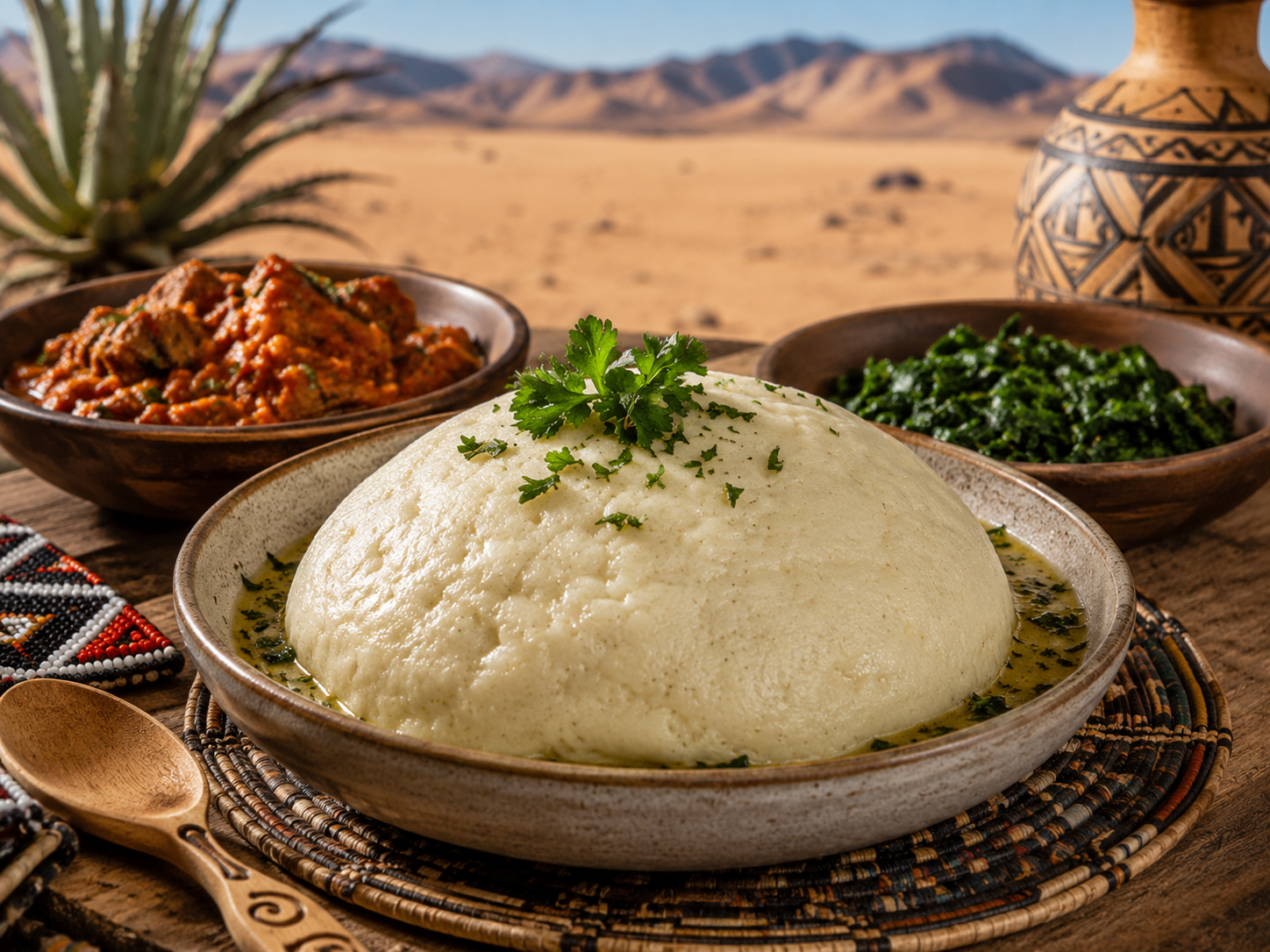
Posho is the quintessential staple food in Uganda and several regions of East Africa. This disarmingly simple dish, consisting of a dense, white paste made by cooking white corn flour in boiling water, forms the daily nutritional foundation for millions of people. To understand posho's place in East African society, one must view it not just as food, but as the very engine of collective life. It is the essential meal in schools, boarding houses, military barracks, construction sites, and rural homes. It is pure, economical, and accessible energy that allows an entire region to function daily.
Where to find it
Look for the exact food-grade form required by the recipe at markets and specialist shops. Check the product name, ingredients, condition and storage instructions.
Explore further: Cooking tips · Food hygiene and safety advice.
History and uses
Historically, maize is not native to East Africa. Introduced to the continent through colonial trade networks, it quickly supplanted traditional cereals such as millet and sorghum in the fertile plains and plateaus of Uganda, notably due to its exceptional agricultural yield and ease of milling. The name posho has its roots in the colonial era and derives from the Swahili word posho, meaning ration or portion. Originally, it referred to the daily ration of corn flour distributed to plantation and railway workers. Over time, this term became common usage in Uganda to refer to the dish itself. Today, although it retains this connotation of an economical staple, posho is consumed with pride by all strata of society, embodying resilience, simplicity, and sharing around the family table.
🥣 THE PREPARATION TECHNIQUE AND THE RIGOR OF MINGLING
Preparing posho is a physical and technical process that requires rigorous know-how, often described as a true ritual of strength in African kitchens. The required ingredients are absolutely simple: medium or fine ground white corn flour and water. In its traditional version, no salt, butter, or fat is added during cooking, as posho must remain perfectly neutral to serve as a neutral receptacle for the pronounced flavors of accompanying sauces.
The process begins by boiling a large quantity of water in a deep, thick-bottomed pot. This is when the crucial step called mingling in Uganda begins. The cook gradually sprinkles the corn flour into the boiling water while grasping a large, sturdy, flat, and wide wooden stick, called a mingling stick or matuki. She begins to stir vigorously and continuously to incorporate the flour and prevent lumps from forming. As the flour absorbs the water and swells, the dough becomes extremely heavy and resistant.
The cook must demonstrate great physical strength, continuously pressing and crushing the mass against the sides of the pot with the stick to ensure that all the flour is perfectly hydrated and cooked evenly. The heat is then reduced to a minimum, the pot is covered, and the posho is left to steam in its own moisture for about fifteen minutes. The dish is ready when the dough gives off a delicious warm corn smell, becomes slightly elastic, and no longer sticks to the sides of the pot. It is then shaped using a wet bowl into perfect, smooth, steaming domes, ready to be served.
🍲 THE ESSENTIAL COMPANIONS OF POSHO AND THE ART OF SAUCE
Because posho is intentionally neutral and unadorned, its gastronomic success depends entirely on the quality and aromatic richness of the sauces and stews that accompany it. In Uganda, the most classic and popular pairing is undoubtedly posho and beans. Red or brown beans are simmered for long hours in a spicy sauce made with onions, tomatoes, garlic, and sometimes coriander leaves, creating a thick, flavorful gravy that soaks into the corn paste. This simple and economical meal is the nutritional pillar of Ugandan schools, appreciated for its richness in plant proteins and fiber.
In my books

Continue exploring the continent’s cuisines with Africa at the Table — 54 countries, 54 iconic dishes, by Alioune FALL. This book is in English.
Explore further
For special occasions or in more affluent households, posho is served with binyebwa, the traditional Ugandan groundnut sauce. This smooth and creamy sauce is prepared from ground raw groundnut paste, simmered with onions, tomatoes, and dried fish or pieces of meat. Its rich and slightly sweet flavor pairs divinely with the firm texture of posho.
Green vegetables also play a major accompanying role. Posho is frequently served with sukuma wiki, finely shredded collard greens sautéed with onions and tomatoes, or with eshabwe, a traditional white sauce made from ghee (clarified butter) originating from western Uganda, reserved for prestigious meals. Whatever the accompaniment, the sauce must be generous to allow posho to express its full potential for culinary comfort.
🤝 THE SOCIAL DIMENSION AND THE CEREMONIAL OF SHARING
Beyond its strictly nutritive function, posho is a powerful vector of social cohesion and conviviality in East Africa. It embodies the values of sharing and solidarity that structure human relationships in the region. Consuming posho is generally done collectively, with diners gathering around a large single dish placed in the center of the table or on a mat.
The tasting ritual is imbued with respect and cleanliness. Before approaching the dish, everyone carefully washes their hands. The meal is eaten exclusively with the fingers of the right hand. A small piece of warm posho is taken from the edge of the collective dome, then gently rolled between the palm and fingers to form a small, compact, bite-sized ball. Using the thumb, a slight depression is made in the center of this ball to form a kind of improvised small spoon, which is then dipped into the sauce to collect beans, meat, or vegetables before bringing it to the mouth. This ancestral technique allows one to savor the perfect harmony of textures and temperatures between the warm posho and the hot sauce. Sharing posho is affirming one's belonging to the community, sealing peace within the home, and expressing gratitude for life and shared food.
🌍 POSHO IN THE LARGE FAMILY OF AFRICAN CEREAL PASTES
Ugandan posho is not a culinary isolate; it is part of the vast geography of corn pastes that form the foundation of African food security. Traveling across the African continent reveals how much this simple recipe has diversified and adapted under different linguistic names, while retaining its fundamental essence.
Across Africa, posho has many close relatives and synonyms:
Ugali: This is the most universal synonym in East Africa, used daily in Kenya, Tanzania, and eastern Democratic Republic of Congo to refer to the same firm corn paste.
Nsima or nshima: This is the preferred name in Malawi and Zambia, where the paste is worked to be even smoother and more elastic, often served in individual oval portions.
Sadza: In Zimbabwe, white corn sadza is the absolute national dish, consumed for lunch and dinner with meat stews or dried wild vegetables.
Kabato: In Côte d'Ivoire and the north of the country, corn kabato is the direct equivalent of posho, appreciated for its suppleness and served with slimy okra sauces.
Pap or mealie pap: In South Africa, pap refers to the basic corn paste, available in several textures (firm, liquid, or crumbly like putu pap) depending on meals and local traditions.
🔑 CULINARY TRADITION KEYWORDS
Maize Uganda Beans Ugali Mingling Synonyms: Ugali, Nsima, Nshima, Sadza, Pap, Mealie pap, Ugandan corn paste, Sima, Bugali.
In the kitchen : Posho
Recipes from the site to put your knowledge into practice:
Discover these cuisines at a restaurant
Explore our restaurant and caterer directories. Choose your destination and check the establishment’s menu to confirm which dishes are offered and available.
Continue exploring
Enjoy discovering ingredients and African cuisines? Join our newsletter. The illustrated PDF 10 sauces africaines incontournables is in French and is offered after confirming a subscription to the French or bilingual edition.