Laxoox
Djibouti, Somalia
Understanding : Laxoox
🌾 INTRODUCTION AND ESSENCE OF LAXOOX 🌍
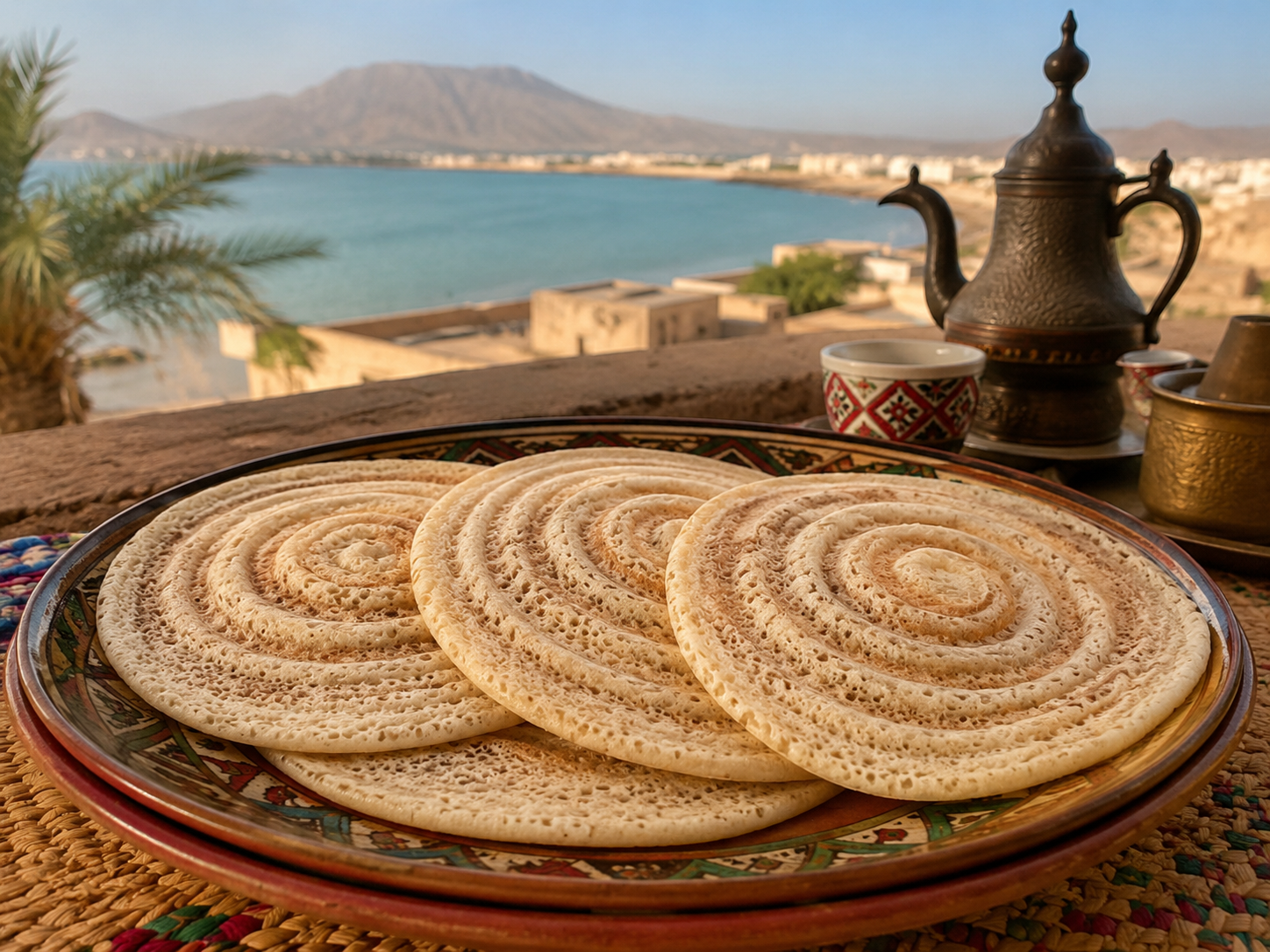
Laxoox, also known as lahoh or lahox, is a jewel of East African cuisine, particularly in the Horn of Africa. This fermented, soft, flexible, and generously dimpled pancake-bread forms the backbone of daily sustenance in Somalia, Djibouti, and some bordering regions of Ethiopia and Yemen. Simple in appearance, laxoox is the product of an ancestral bread-making process based on slow fermentation. Visually, it presents as a circular pancake, pale to slightly golden on its underside, while its upper surface is characterized by a multitude of small cooking chimneys, called alveoli, formed by the escape of gas bubbles during cooking.
Where to find it
Look for the exact food-grade form required by the recipe at markets and specialist shops. Check the product name, ingredients, condition and storage instructions.
Explore further: Cooking tips · Food hygiene and safety advice.
History and uses
Laxoox stands out from other flatbreads due to its extraordinarily spongy and elastic texture, which allows it to absorb sauces without losing its structure. In the nomadic and sedentary societies of this African region, laxoox embodies sustenance, simplicity, and the constancy of the home. Preparing its dough the night before consumption is a ritual, almost meditative gesture, repeated every evening by mothers to ensure that the first meal of the next day will be a celebration of freshness and sharing. It transcends social classes, uniting urban and rural populations around the same table.
🥣 THE ART OF FERMENTATION AND CULINARY CERAMICS 🏺
The secret to laxoox's unique dimpled texture and subtly tangy taste lies entirely in mastering its fermentation. Traditionally, the dough is made from a mixture of local flours, among which red or white sorghum holds a prominent place, although wheat or white corn flour is increasingly common today.
The process begins with the creation of a sourdough starter, called dhanaanis in Somali. This starter, derived from a portion of the previous day's dough carefully preserved by the cook, introduces lactic acid bacteria and natural wild yeasts into the new preparation. The flour is mixed with warm water, salt, and a little sugar to stimulate bacterial activity.
In some culinary traditions, women first prepare a pre-gelatinized dough, called cajiin, by scalding a small portion of sorghum or millet flour with hot water. This step is crucial, especially with gluten-free grains like sorghum, as it helps release and gelatinize the plant's natural starch, thus mimicking the gluten network to effectively capture the carbon dioxide produced during fermentation.
The liquid and smooth mixture is then left to rest overnight at room temperature, in a warm and humid environment. During the ten to twelve hours, fermentation transforms the dough, creating thousands of microscopic air bubbles and developing a mild acidity that makes the bread extremely digestible.
The next morning, cooking takes place on a circular cast-iron griddle or a traditional flat pan called daawa. The griddle is lightly greased with a piece of cloth soaked in clarified butter or vegetable oil. A ladle of fermented dough is poured into the center, then spread circularly by a rotating motion of the pan or with the back of the ladle, following a spiral path from the center to the edges. Cooking is done over medium heat, on one side only.
While the underside solidifies and gently browns, the heat passing through the dough causes gas bubbles to burst on the surface, creating these famous small holes. When the surface is no longer liquid and is entirely covered with dry alveoli, the laxoox is immediately removed from the griddle without being flipped. The resulting pancakes are stacked, their spongy texture preventing them from sticking to each other as they cool slightly.
🥙 COMPARISON WITH AFRO-MEDITERRANEAN BREADS 🗺️
Laxoox belongs to a large family of fermented African breads and pancakes, but it has its own unique geographical and culinary characteristics that deserve comparison with its continental neighbors.
In my books

Continue exploring the continent’s cuisines with Africa at the Table — 54 countries, 54 iconic dishes, by Alioune FALL. This book is in English.
Explore further
The first obvious parallel is with injera, the national bread of Ethiopia and Eritrea. Although both are fermented, holey flatbreads, they differ greatly. Injera is primarily made from teff, a tiny local grain, and undergoes a much longer fermentation of three to four days, which gives it a very pronounced acidity and a grayish color. Moreover, injera is immense, often serving as a serving platter, while laxoox is smaller, softer, often made from wheat or sorghum, with a much more discreet acidic taste and a slightly sweet texture.
Another fascinating parallel can be drawn with baghrir, commonly known as the thousand-hole pancake in North Africa (notably Morocco, Algeria, and Tunisia). Baghrir shares with laxoox this single-sided cooking and its dimpled surface. However, baghrir is made from fine wheat semolina and flour, with a generally faster fermentation based on chemical or dry baker's yeast, without the rustic character brought by sorghum or natural starter. Baghrir is almost exclusively a sweet dish, while laxoox shines with its versatility, adapting to both sweet and savory accompaniments.
🍛 ROLE IN AFRICAN CUISINE AND ACCOMPANIMENTS 🥗
Laxoox's place in East African gastronomy is central, forming the starting point of the day for millions of people. For breakfast, it is commonly served warm, drizzled with traditional clarified butter called subag or ghee, and sprinkled with sugar or honey. It is then accompanied by a very spicy Somali tea, infused with cardamom, cinnamon, cloves, and ginger, enriched with condensed or fresh milk.
For lovers of savory dishes at dawn, laxoox is served with odka, a traditional preparation of sun-dried beef or camel meat strips, then fried in clarified butter and seasoned with spices. It also beautifully accompanies fooy or goat, beef, or mutton liver stews sautéed with onions, peppers, and garlic.
At lunches and dinners, laxoox serves as a plate and utensil for enjoying stewed red beans or rich meat stews. Pieces of laxoox are torn off with the fingers to pinch food and absorb cooking juices, the spongy texture of the bread absorbing the sauce like a vegetable sponge.
A festive and sweet variation called cambaabur is prepared during Eid celebrations or weddings. For cambaabur, the laxoox dough is enriched with spices such as turmeric, cumin, green anise, and garlic, giving it a beautiful golden yellow color and a complex aroma. It is then sprinkled with sugar and generously drizzled with clarified butter when served, illustrating the infinite creativity of Somali gastronomy.
🎉 SYMBOL OF CONVIVIALITY AND HERITAGE 🤝
Laxoox goes far beyond mere nutritional value to become a symbol of hospitality and social cohesion in the Horn of Africa. Inviting someone to share laxoox is the first gesture of welcome towards a visitor or tired traveler. It is a bread that calls for gathering: it is never prepared for just one person, but always in large quantities to feed the extended family and passing neighbors.
Learning to make laxoox is considered in Somali and Djiboutian culture as an informal rite of passage for young women. Knowing how to gauge fermentation to achieve the perfect acidity, mastering the circular motion to spread the dough evenly on the hot daawa, and knowing exactly when to remove the pancake from the heat are celebrated skills. The sound of the dough sizzling as it touches the hot griddle and the characteristic smell of fermenting grain browning in the early morning are sensory markers deeply etched in the collective memory of the African diaspora around the world.
By keeping laxoox consumption alive in the face of imported industrial products, the people of the Horn of Africa not only preserve their health through a naturally nutrient-rich fermented food but also affirm their cultural and culinary sovereignty. Laxoox remains the invisible but indestructible thread that connects past, present, and future generations to their homeland.
Synonyms for laxoox: lahoh, lahox, canjeero, anjero, Somali pancake.
In the kitchen : Laxoox
Recipes from the site to put your knowledge into practice:
Discover these cuisines at a restaurant
Explore our restaurant and caterer directories. Choose your destination and check the establishment’s menu to confirm which dishes are offered and available.
Continue exploring
Enjoy discovering ingredients and African cuisines? Join our newsletter. The illustrated PDF 10 sauces africaines incontournables is in French and is offered after confirming a subscription to the French or bilingual edition.