Kitcha
Ethiopia, Eritrea
Understanding : Kitcha
🌾 INTRODUCTION AND IDENTITY OF KITCHA 🌍
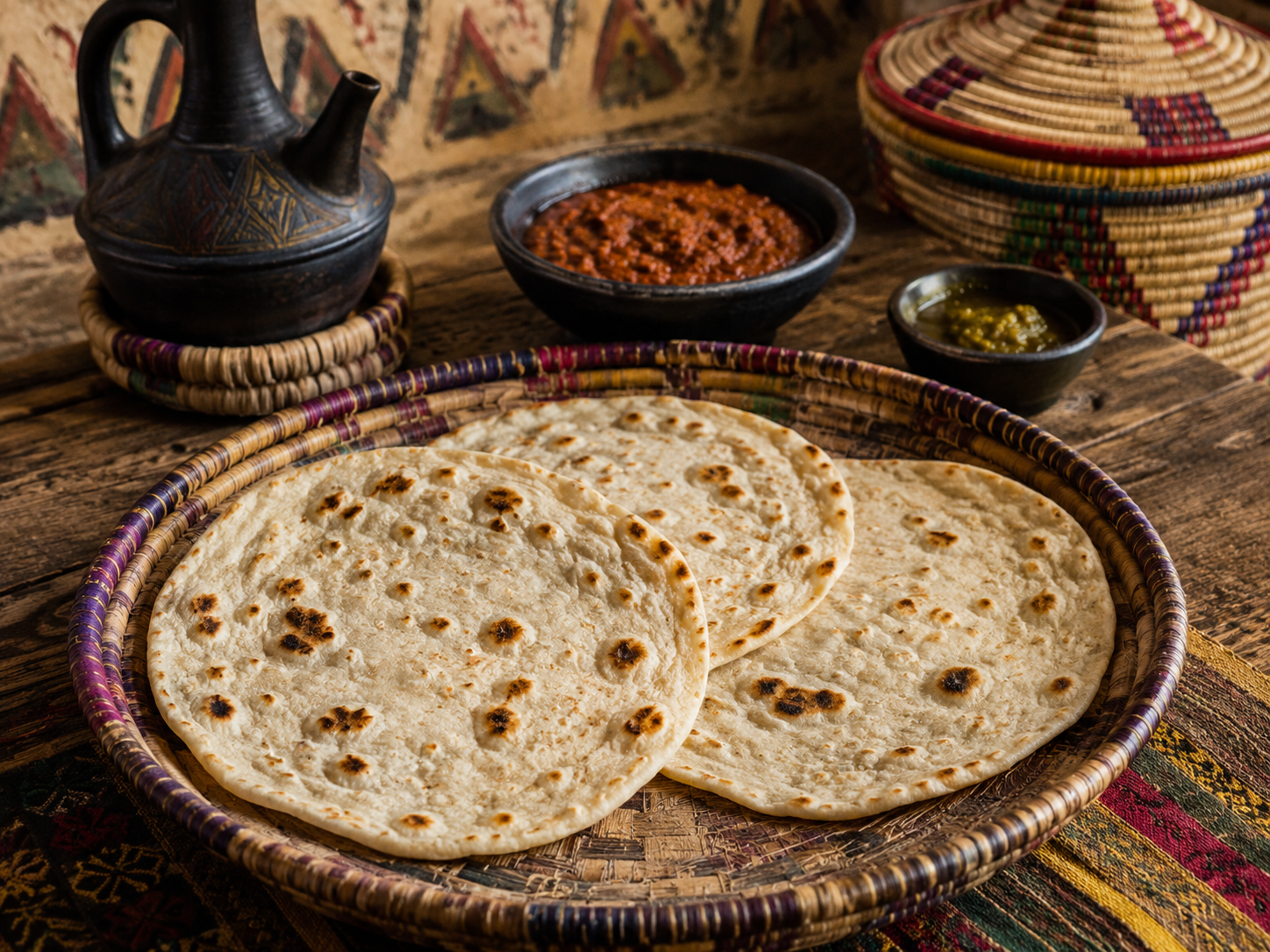
Kitcha, also spelled qitta, kita, or qita, is a culinary treasure from the Horn of Africa, specifically Ethiopia and Eritrea. Unlike injera, the famous fermented teff flatbread that dominates the region's gastronomy, kitcha is a traditional unleavened, unfermented, and quickly cooked flatbread. This whole wheat or other grain bread comes in the form of a dense, golden, circular flatbread, often pan-fried. In an African culinary landscape characterized by long and complex preparations, kitcha shines with its simplicity, speed of execution, and ability to provide immediate sustenance.
Where to find it
Look for the exact food-grade form required by the recipe at markets and specialist shops. Check the product name, ingredients, condition and storage instructions.
Explore further: Cooking tips · Food hygiene and safety advice.
History and uses
The word kitcha refers both to the flatbread itself and, by metonymy, to the savory and comforting dishes derived from it, notably kitcha fit-fit. Historically, this bread was prepared by shepherds and nomads traveling through the highlands of the Horn of Africa. Lacking the time to wait for the several days of fermentation required for injera, they mixed flour with water over a campfire to obtain a nourishing and robust bread. Today, kitcha has become a staple of urban and rural breakfast, symbolizing the warmth of home and the generosity of African family cooking.
🥣 TRADITIONAL MANUFACTURING PROCESS 👩🍳
The making of kitcha is a simple, direct, and highly efficient culinary process, requiring only three fundamental ingredients: flour, warm water, and a pinch of salt. Traditionally, whole wheat flour is used, although mixtures with barley, teff, or rye flour are also common depending on the region and available harvests.
The first step is to sift the flour into a large clay or wooden bowl, then add the salt. Warm water is then gradually incorporated. The cook kneads the mixture by hand until a soft, homogeneous, and slightly moist but non-sticky dough is obtained. Unlike Western bread dough, kitcha dough does not require long kneading to develop gluten, as an airy or leavened texture is not sought.
Once the dough is ready, it is divided into portions. Each portion is flattened directly by hand to form a disk about one centimeter thick and twenty to thirty centimeters in diameter. Cooking is done on a traditional clay griddle called a mitad, heated over a wood fire, or more commonly today in a cast iron or non-stick pan lightly greased with a little clarified butter or vegetable oil.
The dough disk is placed on the hot surface. The cook gently presses the flatbread with wet fingers or the back of a wooden spoon to even out the thickness and ensure the bread cooks uniformly. The pan is covered to trap the natural water vapor, allowing the inside of the kitcha to cook through while remaining soft, while the outside begins to brown. After a few minutes, the flatbread is flipped to brown the other side. The bread is cooked when it has nice brown and crispy spots on the surface. The hot kitcha is then removed from the heat, ready to be eaten immediately or to serve as a base for other recipes.
🥘 KITCHA FIT-FIT AND THE ART OF NITER KIBBEH 🌶️
Although kitcha can be eaten plain, accompanied by tea or coffee, its most famous culinary sublimation is undoubtedly kitcha fit-fit, also called kitcha fir-fit. This iconic breakfast dish is a monument of East African street and family cuisine.
To prepare kitcha fit-fit, warm kitcha is torn or manually cut into small, bite-sized pieces. These pieces are then tossed into a hot pan where a mixture of niter kibbeh and berbere is simmering. Niter kibbeh is traditional Ethiopian clarified butter, infused for long hours with garlic, ginger, red onion, and a multitude of spices such as fenugreek, black cardamom, black cumin, cinnamon, and turmeric. Berbere, on the other hand, is the region's flagship spicy and aromatic spice blend, composed of dried red chilies, coriander, cloves, and holy basil.
In my books

Continue exploring the continent’s cuisines with Africa at the Table — 54 countries, 54 iconic dishes, by Alioune FALL. This book is in English.
Explore further
The marriage of warm bread, melted spiced butter, and the heat of the chili creates a soft, almost melting texture, where the bread absorbs all the aromas like a sponge. Kitcha fit-fit is traditionally served hot, often accompanied by a generous spoonful of fresh, thick yogurt called ergô, which softens the heat of the berbere chili. This dish is not only delicious but also provides an immense amount of energy needed to face the day, making this breakfast a moment of unparalleled comfort.
🥗 KITCHA'S PLACE IN AFRICAN CUISINE 🗺️
In the vast culinary heritage of the African continent, kitcha occupies a strategic place as a worthy representative of unleavened flatbreads. While West Africa is famous for its pounded tubers and thick vegetable sauces, and Southern Africa for its dense corn pastes like pap, East Africa stands out for its richness in grain breads and flatbreads.
Kitcha perfectly illustrates the geographical and cultural transition between Middle Eastern cuisine, characterized by flatbreads like pita bread or lavash, and African agrarian traditions focused on the exploitation of local grains such as wheat, barley, and teff. It shows how African peoples have adapted simple bread-making techniques to create unique and highly nutritious dishes.
Furthermore, kitcha is intimately linked to the culture of fasting in the Orthodox Christian communities of Ethiopia and Eritrea. During these fasting periods, where all animal products are prohibited, kitcha is prepared without butter, replacing niter kibbeh with sesame or peanut oil, demonstrating its flexibility and importance in the spiritual and social life of the people of the Horn of Africa.
🗣️ SYNONYMS AND COMPANION DENOMINATIONS 🌍
Kitcha, depending on local languages, geographical regions, and ethnic groups in the Horn of Africa, is known by several names and synonyms that attest to its cultural richness.
The most common synonym is qitta or qita, which comes from local Semitic languages like Amharic and Tigrinya. The spelling kita is also found in some phonetic transcriptions.
In the Oromo language, it is often called kita or biddeena, although the latter term can also apply to other types of flatbreads.
Internationally and in French, it is often referred to by the generic terms Ethiopian flatbread, unleavened Ethiopian flatbread, or Horn of Africa wheat flatbread.
Although similar in form and simplicity to chapati, very popular in East Africa (Kenya, Tanzania, Uganda), kitcha differs from it because Kenyan chapati is flaky, stretched, and contains oil in its dough, while kitcha is more rustic, denser, and cooked without fat inside the dough. This variety of names and culinary relationships shows that kitcha is an essential link in a long chain of bread-making traditions that unite the peoples of the African continent.
💖 SYMBOL OF SHARING AND TRANSMISSION 🤝
Beyond its nutritional and gastronomic value, kitcha is a powerful symbol of hospitality and social cohesion in Ethiopia and Eritrea. Preparing kitcha for a guest is an immediate gesture of welcome, signifying that the hostess is doing everything possible to feed her guest without delay.
Kitcha fit-fit is traditionally served in a large communal dish where the whole family and friends dip their fingers together. Eating in this way strengthens community and family ties, reminding us that food is a gift from the earth meant to be shared.
The cooking and kneading technique is passed down orally from generation to generation, with mothers showing their children how to listen to the dough's sizzle on the mitad and how to appreciate the perfect cooking by the simple golden color of the crust. By preserving kitcha in their daily diet, Ethiopians and Eritreans celebrate their history, their land, and their unique way of life.
Synonyms for kitcha: qitta, kita, qita, Ethiopian flatbread, Horn of Africa flatbread.
Keywords: kitcha, Ethiopian cuisine, berbere, niter kibbeh, flatbread.
In the kitchen : Kitcha
Recipes from the site to put your knowledge into practice:
Discover these cuisines at a restaurant
Explore our restaurant and caterer directories. Choose your destination and check the establishment’s menu to confirm which dishes are offered and available.
Continue exploring
Enjoy discovering ingredients and African cuisines? Join our newsletter. The illustrated PDF 10 sauces africaines incontournables is in French and is offered after confirming a subscription to the French or bilingual edition.